For a video reading of this article on YouTube, click here.
In a comment on my recent article, “If God is Love, Why all the Pain and Suffering?” a reader named Mike wrote:
All good and fine but where is the proof there is life after we die? You contend that there is suffering in this material world but our spirit will go on to another world after this one. Where is the proof? Not enough to just believe blindly (like communism or some other ism).
Great question! Let’s talk about it.
First, as you have gathered from my earlier article, I believe that the afterlife is not in this physical world after some future Last Judgment, as some people think. Instead, I believe it is in a spiritual world that is entirely distinct from the physical world.
Obviously, for that to be true there would have to be a spiritual world. So let’s broaden the question:
Where is the proof that the spiritual world exists?
Now, I assume that by “proof” you mean conclusive evidence by which one person could demonstrate to another person that the spiritual world definitely exists. Is that a reasonable assumption?
If so, then the answer is:
There is no proof that the spiritual world exists.
In fact, God has specifically designed the universe and the human mind so that it is impossible for one person to prove to another person that the spiritual world exists. This is to protect the very same freedom that I talked about in the “Pain and Suffering” article.
But here’s the real kicker:
There is also no proof that the material world exists.
Do you have a brain?
No, I’m not insulting you. This is a serious question!
How do you know that you have a brain? Have you actually seen your brain? Have you heard, smelled, tasted, or touched your brain? If not, how do you know it exists?
Most likely, you “know” that you have a brain because you were told so by your parents and teachers, who were told by scientists and doctors who have actually seen people’s brains. You trust that those people know what they’re talking about. Besides, everyone except a few insulting jerks agrees that you have a brain!
In other words, even though you have probably never seen, heard, smelled, tasted, or touched your brain, you believe that you have one because people you trust have told you so, and everyone you know believes that you have a brain.
In other words, most likely all of your proof that you have a brain is that other people have told you so.
Is that really proof? No. It’s a reasonable belief based on what you’ve been taught, and on what you have learned about the human body and how it works.
I also happen to believe that you have a brain. But the fact of the matter is that you could not prove to me that you have a brain.
Does the material world exist?
It’s not just that you wouldn’t want to cut open your head to show me that you do, indeed, have a brain inside your skull.
The problem is much bigger than that.
You see, it’s impossible for you to prove to me that the material world exists in the first place.
I know what you’re thinking: “That’s stupid. Everyone knows that the material world exists!”
Well . . . before Copernicus and Galileo, everyone knew that the sun orbits the earth—and we know how that turned out!
“Everyone knows” is not valid proof. And “That’s stupid” is not a valid argument.
Think about it. The only thing you know for absolutely sure is this:
Your consciousness exists.
Your thoughts and feelings are the only things that you experience directly. This is the famous starting point of the philosophy of René Descartes: “Cogito ergo sum,” “I think, therefore I am.”
Everything else besides your own consciousness you experience indirectly—apparently through your physical senses and the nerve pathways from them to your brain. But the only place you actually sense anything is in your conscious awareness.
How do you know for sure that anything else besides your own consciousness exists?
The fact is, you really don’t know for sure. It could be that everything you experience every day, including your own body and brain, is being manufactured by your consciousness so that it seems to you exactly as if you are living and moving in an external, material world full of people, buildings, animals, and trees, when in fact none of those things actually exist out there.
Your conscious awareness may be the only thing that exists!
But what if I think that my consciousness is the only thing that exists? Huh?!?
There is no way you can prove to me that anything else but my own consciousness exists. In the same way, there is no way I can prove to you that anything but your own consciousness exists.
How can I prove to you that I’m not a figment of your imagination? The fact is, I cannot. Even if I punched you to prove that I exist, that could just be your own mind manufacturing both me and the experience of being punched.
The stubborn fact is that you can’t even prove to yourself that anything besides your own thoughts and feelings exists.
There is more proof of spirit than there is of matter
Now, thoughts and feelings are non-material things.
Yes, I know. Most scientists believe that thoughts and feelings are impulses in the brain.
But remember, there is no way to prove that the brain exists. The brain is a physical organ made of physical matter. We have no direct experience of it. Therefore we have no undeniable proof that it exists.
The only thing we know for sure is that our consciousness exists. And our consciousness consists of thoughts and feelings, loves and motives, intelligence and rationality.
These things are all non-material.
Love is not a physical entity. It is something that we experience in our mind. The same is true of everything else that makes up our mind—thoughts, feelings, ideas, emotions, motives. And these thoughts, feelings, ideas, emotions, and motives are not material . . . they are spiritual.
Another way of saying this is that everything we have direct experience of is spiritual in nature.
So the plain fact of the matter is that the only thing we have any solid proof of is that the things that are usually called “spiritual” actually do exist. We have this proof because we experience these things directly for ourselves.
For everything else, including the existence of our physical brain and of the entire material world, we only have secondary evidence.
In other words, there is no conclusive proof that the material world exists. But each of us does have direct experience of the existence of non-material, or spiritual, things.
The existence of the material world is an assumption
Now, just to put your mind and your brain at rest, I do happen to believe that the material world actually exists objectively out there.
However, I recognize that this is an unprovable assumption, which can be treated as an axiom. It is something that we just assume to be true because it seems so obvious. We then use that unprovable assumption or axiom as a foundation for a whole superstructure of other ideas and conclusions.
I also happen to think that the objective reality of the material world is a very useful assumption. If we all agree that the material world exists, and that other people are not just figments of our own imagination, then we can go on about the business of living our lives in human society.
However, we must always remember that the existence of the material world is an assumption. We truly cannot prove to anyone else, or even to ourselves, that it actually exists.
So let’s forget about proof, and talk about evidence. How we can have some reasonable confidence that the spiritual world exists, and that the afterlife is a real possibility?
How do we know things?
There are two basic ways of knowing something:
- We can experience it directly for ourselves.
- We can have it taught to us by other people.
The second category involves not only verbal teaching and demonstration by parents, teachers, ministers, and so on, but also reading books, watching videos, reading stuff on the Internet, and getting information via all of the other media that we use to communicate information to one another.
When we experience something for ourselves, we can have a great deal of confidence that it is true.
When we are taught something by other people, either directly or indirectly, our confidence in the truth of it depends on how much we trust the people who are providing the information. If a particular piece of information comes from someone with a PhD in the field and a high-powered academic teaching position, we’re likely to trust it a lot. But if it comes from some wild-haired person shouting in the street, we’re likely to file it in our brain under “crazy stuff.”
How can we know that the spiritual world exists?
Similarly, there are two basic ways we could know that the spiritual world exists:
- We could experience it for ourselves.
- We could be taught about its existence by other people who have experienced it.
Obviously, if we experience the spiritual world for ourselves, we’re likely to have a great deal of confidence that it exists.
This is precisely what has happened for millions of people who have had near-death experiences. (For a book with my own take on near-death experiences, see Death and Rebirth, by Lee Woofenden.)
For readers who have had near-death experiences, my whole argument above about the existence or non-existence of the spiritual world probably seems rather unnecessary, if not just a bit silly. They know that the spiritual world exists because they have experienced it for themselves.
Yes, I know. Many skeptics and materialistic scientists believe that near-death experiences are just hallucinations generated by an oxygen-deprived brain. But those who have had a near-death experience can simply say, “You have not experienced it. I have. I know that it is real.”
So for millions of people alive today, the existence of the spiritual world, and by extension, of an afterlife, is a simple fact because they have been there.
Yes, but how can the rest of us know?
That’s all well and good . . . if you’ve had a near-death experience. But what about the rest of us, who have not experienced the spiritual world for ourselves?
Of course, my view is that we all are experiencing a piece of the spiritual world every day in our own minds and hearts. As I said above, all of our thoughts and feelings, ideas and loves, are spiritual. So in our minds and hearts, we are living in the spiritual world every day.
However, as long as we are still living on this earth, we are not fully conscious in the spiritual world. And if our spiritual senses (the sensory organs of our spiritual body) have not been activated through a near-death experience or some other type of spiritual experience, then we have to fall back on the second way of learning about something: being taught by others.
And in fact, there is no lack of eyewitness testimony to the spiritual world and the afterlife. From ancient texts such as the Bible and the Tibetan Book of the Dead right up through the present wealth of literature on near-death experiences, we have the experience and the testimony of thousands of people, over thousands of years, on the existence and reality of the spiritual world.
Not all of those people agree with one another on exactly what the spiritual world is like. But that’s not surprising. Even scientists studying the material world don’t all agree with one another on the nature of the material world.
What all of those people spread over the thousands of years of human civilization do agree on is that the spiritual world is real.
Evidence for the afterlife
For anyone who wishes to learn about it, there is plenty of good information out there. I’m sure you can find as much as you want with a few Internet searches. But let me recommend a couple of credible sources, one new and one old. Just click on the cover image or title link to go to the book’s page on Amazon.
For those who believe in science and want the testimony of a scientist—a neurosurgeon, no less—you can’t do better than this recently published book:
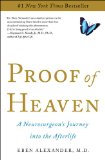
Proof of Heaven: A Neurosurgeon’s Journey into the Afterlife
By Dr. Eben Alexander
(Yeah, I wouldn’t have used “proof” in the title!)
And here is the most extensive eyewitness account of the spiritual world ever published:
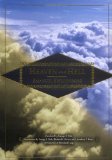
Heaven and Hell
By Emanuel Swedenborg
Heaven and Hell was originally published in Latin in 1758. I recommend the edition linked above for the most readable and accurate modern translation.
You might also enjoy reading “A Sister’s Eulogy for Steve Jobs.” It lovingly recounts his final days and his last words. For much of his life, Steve Jobs questioned the existence of an afterlife. And yet at his death, to the amazement of those present, he saw something not visible to the rest of the people in the room. His final words were, “OH WOW. OH WOW. OH WOW.”
Of course, if you truly do not want to believe that there is a spiritual world or an afterlife, all the books and accounts in the world won’t convince you. But if you truly do want to believe that there is an afterlife, there is plenty of evidence available.
For a video reading of this article on YouTube, click here.
For further reading:
- Near-Death Experiences and the Doctors
- What Happens To Us When We Die?
- Where are my Children who have Died? Will I Ever See Them Again?
- What Does it Mean When My Parents Die? Will I See Them Again?
- Who Are the Angels and How Do They Live?
- Death and Rebirth, by Lee Woofenden
Share this:


Lee Woofenden is an ordained minister, writer, editor, translator, and teacher. He enjoys taking spiritual insights from the Bible and the writings of Emanuel Swedenborg and putting them into plain English as guides for everyday life.



 Spiritual Insights for Everyday Life
While Swedenborg was wrong about a lot of things, how is it that you seem sure he was right about at least the basics of the spiritual, such as marriage in Heaven, no reincarnation, and no angry god who casts sinners into eternal torment?
And is there a good summary of the argument for dualism and against apparent mind-brain dependence?
Hi K,
I wouldn’t say that Swedenborg was wrong about a lot of things. He was using the best information he had access to at the time. Human knowledge develops over time. We can’t expect Swedenborg to have had today’s level of knowledge two and a half centuries ago. In another two or three centuries much of what we know today will seem hopelessly outdated and faulty. But today’s scientists and thinkers will, I think, be given credit for the advances in knowledge that they brought about within the context of their own times. I think we can extend the same consideration to Swedenborg. During his scientific period, Swedenborg provided quite a few advances in knowledge. Saying “he was wrong about a lot of things” is looking at it from today’s perspective, which is anachronistic.
It is true that some of the scientific and social ideas he had that we now know to be mistaken made their way into his theological writings. However, Swedenborg made no claim to being infallible. Some of his followers have come to this conclusion, but that’s on them. Swedenborg himself never said any such thing. Why should we hold him to a standard that we don’t apply to anyone else, and that he himself never claimed?
I have a great deal of confidence that he was right about the basics of the spiritual for many reasons. Here are some of the key reasons:
First (not in order of priority), no one in history that I am aware of has even claimed to have the length, depth, and breadth of experience in the spiritual world that Swedenborg did. Most people who claim supernatural knowledge say that they heard voices, or had their hand guided while writing, or that they had brief waking experiences in the spiritual realm here or there. Swedenborg said that he spent nearly three decades of almost daily waking, full-sensory experience in the spiritual world, as if he were living there himself in the afterlife. I will put that level of experience against the experience of any medium or spiritual teacher any day.
Second, what Swedenborg teaches about God, spirit, and the afterlife is very much in accord with the Bible if we read the Bible carefully, in its own exact words, without imposing outside doctrines on it. Many churches and preachers claim that their teachings are based on the Bible. But when you actually read the Bible passages they quote and refer to, they just don’t say what these people claim they do. Often there are Bible passages that flatly deny what they claim is based on the Bible. It is true that Swedenborg devoted much of his theological writings to interpreting the spiritual meaning of the Bible. But when it comes to his basic teachings, he bases them firmly on the plain literal meaning of the Bible in a way that no other so-called Christian doctrine I’m aware of even comes close to.
Third, what he writes about God, humans, the afterlife, and so on makes rational sense in a way that no other doctrine I’m aware of does. Other “Christian” doctrines have gaping holes of logic, compassion, and common sense. Swedenborg’s system is highly satisfying even to rigorously logical and rational thinkers, provided they are willing to accept the reality of God and spirit rather than confining their thinking and belief to material things. But of course materialists will reject everything Swedenborg says precisely because he says that the material universe is not all there is. For people who are willing to accept the reality of God and spirit, there is not a more sensible, rational, and satisfying system of belief anywhere.
Fourth, Swedenborg’s system has worked very well in my own life. Not that I’ve had an easy life without challenges and stress. But unlike many people, when my life has gone into crisis, it has not caused me to fall away from belief and become an atheist. Rather, my beliefs were able to carry me through even the lowest times in my life. I’ve modified my thinking over the years on various aspects of Swedenborg and his teachings. But the fundamentals have held strong for me ever since childhood, and they show no signs of weakening now that I’m entering my elder years. In other words, my confidence is not just abstract and theoretical. These beliefs have been a constant help and support to me all my life in matters both theoretical and practical.
You, of course, will have to make up your own mind. However, I defy you to find any other belief system that has as much going for it for a thinking, caring person as Swedenborg’s does. Yes, there’s always the possibility of becoming atheistic, and deciding that life ultimately has no meaning. But I think that’s a surrender, not a solution.
The human mind and heart want more than that. And I do not believe the human mind and heart are wrong in that yearning and desire. If there were not more to life than this world, we humans would never even have conceived of the idea of God and the afterlife. We would live like animals, content with the pursuits and pleasures of this world. The very fact that we aspire to more suggests to me that there is more. Swedenborg’s theological writings open the floodgates to a firm knowledge of exactly what that “more” consists of.
Thanks for the reply.
It does look like no other belief system looks to be as intricate and less arbitrary as New Church, AFAIK. The only possible rival is the so-called New Age, but New Age does not seem to encourage morality as much.
Hi K,
Hinduism is ancient and complex, but I believe it has gotten corrupted over the centuries. It’s not that other religions don’t have the complexity of the New Church. But I believe the New Church comes closest to integrating all our knowledge into a coherent system that is believable to thinking and caring people of the present day.
I think there was the idea of mind-brain dependence among those who didn’t believe in the afterlife in the 18th century. Did Swedenborg ever specifically address and refute that notion?
Hi K,
You might want to look at Swedenborg’s small work Soul-Body Interaction which you read online starting here. It has only twenty numbered sections, and is a relatively short read.
Lee why do you believe in God/jesus?
i’ve been recently have been getting tested on my faith and im failing miserably my whole life i’ve been taught and showed to have a relationship with Jesus yet 17 years later i’m coming to think these negative thoughts because of my doubts.. i’m afraid weither this is all just a cope mechanism or being brainwashed and the reason i say this is because that’s what atheists or agnostics say especially with saying there’s no proof given and with science but i just don’t know what to do anymore is God disappointed with me?
Hi Max,
First of all, no, God is not disappointed with you. God knows and understands our struggles with faith and with life, and is always rooting for us. But God also knows that we have to work these issues out in our own mind and life, or they won’t be ours, and they won’t become a part of us. So God is always gently leading and bending us toward what is good and true, but never pushing or forcing us to accept it.
I could say why I believe in God, but it might be more fruitful to ask why atheists and agnostics don’t believe in God. They will commonly say “because there’s no evidence,” but that’s not the real reason. The real reasons are more emotional than intellectual; their intellect then comes in and supports what their heart and emotions have decided, which is not to believe in God.
Many atheists were brought up in some sort of fundamentalist or hard-core Christian sect. What they’re rejecting is the kind of intolerant, bigoted God that they were brought up with. They don’t like that God, and they don’t want that God to exist, because when you look closely, that God is a real bastard, throwing people into eternal torture in hell for petty “sins,” and killing his own son to satisfy his anger at us for sinning. It’s a horrible, hateful idea of God, and atheists don’t want any part of it. That is the God they’re always attacking and saying doesn’t exist.
And they’re right! That God doesn’t exist. But that idea of God has been so deeply ingrained in the atheists’ minds that they cannot get past it. So they become atheists because the God they were taught to believe in is a horrible God, and they don’t want that God to exist.
Only then do they come up with all sorts of “logical” reasons that there is no God, such as the “lack of evidence.”
Another reason is one that you’re facing, which is that they prayed to God but never got an answer (as they see it), so they were crushed and disappointed, and decided God must not exist. Other people say God talked to them, but God never talked to me, so I’m not going to believe in God. It’s like being snubbed by a girl you have a crush on, and you decide you don’t like her after all, and start saying all sorts of nasty things about her. Again, the atheist’s real reason for not believing in God is emotional. But the atheist then dresses it up with all sorts of “logical” reasons God doesn’t exist.
If you were to become an atheist in the midst of all these struggles, it would be the same thing. Your reasons would be emotional, but then you would get all logical about it, and convince yourself that believing in God is baseless and irrational. And so, like other atheists, you would be walking around rejecting God for emotional reasons, but convincing yourself that it is just purely a matter of science, evidence, logic, and rationality.
So the first thing I would recommend is that you learn more about who God actually is. One place to start would be my own “testimony,” which is not so much why I believe in God, but why I believe Jesus is God:
The Logic of Love: Why God became Jesus
I would also recommend reading the first two articles linked from the end of this one. A true understanding of God is the first step in staving off atheism.
And that true idea of God was in my mind when I faced the same question you’re facing right now, which was whether or not to believe in God and everything I had been taught about God, spirit, the afterlife, and so on. It was when I was eighteen years old and about to graduate from high school and head out into the wider world. (College, but that was the wider world for me at the time.)
Long story short: I decided that even though I could convince myself either way, based on my understanding of God, the world would be a better place if I, and others, believed in that God, and lived the way that God teaches and shows us to live. In other words, it wasn’t logic or rationality that convinced me. It was knowing that I would live a better, kinder, more constructive life if I did believe in God than if I didn’t. This, of course, was based on what Swedenborg taught about God, because I grew up Swedenborgian.
Atheists commonly believe that the world would be a better place without God as they understand God. But their understanding of God is flawed, faulty, and false, because today’s “Christian” church has completely twisted God into an awful tyrant. If they knew what God is really like, they would have no such reasons for rejecting God and wanting a universe without God. They would see that a universe with God is far better than a universe without God, and that if everyone lived the way the real God wants us to live, this world would be a beautiful, wonderful place.
So that’s why I believe in God, and that’s why I encourage you to learn what God is really like, and not just believe, but live the way God wants us to live, which is a life of loving God and loving each other.