Do the Teachings of Emanuel Swedenborg take Precedence over the Bible?

Here is a question that a reader named Lara asked in a comment on the article, “Did Jesus Really Die to Pay the Penalty for our Sins?”:

I was wondering why so much of your site and the large majority of your beliefs about God, heaven and hell and Jesus are based on the teachings of Emanuel Swedenborg? Why do you think that he holds special precedence in knowing the mind of God? after all he was just one man who believed he had undergone a spiritual experience from God, which many many other people throughout history have also claimed. I was just wondering why your site and theology weigh so heavily on his thoughts, even almost more than what the Bible has to say? If you could give me some points on why you take his ideas and experiences as unquestionable truth that would be much appreciated!

Thanks for the great question, Lara!
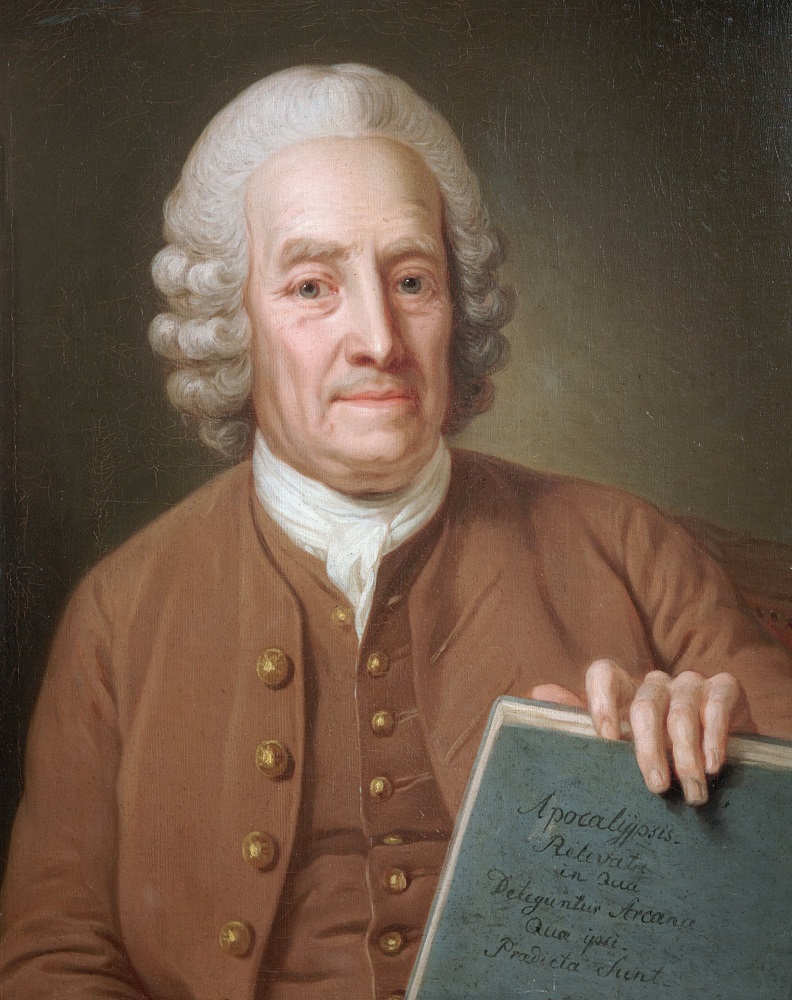
Emanuel Swedenborg

Emanuel Swedenborg

Between 1749 and 1771, Emanuel Swedenborg published twenty-five books written in Latin, which was the universal scholarly language of the day. He wrote but never published almost as many additional volumes, some of which were first drafts for books he later published. These books tell about the deeper meanings in the Bible, Swedenborg’s experiences in the spiritual world, and the true meaning of Christianity as he understood it.

Ever since, readers and followers of Swedenborg’s teachings have debated exactly what to make of his writings, and how Swedenborg’s teachings relate to the Bible and to the mind of God.

The Holy Bible

The Holy Bible

Having grown up steeped in the Bible and in Swedenborg’s teachings, I have spent many years pondering these very questions. It’s not enough to believe something just because that’s what you were taught. To make beliefs truly our own, and feel that we can trust them, we must weigh them against other possibilities, consider them from a rational perspective, and measure them against our own experience of life.

Of course, Christians must also measure them against the Bible. As pointed out in the article, “Christian Beliefs that the Bible Does Teach,” Swedenborg’s basic teachings pass Biblical muster in a way that many traditional Christian teachings simply do not (see the article, “‘Christian Beliefs’ that the Bible Doesn’t Teach”).

This article will focus more on Swedenborg’s writings themselves: what they are and what they are not, how they are different from the Bible, and why Swedenborg’s teachings are worth paying attention to.

Here are some key points:

  1. Swedenborg’s writings are not unquestionable, inerrant truth.
  2. Swedenborg’s experience in the spiritual world was unique in known history.
  3. Swedenborg’s inspiration from God was very different than that of the Bible writers.
  4. Even if we don’t realize it, our understanding of the Bible depends on human teachers.
  5. Swedenborg’s teachings are not an addition to the Bible; rather, they help us understand the Bible.
  6. Only you can decide whether Swedenborg’s teachings are worth paying attention to for you.

Let’s take a closer look. It’s a lot of material to cover, and it’s going to take some time. However, it will answer the question of why this website draws so heavily on the teachings of Emanuel Swedenborg, and what particular perspective on his writings, and on the Bible, is behind the articles here.

For more on the Bible and Emanuel Swedenborg’s teachings, please click here to read on.

Tagged with: , , , , , , , , , , ,
Posted in Science Philosophy and History, The Bible Re-Viewed

The Mother of All the Living

Eve, painted by Hans Baldung Grien

Eve, the mother of all the living

In Genesis 3:20, after Adam and Eve have earned themselves a one-way trip out of the Garden of Eden, we read:

The man named his wife Eve, because she was the mother of all the living.

I am struck by that phrase, “The mother of all the living.” Each year Mother’s Day brings to mind mothers with two, three, and more children, not to mention grandmothers and great-grandmothers with a growing number of grandchildren. But “the mother of all the living”?

If we take this Bible story literally (which I don’t), there can be only one mother of all the living. She is the first woman created by God. As the story goes, she and her husband Adam are the only people created directly by God. All the rest are created through the reproductive ability God gave to humans. So Eve becomes the mother of all the people on earth, in all their succeeding generations, right up to the billions who are on earth today.

Of course, science would never support such a proposition.

Or would it?

For more on the mother of all the living, please click here to read on.
Tagged with: , , , , , , , , , , ,
Posted in All About God, The Bible Re-Viewed

“And They Lived Happily Ever After”

I have a pet peeve about the love stories in many popular movies and novels. We could call it the and-they-lived-happily-ever-after complex.

For classic fairy tales, “And they lived happily ever after” is the most popular ending. Here’s the pattern: The story opens with, “Once upon a time. . . .” Then the characters are introduced, and they get into various adventures and troubles. Finally, their troubles are resolved, their adventure ends in success, and they live happily ever after.

Wedding Rings

Wedding Rings

This is also the most common format for love stories in popular movies and novels. The basic plot runs like this: “Boy meets girl, boy and girl separate, boy and girl join again and get married.” Sometimes the separation is emotional rather than physical; often it is both physical and emotional. This pattern is followed in thousands and thousands of love stories.

For children’s fairy tales, a happy ending is nice. It conveys the idea that even if we have to go through many troubles and hardships in life, things will all work out in the end. True, often that is not the case in the material world. But from a spiritual perspective, unless we willfully choose to turn our back on God and our fellow human beings, things will work out in the end. No matter what pain and struggle we have to suffer through here on earth, we will ultimately find happiness as angels in heaven.

I suppose adults, too, need continual reassurance that things will all work out in the end. Happy endings are very popular in adult fiction and movies as well.

But here’s my pet peeve: Over and over again, love stories are all about the boy getting the girl and the girl getting the boy. What about their lives after that?

For more on before and after the wedding, please click here to read on.

Tagged with: , , , , , , , , , , , ,
Posted in Sex Marriage Relationships

Must We Answer in Heaven for Misbehavior we have Confessed To on Earth?

In the article, “The Bible, Emanuel Swedenborg, and Reincarnation,” I wrote this:

In the spiritual world, it is not only possible for us to re-experience events in our own lives from the records of it in our spiritual memory, but for the angels and spirits around us to share in that experience.

For example, Swedenborg describes how angels are able to draw out of the memories of criminals who have died the exact circumstances of their crimes, and display every single detail of each crime, one after another from beginning to end, until they cannot possibly deny what they have done. See Heaven and Hell #462b (scroll down to 462b).

In response to this, here is a Spiritual Conundrum submitted to Spiritual Insights for Everyday Life by a reader named Heather:

I have read through your page about how angels can tease out your real thinking when you were on earth. (Heaven & Hell 462). I want to know if you have confessed to Jesus about your misbehaviour on earth, will the angels still show you, your wrong doings in the spiritual world.

Thanks for the great question, Heather!

The short answer is: No.

The still-pretty-short answer is: If you have confessed your misbehavior to Jesus (or for non-Christians, to God as you understand God), and you have stopped doing it because it is wrong and contrary to God’s will, then you will not have to answer for it in the spiritual world. The process of spiritual examination and prosecution that Emanuel Swedenborg (1688–1772) describes in Heaven and Hell #462b happens for people who deny and try to hide their wrongdoings. (It is common, however, for us to review the events of our lives when we die, accompanied by angels to guide us through the process.)

If that’s all you want to know, you can stop reading now!

If you want more, let’s take a closer look. As it turns out, Swedenborg took his cue from the Bible, which has a few things to say on this subject.

For more on misbehavior and spiritual prosecution, please click here to read on.

Tagged with: , , , , , , , , , , , ,
Posted in Spiritual Growth, The Afterlife

Will We See our Pets Again in Heaven?

A reader named Grace submitted this Spiritual Conundrum to Spiritual Insights for Everyday Life:

I lost my 12 year old Lab to brain Cancer last summer. I miss him terribly. Will we see our pets again in heaven?

Thanks for your question, Grace. I’m so sorry to hear about the death of your dog.

Samson - Pets in heaven

Samson

Pets become members of our family—each with a unique personality. However, most pets have shorter lifespans than we humans do. The companionship and joy of sharing our lives with animal friends is tinged with a time of loss and grieving when their lives come to an end.

Death is a natural and inevitable event for all living beings on earth. For our human friends and family, we have the hope and assurance that we will see them again when it comes our time to die (see “What Happens To Us When We Die?”).

Can we have the same hope and assurance of seeing our pets in the afterlife?

Well . . . I have good news, and I have bad news.

First, the bad news: From a Christian perspective, animals do not have eternal souls.

But here’s the good news: That doesn’t mean we won’t see our pets in heaven.

Let’s take a closer look.

For more on animals in the afterlife, please click here to read on.

Tagged with: , , , , , , , , , ,
Posted in The Afterlife

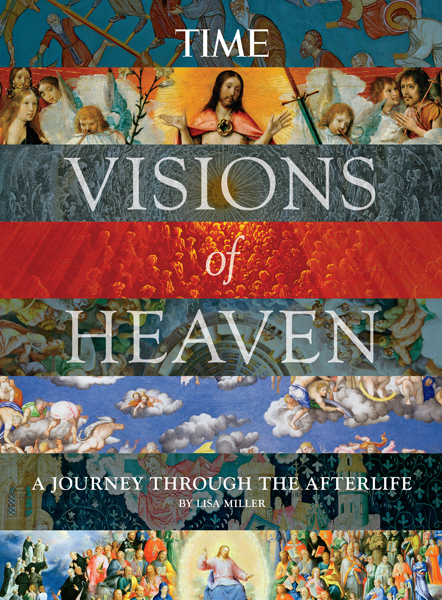
Visions of Heaven, by Lisa Miller

Released just in time for Easter is this new book published by TIME:

Visions of Heaven: A Journey Through the Afterlife, by Lisa Miller, TIME, April 2014

Visions of Heaven, by Lisa Miller

(We picked up a copy at the local supermarket checkout stand under a different title: Discovering Heaven: How Our Ideas About the Afterlife Shape How We Live Today.)

Visions of Heaven: A Journey Through the Afterlife, by Lisa Miller (Time Books, April 2014), is a quick and easy read. It offers plenty of large, full-color illustrations, from medieval artwork to contemporary scenes. This 112 page book offers a brief survey of concepts of the afterlife from ancient times to the present. Though it focuses on Judaeo-Christian perspectives, it also touches on views of heaven in other religions and cultures.

Emanuel Swedenborg (1688-1772) shows up on page 65 as a leading figure in the trend toward a more realistic, practical, and earth-like view of heaven.

This beautiful coffee table book has no sectarian agenda, just as it comes to no definite conclusions. This makes it an ideal starting point for conversations with family and friends about what awaits us after we die—and about building a more heaven-like community right here on earth.

To purchase Visions of Heaven: A Journey Through the Afterlife on Amazon, click on either of the title links, or on the cover photo above.

For further reading on the afterlife:

Tagged with: , , , , , , , , , , ,
Posted in The Afterlife

Noah’s Ark: A Sea Change in the Human Mind

What do the stories of Creation and Noah’s Ark have in common?

Umm . . . atheists and fundamentalists spend a lot of time arguing about them?

Haha! Yes they do. But besides that?

They’re both really old?

Yes, they go back thousands of years. Besides that?

They’re both in the Bible?

Well, yes, of course . . . but there are lots of other versions of these stories, too.

Okay, I give up. What do the stories of Creation and Noah’s Ark have in common?

They’re both from an ancient, mythical part of the Bible that was never meant to be taken literally. These are symbolic stories about the human condition, and about our relationship with God.

Oh really? Says who?

Just go with me on this one, okay? You’ll see. If we think of these as symbolic rather than literal stories:

  • We don’t have to waste our time arguing about science vs. the Bible.
  • We don’t have to think of these as just some old, outdated stories.
  • We don’t have to worry about which culture’s version of them is “right.”
  • We can find a deeper meaning in them that is just as true today as it ever was.

Does God really care what we believe about science and history? If the Bible is the Word of God as Christians believe it is, then isn’t it about the things God truly cares about? Spiritual things?

Noah's Ark at sea, from the 2014 Darren Aronofsky film

Noah’s Ark at sea

Let’s take a deeper look at the story of the Great Flood, and see what meaning it holds for us. Though the literal story is about a great, world-destroying flood, at a deeper level it tells the story of a great sea change in the human mind.

This change is something that the human race went through thousands of years ago as we made the transition from being pre-literate, nomadic hunter-gatherers to a more settled agrarian culture with spoken language and written literature.

It is also a change that each one of us goes through individually, from our own mythic times of infancy through the awakening of our thinking mind in early childhood.

Yes, all of this—and much more—is in the story of Noah and the Ark.

We are speaking of divine literature, not a human textbook of science and history. The depths of meaning contained within it put all the materialistic, quasi-scientific arguments of the fundamentalists into the shade.

For more on the depths of meaning in the Noah story, please click here to read on.

Tagged with: , , , , , , , , , , ,
Posted in Science Philosophy and History, The Bible Re-Viewed

A Christian Movie Review of Darren Aronofsky’s “Noah”

(Warning: major movie plot spoilers below)

Noah Movie Poster, for the 2014 Darren Aronofsky movie

Noah Movie Poster

First, the disclaimer: Darren Aronofsky’s movie Noah is not faithful to the Bible story. If your primary interest is to see a dramatization of the Bible narrative of Noah and the Ark as told in Genesis 6–9, this is not the movie for you.

Here’s the official disclaimer from Paramount Pictures:

The film is inspired by the story of Noah. While artistic license has been taken, we believe that this film is true to the essence, values, and integrity of a story that is a cornerstone of faith for millions of people worldwide. The biblical story of Noah can be found in the book of Genesis.

Let’s just say that this disclaimer is a masterful piece of PR designed to placate the faithful while still giving the impression that Noah is faithful to the Bible story.

For the most part, it’s not.

We’ll list some of the accuracies and inaccuracies of the movie shortly.

Yes Noah does get some things right. The reference to movies “inspired by a true story” is apt: this movie does draw its central theme of the Great Flood, along with the names of various characters, from the Bible story. However, the departures from the Bible version are so fundamental and overwhelming that the movie must be viewed as a very different story than the one told in the Bible.

Why would anyone want to see Noah?

It’s a big American action flick that engages with Biblical themes, even if it doesn’t get them quite right. And unlike many previous dramatizations of the story, it does take a serious stab at capturing the intensity of a mythic Biblical event that changed the course of humankind. After seeing this film, it is no longer possible to imagine Noah as some delightful Doctor Doolittle character from a cute little children’s story. For that alone, it is worth seeing the film.

In the next article we’ll look at the Bible narrative itself, and consider some of the deep and powerful human realities embodied in the story of Noah and the Ark. The Great Flood marks pivotal phase shift in the spiritual history of humankind, and in our own early formative years as individual human beings. See “Noah’s Ark: A Sea Change in the Human Mind.”

For now, let’s take a closer look at the movie Noah, and how it compares to the Bible story. As it turns out, the movie delivers a modern story about our relationship with the earth, while the book delivers an ancient story about our relationship with God and with one another.

For more on the Bible’s Noah vs. Darren Aronofsky’s Noah, please click here to read on.

Tagged with: , , , , , , , , , , ,
Posted in Popular Culture, The Bible Re-Viewed

The Bible Says It, and I Believe It!

The Bible

The Bible

I’ve written a new article on Christian Beliefs that the Bible Does Teach. It is a companion piece to my previous article, “Christian Beliefs” that the Bible Doesn’t Teach.

This new article is meant to show that the basic beliefs behind the articles here on Spiritual Insights for Everyday Life are solidly based on the Bible.

But more than that, the purpose of the article is to provide some simple, practical, Bible-based beliefs for anyone who wants to live a truly Christian life.

Here is a quote from the first part of the new article:

The Bible is far more concerned with how we live our life than with what we believe. The Bible is a practical book, not an abstract theological treatise.

Still, the Bible does provide us with a foundation of basic beliefs that we can trust and use as guides for everyday life.

Here are some Christian beliefs that the Bible does teach:

  1.       There is one God, and Jesus Christ is that God
  2.       Believing in Jesus Christ leads to salvation
  3.       We must not do evil and destructive things
  4.       We must do things that are good and right
  5.       We must recognize that the power to do these things comes from God

Let’s take a quick look at each of these Christian beliefs, and what the Bible has to say about them.

These five points are adapted from a statement of basic Christian beliefs found in True Christianity #3, written by Emanuel Swedenborg (1688–1772).

Any time you want to refer to this article, you will find it linked prominently near the top of the right column on Spiritual Insights for Everyday Life, along with its companion piece.

To read the whole article, please follow this link:

Christian Beliefs that the Bible Does Teach

If you like it, please tell your friends and family. Links to it from any web pages you host are also much appreciated. Thank you.

Enjoy!

Tagged with: , , , , , , , , , , , ,
Posted in All About God, Spiritual Growth, The Bible Re-Viewed

The Basketball Eyes of Isaiah Austin: “Your Excuse or Your Story?”

Isaiah Austin, Baylor University Basketball

Isaiah Austin

(For a follow-up story, see “Isaiah Austin’s Marfan Syndrome: Another Life or Death Choice.”)

Isaiah Austin has two eyes. Only one of them works.

He had a decision to make. That decision would determine his future.

Would he go with the bad eye, or with the good one?

An AP news piece tells the story. At about twelve years old, Austin got hit in the eye with a baseball. He didn’t lose sight in that eye then, but the accident did loosen his retina. Two years later, when he was in eighth grade, the retina detached when Austin, then 6’7″ tall, dunked the ball while doing his usual warm-ups for a middle school basketball game. Four surgeries later, it became clear that his right eye would never see again.

As he tells it, his biggest fear during that year of unsuccessful surgeries was that his days of playing basketball were over. He asked his mother, Lisa Green, “How am I going to get through this?”

“You can make it your excuse, or you can make it your story,” she said. “You can touch lives or you can be a quitter.”

The challenge of those words, spoken to him out of love, became the touchstone that helped him to put his life back on track.

Soon he was back out on the basketball court, struggling and working to learn how to shoot and how to play without his former depth perception.

Isaiah Austin had decided to go with the good eye.

But that didn’t mean it was going to be easy.

For more on Isaiah Austin’s decision, please click here to read on.
Tagged with: , , , , , , , , , , ,
Posted in Sports and Recreation
Lee & Annette Woofenden

Lee & Annette Woofenden

Donate

Support the work of Spiritual Insights for Everyday Life by making a monthly donation at our Patreon

Join 1,260 other subscribers
Earlier Posts
Featured Book

Great Truths on Great Subjects

By Jonathan Bayley

(Click the title link to review or purchase. This website receives commissions from purchases made via its links to Amazon.)

Blog Stats
  • 4,225,955 hits