How Can I Help a Loved One who is In an Abusive Relationship?

A reader named “Sister-In-Law” recently submitted a spiritual conundrum in which she describes the situation of her husband’s brother, “John” (not his real name), who is married to a woman who abuses him verbally and physically. The woman has a child from a previous marriage. The two of them also have one child together, and another one on the way.

Here are a few of the relevant pieces of information based on Sister-In-Law’s account:

  • John’s wife puts heavy pressure on him to make poor financial decisions and to leave his well-paying job, although she herself is not gainfully employed.
  • She is also distant and cruel to their children, and in general is not a good mother to them.
  • John is a great guy, but he does have a domestic violence charge against him from his high school years.

Not a pretty picture. But unfortunately, an all-too-common one. Whether it’s a man or a woman dishing out the abuse in a relationship, the result is a lot of terrible pain and suffering, and emotional scars that can last a lifetime.

Based on the situation she describes, here are Sister-In-Law’s questions:

My spiritual conundrum is this: HOW can I convince John, a macho guy who refuses to let anyone help him on small things, that he needs to get help for his marriage, his children, and himself? What can I say to him? How can I pray for them? The last is my biggest hurdle, because these things make me so angry every time I think about them that all I can do is ask God why this is happening. John is a great guy and deserves much, much better than this.

Let’s dig into these questions.

For more on helping loved ones who are in abusive relationships, please click here to read on.

Tagged with: , , , , , , , , , , , ,
Posted in Pain and Suffering, Sex Marriage Relationships

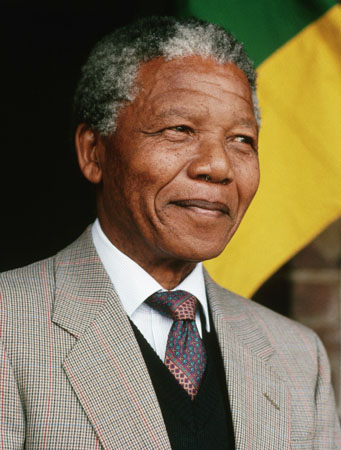
Nelson Mandela 1918-2013: From Revolution to Reconciliation

Nelson Mandela, 1918-2013

Nelson Mandela, 1918-2013

We are pleased to dedicate our 100th post here on Spiritual Insights for Everyday Life to the memory of Nelson Mandela, who died this Thursday, December 5, at the age of 95.

In his younger years, Mandela gained notoriety as a divisive figure: a socialist revolutionary aiming to overthrow the harsh apartheid regime that ruled South Africa. But Mandela will not be remembered as a socialist revolutionary.

He spent twenty-seven years imprisoned under a life sentence on charges of conspiracy to overthrow the government. And though his time in prison molded him into the person he was to become, Mandela will not be remembered as a political prisoner.

He was released from prison in 1990 under mounting international pressure, during a time of severe and increasing civil strife in South Africa.

Then began the events for which he will be remembered.

In 1994, as the first black president of South Africa, Mandela held the reins of power in his hands. He had seen the bloodshed and the civil and economic destruction that ravaged many African nations when their black majorities overthrew the ruling white elites. Despite the oppression under which he himself had suffered, he chose a different course.

This is what Nelson Mandela will be remembered for. He will be remembered as the man who led his nation toward multiracial democracy after years of racism and oppression. He will be remembered as the man who, having tasted violence and bloodshed, and having every reason to choose the path of revenge, chose instead the path of forgiveness and peace.

He will be remembered as the former revolutionary who led his country to reconciliation, and showed the entire world that constructive peace and understanding among former enemies is both possible and achievable.

Perhaps his greatest testament is that at his death, he was mourned equally by blacks and whites in his own country, and by people of every race throughout the world.

Tagged with: , , , , , , , , , , , ,
Posted in Current Events

To Train Up A Child, or: Spare the Rod? What Rod?

Larry and Carri Williams

Larry and Carri Williams

On October 29, 2013, Larry and Carri Williams of Sedro Woolley, Washington, were sentenced to 28 and 37 years in prison, respectively, for causing the death of their adopted daughter Hana Williams just after midnight on May 12, 2011. She was approximately 13 years old. She died of hypothermia and malnutrition after being systematically beaten, starved, and forced outside in the cold by her adoptive parents as punishment for her “rebelliousness.”

Hana Williams, 1997-2011

Hana Williams, 1997-2011

The Williamses had adopted Hana just three years earlier in 2008. The last year of her life was particularly brutal. In that year she lost 30 pounds due to her parents withholding food from her as punishment. Weighing only 78 pounds at the time of her death, her body was covered with welts and bruises from the beatings her parents had administered. They regularly punished her for such “offenses” as refusing to stand in a twelve inch circle that they had ordered her to stand in.

This was the third death linked to the child-raising practices advocated by Michael and Debi Pearl in their 1994 book To Train Up A Child.

All three of these families believed in the child-raising principles advocated in To Train Up A Child. And though they went far beyond what the Pearls advocate in the book, the deaths of their children were linked to beliefs and practices inculcated in them by the Pearls’ book.

In To Train Up A Child, the Pearls advocate “training” children to absolute obedience by systematically hitting them with instruments such as a plastic plumbing supply tube whenever they disobey commands—including contrived and arbitrary commands—given by their parents.

Michael Pearl runs a 501(c)(3) non-profit organization called No Greater Joy Ministries. To Train Up A Child is its best-known product. He preaches at a small fundamentalist church in the town of Pleasantville, Tennessee, where he and his wife Debi live.

He claims that the methods of corporal punishment (or “spanking,” as he prefers to call it) in To Train Up A Child are based on the Bible. But as we will see, his methods are actually based on the principles of behaviorism that were developed by atheist scientists such as Ivan Pavlov and B. F. Skinner.

For more on the Bible, behaviorism, and the Pearls, please click here to read on.

Tagged with: , , , , , , , , , , , , , , , ,
Posted in Current Events, The Bible Re-Viewed

Viktor Frankl on Meaning in the Midst of Suffering

For Part 1 of this article, see “Viktor Frankl on Meaning through Work.”

For Part 2 of this article, see “Viktor Frankl on Meaning through Relationship: It’s All About Love and Understanding.”

Man's Search for Meaning, by Viktor Frankl, forward by Harold Kushner

Man’s Search for Meaning

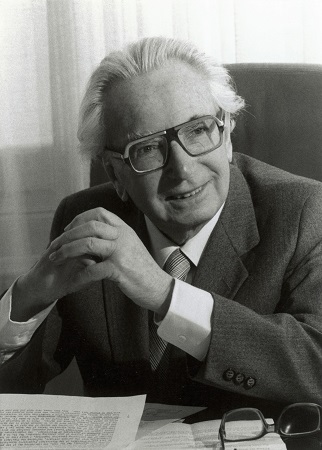
Viktor Frankl

Viktor Frankl

In the second part of Man’s Search for Meaning, psychiatrist and holocaust survivor Viktor Frankl lists three different ways we can find meaning in life:

  1. By creating a work or doing a deed
  2. By experiencing something or encountering someone
  3. By the attitude we take toward unavoidable suffering

In Part 3 of this article, we’ll look at finding meaning in the midst of suffering. On that subject, Viktor Frankl writes:

We must never forget that we may also find meaning in life even when confronted with a hopeless situation, when facing a fate that cannot be changed. For what then matters is to bear witness to the uniquely human potential at its best, which is to transform a personal tragedy into a triumph, to turn one’s predicament into a human achievement. When we are no longer able to change a situation—just think of an incurable disease such as inoperable cancer—we are challenged to change ourselves.

As with Frankl’s views on meaning through work and meaning through relationship, this, too, is harmonious with Emanuel Swedenborg’s views on our spiritual rebirth or “regeneration.”

In fact, Swedenborg agrees with Frankl that when we are in the midst of suffering and struggle, that is precisely when we are at our most human. And though it may seem just the opposite to us at the time, it is also when God is closest to us.

Why are these things so?

Let’s take a closer look at what suffering and struggle are all about spiritually.

For more on Viktor Frankl and meaning in the midst of suffering, please click here to read on.

Tagged with: , , , , , , , , , , , ,
Posted in Pain and Suffering, Science Philosophy and History, Spiritual Growth

Viktor Frankl on Meaning through Relationship: It’s All About Love and Understanding

Man's Search for Meaning, by Viktor Frankl, forward by Harold Kushner

Man’s Search for Meaning

Viktor Frankl in 1975

Viktor Frankl in 1975

In the second part of Man’s Search for Meaning, psychiatrist and holocaust survivor Viktor Frankl lists three different ways we can find meaning in life:

  1. By creating a work or doing a deed
  2. By experiencing something or encountering someone
  3. By the attitude we take toward unavoidable suffering

Part 1 of this article, “Viktor Frankl on Meaning through Work,” explored Frankl’s first path to meaning by offering some supporting elements of the path of spiritual rebirth or “regeneration” described by Emanuel Swedenborg (1688–1772) two centuries earlier.

In Part 2, we’ll look at finding meaning by experiencing something or encountering someone. This, too, is harmonious with key parts of Swedenborg’s perspective on our path of spiritual rebirth. It’s all about love and understanding.

For more on Viktor Frankl and meaning through relationship, please click here to read on.

Tagged with: , , , , , , , , , , , ,
Posted in Science Philosophy and History, Sex Marriage Relationships, Spiritual Growth

Viktor Frankl on Meaning through Work

Man's Search for Meaning, by Viktor Frankl, forward by Harold Kushner

Man’s Search for Meaning

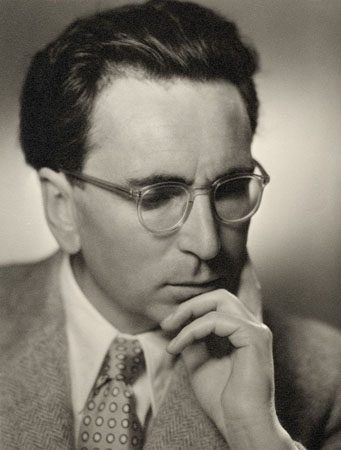
Viktor Frankl in 1949

Viktor Frankl in 1949

With over twelve million copies in print worldwide since it was originally published in 1959, Man’s Search for Meaning, by Viktor Frankl, has become a psychological and spiritual classic.

In it, Frankl recounts his experiences during three years in Auschwitz and several other Nazi concentration camps. And yet, as its title suggests, the message of Man’s Search for Meaning is not one of horror and despair, but one of meaning and of hope for humanity.

Instead of surrendering to hopelessness as many imprisoned victims of the Nazi regime did, Frankl viewed the horrors of the camps with a trained psychiatrist’s eye. In doing so, he found vindication for his view that the beauty and power of humanity is our ability to rise above even the worst suffering, and become greater than any barbarism that might be inflicted upon us.

Frankl proposes that in finding a meaning for our own particular life and circumstances, we can rise above hopelessness, depression, and the various neuroses that afflict us, and build a satisfying and worthwhile existence for ourselves. In the second part of Man’s Search for Meaning, Frankl lists three different ways we can find meaning in life:

  1. By creating a work or doing a deed
  2. By experiencing something or encountering someone
  3. By the attitude we take toward unavoidable suffering

These three paths to meaning in Frankl’s existential system of psychotherapy (which he named “logotherapy”) are harmonious with similar elements of the path of spiritual rebirth or “regeneration” described by Emanuel Swedenborg (1688–1772) two centuries earlier.

In Part 1 of this article we’ll look at finding meaning by creating a work or doing a deed.

For more on Viktor Frankl and meaning through work, please click here to read on.

Tagged with: , , , , , , , , , , , ,
Posted in Pain and Suffering, Science Philosophy and History, Spiritual Growth

Personal Transformation: It Ain’t Over ‘Til It’s Over

SuEllen Fried talks about the "Reaching Out from Within" program

SuEllen Fried

SuEllen Fried looks more like a grandmother than a group counselor for prisoners.

In fact, she is both.

In 1980, she began volunteering at Lansing Correctional Facility in Lansing, Kansas. That volunteer work became a lifetime commitment to the inmates. As reported in a recent CBS Evening News report, “Kansas prisoners get the granny treatment,” Mrs. Fried leads a program in the Kansas prisons called “Reaching Out from Within.”

Why does she do it?

“I am addicted to personal transformations,” she says.

And the program works. Although the national recidivism rate (prisoners who end out back in prison after their release) is roughly 50%, for those who attend Mrs. Fried’s program regularly the rate drops to less than 10%.

How does this sweet, grandmotherly woman accomplish such tremendous results?

For more on SuEllen Fried and personal transformation, please click here to read on.

Tagged with: , , , , , , , , , , , ,
Posted in Current Events, Spiritual Growth

Can Communication and Confrontation be Spiritual?

Confrontation: Handle With Care

Adam Sandler and Jack Nicholson in "Anger Management"

An angry confrontation

“I hate you!”

“I hate you too!”

Ouch! Too many of our “conversations” turn into confrontations, and then degenerate into shouting matches. After it’s all over, neither side feels very good. These battles can be bruising—and even deadly.

How can a spiritual perspective help us to communicate well both with those we love and with those we consider enemies?

We start by working on developing direct and caring communication with those we are closest to. After all, if we can’t communicate well with our friends and lovers, how will we ever communicate well with our enemies? Good communication takes time and effort. But it also pays big dividends in closer and deeper relationships, and a happier life.

When we find ourselves in situations of conflict and confrontation, the skills and practice we have gained in communicating well during the good times can turn what could have been a breakup or a war into an opportunity for spiritual and interpersonal growth.

It all starts with developing love and respect both for our friends and for our enemies. Yes, we are commanded to love our enemies! Developing respect for them can be even trickier. But the rewards of doing so are well worth the effort.

For more on negotiating the path of communication with friend and foe, please click here to read on.

Tagged with: , , , , , , , , , ,
Posted in Sex Marriage Relationships, Spiritual Growth

World Series Obstruction: Intent or Not Intent, That is the Question?

In a freak ending—a first in World Series history—game three of the 2013 World Series matchup between the Boston Red Sox and the St. Louis Cardinals ended with an obstruction call. Here’s the official definition of “obstruction” from the Major League Baseball rules:

OBSTRUCTION is the act of a fielder who, while not in possession of the ball and not in the act of fielding the ball, impedes the progress of any runner.

Rule 2.00 (Obstruction) Comment: If a fielder is about to receive a thrown ball and if the ball is in flight directly toward and near enough to the fielder so he must occupy his position to receive the ball he may be considered in the act of fielding a ball. It is entirely up to the judgment of the umpire as to whether a fielder is in the act of fielding a ball. After a fielder has made an attempt to field a ball and missed, he can no longer be in the act of fielding the ball. For example: If an infielder dives at a ground ball and the ball passes him and he continues to lie on the ground and delays the progress of the runner, he very likely has obstructed the runner.

That’s almost exactly what happened in the final play of the game, except that it was a thrown ball rather than a hit ball. Because of the obstruction call, the Cardinals won the game. Needless to say, Red Sox fans were not happy!

Will Middlebrooks obstructs Allen Craig in game 3 of the 2013 World Series

Middlebrooks obstructs Craig, World Series 2013, Game 3

That has set off a spirited debate about the obstruction rule. Why should there be a penalty when the Red Sox fielder obviously had no intention of obstructing the Cardinals’ runner?

Spiritually speaking, this has a lot to do with the difference between evil and sin. But before we get there, let’s take a look at the unusual call that decided a World Series game.

For more on obstruction and intent, please click here to read on.

Tagged with: , , , , , , , , , , , ,
Posted in Sports and Recreation

Secrets of Heaven, by Emanuel Swedenborg

What are the stories in Genesis about?

Was the world really created in six days, or is there some deeper meaning?

What about Adam and Eve? Noah and the Ark?

How can we believe these stories in the first few chapters of Genesis when science tells us that the universe is billions of years old, humans evolved from lower animals, and there isn’t anywhere near enough water on earth to cover all the mountains in a worldwide flood? Is the Bible just plain wrong? Or is science itself an illusion, as many Christian fundamentalists claim?

If these questions trouble you, I recommend Secrets of Heaven, Volume 1, by Emanuel Swedenborg. This volume, the first of fifteen volumes covering the books of Genesis and Exodus, sets the stage and provides the opening acts for a revolutionary new way of understanding the Bible—especially the early, mythical stories in the first few chapters of Genesis.

For example, the Creation story in Genesis chapter one is revealed not as a mere literal account of how people thousands of years ago thought God created the world, but as a divinely inspired story of our spiritual rebirth as new creations in the image and likeness of God.

In Secrets of Heaven, Swedenborg looks at the stories in Genesis and Exodus chapter by chapter and verse by verse, explaining the deeper, spiritual meanings in the Word of God. These meanings provide new and deeper light on our own spiritual journeys, and on the inner life of Jesus Christ when he lived among us here on earth.

Secrets of Heaven
By Emanuel Swedenborg

Secrets of Heaven was originally published in London, 1749-1756, in eight Latin volumes. I recommend the New Century Edition linked here for the most readable and accurate modern translation.

To purchase Secrets of Heaven, Volume 1 on Amazon, click the cover image above, or any of the title links. To purchase direct from the publisher in various formats, or to download a free PDF or epub version (without the scholarly introduction and notes), click this link.

For further description and review, please click here to read on.

Tagged with: , , , , , , , , ,
Posted in Books and Literature
Lee & Annette Woofenden

Lee & Annette Woofenden

Donate

Support the work of Spiritual Insights for Everyday Life by making a monthly donation at our Patreon

Join 1,296 other subscribers
Earlier Posts
Featured Book

Great Truths on Great Subjects

By Jonathan Bayley

(Click the title link to review or purchase. This website receives commissions from purchases made via its links to Amazon.)

Blog Stats
  • 4,201,976 hits