Then God said, “Let us make humans in our image, according to our likeness, and let them have dominion over the fish of the sea and over the birds of the air and over the cattle and over all the earth and over every creeping thing that creeps upon the earth.” (Genesis 1:26)
Then the Lord God said, “See, the humans have become like one of us, knowing good and evil, and now they might reach out their hands and take also from the tree of life and eat and live forever” . . . . (Genesis 3:22)
Come, let us go down and confuse their language there, so that they will not understand one another’s speech.” (Genesis 11:7)
And there’s one more, in the Prophets:
Then I heard the voice of the Lord saying, “Whom shall I send, and who will go for us?” And I said, “Here am I; send me!” (Isaiah 6:8)
Why the “us” in these verses?
Is this a leftover from the pagan polytheism out of which the Hebrew people originally came? Is it a surviving reference to multiple gods? So some have argued. But by the time the Hebrew Bible was put into its final form, its editors and authors were firmly monotheistic. They would not have allowed their most sacred text to espouse a belief in polytheism.
Is this a reference to a Trinity of Persons, as Nicene Christians strenuously argue? In a word: No. The idea of the Trinity of Persons did not exist when these passages were written. It didn’t come into being until the third and fourth centuries AD, hundreds or even thousands of years after these stories were originally composed. The writers of the Old and New Testament could not possibly have had a Trinity of Persons in mind in anything they wrote, because that idea hadn’t been developed yet.
Then why the “us”?
There are two basic explanations that can be supported from the text of the Bible itself:
- These are examples of a plural of majesty.
- These are references to God working in company with heavenly beings.
Let’s take a closer look.
For more on the majesty and company of God, please click here to read on.


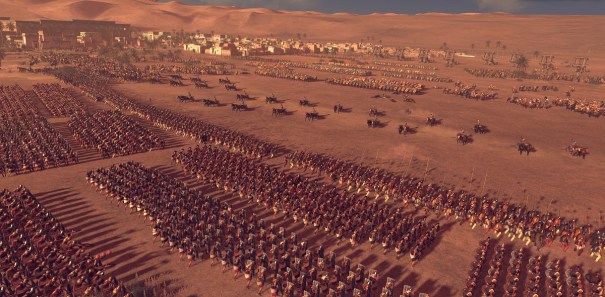 This harsh, arid desert environment is precisely where Jesus fought the first of his temptations recorded in the Gospel story. It was right after he was baptized in the cooling waters of the Jordan that the spirit led him into the desert. We read that he fasted forty days and forty nights—and the number forty, especially when it is mentioned together with fasting, corresponds to temptation. The Children of Israel wandered forty years in the desert before they could enter the Holy Land. And Moses twice fasted forty days and forty nights on Mt. Sinai when receiving the Ten Commandments and all the accompanying laws.


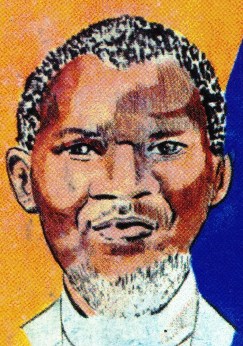 As the Africans surpass all others in interior judgment, I have talked with them on matters requiring rather deep consideration, and recently on God, on the Lord the Redeemer, and on the interior and exterior man; and since they derived great pleasure from that conversation, I will here mention what their perceptions were from their interior sight on these three subjects. (Emanuel Swedenborg, True Christian Religion §837)

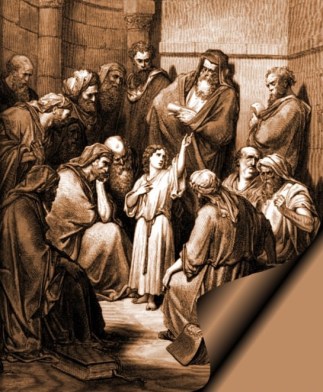 The story of Jesus as a boy at the Temple in





 In the previous post, I responded to the question “