In the course of a discussion on the recent article, “How Imagination and Fantasy Help our Spiritual Growth,” a reader named Frankly Frank said:
“And hell is not a punishment”…….
I dunno about that one, Lee.
There are vivid accounts from Swedenborg where in one example he describes IIRC two angels holding a hell detainee off the ground by the head and feet and then “twirling” them back and forth repeatedly in opposite directions so that their spine felt like it was being torn apart. Yeah, I think that could be called “punishment” but if it isn’t I’d hate to see what qualifies. (lol?).
I don’t see how a spade here isn’t a spade. And I don’t see how one honestly could interpret that it’s actually God’s love and not punishment in that particular scenario as an easy way out to explain it either. Bottomline hell is inherently a PRISON. Aren’t prisons defacto punishment?
Frankly Frank was responding to something I had said in an earlier comment. You can read the whole comment thread starting here.

“El Chapo” inside the Altiplano maximum security prison
Yes, hell is a type of prison. And yes, there are punishments in hell.
But as I had said in previous comments, the main purpose of hell is not to punish evildoers, but rather to provide them with a place where they can live in the way that they want to live—or at least, as much as that’s possible given the self-defeating nature of their desires and actions.
This post is an edited and expanded version of my own long comment in response to Frankly Frank’s statement and question above.
TL;DR: Even if prison is a punishment, and even if there are punishments in hell, both prison and hell are more about protecting the innocent from being victimized than they are about punishing criminals. There’s no other way to effectively accomplish this, because hardened criminals are going to victimize innocent people if they are allowed access to them. And yet, pragmatically speaking, prison and hell really are the choice of those who go there.
Now let’s look at all that twisting, twirling, pain, and punishment.
A graphic description of a punishment in the spiritual world
About that rather nasty sounding punishment, I presume you’re referring to what Emanuel Swedenborg (1688–1772) wrote in Spiritual Experiences #1696:
There is a punishment, which I saw—and I was grieved at seeing it (I did not know who it was). In front of the spirits he has distressed and offended, he is stretched out horizontally and rolled like a scroll from the left to the right, quite rapidly, then across in a different position, and so on, in almost every position, so that he is seen by all. Sometimes he is half-naked, dressed in clothes with which he tries to cover himself up, because he had been of that character in life. Thus he is turned in a horizontal position toward many quarters, being rolled around with the spirits looking on, and in this manner he is made to feel shame—evident from the fact that he does not want to be stripped of clothing.
He is likewise rolled around in another way, namely, head over heels, thus in a manner as when the axis is revolved not along the axis but crosswise to the axis. Then again, he is also rolled horizontally both to the right side and to the left, and then—and this is painful—to the right, like an axle being restrained. For two forces are in action, one turning around, the other going counter to it, being thus held back from the direction it is turning. This causes a pulling apart, and thus pain, due to the action of two forces while turning in one direction. The punishment develops from his defect and its fantasy and is a result of it, thus it comes from the defect and images it, which is amazing.
First, it’s necessary to understand that Spiritual Experiences is more of a journal than a finished work. It was not something Swedenborg planned to publish—though he did draw on the material in it for his published works. Spiritual Experiences was written over a period of two decades, from 1745 to 1765, and left in manuscript. The earlier parts were written while Swedenborg was still getting his bearings in the spiritual world, when he did not yet fully understand what he was seeing and hearing there.
Spiritual Experiences has to be read with this in mind, and with some caution about drawing hard-and-fast conclusions based on what is written there. Don’t get me wrong. There’s a lot of fantastic and fascinating material in Spiritual Experiences! It just needs to be read in light of Swedenborg’s later, published works, where he writes with more experience under his belt and a better understanding of what it all means.
About that particular description in Spiritual Experiences #1696, although angels are mentioned in the previous section, they are not mentioned in connection with the punishment itself. And the following section makes it pretty clear that it is spirits, not angels, who are doing the monitoring and punishing. (You can read the sections before and after by clicking the “previous” and “next” buttons at the above link.)
“Spirits” here could mean fairly recent arrivals in the spiritual world who are still living in the “world of spirits” (the intermediate region between heaven and hell), and have not yet gone to their final homes in heaven or hell. Or it could mean evil spirits.
Who does the punishing in the spiritual world?
Once again, in the earlier parts of Spiritual Experiences, Swedenborg had not completely gotten his bearings in the spiritual world, so it’s not always clear exactly what he’s talking about. In his later works he usually identifies punishing spirits as evil spirits. He does, however, sometimes mention good but strict spirits who punish wrongdoers in the world of spirits in an effort to reform them. The punishers in Spiritual Experiences #1696 could have been this type of spirit.
Angels are capable of inflicting pain upon evil spirits who manage to venture up into heaven for less than noble purposes. But they do this more to protect themselves and scare the evil spirits away than to punish them. Angels have no desire to inflict pain on anyone. And in general, the pain is the result of the heavenly aura of love and truth that surrounds angels hitting the hellish aura of hatred and falsity that surrounds evil spirits, and inflicting pain due to the extreme dissonance of that collision of opposites. This is how angels protect themselves from being harmed by evil spirits.
In hell itself, punishments are not meted out by angels, but by other evil spirits. Evil spirits enjoy inflicting pain on others, and are always looking for an opportunity to do so. They get that opportunity when someone does something evil, which opens them up to retribution and punishment. And since evil spirits in hell love to do evil, and are always doing it whenever they can, there are indeed many punishments in hell.
If angels are involved at all, it is not to inflict punishment, but rather to stop evil spirits from getting completely out of bounds in the punishment and pain they inflict upon one another. The angels whose job is to serve as “prison guards” in hell are there primarily as a moderating influence, to keep the usual clash and conflict of hell from breaking out into an uncontrolled riot and conflagration.
For habitual wrongoers, pain and punishment is inevitable
So yes, there are punishments in hell. And no, the evil spirits in hell do not like everything about their existence. What criminal wouldn’t love to engage in a continuous life of crime without ever having to get arrested and imprisoned, or whacked by a competing crime ring, or suffer any negative consequences whatsoever?
Unfortunately, that’s just not how life works.
And even though criminals may not think of themselves as choosing to be in prison, consider this: When hardened criminals get out of prison, they regularly re-offend, committing the same crimes as before, and landing themselves right back in prison.
What would you call this?
In effect, they are choosing the punishment by choosing to commit the crimes. There is no reality in which people could commit all sorts of evil and criminal actions with no consequences. Any society that allowed this to happen would rapidly destroy itself. Nothing would be left but bodies in the streets.
Evil always has consequences, whether or not we experience them right away.
In short, when we choose the evil, we choose the whole package.
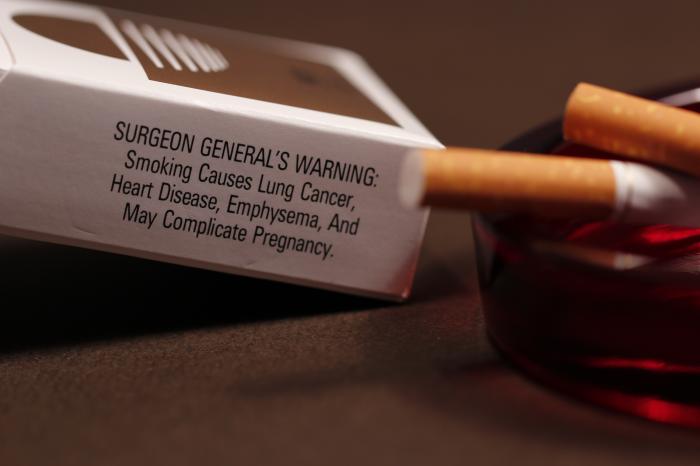
Surgeon General’s Warning
Every time smokers buy a pack of cigarettes in the United States, they also buy the Surgeon General’s Warning on the side of the package. Many other countries require similar warnings.
Does it stop people from smoking?
Nope.
Regular smokers ignore the warning and light up anyway, knowing very well that their smoking will most likely lead to a slow and painful death down the road.
You simply cannot do damaging and destructive things without causing damage and destruction. Evil is evil precisely because it is damaging and destructive. So when we choose evil, we are also choosing its consequences: pain, suffering, punishment, and misery.
These consequences may come immediately or they may come many years later.
But they will come.
And we know it—even if we ignore it and try to fool ourselves about it.
Evil people go to hell by their own choice
There’s really no excuse for the evil spirits in hell. You don’t get to hell unless you consciously and intentionally choose evil over good, knowing full well that it is evil, and knowing very well that bad things will happen as a result of this type of behavior.
No criminal is stupid enough not to realize that if he or she gets caught, there will be very unpleasant consequences such as prison, serious physical injury, or death. In fact, in countries that have a reasonably humane justice system, getting caught by the police and put in jail is generally preferable to getting brutalized or killed by the wrong victim who comes back for revenge.
Criminals make their choices knowing the risks. And the reality is that if you continue to act in an evil and criminal way, sooner or later those risks are going to become a reality. It’s just a matter of time.
So we can cry all we want for the evil spirits in hell. But nobody goes to hell without having chosen that life. Unlike in the material world where governments and courts are often corrupt, there are no miscarriages of justice in the spiritual world. No one goes to hell through a divine clerical error, nor does anyone get off on a legal technicality. The people who go to hell are those who knowingly and intentionally choose an evil life, being well aware of the implications and consequences of their choices, and having the ability to make a better choice if they so desired.
The “Baretta” theme song, by El Chicano:
“Don’t do the crime if you can’t do the time”
Truly evil people enjoy their evil actions
Although there are some people who veer off into a destructive and criminal life due to a completely screwed-up childhood or a damaged and malfunctioning brain, there are others who could very well have done something else, but who chose a life of crime because they liked that idea better doing an honest day’s work for an honest day’s pay.
Some criminals enjoy their life of crime. They aren’t criminals due to a mental illness or a shockingly bad childhood. (People who do horrible things due to forces beyond their control do not go to hell.) They are criminals because they truly enjoy gaining pleasure, money, and power for themselves at others’ expense.
- Have you ever heard about a rapist who enjoys raping women (or men)?
- Have you ever heard about a thief who enjoys stealing?
- Have you ever heard about a hit man who enjoys knocking people off?
- Have you ever heard about an embezzler who enjoys skimming off as much money as possible?
These are the people who end out in hell.
And once they have made these choices and hardened themselves into a life in which they get their pleasure from inflicting pain and loss on others, there is no turning back—especially once they reach the spiritual world. It’s not that they aren’t allowed to leave hell. It’s that they have no desire whatsoever to do so. They sneer at good-hearted spirits and angels who try to remonstrate with them. And if they could, they would treat them exactly as the robbers treated the man who was later helped by a Samaritan:
A man was going down from Jerusalem to Jericho, when he was attacked by robbers. They stripped him of his clothes, beat him, and went away, leaving him half dead. (Luke 10:30)
They would do this because that’s the sort of thing they enjoy doing to anyone unfortunate enough to fall into their clutches. (But in the spiritual world, God protects angels and good spirits from them.)
This is also what Jesus was talking about when he said:
Do not give dogs what is sacred; do not throw your pearls to pigs. If you do, they may trample them under their feet, and turn and tear you to pieces. (Matthew 7:6)
Punishment is not the purpose of hell
So are there punishments in hell?
Yes there are.
But is punishment the purpose of hell?
No it isn’t.
The punishments in hell are simply an unavoidable consequence of the evil choices and actions of the people who live there. And those punishments are not inflicted upon them by angels, still less by God, but by their fellow evil spirits.
God does not want to punish anyone. And in fact, God doesn’t punish anyone, nor does God send anyone to hell, despite appearance to the contrary. Rather, God allows hell to exist so that people who have chosen evil will have somewhere to live that fits the motives and character they have chosen for themselves.
The purpose of hell is also to protect the innocent. We’ll get to that in a moment.
Do evil spirits really choose hell?
Could evil spirits get out of hell?
Theoretically, yes. No one is forcing them to be there. Not in an ultimate sense.
But in order to get out, they would have to make a different choice. They would have to choose to live from love, truth, and goodness rather than from hatred, falsity, and evil. And they have exactly zero interest in making such a change in themselves.
Technically speaking, they don’t “choose” to be in the prison of hell any more than technically speaking, criminals on earth “choose” to be in prison. They would rather be out wreaking havoc on good and innocent people.
But practically speaking, both criminals on earth and evil spirits in the spiritual world do choose to be in prison, or in hell. They choose to live in such a way that prison, or hell, is the only place they can live long-term. This is simply a reality because no society that failed to isolate and contain its hardened criminals could survive, let alone thrive. Not even the society of heaven.
So whatever the abstractions and technicalities may be, the pragmatic reality is that ultimately, choosing evil means choosing prison—if not here on earth, then certainly in the afterlife.
Another pragmatic reality is that in the afterlife, it’s not long before people who have chosen evil simply can’t stand to live anywhere else but in hell. If they try to stay anywhere else for very long, they begin to experience excruciating pain, they start to suffocate, and they feel as if they’re going to die. So they fling themselves back into their own home in hell, where they can breathe freely again.
Jesus described the same phenomenon in figurative language when he said:
I saw Satan fall like lightning from heaven. (Luke 10:18)
(About Satan, please see: Is there Really a Devil? Why??)
In the spiritual world, people who love evil cannot breathe in the atmosphere of heaven, where everything reeks of goodness and love.
The primary purpose of prison and hell
Yes, prisons are “de facto punishment.” But the primary purpose of prisons isn’t punishment. That is a secondary purpose. Prisons exist primarily to protect the innocent from the guilty.
We cannot let murderers, rapists, thieves, embezzlers, and so on wander around scot-free. If we do, they will kill, rape, steal, and embezzle away, and cause massive damage to many innocent people.
In some societies, people who engage in terribly damaging behavior receive the death penalty, not only as a punishment and a deterrent to others, but to ensure that they never harm another innocent person again.
Other societies have decided that the death penalty is unacceptable.
How can these societies prevent hardened criminals from hurting more and more innocent people?
Life in prison without the possibility of parole is the only other foolproof option. That’s because as soon as you let hardened criminals out of prison, they will immediately start looking for opportunities to get back into their old life of crime, and will once again start victimizing people. It’s what they do.
Of course, some people who go to prison do think better of their actions, and begin a new life when they get out.
But the people in hell are not casual offenders, nor are they about to think better of their actions. They are hardened criminals. And in hell there can be no death penalty because everyone is already dead.
If they were willing to live in such a way that they did not endanger and victimize innocent people, they could walk right out of hell. In fact, many of them are allowed to walk right out of hell, especially in the early stages.
Unfortunately, as soon as they do, they start victimizing people. This brings the inevitable consequences of excruciating punishment and pain, as described in Spiritual Experiences #1696 and elsewhere in Swedenborg’s writings. And then they throw themselves back into hell in order to escape that pain and get back into an atmosphere where they can breathe freely.
Evil spirits choose hell by their actions
So do evil spirits choose to be in prison?
In a word: Yes.
They choose to be in prison by their actions, just as criminals on earth choose to be in prison by their actions. They know the law. They know that if they’re caught they’ll end out in prison, or worse. And they go ahead and do it anyway.
Isn’t that, in all practical reality, choosing to be punished, and choosing to be in prison?
And if you don’t believe me, take a listen to this: “Don’t Do the Crime,” performed by Kam feat, Above the Law, from True Crime: Streets of LA: The Soundtrack.
Warning: contains seriously foul and disturbing language
For further reading:
- Is There Really a Hell? What is it Like?
- If You Think You’re Going to Hell, Please Read This First
- Can Gang Members Go to Heaven? (Is Life Fair?)
- How Can a Criminal Get to Heaven?
- Spiritual Growth 101 with Mike Tyson: “The Virtue of Selfishness”
- What Happens To Us When We Die?
Share this:


Lee Woofenden is an ordained minister, writer, editor, translator, and teacher. He enjoys taking spiritual insights from the Bible and the writings of Emanuel Swedenborg and putting them into plain English as guides for everyday life.



Wondering if there’s sleep in hell. And if so are dreams in hell only nightmares? (lol?)
‘Cause I gotta tell ya some of the happiest sojourns in this life IMO is having a great dream. I could sleep for a million years right now, wake up once in a while, streeeeeetch, go back to sleep for another 200,000 years or so, and dream on. I could take that for heaven even. 🙂
Frankly Frank
Hi Frankly Frank,
Yes, people in the spiritual world sleep just as people on earth do. And I presume they also dream just as we do. And I bet the ones in hell have some epic nightmares, too! And that the angels have some amazingly good dreams. And it wouldn’t surprise me if evil spirits have some good dreams also, and angels an occasional nightmare.
I’ve often thought of dreams as sort of like being in a spiritual movie theater. It’s not real life in the spiritual world. But it’s a holographic theatrical production of themes running through our deeper mind. And psychologists who study sleep and dreams tell us that dreams help us to stay mentally balanced and healthy. Why wouldn’t that continue in the spiritual world?
So I think you can look forward to some great dreams in the spiritual world. Not so sure about sleeping all the time, though! 😛
Why would you have nightmares in Heaven? Isn’t Heaven supposed to be pure bliss?
Hi Ray,
Heaven is pretty epic. But it’s not pure bliss. It is made up of ordinary good-hearted people. They’ve been scrubbed up a bit to get rid of any external masks or habits that don’t match what’s inside. Still, what’s inside is a good but imperfect person.
Even in heaven, people are always growing in love and understanding, and always banishing remaining parts of themselves that don’t measure up to their best ideals. Angels are always moving toward God. Since God is infinite, that journey will never end.
This means that angels do still have a “shadow,” to use modern psychological terms. The shadow is never going to win in the end, but it can still cause angels some times of being down. I don’t think angels will have the horrific nightmares that people on earth sometimes have. But they could certainly have bad dreams.
After all, angels are still imperfect humans, and they still have remaining negative parts hidden in their character that must be brought out, confronted, and defeated. They’ll never lose those battles in the long run. They won’t be the life-or-death struggles that we face here on earth. But angels do still have work to do, even if the burden may be easy and the yoke light.
I thought the spirit world was for us to get rid of our imperfections? Do angels ever fully get rid of their imperfections?
Hi Ray,
Only God is perfect. No human being can ever be perfect. We can always be moving toward perfection, but we will never reach perfection, because that would mean becoming God. And there is only one God.
However, being imperfect does not mean being bad. There is a false idea floating around traditional Christianity that God requires us to be perfect, and cannot tolerate imperfection in heaven. This is false.
Would you scrap a car if there were a chip in its paint? What about if the steering wheel had just a little bit of play? How about if there is a small slit in the upholstery?
We continue to drive our cars even after they’ve lost their new car smell. And they work just fine.
God is just as reasonable as we are, and much more so. God doesn’t require us to be perfect. God only requires us to love God more than we love ourselves, and love our neighbor as ourselves. That leaves a lot of room to sometimes get things wrong, and then do the work of correcting it.
So what does it mean to be imperfect vs being bad, and don’t atheists end up in Heaven even though they don’t love or believe in God?
Hi Ray,
To use the automobile example, if you have to slam the car door to get it to latch, it’s imperfect, but it’s not bad. It still works. It just doesn’t work as well as it should.
To use a human example, if a father had two sons who were engaged in a physical fight with each other, and he intervened and broke up the fight, but in doing so was a little rougher with the boys than he really had to be, it’s imperfect, but it’s not bad. Perhaps he could have handled it a little better than he did. But he still did the job he had to do as the boys’ father. His action was good, but imperfect.
As covered in my article “Do Atheists Go to Heaven?” yes, atheists can and do go to heaven if they at least follow the second Great Commandment, which is to love their neighbor as themselves.
In the Parable of the Sheep and the Goats in Matthew 25:31–46, Jesus tells us that people who have done good deeds for their fellow human beings have done it for him. In other words, our real treatment of God is shown by our actions.
Jesus also said, “Not everyone who says to me, ‘Lord, Lord,’ will enter the kingdom of heaven, but only the one who does the will of my Father who is in heaven” (Matthew 7:21). Same idea.
Atheists who don’t intellectually believe in God, but who live according to God’s basic commandments anyway in accordance with their own conscience, do believe in God in their heart, even if they don’t believe in God in their head. In the afterlife their head will join their heart. They will come to believe in God, realizing that God is the source of all the good things they had believed in and lived out during their lifetime on earth.
So if we still deal with imperfections, what’s the point of the spirit world?
Hi Ray,
If we ever did reach perfection, what more would there be for us to accomplish?
I don’t know. It just seems like the spirit world is pointless then. I mean once we are there, haven’t we already chosen out destination even if we haven’t realized yet?
Hi Ray,
I presume you’re not perfect now. Does that mean your life is pointless?
I have been eavesdropping on this conversation. I think what Ray is saying is something along the lines of what Aristotle and Scholastics after him (e.g. Thomas Aquinas) said regarding the infinite regress (only in this case its pro-gress), namely that meaning begins to fade if something does not terminate in its end/goal/purpose and is akin to it having no end, goal, purpose, etc. So if we are endlessly progressing toward an end (perfection) it is the same as not progressing at all. I am persuaded by this argument; that is, while I think progress certainly continues in the afterlife, that one can never reach perfection would be contrary not only to tradition, but to reason as well.
Hi Duane,
Good to hear from you again. It’s been a while!
I am nowhere near as conversant with Aristotle and the Scholastics as you are. However:
On the first point, infinite regression is a problem because there is nothing to set the chain in motion. The mind rebels against the idea that existence had no starting point, such that there is no cause for what exists. That’s why Aristotle posited an “unmoved mover”—which, to a theist, is obviously God.
Unending progress has no such problem. Once the chain is set in motion by an original cause, there is no logical or conceptual reason it would have to stop at any particular point in the future.
Yes, there’s entropy. But that’s a law of the physical universe that is not binding if there is an infinite source of power—which, from a theistic point of view, is once again God. The applicable law is the law of momentum or inertia, which says that a body in motion will continue to move in the same direction unless some outside force turns or stops it.
The short version is that once something is started, there’s no inherent problem in it never stopping.
Another way of saying this is that the universe is not temporally symmetrical. Going backwards in time is not the same as going forwards in time. For any given (created) entity, there must be a beginning in time, but there doesn’t have to be an ending in time.
On the second point, God resolves both of these issues because:
The second point means that our progress is not aimless, without goal or purpose. There is a definite goal and purpose toward which we are moving.
The fact that we never reach that goal, which is perfection or God, does not vitiate the journey toward it. In fact, it gives that journey never-ending purpose.
Consider, for example, the goal of gaining in knowledge and understanding in any field. Does always having further questions to answer vitiate the goal of the seeker of knowledge? No. It enhances it. If, at some point in the future, the seeker of knowledge were to acquire all possible knowledge, suddenly the entire enterprise would stop. There would be nothing more to learn, nothing more to seek, nothing more to achieve.
Despite silly suppositions by various philosophers and scientists over the years that we are “just about to have a theory of everything,” and then all that’s left will be some mop-up, the reality has been that every time we achieve a major breakthrough in science or philosophy, the result is not fewer questions to answer, but more questions to answer. Every indication has always been that we will never achieve a complete understanding of the universe we live in; that there will always be more for us to learn, and greater questions for us to answer.
Meanwhile, on the ground, ordinary people can have continuing purpose by continually engaging in acts of love and service toward their fellow human beings. There is no end point to this either. We are learning, growing, living beings. We never run out of the need for inputs such as food, water, and clothing on the physical level, and knowledge, understanding, love, and human closeness on the spiritual level. We will never run out of things to do for each other. This will keep ordinary non-philosophers busy and happy to eternity, also.
No I meant the part of the spirit world you go to after you die before you go to Heaven or Hell.
Hi Ray,
“The world of spirits” is what Swedenborg calls the place between heaven and hell where people go right after they die. People live there until they are prepared for their permanent home in either heaven or hell. In Heaven and Hell #426 Swedenborg says:
“The world of spirits” is distinct from “the spiritual world,” which refers to the entire spiritual realm, including heaven, the world of spirits, and hell.
Hi Lee. See, I thought the point of the world of spirits was for those that are Heaven bound to get rid of their own perfections for when they enter Heaven. Yet, it sounds like they are still getting rid of their imperfections in Heaven, so that’s where I am confused.
Hi Ray,
The world of spirits is where people get rid of any outward personas and appearances that do not match their true inner character, which is determined by their ruling love. “Ruling love” means what we love and value most of all, which will be within one of the categories of love of God, love of other people, love of worldly things, and love of self.
This is not the same as getting rid of imperfections. Even if our ruling love is love of God, we do not love God perfectly, but imperfectly, with limitations. If that is our ruling love when we enter heaven, we will never stop loving God, because that is what moves and motivates us. But we also will still have plenty of room to grow in loving God better and more deeply.
As a more concrete example from this earth, let’s say a man has decided he’s going to leave behind all of his other ideas of how to make a living, and focus on being an automobile mechanic. He had thought maybe he would be a musician or a plumber or a taxi driver, but now he’s decided to focus his working life on fixing cars.
Just because he’s no longer doing other things for a living, that doesn’t mean he’s a perfect auto mechanic. He may be fairly good, but he still has a lot to learn. Sometimes he may not do as good a job on a particular repair is he would if he had more knowledge and experience. But as he fixes more and more cars of various makes and models that have various mechanical and electrical problems, he gets better and better at it.
Does he ever become a perfect auto mechanic? No. But he keeps getting better and better at it, so that the repairs he does now are better than the ones he did when he was first starting out.
That’s what our life is like in heaven. We’re always getting better at what we do, but we never reach perfection. Rather, we are always moving toward perfection, which is God.
Do people in heaven dream? Do they dream of the people they love who are in hell?
Would that be a nightmare?
Hi Rob,
Yes, people in heaven dream. But the memory of those whom they had loved on earth but who chose hell instead of heaven fades away over time. Angels are not focused on their past life and relationships, but on their present life and relationships.
Hi Lee,
Hope you’re doing well! I have been rereading some of your posts. Do you have one where you definitely say “how” to get to heaven?
Best to you and thanks for everything !
Duane
Hi Duane,
Thanks! Good to hear from you. Hope all is well with you and yours as well.
About your question, try this article on for size:
What does Jesus Mean when He Says we Must be Born Again?
Hi Lee. If Hell so not a punishment then why are so many people devoid of what makes them happy. For example, Swedenborg mentions an example of vile prostitutes who can no longer feel any stimulus from sexual intercourse. Well, isn’t that what gives a prostitute (that willingly chooses that lifestyle) pleasure and joy? So if they lose the ability to have pleasure from sex what’s left for them to enjoy? In another part, he talks humans eating excrement and complaining about it. Then, in other places, he talks about people enjoying Hell cause they can indulge in their sickest pleasures within reason.
Hi Ray,
Prostitutes don’t get their pleasure from the sexual intercourse they engage in. For them, that’s just a job. If they happen to enjoy it (which I doubt most of them do), that’s purely icing on the cake. What they’re interested in is the money they get in exchange for giving their clients sexual pleasure and release.
And yes, hell is a gross place. So are some places on earth. Life in hell has its pleasures, but that doesn’t mean it’s a pleasant place to live.
Hi Lee. I guess when we read what Swedenborg wrote, we shouldn’t assume that is the whole life of that individual spirit especially in Hell. It was just what they were doing (likely being punished for harming others) at the time. But Swedenborg gave us a a full picture of a spirits life in Heaven since he met and talked and visited their homes. He didn’t visit anyone’s home in Hell, he just saw what life was like in general for them as a result of their disgusting pleasures
Hi Ray,
Swedenborg did visit towns and enter various buildings in hell. I don’t think he spent as much time in hell as he did in heaven, but he still got a pretty good idea of how people live in hell. But once again, the spiritual world is a huge place. Even three decades is not enough time to explore all of its nooks and crannies. And much of Swedenborg’s time in those years was spent on intensive Bible study and exegesis, not to mention writing Christian theology. He could not devote all his time to exploring the spiritual world.
Having said that, his account is still by far the most detailed first-person account of the spiritual world that we have. Even if it couldn’t possibly describe every area and aspect of the spiritual world, it gives us the best picture we can hope for while still living in the material world.
He Lee. I finally get it. See, what confused me was people having what seemed like such a miserable existence in Hell, so I was wondering why they would want to stay. However, as you pointed out, it is likely that even those Swedenborg saw in torment at the moment likely had moments of pleasure and gratification, and were in the midst of being punished. The story of the woman eating excrement reminded me of some of the tortures others have claimed to see in Hell when they visited during near death experiences.
Hi Ray,
Yes, sounds like you’ve gotten it.
Hi Lee, God bless you. I can’t remember if you have ever answered this question before, but I feel like I’ve read it on here: do those in Hell know there is a God? If not, do they know they are in Hell?
Hi Duane,
Good to hear from you, my friend. It’s been a while!
In answer to your question, the evil spirits in hell both know and don’t know that there is a God, and that they are in hell. When they are consumed with their evil cravings and desires, their thinking is distorted, and they can think and believe that there is no God, and that they are just living an ordinary life. But they also have times of rationality when they do recognize that there is a God (whom they hate) and that they are in fact miserable slaves in hell.
Evil and falsity have the quality that they are fickle and alternating. The fantasy that what is evil and false are actually good and true (which is how evil spirits, and evil people, think and feel) cannot be maintained steadily. There are cracks in it, through which the light of heaven occasionally shines through, breaking the illusion and showing the true nature of things. But because evil spirits and evil people love their particular evil desires and activities, and the falsities of illusion that go with them, they close off those cracks as quickly as they can so that they can return to the illusory (but real to them) life that they want to live.
It is a common feature of Swedenborg’s discussions with evil spirits from hell that the evil spirits have moments of clarity in which they can accurately describe their own sorry state. But they love that state so much that they always return to it, despite all its unpleasant side-effects.
Thank you. Ok, this is what I had sort of assumed. But what about their continuity? Do they remember dying , their life on earth….how do they think they got there, that is, to the afterlife? Or are you saying they are so consumed with lusts of the lower sort that rationality and temporality are almost completely distorted?
Hi Duane,
For both angels and evil spirits, the active memory of earthly things tends to fade over time. However, it is still all there, perfectly recorded, if there is any reason or desire to recall it. Mostly, both angels and evil spirits are absorbed in their current life. But they do have the ability to remember such things as their earthly life, their death and resurrection into the spiritual world, their experiences in the world of spirits, and so on. It’s just that most of the time they’re not very interested in those things.
H Lee. I’ve been getting messages from Duane and it got me thinking that what if they can’t let go of their life on Earth. What if they’re only desire post death, good or bad, is to live a life like that they never died to begin with.
Hi Ray,
There are “earthbound spirits” that very much want to be back on earth. If hauntings are real, then these are the spirits that haunt people and places on earth. However, they cannot do this forever. Once their time in the world of spirits is over, they go to their eternal homes in hell—probably one of the milder hells—and they can no longer directly access the material world. The world of spirits is the part of the spiritual world most closely connected with the material world. Once a spirit goes to either heaven or hell, although direct contact with the material world is possible, this is mostly with the spirits of people living in the material world, and it is almost always an unconscious connection.
In short, spirits cannot hang around their old haunts on earth forever, no matter how much they might want to.
Hi Lee. Another thing i want to comment on is spirits forgetting or not thinking about their time on Earth. Our experiences on Earth influence our decisions. You think about the activity you want to do before you do it, but if you don’t care to recall your Earthly life what motivates you to do the activities you do in either Heaven or Hell that you did while alive?
Hi Ray,
You’re still the same person after you die as before you die. You still have all the same loves and desires, and all the same ideas and beliefs that you did here on earth. In particular, your ruling love, meaning the core motivation of your life, is still the same. In fact, once we die, that never changes to eternity. And that is what motivates us to do everything we do, both here on earth and forever in the spiritual world after we die.
Hi Lee. So, we act on instinct then and don’t really think about what we want to do before we do it. I believe we have other loves that are subordinate to our ruling love as well if I am not mistaken?
Hi Ray,
We act exactly the same way we do here. We are exactly the same person, only any outer parts that didn’t match our true inner self are stripped away.
Lee re: this context and question. I get the idea that we become what we love and want, but isn’t the human being more complicated than simply what we want? Like Paul says, sometimes, the good we want we dont really want (and cant do) and vice-versa. I know I myself have conflicting desires — I love God and Jesus, but I also do wrong things sometimes (presumably because I wanted to!– momentarily when not thinking). How does this get sorted?
Hi Duane,
Here on earth we are still an often unstable mixture of good and evil. That’s because we’re still making up our minds exactly who we want to be. Once we die and move permanently to the spiritual world, the decision has been made. At that point, anything that conflicts with our “ruling love,” or primary motivation in life, is pushed to the side (not obliterated) and ceases to be an active part of our day-to-day life. We’re still not perfect (or perfectly evil), but our direction in life is clear, and we follow that direction without all the inner conflicts and complications that Paul and others lament. When something comes up that conflicts with our ruling love, we deal with it and sideline it. This is the ongoing process of regeneration that continues to eternity even for people who make their home in heaven.
Ok then is it fair to say that”hell” isn’t really “hell” to those who want to be there; heaven would be hell to them and thus vice versa?
Hi Duane,
Everything in hell is an upside-down and distorted version of what’s in heaven. For the people in hell, evil is good and good is evil; truth is falsity and falsity is truth; hell is heaven and heaven is hell.
However, this is not to say that objectively, hell is just the same for its inhabitants as heaven is for its inhabitants. In heaven, everyone’s joy and pleasure adds to everyone else’s joy and pleasure. In hell, everyone’s joy and pleasure subtracts from everyone else’s joy and pleasure. This is just one of the distinct differences between heaven and hell.
Hi Lee. That’s only if other people target other people in a cruel way though. From what I understand, evil spirits are only allowed to give back what they dish out and if they go any further, that is when angels from Heaven descend to break it up for lack of a better word.
For example if one evil spirit punches another, then they can only be punched once, but if they punch them a second time, then the angels descend to stop them.
So, theoretically speaking, if evil spirits didn’t physically harm each other or they consented to physical harm, then Hell wouldn’t be so bad. But because evil spirits can attack each other on a whim, that’s why Hell is horrible for them.
Hi Ray,
My sense is that it’s not a matter of if someone punches you once, you can only punch them once in return or angels will intervene. Rather, angels intervene when things start getting out of hand.
If a couple of evil spirits get into a fist fight (which is probably quite common), it will go pretty much like such fights go here on earth. They’ll have at it with each other until one of them wins and the other loses. And they’ll likely both get quite a drubbing. They’re not going to limit themselves to one punch for each punch the other one throws. That would be completely unnatural.
However, if the winner of the fight then begins to slice and dice the loser while he’s lying there unconscious on the ground, that’s when angels would intervene. That would go far beyond any reasonable response to the provocations that they threw at each other that led to the fight in the first place.
Even this is not all that different from how such things work here on earth. In schoolyard fights, other kids will crowd around to watch the fight. But if one of the combatants goes down, and the other starts pounding away at him and doing serious damage, the other kids are likely to pull him off. Similarly, if there’s a fight in prison, the guards may or may not wade in and shut it down, depending on how serious it is and how corrupt the the prison is. But if it escalates into a riot, the guards will definitely intervene.
Remember, people in the afterlife are the very same people that live here on earth, and they engage in many of the very same things that people do here, both in heaven and in hell.
Hi Lee. I wonder if an evil spirit has had enough and surrenders if the other evil spirit would still keep beating or does the other one have to be bloodied and broken. Also, there are sadomasochists who get off on hurting others and getting hurt back. How would that work in the world of spirits?
Hi Ray,
Every situation is different. The main point is that evil spirits can beat on each other if they want, but they can’t get out of control, or angels will step in and restore order. As for sadomasochists, if people enjoy being hurt, then there will be no shortage of people wanting to hurt them, and vice versa. There as in many places here, if there is mutual consent there’s generally not a problem.
I have made up my mind to not believe that hell is how you or Swedenborg describe it.
But I do believe there are different degrees of punishment in hell, positively correlated with how bad evil the damned have done, and negatively correlated with the knowledge the damned had, like knowledge of the law or knowledge of God’s character, and also less severe for the mentally disabled for a given degree of sinfulness and evil.
AND there are different degrees of rewards in Heaven, positively correlated with the degree of good works the deceased have done.
Hi World Questioner,
Well then, that’s progress! 🙂
We should do what’s right at all costs, even at the cost of perishing in hell for all eternity. Jesus would not do evil, even if it rewarded him eternal Heaven. He would do what’s right, even if it cost him eternal hell. Just hypothetically.
That’s an example of two things. One is standing firm – standing up to evil for what’s right. The other is selflessness by self-sacrifice.
Thoughts?
Hi World Questioner,
There is no possibility of perishing in hell far all eternity because we did right. Only if we intentionally and selfishly do wrong.
What I would say instead is that we should do right even if we see no benefit in it for ourselves, and even if we believe we are about to be destroyed, either physically or spiritually. Coming to that point of despair is the deepest kind of “temptation,” or spiritual trial, that we humans face. If we do the right thing even when all seems to be lost for us, and we feel that there will be no benefit whatsoever for ourselves in doing what is right instead of doing what is wrong, then we are truly dedicated to what is good and right for their own sake.
That is the true test of the measure of a human being and of an angel.
What I mean is, it’s not about the rewards. It’s not about avoiding punishment. It’s about being good, caring about others, caring about the world, caring for what’s right, doing what’s right simply because it’s right.
Am I right?
Hi World Questioner,
Sounds good to me! 🙂
What if a total evildoer, as evil as Ganondorf, Palpatine, Dormammu, and Sauron or worse, the Devil, turned and truly repented radically, and felt remorse as painful as hell? Then he wouldn’t need to perish in hell, because he’s getting the same anguish from remorse and guilt, which is just as painful as burning in hell. The remorse and guilt is burning him!
If a sentient being felt remorse so strong that he is lethally heartbroken, heart doesn’t just break as in broken heart syndrome, his heart BURSTS! And in the process, he dies…
Hi World Questioner,
Repentance must happen during our earthly lifetime. If it causes us to die, then it’s likely it is not real repentance. Also, God does not require anguish from remorse and guilt except insofar as it prompts us to repent. Repentance is not about sorrow and guilt. It is about ceasing to do wrong and learning to do right. No amount of anguish and remorse amounts to repentance unless it leads to changed behavior.
That’s what I also meant. My hypothetical character would love to do kindness to others, and would love to change, and he truly wishes he never did evil. He truly is sorry.
Hi World Questioner,
That’s fine. But the acid test is whether he actually changes, and stops doing evil.
According to Swedenborg, people who repent in a state of fear that is common as death approaches will, once they realize they are still alive (albeit in the spiritual world) go right back to their old selfish and evil ways. The repentance was not real, as shown by their subsequent actions.
Repenting is not about avoiding punishment. It’s about changing simply because it’s right. It doesn’t matter what reward you get or what punishment you avoid. Doing good just because it’s what you love to do, not to avoid punishment or get a reward.
I will do what’s right if it damns me! That’s a more extreme form of the figure of speech “if it kills me.” You know what “damns” means, right? Is that slang ok according to your comments policy?
Hi World Questioner,
I agree that repenting is about changing simply because it is right. However, some people are motivated toward repentance by a fear of punishment. Sometimes we do the right thing for the wrong reason, and only later realize what the right reason is. That’s part of how God moves us step by step from where we are now to where God is leading us.
On your second part, I would say that doing the right thing even if it looks like it will be of no benefit to ourselves, and may even cause us injury or death, is a real dedication to doing good. Doing good only when we think it will benefit us may look good outwardly, but inwardly it is evil because it is self-serving.
My comments policy doesn’t forbid slang. It doesn’t even forbid swearing. Rather, it says that “Comments with inappropriate or insulting content will be deleted.” That purposely leaves some wiggle room. Sometimes it’s a judgment call. Besides, the word “damn” is not slang, nor is it a swear word, when it is used in its original meaning of “consign to hell.”
I will do what’s right if it condemns me!
Hi World Questioner,
Doing right might condemn you in some places and circumstances here on earth. But it will not condemn you in the spiritual world and in eternity.
“I would perish in hell for eternity for you!” Is an example. Is that true for Jesus Christ to us?
Hi World Questioner,
It’s a pure theoretical. That’s just not how it works. People do not go to hell for laying down their lives for their friends. But it’s a nice sentiment.
What I quoted is just an extreme version of “I would die for you.”
Can’t they tell hell apart from Earth? Do they even know they are awake in the spiritual world, not in the physical world?
What if they didn’t go to their old selfish and evil ways and just said “I’m just getting what I deserve”?
Hi World Questioner,
Most people do not go directly to heaven or hell after they die. Instead, they at first live in the region in between them, which Swedenborg calls “the world of spirits.” The world of spirits is very similar to earth in that it is a mixture of good and evil, and many recent arrivals who are living there still have an outward mask that is different from their true inner self.
This is why it’s so easy for people who have just died to think that they are still on earth, and go right back to the way they were living before.
What about Hebrews 9:27 – Just as it is appointed for man to die once, then face judgement? Does that mean that a person faces judgement immediately after they die once? That judgement comes next after death?
Hi World Questioner,
Of course, that’s how Swedenborgians read it. And the verse doesn’t say, “Just as people are destined to die once, sleep in the grave for a very long time, and after that to face judgment.” It certainly sounds like the writer thinks of judgment as happening right after death. Still, it doesn’t explicitly say that, so people who believe in a future last judgment can still hold onto their belief in reading this verse.
Oh! I forgot to mention. Hebrews is not in Swedenborg’s canon.
Hi World Questioner,
No. But Swedenborg does call the Acts and the Epistles “good books of the church.” I am happy to support true Christianity (what Swedenborg taught) based on the entire Protestant canon of the Bible. After all, it supports Swedenborg’s teachings, and does not support Protestant teachings.
Good books? Equivalent to Hasan Hadiths in Islam? Hasan is midway between sahih (sound, authentic) at one end and da if (weak) and mawdu (fabricated) at the other end. The deuteronical books would be weak, equivalent to da if hadiths, while the pseudepigrapha such as the Gospel of Thomas are fabricated, like mawdu hadiths. With diacritical marks, the categories are, in order from most to least valid, ṣaḥīḥ (sound, authentic), ḥasan (good), ḍaʿīf (weak), or mawḍūʿ (fabricated). The canon books equivalent to the first, the Acts and Epistles would be equivalent the second one, the deuterocanonical books to the third one, and the pseudepigrapha to the last one?
Oh! For reference, see https://infogalactic.com/info/Hadith_terminology#Hasan. Would the Acts and Epistles be equivalent to that?
Hi World Questioner,
Swedenborg’s distinction between the books that he says are part of the Word of God and the ones that aren’t, but are “good books of the church” (such as the Acts and the Epistles) is not about whether the text is more or less authentic. It’s about whether or not it has a continuous, connected spiritual meaning.
I wonder for those that are good at heart and in soul but don’t accept Jesus either because they belong to another religion or never grew up in an area that he was really that popular like, for example japan or India or China. What would the process for them be? I can’t imagine they would fit in with hell that much. Is this addressed in your other article about the processing/judgement area?
Hi Zachary,
Thanks for stopping by, and for your comment and question.
In response, good people who belong to other religions besides Christianity can go to heaven just as easily as Christians.
Contrary to popular belief, the Bible never says that non-Christians go to hell. In fact, if you read Romans 2:5–16 you will see that Paul talks about how non-Christians who live according to their conscience are saved through Jesus Christ.
For more on this, please see:
Is Jesus Christ the Only Way to Heaven?
There are a few more articles linked to the end of this one that you may also find helpful.
Meanwhile, Godspeed on your spiritual journey.
what do you make of people who did have a difficult childhood ..didnt have their emotional needs met were not able to thrive and develop in a healthy way then they grow into adults who are addicted to the vices and enjoy to have wealth and power at the expense of others who laugh with glee when they hurt others and look down on people who show goodness perceiving it as weakness
Hi Yas,
Thanks for stopping by, and for your comment and question. In response:
Life is complicated. There are no one-size-fits-all answers to questions like these. From the outside, we really can’t tell for sure what the inner spiritual state of another person is based on his or her outward actions and expressions. Some people outwardly appear like awful people, but as you say, they were just twisted by a terrible childhood, and haven’t managed to recover from it. Others look outwardly like wonderful people, but that’s just a front, behind which is a grasping, greedy, selfish person. We may think we know the inner state of another person, but that will become fully clear only when we move on to the next life, and all outward masks come off.
However, I also think it’s best not to give jerks and awful people a free pass. Plenty of people have a terrible childhood, and grow up to be good and even wonderful people. Even siblings in the same family, who grew up under the same circumstances, can turn out to be polar opposites as adults.
Once we reach adulthood, it’s time to stop blaming our parents for our character, and take responsibility for ourselves. Yes, people who had a bad childhood have two strokes against them. They can either use that to make excuses for themselves or they can pull up their pants and do the hard work of making something of themselves.
Giving people a free pass to act terribly because of the circumstances of their birth and childhood is a subtle way of disrespecting them. It is treating them as if they are not grown adults capable of taking charge of their own life. Sure, give ’em some slack. But also give them the respect of treating them like adults, not like children. Sometimes that means bringing them up short when they do things that we don’t tolerate in people who had a good upbringing, either. Holding people accountable for their behavior is the best way to create the conditions in which they may make the decision to do something better with their life.
Of course, it’s still 100% their decision. We can’t make the decision for them. And once again, even if they seem like terrible people, we can’t jump to the conclusion that this means they are going to hell. It is God’s job to judge, not ours. And God is both a just and merciful judge. If there’s even a technicality that can keep them out of “jail,” God will allow it. Only people who are bound and determined to be horrible people regardless of all efforts by God, the angels, and fellow human beings will make their own bed in hell.
For some related articles, please see:
thank you for your response Lee. You have made some very good points and offered a different perspective for me to ponder over and digest. Many blessings to you
Can angels in Heaven ever get imprisoned or subject to corporal punishment? I sure hope not, as that would make Heaven feel less free, and of course with increased pain sensitivity, corporal punishment would suck even more than in this corrupt world.
Hi K,
No, this will never happen in heaven, precisely because its inhabitants are angels, not evil spirits. Angels are angels because their ruling love is good. This means that their life is motivated by love for God and/or love for other people. One or the other of these might predominate in different angels, but angels’ motives are always good.
If angels say or do something that is not so good, as may sometimes happen in the lower heavens, there is no need for punishment, still less corporal punishment. All that’s required is for someone wiser than they to point out their error, and they will willingly do the work of correcting it in themselves. Worst case, they will experience some sadness, despondency, and social isolation as a result of getting too caught up in themselves and hurting someone else as a result. But they will be motivated to correct this in themselves, and they will correct it in themselves—with God’s help, of course. And then they will return to their happy life in the community.
Even angels of the lowest heaven will not require punishment. But some of the lowest of the low may occasionally require a stern talking-to in order to keep them on track. Swedenborg does describe this happening to some very low-level angels who are basically idol-worshipers. They are periodically admonished by a visiting angel not to worship the idols, but to think of them as representing characteristics of God.
Can angels ever experience any kind of agonizing pain throughout endless eternity, even though there is no punishment in Heaven? Like from something like diseases or accidents? No matter how small the risk, a nonzero chance can become certain with an infinite amount of the equivalent of time.
Hi K,
Agonizing pain? I don’t think so. Mild pain? Perhaps. Swedenborg only mentions that angels sometimes feel sadness when they see the sad state of human society on earth, or when they start thinking about themselves too much, and briefly lose their heavenly joy as a result.
Personally, I hope heaven isn’t completely painless. There, as here, I expect that many people will want to go on adventures such as mountain climbing, mountain biking, skydiving, river rafting, and so on. Part of the fun of these activities is in the risk. If there were no possibility of any accidents and pain, and no real risk, many people would feel like all the thrill was drained out of the activity, so that it is no longer a real adventure. I am reminded of this scene in the movie “Star Trek: Generations”:
Personally, I hope to get back onto the mountain bike trails in heaven, and tackle trails and obstacles that are well beyond me at my age here on earth. While I’m not keen to break an arm or a leg, wiping out and getting banged up a bit is part of the experience. Even now, with my somewhat less adventurous cycling adventures, I commonly return home with a few cuts and bruises on my shins and my arms. I wouldn’t have it any other way.
But long term, agonizing pain? I don’t think that will happen to any angel in heaven. This would correspond to long-term, persistent evil in the person’s heart, and falsity in the person’s mind. And angels are angels precisely because they have turned their back on evil and falsity, and have chosen good and truth instead. They’re not perfect, which makes me think that minor, short-term pain may be possible. But they have good hearts, which suggests that long-term, agonizing pain is not possible.
Wouldn’t the ability to get physically hurt or injured ultimately suggest mortality though? Or, and especially if shapeshifting is possible, would an angel who somehow got their body destroyed respawn (like in a video game)?
Unlike you, I personally hope there is no more physical pain, like Revelations says. Or at least that such can be turned off, just like I can temporarily and completely turn off my sense of smell in this life.
Hi K,
For most people in heaven, and perhaps for all people there, there is no more physical pain. I just have a hard time believing it will be completely gone for all people. Some people enjoy physical challenges. Taking away all pain would tend to blunt that. After all, pain does serve a necessary purpose for the physical body, which is to warn us when we are doing something damaging to our body. It therefore serves a protective function. Perhaps even in the spiritual world some people still like to push the limits, which might require some such feedback.
As for mortality, no, it wouldn’t suggest that. Swedenborg is quite explicit about this. He describes people trying to plunge a knife into their own heart, or to kill someone else with a knife, but the knife is taken away just when it would strike the fatal blow. In the spiritual world death, as in the cessation of life, is not possible. Even in hell, the body may be stretched and wracked in a painful way, but it will not be destroyed. The human soul is capable of a conscious relationship with God, which makes it immortal even if a particular individual does everything possible to reject a conscious relationship with God.
If that knife was taken away before it could strike a fatal blow, or a spirit _tried_ to stab himself, then that sounds like some kind of death in the spirit is possible after all, which God holds off. Hopefully actual spiritual death isn’t possible for those who want to exist forever after physical death.
And, hopefully as discussed earlier, I don’t have to be stuck in the spiritual equivalent of corporeal form in the spiritual equivalent of 24/7, with no relief ever. That would suck: as also discussed earlier, I see being stuck in this mammalian corporeal form as limiting (and gross).
Hi K,
The point is, it’s not possible to kill yourself or anyone else in the spiritual world.
“Spiritual death” actually means choosing evil over good, and going to hell instead of heaven. But the person still remains alive as a conscious being. This can’t be snuffed out because each one of us has an inviolable inmost soul into which God flows directly, giving us life. We do not have conscious access to it, and we cannot corrupt it. We can only close it off as much as possible, but not totally, because that would kill us—and once again, actual death, meaning cessation of life and consciousness, is not possible in the spiritual world.
As for the rest, we’ve already discussed that to death, and I don’t have anything new to say about it, so I’ll let that one rest, also.
So I guess if a spirit body were to be somehow vaporized or otherwise destroyed (assuming that is even possible), that body could just pop back into spiritual existence afterwards?
PS: with the original consciousness rather than a copy that is
Hi K,
In the physical world, it is possible for our body to be vaporized. In the spiritual world, that is not possible.
Our physical body exists in the material universe, subject to its laws. This means it is semi-autonomous from our spirit. Our spirit gives it life, and also directs its activities. However, our physical body is only an add-on or a tool that our spirit uses to interface with the material world. It roughly, but not perfectly, corresponds to our spirit. Only roughly, because there are many physical forces that act on it that have nothing to do with our spirit.
For example, if a nuclear bomb went off over the city we live in, and we were within a certain radius of the epicenter of the blast, our physical body would be vaporized. This would have nothing to do with any of our thoughts, feelings, beliefs, motives, or desires—i.e., with our spirit and character. We just happened to be in the wrong place at the wrong time when a physical event happened that vaporized our body.
Of course, in that event our body would never be reconstituted. This would be the moment of our death. Our spirit would wake up in the spiritual world shortly afterwards, and we would continue our life there, never to return to earth. The complex biological tool that our spirit had used to interface with the material world can no longer serve that function, causing our spirit to separate from it.
That’s not how things work in the spiritual world.
In the spiritual world, our body is a direct, complete, and perfect expression of our spirit. In fact, it is an integral part of our spirit. It cannot be separated from our spirit, and it always perfectly expresses what’s in our spirit.
In the spiritual world our environment, also, is an expression of our spirit, as well as of the spirits of all the other people who live in the area, or who are passing through. Nothing happens independently of the minds and hearts, the thoughts and feelings, of the people in the area. And nothing happens to our body that is not a direct expression of our character and soul. There is no outside force that could vaporize our body. That’s just not how the laws of the spiritual universe work.
In heaven, no one wants to vaporize our body. Even in hell, where there are many people who would love to vaporize other people, this is simply not allowed, nor is it possible. Since each person’s soul is eternal, and the body is a direct expression of the soul, the body cannot be destroyed. Hurt and damaged, yes (in hell), but not destroyed, and like the physical body, it will heal itself over time.
In general, people in hell are poverty-stricken, and wouldn’t have the means to build a nuclear bomb. They also tend to become rather stupid over time, because even though they have the capacity for intelligence, and can even speak intelligently if they are brought into a state outside their usual evil one, the evil in their heart draws falsity, not truth, to itself, so that everything they think and say is false and wrong. A nuclear bomb requires considerable intelligence and skill to build. This would be beyond the evil spirits in hell who have been reduced to the hellish marriage of evil and falsity. Falsity is how things don’t work. As a result, if they tried to build a nuclear bomb, it just wouldn’t work.
Even if they did somehow manage to build a nuclear bomb that worked, they would not be allowed to use it. Just as the knife was snatched out of the hand of the one trying to kill himself or someone else, the nuclear bomb would be taken away before it could explode and do any damage. Most likely it would explode in the silo, like the recent failed Russian nuclear missile test.
Long story short: Because our spiritual body is a direct correspondence and expression of our spirit, which cannot be destroyed or die, our spiritual body also cannot be destroyed, and it cannot die. The laws of the spiritual world don’t allow this to happen.
So in New Church belief, even though spirits can feel pain, lose consciousness, or maybe even get injured, that is like a manifestation of various states of mind, but ultimately they are immortal anyway because the mind is being sustained by the New Church equivalent of the so-called higher self (that innermost incorruptible part)?
It also sounds sort of horrifying that evil spirits would be stuck in such insanity and evil for literal infinity, rather than God allowing evil spirits the choice of ceasing to exist, but from what I gather the evil spirits like their suffering in New Church beliefs?
Hi K,
On your first question, yes, but with one important amendment: It is not their higher self that sustains spirits. It is God through their inmost soul, which is above their conscious awareness, that sustains them. We ourselves, including our higher self, have nothing to do with sustaining ourselves as eternal beings, whether here on earth or in the spiritual world. Only God does that.
Having said that, the reason God sustains us as individuals to eternity is that we have the ability to have a conscious, freely chosen, mutual relationship with God. Lower animals do not have this ability. They therefore do not have eternal souls as humans do.
On your second question, this is not the right way to think about it. Evil spirit are not stuck in such insanity and evil for eternity. They have chosen to be in that insanity and evil, and they have no interest in changing.
Also, they do not like their suffering. They hate it.
But they do love thinking, desiring, and doing the evil things that bring on their suffering. Their suffering is not some judgment or punishment from God. It is the inevitable result of their own evil and destructive behavior. When they attack other evil spirits, those evil spirit attack them back, and they suffer as a result. All “punishment” in hell is meted out by other evil spirits, not by God or the angels. And it is meted out in direct response to the evil that the spirits being punished have done.
To use an earthly example, when rival gangs attack each other, injuring and killing one another, it is not some judgment from God that causes those injuries and deaths. It is a direct result of the actions of the gang members themselves. This is exactly how “punishment” and suffering works in hell. It is not some judicial imposition of penalties and fines for breaking the law. It is the direct result of the lawbreaking itself.
The role of God and the angels is to moderate and put limits on the punishment so that it does not go too far—meaning so that it does not go beyond what the spirit’s evil actions deserved. In hell, the punishment always fits the crime, not because the evil spirits inflicting it wouldn’t love to go way beyond what the evil actions deserved, but because God and the angels do not allow them to go beyond those limits. Hence the inability to actually kill another person, even though many evil spirits are in hell because they love to murder people.
But back to the main point, though evil spirits don’t love the suffering they endure, they do love themselves, including loving the (evil) type of person they are. They think they themselves are the greatest person in the universe. They think of angels as sad, sheep-like people who don’t know how to have a good time. It’s similar to rednecks getting drunk in a bar and getting into brawls, and thinking they are real men, whereas all those happily married suburban men who never get into any trouble are hardly even men.
Evil spirits don’t want to cease to exist. Why would they want to cease to exist when each one of them thinks he or she is the greatest being in the universe? They very much want to continue their life, no matter how sordid it may look to outsiders.
This is the error that good-hearted people make when contemplating the eternal hell that Swedenborg describes. They judge the life of people in hell by their own (good) standards, rather than by the (evil) standards of the people who live in hell. Not seeing other people in their own light, from their own perspective, is the source of much of the misunderstanding and ineffective action toward all sorts of people and groups outside one’s own self and group.
Western liberals in Christian societies, for example, commonly assume that everyone in the world must think pretty much the way they do, and want to live the way they do. However, the reality is that many people think very differently, and have no interest in living the way Western liberals do. This leads to many paternalistic attempts by people in rich countries to “help” people in poorer countries and cultures around the world in ways that often make things worse instead of better. Giving real help requires first understanding the culture and perspective of the people you want to help.
This is a function of Swedenborg’s definition of love: one element of it is feeling the joy of other people as joy in oneself. But feeling one’s own joy in other people, Swedenborg says, is not love, but selfishness. When we think other people should live the way we do, and enjoy the things that we enjoy, that is loving our own joy in other people. It’s not real love. It’s self-absorption. It’s thinking that other people should be like we are, and that they are lesser people if they aren’t.
Real love means gaining an understanding of what makes other people happy, even if it’s different from what makes us happy, and feeling joy in the fact that they have joy in the kind of life they are living, even if it’s not the sort of life we would want to live. This is feeling the joy of other people as joy in oneself, and it is one of the key elements of real love.
To bring this back to the discussion about evil spirits in hell, good-hearted people commonly look at evil spirits through the lens of the good people’s own enjoyments, thinking that if evil spirits could just live the way they do, getting their joy from living a life of mutual love, understanding, and kindness, then they would be so much happier!
But for those evil spirits, that simply isn’t the case. They love being mean and deceitful! They love hurting other people! They feel intense pleasure when they steal something from someone, or attack and injure someone, or rape someone, or even make someone look like a fool. This is what they live for! Engaging in these actions is what causes tingles to go up their spine! It is what makes them feel truly alive!
Good-hearted people naturally can’t understand this, because for them, doing any of those things would feel horrible. But to understand the life of evil spirits in hell, it is necessary to get out of one’s own mind, joys, and pleasures, and put oneself in the shoes of the evil spirits in hell, looking at their life from the perspective of their desires, joys, and pleasures.
As sordid and disgusting as those pleasures may look to angels and good-hearted people, to people in hell they are incredibly pleasurable. That’s why they do them even though they know they will suffer pain as a result. For them, the intense pleasure they get from their favorite evil actions is worth the pain that inevitably follows.
God’s love is one that feels the joy of others as joy in God’s own self. That is why, instead of forcing everyone to live the way God thinks we should live, God allows each one of us to live the way we want to live, and gives us as much pleasure as possible given the choices we make.
For people who choose good and heaven, this means an eternity of mutual love, understanding, and kindness in which my joy is your joy, and your joy is mine. That joy therefore continues to grow to eternity.
For people who choose evil and hell, this means allowing them to engage in their evil pleasures as much as is possible given the self-limiting and self-punishing nature of those pleasures. Contrary to what happens in heaven, this pleasure tends to diminish more and more to eternity because of the deterrent effect of continual pain that follows their indulgence in it. But they still desire their evil pleasures, and engage in them as much as they can. And when they can’t, they fantasize about them, and gain some pleasure in their fantasies.
I know it’s hard for you and other good-hearted people to accept all this. We want people to have the sort of happiness we have in loving other people and doing good for them. But we can’t impose our joys and our values on other people. Other people make their own choices. And though we can do our best to dissuade them from bad choices, we can’t make their choices for them. We can only allow them to enjoy the life they have chosen as much as possible given its destructive nature, while protecting innocent people from their evil desires and actions. This works perfectly in the spiritual world, but unfortunately, only imperfectly here on earth.