Dear Readers,
Since Annette and I began this blog in 2012, we have received many expressions of surprise and excitement about the beliefs and ideas presented here. Perhaps it would be helpful, then, to provide more specific information about the origin of our theology, and of the church organizations associated with it.
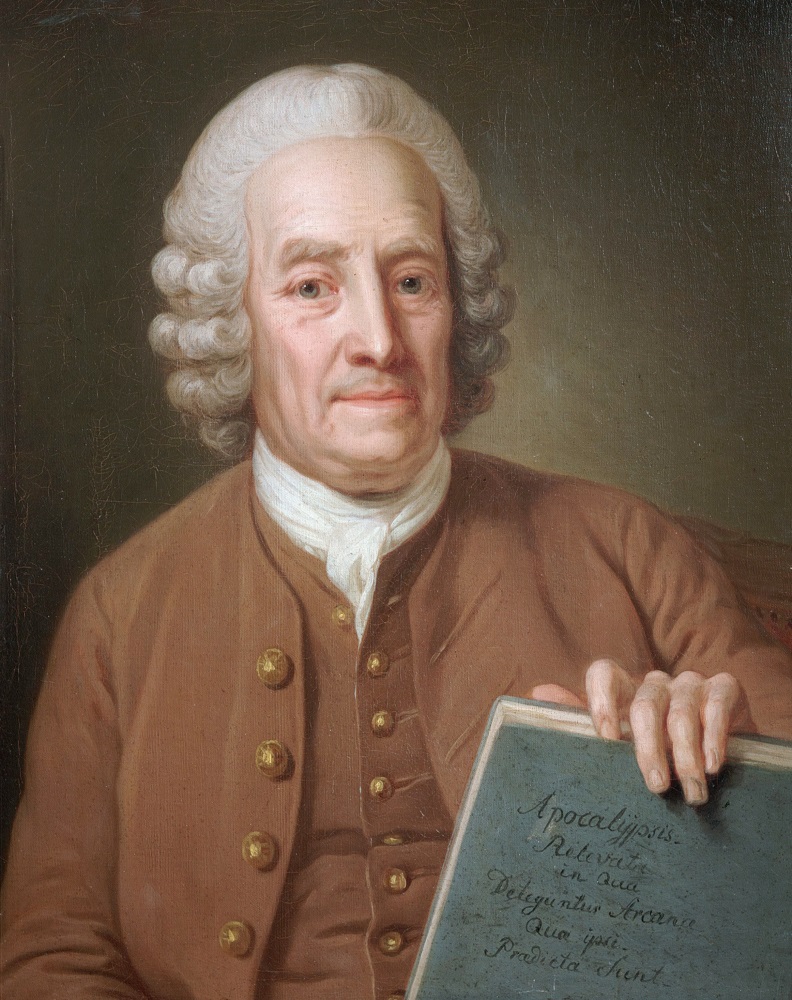
Emanuel Swedenborg (1688-1772)
The beliefs presented on our blog are based on the Bible as interpreted by Emanuel Swedenborg (1688–1772), an eighteenth century scientist, philosopher, and explorer of the spiritual world. Swedenborg wrote extensive commentaries on the Bible, opening up a deeper spiritual meaning within the literal meaning. He also presented a new perspective on Christianity—one that is solidly founded on the plain statements of the Bible.
Though Swedenborg wrote about a new era of the church that he said was beginning in his day, he never made any effort to start a church organization. However, fifteen years after his death, a small group of his readers founded the first New Church (Swedenborgian) organization, in London, England. From there it spread around the world.
Despite the relatively small number of avowed Swedenborgians, over the years Swedenborg’s teachings have had a major influence on our society’s changing views of Christianity, the Bible, spirituality, and the afterlife. Much of this influence happened not directly, but indirectly through well-known figures in the subsequent history of Western thought who read Swedenborg and incorporated some of his ideas into their own writings. For some examples, see the article, “Swedenborg’s Cultural Influence” at the website of the Swedenborg Foundation.
The Swedenborgian churches
The various Swedenborgian or “New Church” bodies around the world are Christian churches with ministers and members, churches and worship services, and church organizations that operate much like those of other Christian churches. Though there is a wide variety in the types of worship services offered by the various Swedenborgian groups, many traditional Christians find themselves quite comfortable in the atmosphere of a Swedenborgian congregation.
The main difference is not in what the church looks like and how it operates, but in its beliefs. Though the Swedenborgian churches are Christian, their beliefs about Jesus Christ, the Bible, salvation, and the afterlife distinguish them from all other Christian churches. The various Swedenborgian churches share common beliefs in:
- A God of pure love and wisdom, who is never angry and never condemns anyone
- Jesus Christ as God’s own human presence among people on earth and in heaven
- The Bible as God’s Word containing deeper levels of spiritual meaning
- God’s presence in all religions and among all people, so that all who live good and thoughtful lives according to their own beliefs will find their place in heaven
- An afterlife in which we choose heaven or hell for ourselves, based not just on what we believe, but on what we most love to do
Mind you, none of these beliefs are a response to modern enlightened views. All of them, and many more like them, have been fundamental to the Swedenborgian faith from its very beginning over two centuries ago, when such beliefs were universally condemned as heretical by the established Christian churches.
Let’s take a look at the origins and practices of the worldwide Swedenborgian movement.
Why “Swedenborgian”?
Historically, those who follow the teachings found in the writings of Emanuel Swedenborg have preferred to be called “New Church,” and to have their religion called “The New Church” or “The New Jerusalem Church.” Swedenborg himself never sought personal fame or notoriety based on his spiritual writings. He published most of them anonymously. His authorship did not become known until a decade after the first of the many volumes of his theological writings rolled off the press.
However, once it became publicly known that he was the author of these unusual books, some of his opponents began to refer to the beliefs contained in them as “Swedenborgianism.” The name stuck. Swedenborg was philosophical about his name being used in this way. In a letter to the king of Sweden dated May 10, 1770 he wrote, “‘Swedenborgianism’ is the worship of the Lord our Savior.” However, a month earlier, on April 12, 1770, he wrote a letter to one of his supporters, Dr. Gabriel Beyer, in which he said that although the doctrine presented in his writings has been called “Swedenborgianism,” he himself calls it Genuine Christianity.
Like Swedenborg, believers in his teachings are of two minds about the term “Swedenborgian.” Some avoid it, since it calls attention to a mere human being instead of focusing on the spiritual message delivered by that human being. Others embrace the name, since it provides a distinct, recognizable name for the church, and leads people to learn about the teachings found in Swedenborg’s writings.
For better or for worse, “Swedenborgian” has become the most widely used name for the teachings presented in Emanuel Swedenborg’s spiritual writings, and for the churches and people who follow those teachings. However, just as Lutherans don’t worship Martin Luther, and Wesleyan Methodists don’t worship John Wesley, neither do Swedenborgians worship Emanuel Swedenborg. He is considered an extraordinary human being who delivered new spiritual knowledge and understanding from God.
Swedenborg never made any effort to start a church organization based on the teachings in his books. The first church based on those teachings was not founded until fifteen years after his death, by people who had never met him personally. Yet without the books written by Swedenborg, there would be no Swedenborgian churches. So let’s take a look at the person whose writings spawned this religious movement.
Swedenborg the Scientist
Emanuel Swedenborg was born in Stockholm, Sweden, on January 29, 1688. His father, Jesper Swedberg, was a prominent Swedish Lutheran clergyman who came from a wealthy mine-owning family. His mother, Sara Behm Swedberg, also came from wealthy mining stock. Young Emanuel Swedberg (later changed to Swedenborg) was therefore provided with a fine education. As an adult he moved in the upper circles of Swedish and European society.
For the son of a minister, a church vocation would have been a natural choice. Instead, Swedenborg chose a career in science and engineering. After graduating from university as a young man, he traveled from his native Sweden to the intellectual centers of Europe, learning from the prominent scientists of his day.
When he returned from his travels, the king of Sweden offered him a position on the Swedish Board of Mines. Mining was the largest industry in Sweden, and Swedenborg took his new post seriously. He again traveled to Europe, this time to learn the newest and best mining techniques and bring them back to Sweden. His post involved many different skills, from deliberating on mining regulations and mediating business disputes to inspecting the mines firsthand and making on-site improvements.
Meanwhile, he continued his scientific studies. He mastered nearly every branch of scientific knowledge that existed in his day, and wrote books about many of them. He made new discoveries and proposed theories to explain some of the phenomena he encountered.
However, as young adulthood gave way to middle age, Swedenborg’s goals moved beyond a search for purely scientific knowledge. He was now searching for the human soul. He focused his studies increasingly on the human body and brain, attempting to locate the soul through scientific observation. But the more painstaking his research, the more his goal eluded his grasp.
Swedenborg the Seer
Later in life Swedenborg would realize that it is impossible to locate the soul through study of the material world because the soul is on an entirely different level—a spiritual level. That realization, however, did not come through his own efforts.
When he was in his mid-fifties, Swedenborg’s life went through a profound change. Through a series of dreams and visions, he felt called by God to leave his scientific work and explore the deeper mysteries of spirit and religion. Yet his scientific studies were not in vain. He realized that every material thing expresses a deeper spiritual reality. His thorough knowledge of the physical world gave him the foundation he needed to understand the workings of the inner spiritual world. And his habits of careful observation and analysis developed through scientific study proved valuable in his explorations of the spiritual realm.
For the remaining three decades of his life Swedenborg devoted himself to spiritual studies. By his account, God had allowed him to be conscious in the spiritual and physical worlds simultaneously. Informed by his experiences in the spiritual world, and by painstaking studies of the Bible in its original languages, he laid the basis for a new Christianity appropriate to an age of intellectual freedom. And yet, he said, these were not his own ideas, but rather were shown to him by the Lord (Jesus Christ) while he was reading and meditating on the Bible.
Swedenborg wrote and published voluminously. Approximately two-thirds of the thirty to forty volumes of his theological works are devoted to explaining deeper spiritual meanings contained within the literal meaning of the Bible. The remaining books explore various spiritual topics. The most poplar of these has always been Heaven and Hell, which is a guided tour of the spiritual world.
These books provide the teachings and Bible interpretations that give the Swedenborgian churches their distinct character and personality.
Swedenborg died in London on March 29, 1772, at the age of eighty-four. Having completed his mission on earth, he happily took up permanent residence in the spiritual world.
The organized Swedenborgian church
It wasn’t until fifteen years after Swedenborg’s death that any move was made to establish a church organization based on his teachings. This was done in 1787 in London, England, by a printer named Robert Hindmarsh and a small group of avid Swedenborg readers. The organization they founded became the General Conference of the New Church in Great Britain. From this oldest of New Church organizations, most of the other Swedenborgian churches around the world owe their origins.
One of those daughter organizations was the General Convention of the New Jerusalem in the United States, whose first convention was held May 15–17, 1817, in Philadelphia, Pennsylvania. Today, this organization goes by the public name “The Swedenborgian Church, United States and Canada.” Though it has churches spread across the United States and Canada, its largest concentrations are in the northeastern U.S. coastal states, the Midwest, and California. It currently maintains its central office in Cambridge, Massachusetts, and its theological seminary, the Center for Swedenborgian Studies, in Berkeley, California. Speaking personally for a moment, this is the church in which I grew up, and in which I was ordained in 1996.
The New Church of Southern Africa was founded independently in 1911 by the Rev. David William Mooki and a group of followers who had accepted the teachings of Swedenborg. It became a mission of the British Conference in 1917, and returned to independent status in 1970, at which time the Rev. Obed S.D. Mooki, the son of the founder, became its first African superintendent. At its peak of 25,000 to 35,000 members in the 1960s to the early 1990s, it was by far the largest Swedenborgian church body in the world. It continues to maintain its own theological seminary, Mooki Memorial College, on the grounds of its home church in Orlando East, Soweto, Johannesburg, and has over eighty churches spread throughout all but one of the provinces of South Africa, as well as in the country of Lesotho.
The New Church in West Africa, a Nigerian Swedenborgian church organization founded by Africanus Mensah in 1935, has followed an arc similar to that of the New Church of Southern Africa, being affiliated with the British Conference for many years before becoming an independent body. Its headquarters is located in the city of Owo, in Ondo State, Nigeria.
Other significant Swedenborgian organizations around the world that owe their origins to the British Conference are The New Church in Australia, the National Convention of Swedenborgian Churches in the Philippines, and a loose federation of Swedenborgian churches in Western Europe. There are also individual churches or groups of churches in other parts of the world, including South America, the Caribbean, and Asia—especially South Korea, Japan, and India.
The Academy Tradition churches
There is, however, another strain of Swedenborgianism that originated from a schism in the North American church, whose ripples were felt in the various Swedenborgian churches around the world. After a protracted internal struggle over church polity and the status of Swedenborg’s theological writings, a group of Swedenborgians centered in the Philadelphia area broke off from the General Convention in the U.S. to form a separate denominational body that became The General Church of the New Jerusalem, headquartered in Bryn Athyn, Pennsylvania, just north of Philadelphia.
This group maintained—contrary to the position of the other Swedenborgian bodies—that in addition to the Old and New Testaments, Swedenborg’s theological writings are themselves the Word of God. This was based largely on a desire to establish their divine and doctrinal authority. The General Church also adopted a hierarchical, episcopal-style, clergy-led church government organized as a single bishopric administered by a bishop and clergy council in its headquarters in Bryn Athyn. This is in contrast to the more congregational-style lay- and clergy-led church polity of most of the other Swedenborgian organizations. It also set aside the regionalism of the rest of the Swedenborgian movement, and organized itself as a worldwide body. It placed a heavy emphasis on New Church education, maintaining a system of private church schools, including a college in Bryn Athyn originally known as The Academy of the New Church, and now known as Bryn Athyn College.
Though much of the General Church’s membership remains concentrated in and around its original community in Bryn Athyn, with smaller congregations located around the U.S., Canada, and Europe, it also has a significant presence in South Africa, Ghana, Ivory Coast, and Brazil, and individual congregations in several other parts of the world.
The General Church, in turn, experienced its own schism in 1930s. A group of ministers and laypeople within the General Church began to maintain that if, as the General Church held, Swedenborg’s writings are the Word of God, then they must also have a spiritual meaning, in line with Swedenborg’s teachings about the Word of the Old and New Testaments. The main body of the General Church rejected this view, leading its adherents to form their own church organization in 1937, which they named The Lord’s New Church which is Nova Hierosolyma. (“Nova Hierosolyma” is Latin for “New Jerusalem.”) The Lord’s New Church is also headquartered in Bryn Athyn, Pennsylvania. It has a church polity and structure similar to that of the General Church, including being organized as a worldwide body. However, its major concentrations of churches are in South Africa and Europe.
Within the Swedenborgian movement as a whole, the General Church and the Lord’s New Church are known as the “Academy Tradition” churches, whereas the rest of the Swedenborgian bodies are known as “Conference Tradition” churches.
Despite its two centuries of existence, the organized Swedenborgian church remains a small movement, with perhaps only 20,000 to 30,000 members worldwide in all of its branches combined. However, its influence on contemporary religious thought has been all out of proportion to its small size. Swedenborgians rejoice in seeing many of their long-held beliefs gradually gaining acceptance in the wider society. For example, though Christian leaders of Swedenborg’s day almost universally rejected the idea that non-Christians could go to heaven, today many Christian leaders and ordinary Christians have come to believe this.
Swedenborgian rituals and worship
The beliefs of the Swedenborgian churches are what especially distinguish them from other churches. But they engage in some of the same rituals that other Christian churches do. Here are some of the rites and sacraments practiced in the Swedenborgian Church, and the meanings attached to them.
Baptism is a sacrament of cleansing and spiritual rebirth. It is a sign that the person being baptized is a Christian, and will strive to live by Christian principles, avoiding doing what is evil and destructive, and doing what is good and loving instead. Baptism itself does not contribute anything to our salvation. However, the self-examination, spiritual cleansing, and rebirth symbolized by baptism are essential to salvation and Christian living. Most Swedenborgian churches practice infant baptism as a sign that this child is to be brought up as a Christian.
The Holy Supper, also known as communion, is a sacrament of accepting the Lord’s love and wisdom into our lives. Communion also does not contribute to our salvation by itself. Rather, it symbolizes our willingness to accept love (symbolized by the bread) and wisdom (symbolized by the wine or grape juice) from the Lord Jesus Christ, and make them a part of our life.
Marriage is a ritual of union between two people. Swedenborgians believe that human marriage has its origin in the marriage of love and wisdom in God. Marriage is therefore seen as a sacred and eternal union that is first and foremost an inner union of souls and minds, and from that an outward union of bodies and lives.
Memorial Services are rituals of passage from life on earth to life in the spiritual world. Since Swedenborg provided extensive clear teachings about the afterlife, these services usually have a comforting and sometimes even a celebratory feel to them. Swedenborgians do recognize our human need to grieve over our loved ones who have died. Yet overall, the Swedenborgian faith provides a positive and hopeful message about death as a natural transition from one life to the next.
Ordination is a ritual of consecration for ministry in the church. Men, and women also in most Conference Tradition churches, who are seeking ordination go through a recognized program of theological training. Once ordained, a minister may be called to be pastor of one of the church’s local congregations, or in some Swedenborgian churches may serve in another form of ministry such as pastoral counseling or chaplaincy at a hospital or hospice.
Most Swedenborgian congregations hold weekly worship services. Some use traditional Christian orders of worship modified to accord with Swedenborgian beliefs. Others use more contemporary worship styles. Each church has its own character. Yet there is a sense of shared faith and extended church family among the members of the various branches of the Swedenborgian movement.
To join or not to join?
Today, many people do not feel the need for organized worship services within a church setting. And with the Internet Age has come much Swedenborgian outreach that focuses on spreading Swedenborg’s ideas to the general public rather than on attracting new members to one or another of the Swedenborgian churches. Spiritual Insights for Everyday Life is one example. This trend seems likely to continue as traditional churches and worship services wane in popularity. Most of the Swedenborgian church bodies mentioned above have declined considerably from their peak membership in earlier decades.
Swedenborgian churches are spread very thinly around the world. Many people do not live close enough to a Swedenborgian congregation to attend regular worship services. However, if you feel drawn to Swedenborg’s style of Christianity, and you wish to join with other Swedenborgians, I encourage you to look up one or another of the Swedenborgian organizations and see if there is a church or group near you. Different churches have different cultures and different styles of worship. Academy Tradition churches tend to be more conservative in their culture and worship, whereas Conference Tradition churches tend to be more liberal in their culture and worship. If you happen to live near a Swedenborgian church, the only way to find out if it’s a good fit for you is to attend a few of its services and meet its people.
One place to look for a congregation near you is the World Map of New Christian Groups, Publishers, Churches and Schools at the New Christian Bible Study website. This map aims to include all of the Swedenborgian churches around the world. Be aware, though, that it is still missing many churches in Africa and Asia. If you are involved in a Swedenborgian church that is not shown on the map, please let me know.
There are also a number of online gathering places for people interested in Swedenborg’s teachings, including the offTheLeftEye YouTube channel and Facebook page sponsored by the Swedenborg Foundation.
If you aren’t finding what you’re looking for, feel free to leave a comment below, and I’ll do my best to help.
Meanwhile, you are always welcome to read the articles on many different subjects here at Spiritual Insights for Everyday Life (use the “Search This Site” box to find what you’re looking for), and to ask any questions you may have in their comment sections. Our goal is to give you the spiritual insights you need in order to live a good and fulfilling life here on earth, and to find your place in the spiritual community of heaven once your time on earth is finished.
For further reading:
- Who was Swedenborg? What Should I Read?
- Do the Teachings of Emanuel Swedenborg take Precedence over the Bible?
- Christian Beliefs that the Bible Does Teach
- Who is God? Who is Jesus Christ? What about that Holy Spirit?
- Can We Really Believe the Bible?
- What Happens To Us When We Die?
- Heaven, Regeneration, and the Meaning of Life on Earth
Share this:


Lee Woofenden is an ordained minister, writer, editor, translator, and teacher. He enjoys taking spiritual insights from the Bible and the writings of Emanuel Swedenborg and putting them into plain English as guides for everyday life.



 Spiritual Insights for Everyday Life
I truly enjoy this blog. I find the idea of continued spiritual growth espoused by Swedenborg with the creation days used as a set of allegorical symbols to be profound and the idea seems to stick with me and influence my actions daily. I am no longer a Christian in any traditonal sense; I am now a philosophical theist. Despite my “deconversion” I read your articles very often and try to use Swedenborgs teachings on growth, love, and wisdom to guide my life alongside the moral precepts taught by Christ and the other moral universals I can find throughout the religions of this earth.
Hi Sean,
Thanks for stopping by, and for your comment. I’m glad you’re finding the articles here enjoyable and helpful. One of the beauties of Swedenborg’s system is that although he himself was strongly Christian, he does not place artificial limits on God’s power to reach people by claiming that God saves only Christians. Instead, he opens the door to God’s presence with people of all faiths, outlooks, and cultures.
Godspeed on your spiritual journey!
Hi Lee. I’ve read numerous articles on this site and have really enjoyed them. Your analysis of the Bible seems very meticulous. I love how careful you are about us not adding our own words to scripture.
Despite this, I’m still hesitant about trusting Swedenborg’s claims, even though it seems that there is some very logical truth in the things he has written. I just wanted some clarification. Doesn’t God warn us about people who try to contact the dead or speak with spirits? Some examples: Leviticus 19:31, Leviticus 20:6, and 2 Chronicles 33:6? Just seeking truth, and wanted your opinion on those verses. Thanks
Hi Eric,
Thanks for stopping by, and for your comment and question, which is a good one.
For those reading in, here are the three Bible verses Eric refers to:
First, it’s important to know and understand that Swedenborg never sought out contact with spirits. He did not consult mediums, nor did he make any effort to engage in spirit contact. Rather, as is well-documented in his own writings and in the various biographies of Swedenborg, the opening of his spiritual senses came to him unbidden, and according to his own testimony, as a result of the Lord choosing him for a special mission.
In fact, like the Bible, Swedenborg warns against seeking contact with angels and spirits, saying that for those whom the Lord has not prepared and called, it can be quite dangerous. There are many evil and unscrupulous spirits who will pretend to be angels of light, and mislead people who seek knowledge and understanding via spirit mediums and spirits.
Meanwhile, the Bible itself contains many stories of God sending angels to people on earth to give them messages from God. If we reject Swedenborg because he said that angels spoke to him, we would also have to reject almost every major figure in the Bible, most of whom also received messages from angels who were sent by the Lord.
Second, it is important to know and understand that Swedenborg’s spiritual experiences were nothing like those of spirit mediums. Spirit mediums hear voices, and may see shadowy apparitions of the spirits that they contact. Swedenborg, by contrast, was fully awake, aware, and conscious in the spiritual world. He traveled around in the spiritual world among the angels and spirits just as if he himself had died and were one of them, even while still being alive in the physical world. He visited their cities, towns, and homes, sat down to dinner with them, and had face-to-face conversations with them just as you and I could do with each other here on earth. This is completely different from the wispy and often auditory-only experience of spirit mediums.
Third, Swedenborg actually avoided acting as a “spirit medium” even after it became known that he claimed to be traveling in the spiritual world and meeting people there. People often asked him to carry a message to their loved ones who had died, or to bring them a message from a friend or loved one who had died. His standard response was to politely but firmly refuse to do so. There are only a very few recorded instances in which he agreed to carry a message, and these involved extenuating circumstances that caused him to override his usual refusal to be a bearer of messages one way or another.
Spirit mediums, by contrast, are eager to carry messages back and forth between spirits and people living in the material world. That’s what they do.
Fourth, it is a misconception common even among some Swedenborgians that Swedenborg’s teachings are based on things he learned from angels and spirits.
It is true that Swedenborg tells stories of many conversations with angels, spirits, and even devils in hell. But if you read these stories, you will find that rather than learning from angels and spirits, Swedenborg himself is often teaching things to angels and spirits that they did not know before. And even when he is learning new things from them, he seems to consider this more in the nature of raw material of experience in the spiritual world that he needs to learn in order to understand things that the Lord is teaching him.
In fact, he specifically denies that anything of his teachings came from angels or spirits:
Unless we want to accuse Swedenborg of being a liar, we have it on his own testimony that his teachings are not based on things he learned from angels and spirits, but rather are based on what the Lord taught him while he was reading the Bible.
Some Swedenborgians make what I believe is a serious error in thinking that all of the stories that Swedenborg tells about his conversations with angels and spirits are “doctrine,” and must be accepted as true. But Swedenborg makes no such claim. Rather, these are conversations with angels and spirits that do indeed tell us something about what the spiritual world is like, and how angels, spirits, and demons think and live. But angels, spirits, and especially demons can be mistaken just as people on earth can be. In particular, since they live in the spiritual world, not in the material world, their knowledge of scientific and earthly subjects is no more advanced than ours is here on earth, because their only source of knowledge about physical and material things is from people who have recently arrived from earth. Swedenborgians who think that the statements of angels or spirits in Swedenborg’s writings are “revealed truth” are very much mistaken. And based on that mistaken belief, they have made some of the same mistakes as have people who consult spirits via spirit mediums and think that they have a superior understanding of God and of spiritual reality based on what they’ve heard from those spirits.
Of course, unlike many of the spirits with whom people on earth seek contact, angels have no intention to deceive. And I believe that the angels who spoke to Swedenborg sincerely believed everything they were saying. I even believe that there is much truth in what they said to him. But when I read Swedenborg’s writings, I distinguish between the things angels and spirits tell him in his various stories from the spiritual world on the one hand, and what Swedenborg himself teaches about church doctrine and the spiritual meaning of the Bible on the other. Even the latter is somewhat complicated by the fact that it had to be filtered through Swedenborg’s mind. But I consider the direct teachings in Swedenborg’s writings to be a basis for doctrine and belief, whereas the statements of angels and spirits are human testimony and example that can throw light on those doctrines and beliefs.
Further, even having the extensive teachings in Swedenborg’s writings, I believe that it is important for Christians to develop a direct relationship with the Lord, and that this comes especially from reading the Word of God, meaning the inspired books of the Old and New Testaments, with a desire to be taught by the Lord so that we can live a good life of love, kindness, and service to our fellow human beings. If we do this, then Swedenborg’s writings become a light shining on the pages of the Word of God so that we, too, can be taught by the Lord while we are reading the Word.
For another article that takes up some of these issues, please see:
Do the Teachings of Emanuel Swedenborg take Precedence over the Bible?
I’m glad to hear that you are finding the articles here enjoyable and helpful. I hope this helps to put your mind at rest about the nature and reliability of Swedenborg’s writings.
One final thing I would say is that I think it is a mistake to read Swedenborg as “authority,” as some conservative Swedenborgians do. Rather, I think it is best to read Swedenborg as a source of light and knowledge, while continuing to evaluate what we read in his writings in light of our own knowledge and experience, and especially in light of what the Lord teaches us in the Bible. Swedenborg himself completely rejects blind faith, insisting that we must believe something only if it makes sense to us and is in accordance with what we learn from the Bible. To turn around and blindly believe something Swedenborg said just because he said it is to disregard Swedenborg’s own teaching about the nature of true faith. True faith, Swedenborg says, is believing something because we see and know that it is true. This can happen only when we consider a particular teaching with our eyes open and our brain fully engaged.
Awesome. Very well said. Thanks for the clear response and breaking all of that down simply for me. I do feel more comfortable in learning more about Swedenborgism. It doesn’t come off as cultish.
You and other supporters of him, I’ve noticed, are very laid back, intelligent, and loving towards one another. It doesn’t seem like you’re trying to force any sort of doctrine. It appears as though Swedenborg’s writings give deeper meanings, not necessarily trying to add on to the Bible per se, but supplementing it.
I’m still fairly new to accepting religious teachings as a whole. I’m 25, in college, and throughout most of it and high school, I went down a bad path for a while. I didn’t fully give my life to Christ until about 6 months ago, after roughly a year of looking at all of the evidence for it. Monotheism, and more specifically the God of the Christian Bible, seems to have the most sound and practical teachings of the origins of everything!
I’ve read your articles on other religions. I don’t necessarily disagree with you. You make excellent points on those topics that most Christians wouldn’t like to acknowledge. I think this is mostly because of fear, not clearly focusing on what scripture actually states, and not being open minded enough. I still don’t know enough about other religions. But my goodness, it just seems like the Christian Bible gets everything so right. And I just think it’s better to emphasize Christianity than to support other religions. Regardless, I love everyone and am eager to keep learning and doing what seems righteous. I’ve been reading the Bible every night and growing stronger and stronger in faith.
Again, thanks
Hi Eric,
Thanks. Glad you found those points helpful.
We Swedenborgians do have our problems, of course. We’re only human. But in general, yes, Swedenborgians tend to be fairly relaxed, broad-minded, and accepting of people from different religions, cultures, and perspectives because of our belief that God is a God of pure love who reaches out to people of all religions, not just to Christians.
However, there is a reason I am Christian, and not Jewish, Muslim, Hindu, or Buddhist. I agree that the Christian Bible and religion, properly understood, has the clearest, deepest, and most effective view of God, spirit, and what it means to live a good and loving life that leads to heaven. I’ve studied other religions to a certain extent, and I have not found anything else that even comes close to what I have in the church of my birth, which is the Swedenborgian Church—but which Swedenborg himself called “Genuine Christianity.” And that is how I have come to think of it as well. As genuine Christianity—the Christianity that Jesus Christ himself teaches in the Gospels.
Yes, I have positive feelings toward the various religions of humanity that exist around the world (with the exception of their fundamentalist wings). But I myself am firmly and happily Christian.
This is rather off topic, so I apologize if this is the wrong place to ask, but I’d like to pick your brain a bit further if that’s possible! I’m just curious and have many questions. Does the historical evidence for Christianity hold any merit to you? I understand that the Bible never claims to be a history or science book.I guess I’m asking, do you think it adds to the truthfulness of its word? It seems that the best possible reason that it could be written was not due to something like a conspiracy but that these people really were inspired to write it for a good reason.
Hi Eric,
As far as historically verifying the Gospel story, I do not believe that will ever be possible, nor do I think it would be desirable. By the same token, I do not believe that science will ever be able to disprove the Gospel story, either. We humans must be free to choose whether or not to believe in God, in Jesus, and so on. If there were overwhelming historical evidence that everything the Gospels say is true, it would make such freedom very difficult. It is not good or proper for spiritual knowledge, belief, and understanding to be based on external, physical evidence. Spiritual knowledge must come from spiritual sources, not material ones.
This doesn’t mean such knowledge can’t come through material vessels. That happens all the time. The Bible, for example, is a physical book, written and edited by human beings, and published in ink, paper, and now pixels as well. But without an internal desire for and conviction about its spiritual content, it’s just a human story. Sociologists and anthropologists can study it as a cultural artifact that gives us insight into ancient human religious and cultural beliefs and practices, without ever thinking for a second that there is actually a God, a spiritual world, or an afterlife. Only people who approach it from an internal conviction that God and spirit do exist, and who turn to the Bible as a guidebook for spiritual life, will see anything more than human culture and anthropology in it.
It is true that the general consensus even among secular scholars is that a historical man named Jesus did exist, and that he probably was executed by the Romans. So it’s also not as if Christian believers must reject the preponderance of evidence to believe that there was a Jesus who could have been who the New Testament says he was. But as for events such as the virgin birth of Jesus, the miracles he did, the Transfiguration, and his resurrection and ascension to heaven, we did not have any cameras or other scientific instruments present at the time, so other than a reliance on belief in either materialism on the part of secularists, or on a belief in God on the part of religious believers, there is no way to say for sure whether any of these things happened historically.
This is as it should be. Once again, spiritual knowledge should be based on spiritual sources, not physical and scientific ones. This doesn’t mean we can’t ever know whether God and spirit exist. Rather, it means that if we rely solely on the evidence of our physical senses for such knowledge, we will never be able to satisfy ourselves of the existence of God and spirit. That’s why atheists and materialists of all stripes will never get the “evidence” for God that they demand. There is no physical, scientific evidence for spiritual and divine things. And that is as God designed it to be. For more on this, please see:
Where is the Proof of the Afterlife?
Once you’ve had a chance to read that article, I’d be happy to continue the conversation if you wish.
On the question of whether the followers of Jesus would have said and done what they did if it had all been a fake, I do find that very hard to believe. But then again, I believe in the existence of God and spirit. For people who don’t, a conspiracy theory about the origins of Christianity is one of the ways to maintain their materialistic belief in the face of the Gospel story and the phenomenon of the development and wide spread of the Christian religion.
Hi Eric,
For my own statement of why I believe in Christianity and Jesus specifically, please see:
The Logic of Love: Why God became Jesus
Thanks Lee. Good points. I have read through both of those articles before, but a re-read is necessary! I’ll probably be back 🙂
Hello again Lee. Everything is beginning to make more sense as I study your posts and Swedenborg’s writings.
I was unaware of how many near-death experiences there really were. Have you encountered a significant number of NDEs that would contradict Swedenborg’s experiences? For example, perhaps some may report to have been sent to a literal fire engulfed hell.
Hi Eric,
Yes, thousands, if not millions, of people have had NDEs. It’s just that most of them don’t write books about it.
And yes, some people do report NDEs that seem to support traditional literalistic interpretations of the Bible, such as seeing people streaming through the pearly gates of heaven or seeing people engulfed in flames in hell.
But keep in mind that in the spiritual world these things are not really “literal,” but rather are symbolic or correspondential representations of spiritual realities. The pearly gates symbolize the hard-learned truth that introduces us into heaven. The hellfire symbolizes the mutual anger and hatred that reigns in hell. Even Swedenborg saw hell as a fiery pit from a distance. But that’s not how the people in hell themselves experience it, nor how Swedenborg saw it when he traveled into hell.
Also, NDEs may follow people’s expectations to a certain extent. That’s because in the spiritual world, our surroundings reflect our thoughts and feelings. This means that some people will indeed experience the spiritual world as a reflection of their particular beliefs, especially when they first arrive there and have not yet learned what the spiritual world is really like.
Hi Lee what are your opinions of Theosophy that was created by madam Blatavsky ?
Ive started reading about it as part of a sort of spiritual quest and if im honest it confuses me
Blatavsky and theosphy says (Like swedenborg )mediumship and chanelling are dangerous yet thats where blatavsky and the people who actually created theosphy got their information from
Hi AJ749,
Though I have some awareness of Blavatsky and Theosophy, I haven’t spent enough time looking into it to give it a proper evaluation. Honestly, it just isn’t something I want to spend my time on unless there is a specific reason to do so. Though I know Theosophy, mediums, and so on give some people hope and comfort, what we have in the true Christianity taught by Swedenborg based on the Bible is so far ahead of channeled material that I don’t feel the need to look into Blavatsky and others along those lines.
But the short answer to your question is that I don’t give Blavatsky and Theosophy a lot of credence, even though there is some truth in it. It’s hard to be completely wrong. I think you’ll find Swedenborg a lot less confusing. However, if you have questions about some particular thing you’re reading, feel free to ask.
Hi Lee. I was curious about your thoughts on allegations of Emanuel Swedenborg being supposedly, well, insane in his time. His most common critic seems to be the late John Wesley, the founder of Methodism. The apparent reason for this strife, so I’ve read, was that Swedenborg and Wesley were, in a sense, “competing” for followers and converts between the New Church and Methodism in the 1700s, although this competition was no doubt perceived mostly, if not exclusively, by Wesley.
While Swedenborg’s message resonates very deeply with me and makes the most sense, I must admit I was bothered when I read Wesley’s accounts and accusations of Swedenborg being an “entertaining madman” (sic) and referring to his revelations as “waking dreams”. There are other allegations of Swedenborg’s supposed madness that are, needless to say, pretty “out there” as well, (John Wesley wrote an account of Swedenborg supposedly “foaming at the mouth” and proclaiming himself the Messiah in 1744 and published it in the Arminian Magazine).
How would you, as a studied and well educated man of Swedenborgianism, respond to accusations of Emanuel Swedenborg, and his spiritual ideas, being crazy? I would greatly appreciate your thoughts, because, slander by other faith leaders notwithstanding, Swedenborgianism is the denomination of Christianity I feel best represents the teachings of the Bible and Jesus Christ, and that I feel most at home with.
Chad
Hi Chad,
Thanks for your good question. Before responding myself, I’ll let Swedenborg have his own say, in words that he wrote long before any of this controversy happened—indeed, before the first person ever read a word of his theological writings, since this statement appears toward the beginning of the first volume of his first published theological work, Arcana Coelestia (Secrets of Heaven):
Swedenborg himself was well aware even as he first began publishing his theological writings that we would be accused of insanity (“hallucinating”), of wanting to make a name for himself, and of many other things, by people who could not accept what he wrote. But he wrote them anyway, as commanded by the Lord and supported by his own first-hand experience in the spiritual world.
For Wesley, I suspect it was not competing for followers, given that the early “New Church,” as it was called, was nowhere near as successful numerically as Wesley’s Methodism. But it probably did annoy Wesley that some of his own ministers made the jump over to Swedenborg’s teachings, and became some of its earliest exponents. In fact, Robert Hindmarsh, generally credited as the founder of the first New Church body in the world, the General Conference of the New Church in Great Britain, and his father, the Rev. James Hindmarsh, had been Methodists before they encountered Swedenborg’s writings and became convinced of their truth.
There is a fascinating story, told by the Rev. Samuel Smith, another of Wesley’s ministers who later became a Swedenborgian, that Wesley once received a letter from Swedenborg saying that Swedenborg had heard in the spiritual world that Wesley wished to meet with him, and that he (Swedenborg) would be happy to receive a visit from Wesley. This astonished Wesley, since he had never expressed to anyone this wish that he had turned over in his mind for some time. Wesley replied in a letter to Swedenborg saying that he would be away on a journey for six months, but would visit Swedenborg when he returned. As the story goes, Swedenborg replied that this would be impossible, since on the twenty-ninth of the next month, he (Swedenborg) would enter the spiritual world, never more to return. (Swedenborg’s housekeeper also said that he predicted the exact date of his death.)
Perhaps Wesley’s view of Swedenborg would have been different if this meeting had taken place. But given Wesley’s later attacks upon Swedenborg, I suspect it was providential that they did not meet. Wesley had already set his course. Accepting Swedenborg as genuine would have derailed everything Wesley had worked for and built up so far. And that’s not something he would likely have been willing to do. He would have had to come up with some way to reject Swedenborg in order to cement his own legacy as the founder of Methodism.
As far as Wesley’s charges of insanity against Swedenborg, they were carefully investigated soon after they were published, and no eyewitness to any of the scurrilous charges against Swedenborg could be found, nor did they square with any historical evidence. All who knew Swedenborg said that he was always thoughtful, level-headed, and gracious in his manner—though he was quite capable of politely but firmly silencing people who made insulting charges against him and his writings to his face.
The account published in Wesley’s Arminian Magazine a decade after Swedenborg’s death, of Swedenborg going insane, proclaiming himself the Messiah, and so on, was written, not by Wesley himself, but by the Rev. Aaron Mathesius, a Lutheran clergyman who was an implacable enemy of Swedenborg and his teachings. Given that those who investigated the charges could find no one who had witnessed any such events, it is most likely that they were simply fabricated by Mathesius in order to discredit Swedenborg. It is an irony of history that Mathesius himself later went insane while preparing to deliver a sermon at the Swedish church in London, and had to be dismissed from his pastorate.
In short, though there have been various charges of insanity leveled against Swedenborg by his theological enemies, there is no historical or eyewitness evidence whatsoever supporting such charges. Everyone who knew him described him as being entirely sound in mind and body right up to the end.
For a decade after he began publishing his theological works, no one knew he was their author (because he published them anonymously—so much for “making a name for himself”), and no one noticed any difference in his behavior. He continued to do his work, to attend parties, to participate in governmental affairs, and so on, and no one was the wiser.
The posthumous charges of insanity made against him were merely the defenders of the old and corrupt “Christianity” fabricating lies about him in an attempt to discredit his teachings when he was no longer present to defend himself. But others came to his defense, and exposed those lies for what they were. Still, to this day traditional and conservative “Christians” continue to quote them as if they were true—and for the same reason: to discredit his teachings. If they accepted Swedenborg’s teachings, they would have to abandon the old and false “Christianity” that they continue to cling to. And they’re not going to do that.
But as Jesus said, it’s best to “let the dead bury their own dead” (Matthew 8:22). People who are stuck in the old corrupt and unbiblical “Christianity” can never accept the biblical truth that Swedenborg calmly and voluminously proclaimed, as commissioned by Jesus Christ himself. I don’t concern myself with people who come to this blog all full of invective against Swedenborg and his teachings. Usually I just delete their comments because there is no gain in attempting to show the light to a blind person, nor am I willing to subject my readers to so much darkness of mind and heart. Let the dead bury their own dead.
I am, of course, willing to debunk any of the other false charges against Swedenborg that you may have heard. But I would suggest not paying any attention to them. The people who spread these charges have a theological ax to grind. They are only too eager to spread false rumors about Swedenborg without bothering to investigate those rumors for themselves. They have no excuse for their ignorance. All of this is very well documented. If you want the real story, I can recommend several good biographies of Swedenborg.
But most of all, I would recommend that you read Swedenborg’s writings for yourself, and consider in your own mind and heart whether they have the ring of truth about them. The truth is its own best defense.
A very well-put and thorough response, Lee. Thank you very much for addressing my concerns.
Indeed, I have started reading Heaven and Hell, and the images and teachings about the afterlife it presents instill in me peace and confidence regarding the hereafter, and great reassurance of our Lord’s overflowing, wonderful love for us.
The faith expounded by Swedenborg is so different from the Biblical literalism and religious conservatism I grew up with, but I feel so much happier and at peace, both with myself and the world. I do feel it was the Lord’s will and calling that I discovered your site and, by extension, Swedenborgianism.
God bless!
Hi Chad,
Glad to help. I have come to realize more and more as the years go by how literalism—which is just a religious form of materialism and physical-mindedness—vitiates and destroys both the Bible and Christianity in the minds of those who are stuck in it. Time after time as I read the doctrinal positions of various so-called Christian churches, I see the mark of literalism preventing the clergy and laypeople of those churches from seeing the real truth in the Bible.
This literalism and physical-mindedness is not new. The Bible itself speaks of people who are stuck “in the flesh,” and cannot see the spirit within the words of the Lord. The Lord himself used this as a tool to separate those who could be his followers from those who could not. See:
Eat My Flesh, Drink My Blood
However, as Christianity became the accepted state religion of much of Europe, people became “Christians” not because they understood and accepted the true meaning and spirit of Jesus’ teachings, but because it was what they were born into and taught by the religious authorities. Over time, “Christianity” became just as fleshly and physical-minded as those hearers of Jesus who were offended by his teachings because they could understand them only literally, not spiritually as they were intended to be heard and understood.
When people come to this website asserting various literal interpretations of the Bible, I generally don’t put a lot of energy into replying. I know they will not be able to understand what I am saying, and what the Bible really means. Their minds are stuck in the letter that kills, so that they miss the spirit that gives life. But those who are ready to make the transition from literalism to spiritual understanding can move forward very rapidly in their spiritual life.
I am glad that you are among those who are making that transition from materialistic darkness into spiritual light.
Hi Lee i have a question regarding spiritual experiences of all types excluding genuine visits from angels and ADCs
so Mediums, OBEs, NDEs, Channeling , meditation etc. Is the furthest they go in to the spirt world the world of spirits?
As i know they are seperate things but of course you see all these people who say i went to heaven in a NDE or who have OBEs amd say they know what the spirit world is and how it works
Hi AJ749,
The spiritual world is a complex place. But usually mediums and channelers would be contacting spirits in the world of spirits, not in heaven or hell. That’s because the spirits who surround us during our earthly life are mostly ones living in the world of spirits, since they are the ones that are in a spiritual state closest to the state we are in here on earth.
People who have NDE’s, however, would usually be in contact with angels rather than with spirits from the world of spirits. That’s because they are in a state of dying, and when we are dying we are met by angels rather than by spirits from the world of spirits. However, we may also be met by deceased relatives and friends, who may still be in the world of spirits.
OBEs usually involve traveling to different places in the physical world, even though we see them through our spiritual eyes. So that’s a different thing altogether.
In meditation we don’t normally have open communication with spirits, so that’s also different. Of course, there are spirits around us all the time, so yes, they’re present in meditation, but not usually speaking to us in an audible voice.
And sometimes the Lord does send angels to speak to us if the Lord sees that it’s something we need. So not all of our contact with the spiritual world is with spirits from the world of spirits.
Once again, the spiritual world is a complex place. It’s best not to make hard-and-fast rules about exactly what’s happening in any particular person’s spiritual experience or contact.
Many thanks for the reply lee, i especially liked the last comment about not making hard and fast rules,
Regarding OBEs , if they do not happen in the physical world but in the spiritual world would it be logical to say its in the world of spirits? , as swedenborg says that in the world of spirits our minds are key to what we experience so everyone sees it differently and has different experiences.
And as i remember you said either in one of your articles or in a comment how the enviroment of societys are more set in stone if that makes sense so two neighbour angels would experience the same rather than one experiencing dessert and the other snow and ice
Hi AJ749,
I’m using “OBE” in the stricter sense of seeing objects and events in the physical world (such as one’s own body lying on the operating table) from a perspective outside one’s body. However, “OBE” is sometimes used more broadly to include NDEs in general, especially by materialistic scientists and doctors who don’t believe in the existence of a spiritual realm.
Yes, two neighbor angels would experience their community as being pretty much the same as one another because they share a common “mindspace,” to use a contemporary term. Angels who live together in the same community do so because they have common loves, values, and outlooks on life. Their surroundings reflect that shared unity of mind and heart—though with the usual smaller variations in perception that even we here on earth experience when we are in the same physical location as other people.
However, people who visit from other communities, especially if they are very different in mind and outlook, may perceive a heavenly community quite differently than its inhabitants do. To use an extreme example, an evil spirit from hell who attempts to enter a community of heaven without preparation will experience its atmosphere as suffocating and excruciatingly painful, whereas to its inhabitants it is balmy and beautiful.
For a milder example, Swedenborg once described some good spirits from the world of spirits visiting a heavenly community and being shown a magnificent spiral arboretum, but at first they couldn’t see it at all, except for one tree in the middle. Then their eyes were opened to see the garden. At first they were not in a mental state to be able to see the rest of it.
In other words, though angels who live together in a particular community will see it pretty much the same as one another, visitors from elsewhere may see it differently if their minds and hearts are not brought into full concordance with the atmosphere of that community.
Also, just as here, communities in heaven aren’t “set in stone,” but do change and progress as they grow in numbers, and as the people living their grow in knowledge, understanding, and wisdom. Communities in heaven don’t radically change, because the basic personalities of their inhabitants don’t radically change; but there are new developments and more subtle changes as things go along.
Hi lee regarding angels the angels in NDEs,
Why do they say different things as in some will say reincarnation is real and others will say its not and then others talk about universal knowledge that dosent agree with swedenborg ?
In my head and from an excellent website its to do with the freedom of the individul, as has been said in other articles on this blog angels dont teach us truth but rather let us find our own path
Hi AJ749,
I’d have to see the specific experiences.
It’s possible that these aren’t actually angels.
Or it’s possible that they are angels, and they’re simply working within the NDEer’s current beliefs. In the situation of a brief encounter with the spiritual world, debating correct doctrine is not at the top of the priority list. Giving a sense of love, meaning, and purpose in life is much more important. Beliefs can be sorted out later.
I cant remember the names of the specific NDEs but i know they mentioned being told that reincarnation was true .
As i previously said and with info from another website i assume its to do with the individuals freedom to belive what they want and come to the truth their own way ?
Hi AJ749,
Yes. If people have confirmed themselves in a particular beliefs, the angels and spirits will not argue with them about it. Also, such people will come away remembering even stronger affirmation of their already existing beliefs than probably happened in reality. We tend to remember things according to our pre-existing perspective. Meanwhile, what gets us into heaven is not what we believe, but how we live. That’s what angels focus on.
Hi lee follow up question,
What do you think about spiritual people who think that swedenborgs experience was real but dosent accept that he saw the real heaven and hell and that say what he saw was tailored to his beliefs so isnt the real experience people will go through when they die or say he was confined to only the astral world and wrongly believed he saw all levels of the spiritual world ??
Admitedly places ive seen these views are mainly those who belive channeled material to be true , theosophy (again mediumship) , or people who claim to be claivoyant and have apparently seen the spirit world
Hi AJ749,
If Swedenborg doesn’t agree with the teachings and beliefs of various channelers and their followers, of course they’re going to say that Swedenborg was wrong. That’s a given. Why do I accept Swedenborg’s testimony over theirs? Here are three major reasons:
On the first point, see the article, “Do the Teachings of Emanuel Swedenborg take Precedence over the Bible?” under the heading, “2. Swedenborg’s experience in the spiritual world was unique in known history.” Short version: Who would you trust more to give you information and advice about a foreign country: someone who’s had a bunch of phone calls with people there, or someone who has lived there for several decades?
On the second point, Swedenborg’s system is organized, sensible, and comprehensive. No other system comes close. ’Nuff said.
On the third point, one of the reasons Eastern spirituality has become so popular in the West in recent decades is that at least in the versions that make it to the West, much of the focus is on gaining secret knowledge and becoming more enlightened than the vast herd of ordinary people. It allows its people to feel superior to everyone else while not actually having to do the hard work of fixing what’s wrong with their own character and life. It’s all about knowledge. It’s the Eastern version of “faith alone” in Western Christianity. The important thing is knowing and believing the right thing. Doing the hard work of personal spiritual growth is secondary.
In Swedenborg’s system, by contrast, knowledge, understanding, and insight is merely a tool to be used in correcting one’s own character flaws and wrong ways of living. And not just by some arbitrary set of rules, but by the rule of loving one’s fellow human beings and serving their needs, physical, emotional, and spiritual. In other words, Swedenborg’s system focuses on becoming a better person. Superior knowledge means nothing if it doesn’t lead to becoming less of a jerk and more of a kind and thoughtful person.
That, to me, is the fundamental reason to pay attention to what Swedenborg says over what so many systems of “secret knowledge” say. Swedenborg’s system is practical. It is focused on making this world, and human society, better through making the people in it better, kinder, and more thoughtful people.
Hi Lee thanks for the answer , it does make sense what you say, i suppose if people belive channeled (in which if you search online theres plenty of evidence why you shouldnt from former channelers) materials any other point is invalid.
Swedenborgs writings however say theres truths in all religions of the world but some contain more truths than others however that dosent mean those with more truths are better
Is that right or have a blended what he said 😂😂
Hi AJ749,
The general idea is that each culture and each person has a religion, or spiritual perspective, that is most helpful in reaching that culture and person, and moving them forward toward spiritual rebirth as a good and thoughtful person. In an absolute sense, one religion is “better” than another because it leads more clearly toward loving God above all, and loving one’s neighbor as oneself. But some people aren’t ready for that level of clarity, or that level of spiritual work. So they have toned down and partially fallacious religions which, however, are more effective at reaching them in their current mental and emotional state.
The most basic commonality in all genuine religions (as opposed to destructive cults) is that they teach their people not to do things that are wrong and harmful, but to do things that are good, loving, and helpful instead. Even woo-woo new-agey religions generally have some basic code of conduct about how you’re supposed to treat your fellow human beings. It may be a loosey-goosey one, but it causes good-hearted followers to become better people than they otherwise would have been.
Hi Lee although alot of people who claim to have contact with the spiritual world dont really ,
And of course there is Blatavsky and others whos work when analysed is obviously plagiarised, the charges against swedenborg such as that he was crazy , had seizures/epilepsy or was a high functioning schizophrenic have been thoroughly debunked by this website and many other swedenborg scholars as well as non swedenborg scholars, have their ever been plagiarism charges against swedenborg ??
Hi AJ749,
There have been many claims that Swedenborg got various ideas from previous thinkers.
In some cases, that is quite true. For example, Swedenborg drew heavily on Aristotle, who still had a major influence on the philosophy and science of his day. In fact, Swedenborg made an extensive notebook of quotations from various thinkers, giving us a pretty good idea of what books he had read and what earlier and contemporary (to him) scientists, philosophers, and theologians influenced his thought.
It would be a mistake to think, as some conservative Swedenborgians have, that everything Swedenborg wrote in his theological writings was based on pure revelation. He clearly used many ideas and methods that were part of the existing fund of human knowledge in expressing the spiritual teachings and Bible interpretations that he wrote about. The scholarly introductions and annotations in the New Century Edition of Swedenborg’s theological works covers much of this existing matrix of thought as it appears in Swedenborg’s writings.
However, claims that Swedenborg copied his system as a whole, or some major part of it, have never been well-substantiated. Even during Swedenborg’s lifetime, people were speculating on where Swedenborg got his ideas. For example, he was asked whether he had gotten some of his ideas from Jakob Böhme, to which Swedenborg replied that he had never read Böhme’s writings. There would be no particular reason for him to lie about this. Böhme also does not appear in Swedenborg’s “Philosopher’s Notebook” of quotations from prior thinkers. And though there are some similarities to Böhme’s ideas, their systems as a whole are not at all the same. Böhme drew heavily on Luther’s thought, whereas Swedenborg, though born Lutheran, rejected Luther’s theology and struck out on his own.
Similarly, some scholars have said that Swedenborg drew many of his ideas from the Jewish Kabbalah, to which he was likely exposed during his university years. However, once again, Swedenborg’s system of Bible interpretation and his cosmology are quite different from those of the Kabbalah.
Swedenborg’s system has often been called a modalist by traditional Christians; but once again, Swedenborg’s theology was not in fact modalist. See: “What is the difference between the Swedenborgian and Oneness Pentecostal doctrines of God?”
So yes, there have been many claims that Swedenborg cribbed his ideas from previous theologians and philosophers. However, though there are, of course, some similarities to previous thought, Swedenborg’s system as a whole just isn’t very much like that of any prior thinker. He did borrow many ideas from many sources. That’s part of the development of human thought. But his synthesis of them, together with many new ideas of his own (or as he would say during his theological period, from the Lord) forms a whole new chapter in theology and philosophy.
2 quick questions from this lee.
1. Whereas someone like blatavsky was proven to have plagiarised most of her work would you put swedenborg as someone who wouldnt plagiarise others ?
2. Channeled teachings never deliver new spiritual knowledge but of course use either their own beliefs or the person they occupy , would you say swedenborgs theology was new theology like god said it was ?
Hi AJ749,
1. First, it’s good to understand that in Swedenborg’s day, standards on plagiarism were nowhere near as strict as they are today. Writers regularly borrowed ideas from one another without giving credit. It was simply assumed that any educated person would know where the ideas came from. Back then, it was still possible to have read most of the major literature, or at least be aware of its contents.
Having said that, no, I don’t think Swedenborg would have borrowed wholesale from another thinker without either making it obvious where it came from or giving explicit credit. Individual concepts and ideas, yes. That falls under the above statement. But whole complexes or systems of thought, no. That wasn’t his style.
Swedenborg was seeking new knowledge. He wasn’t interested in merely regurgitating old ideas. Even in his scientific period, he wanted to make a name for himself, and you don’t do that by publishing things that have already been thought of and published by others. You do that by breaking new ground, and publishing discoveries and ideas that no one has thought of or known about before. In his theological period, he laid aside that aspiration of personal reputation and greatness, but he retained his desire to publish new ideas and discoveries that no one had previously presented to the world.
2. Yes and no. Certainly Swedenborg’s theology was new in terms of then-existing Christian thought. No one else had published quite the same theology that Swedenborg did. Previous thinkers had put forward some elements of it, but none had pulled it all together into the particular system that Swedenborg presented to the world in his writings.
However, Swedenborg also saw himself as reviving ancient wisdom that had long been lost as humanity became more and more materialistic and physical-minded. For example, he said that in ancient times, it was common for people to have open communication with angels and spirits, and to receive guidance and instruction from them. And the content of that revelation from heaven was, he said, the same as what he was teaching in his writings.
He also commonly said that present-day Christian doctrines such as the Trinity of Persons and justification by faith alone were unknown to the early Christians (and this is simply a matter of history). He did not say that they believed everything he taught, but he did say that their beliefs were compatible with his teachings, and incompatible with existing Christian doctrine.
In other words, Swedenborg saw himself as reviving genuine Apostolic Christianity, which, he believed, had long been rejected and lost in the existing Christian Church. So his theology was not “new” in the sense of “going against original Christianity,” as he believed (and I believe) is the case for most of Catholic and Protestant doctrine.
Having said that, Swedenborg also said that new things were being revealed at this day, through him, that could not have been revealed to Jesus’ disciples or to the early Christians generally, because the people of that day and age were not yet ready to receive and understand them, as Jesus said:
Though there was an immediate fulfillment of this on the Day of Pentecost recounted in Acts 2, Swedenborg viewed his own writings as a long-term fulfillment of this prophecy. According to Swedenborg, it took that many centuries for people on earth to be ready for the “many things” that the Lord wanted to teach us.
For my part, therefore, I view Swedenborg’s teachings both as a revival of the original Christianity that Jesus and his Apostles originally taught and a new and greater Christian understanding that we simply weren’t ready for 2,000 years ago.
Hello Lee. Are Swedenborg’s original Latin writings still preserved?
Hi Eric,
Yes, they are.
All of the first Latin editions of his published works are preserved in various public and private libraries around the world. Almost all of them have also been scanned in high resolution and posted as individual pages here:
http://www.baysidechurch.org/writings/
For the works that Swedenborg didn’t publish, his manuscripts are preserved in the Swedish Royal Academy of Science archives. They have been reproduced in facsimile by various means, and these facsimiles are held in various public and private libraries around the world. In some instances, such as for Apocalypse Explained, we have both his rough draft and his fair copy, which he intended for the printer. We also have manuscripts of some of his published works. For a fairly compact book about Swedenborg’s manuscripts, see:
The Story of the Swedenborg Manuscripts, by S.C. Eby (The link goes to a facsimile reprint on Amazon.)
We do know of a few fairly short unpublished manuscripts that Swedenborg wrote but that have been partially or wholly lost. That is a pity. However, considering the sheer volume of his writings, we still have plenty to work with.
There is a full annotated bibliography of Swedenborg’s published and unpublished works, as well as another treatment of Swedenborg’s manuscripts, in this book:
Scribe of Heaven: Swedenborg’s Life, Work, and Impact (The link goes to its page on the publisher’s website, where it is available in various formats, including free PDF and EPUB versions.)
Hi Lee,
I hope you’ll forgive me for asking an unrelated question, but I read recently that some scholars think Jesus’s views weren’t always that different from those of the Pharisees, and that they likely wouldn’t have objected to him forgiving sins or performing miracles on the Sabbath. Do you think it’s possible the confrontations he had with them are exaggerated somewhat in the Gospels, or is there some other explanation?
Hi Griffin,
It’s possible. I’m not an expert on historical Pharisee teachings and customs, nor even on the historical Jesus that secular scholars love to study.
However, it’s a misconception to think that the Gospels, or the Bible in general, are about providing an accurate portrayal of history. The Bible is not a history book; it is a book of moral and spiritual suasion. Its primary purpose is not to record what happened—even though it may sometimes use wording along those lines—but to get people to think about their relationship with God and with their fellow human beings, and to become better people by ceasing wrong attitudes, desires, and behavior (repentance) and becoming a new person (rebirth).
Whatever the exact teachings and customs of the Pharisees were historically, clearly they weren’t doing a very good job of motivating and guiding people to change for the better, which is the primary job of a religious leader. Even looking at subsequent events with a Jewish eye, God was so displeased with his Chosen People in that time period that he sent the Romans to destroy Jerusalem and the Temple, and smash Judaism as it had existed up to that time—and the Pharisees and Sadducees along with it. Rabbinical Judaism then took over.
Further, the key conflict between Jesus and the existing Jewish religious leaders, Pharisees included, was not over particular instances of healing or forgiveness of sins, whether on the Sabbath or not. It was over the Pharisees’ and other Jewish leaders’ largely external, behavior-based approach to religion versus Jesus’ inner, spirit-based approach to religion. Secular scholars generally miss this because they are materialists, and they therefore focus on externals, without any understanding of the inner spiritual essence of religion in general, and of Jesus’ teachings in particular. Even some “Christian” scholars today have gotten all stuck on the historical Jesus because “Christianity” itself has become materialistic and non-Christian. Such scholars do not understand the spiritual message and power of the Gospels or of the Bible in general.
Learning about the historical circumstances of Bible times can shed some light on the Bible narrative. However, the spiritual message of the Bible is contained in its own words and stories. Even if the Pharisees as portrayed in the Gospels are more of a narrative foil than an accurate historical presentation of the Pharisees (and the jury is still out on that), the message is still the one God intended to convey: that religion is not first and foremost about external behavior and an exact adherence to behavioral laws, but about an inner faith in and devotion to the way of loving God above all and loving our neighbor as ourselves.
Hey Lee,
Are the teachings found on this site compatible with what Swedenborg teaches? Do you agree with them?
http://leonsplanet.com/nde.htm
http://leonsplanet.com/exorcism101.htm
http://leonsplanet.com/ancient_religions.htm#Mithraism
http://leonsplanet.com/king_of_the_jungle2.htm
Hi Gonzo,
Thanks for the links. It’s a lot of material. I didn’t read all of it, and I skimmed some of the parts that I did read. But I can give you some initial reactions.
Mr. Priz’s basic belief that heaven and salvation are about love and doing good works, not just about faith, is entirely compatible with what Swedenborg teaches—and, of course, with what Jesus teaches in the Gospels, and what the rest of the Bible teaches. That is the most important thing in any religion. Jesus said that the greatest commandments are to love God with all we’ve got and to love our neighbor as ourselves. Any religion or spiritual teaching that has that sort of love at its core can lead people to heaven, even if it gets many other, less important things wrong.
And I do believe that Mr. Priz gets a number of other things wrong. Or to state it more neutrally, he believes things that are not compatible with what Swedenborg teaches, and with what the Bible teaches.
First, Swedenborg is definitely Christian, whereas Mr. Priz does not consider himself to be a Christian—at least, not in the usual sense of the word. He believes Christ is a Master, but a human Master. He accepts Jesus’ teachings as the teachings of an enlightened human being. Swedenborg, by contrast, believed and taught that Jesus was God come to earth in human form. (Not some second Person of a supposed Trinity of Persons come to earth, as traditional Christianity teaches, but the Bible doesn’t.) See:
Who is God? Who is Jesus Christ? What about that Holy Spirit?
Second, Mr. Priz has been misled by traditional Christian misunderstandings and misinterpretations of Paul into a very wrong view of Paul. Paul did not teach faith alone, as Protestants claim he did. He taught faith and good works just like Jesus and the other Apostles. However, he taught that it was not necessary to do “the works of the Law,” or in shorthand, “works,” meaning that it was not necessary to be circumcised and be an observant Jew in order to be saved. “Faith,” as the Bible uses it, does not mean mere belief, but faithfulness, in this case to the teachings and commandments of Jesus. Paul was not a Roman soldier, nor was he a Mithraist, as Mr. Priz says. And he was not engaged in some dastardly plot to destroy Christianity from within, having failed to destroy it through arrests and persecutions of Christians. Here are some articles that cover some of these points in more detail:
Mr. Priz has many elements from Eastern and Shamanic religions in his beliefs. There’s nothing particularly wrong with that. However, although Swedenborg taught that people of all religions could be saved if they lived a good life according to their own religion, Swedenborg himself was thoroughly Christian.
It should be recognized that Mr. Priz was originally Mormon, and some of his current beliefs are likely influenced by that. For example, Mormonism does not see Jesus as God in any special sense, but as one of the gods; and it teaches that people can become gods also. This shows up in Mr. Priz’s beliefs.
In general, even if many of the things Mr. Priz teaches are not compatible with Swedenborg’s teachings, and with my own beliefs, I think that Mr. Priz’s heart is in the right place. I appreciate his emphasis on love and on doing good to one’s fellow human beings. That, as I said at first, is the most important thing.
If there is anything else you read on his website that you would particularly like my thoughts about, please let me know.
Thanks for the response.
A few more questions, do you agree with Mr. Priz on brain vibrations (lower vibrations equal hell, higher equal heaven)? Do you agree with him on exorcism?
Also, do you ever plan on making a thread on the spiritual effects of music? Like, do you think that eastern or new-age meditation music is beneficial to spiritual growth? Or about genres such as rock, metal, reggae, country, rap, or electro? Do you think it’s sinful to listen to songs such as “Highway to Hell” or “Running with the Devil”?
Thanks in advance.
Hi Gonzo,
I think the “vibrations” thing is more figurative than literal. That said, it’s a perfectly good metaphor. More descriptively, I would say that heaven consists of people who put love for God and love for other people first (these are the “higher vibrations”), whereas hell consists of people who put love for personal power, wealth, and pleasure first (these are the “lower vibrations”).
I read most of Mr. Priz’s page on exorcism. It all seems reasonable to me. I don’t particularly disagree with anything he says, except where he considers Jesus to be a mere enlightened human, and where he thinks we are literally gods based on the Bible passages he quotes. “Gods” was sometimes used in the Bible to refer to powerful people, or people who are filled with God’s power—especially the power of God’s truth. But as for Mr. Priz’s advice for banishing evil spirits, it is all good stuff, even if his prescriptions are nowhere near as “simple” as he promises at the top of the page.
For my own take on demons that “possess” us, originally written a couple decades ago, please see my two-part article starting with:
Facing our Demons of Darkness, Depression, and Mental Illness – Part 1
For another perspective, including interviews with Jerry Marzinsky, a licensed therapist who has dealt with demons and mentally ill people for many years from a position of accepting the reality of evil spirits, please watch this video from offTheLeftEye:
Hi Gonzo,
Yes, music can have powerful effects on our spirit. Music connects especially with our emotions, compared to reading, writing, and talking, which goes through our thinking mind first. As for all the genres, I’m not conversant enough with them to write about them with any great expertise. Different genres speak to different people at different stages and emotional states of their lives.
Some music is awfully negative, and can drag a person down. On the other hand, some people are already in very hellish states, not always because of anything they themselves have intentionally done, and that type of music can give expression to what they’re feeling. Still, the ideal would be for them to find their way out of that negative and hellish state, so that they no longer have an affinity for that very dark music.
Personally, I enjoy all different types of music, but I don’t have music playing all the time as some people do. I like silence as well, and I work best in silence. But I’ve listened to and enjoyed all of the genres you mention, though even within particular genres I like some songs better than others.
Songs that deal with dark subjects aren’t necessarily “evil.” It all depends upon whether they deal realistically with the evil, or romanticize evil and make it look good when in fact it is not. A song that portrays and gives a sense of the evil of evil is truthful, and is simply shining a light on the reality of evil. But a song that romanticizes destructive and criminal behavior, making it look good and “cool,” is, in my opinion, actually evil. However, this also depends a lot upon the state of mind and heart of the people listening.
In general, if a particular song or genre drags you down and plunges you into blackness, it’s probably best not to listen to that song or genre. Why subject yourself to such a downer? But if it helps you to access some dark part of yourself that you’re struggling with so that you can see and feel it more clearly, and move toward healing, then it’s not all bad.
In other words, music is complex and varied, and our interaction with it is complex and varied. It’s not as simple as saying that some music is “good” whereas other music is “sinful.”
Hi Lee. I’m almost finishing Heaven and Hell and I was wondering which of Swedenborg’s books I should read after I finish it. I am particularly interested in relationships, love and marriage in the afterlife, so I thought about going for Marriage Love (Conjugial Love). Is that book too hard or too old fashioned? Since I’m a beginner in Swedenborg’s works I would prefer something that isn’t too difficult to understand. In Heaven and Hell Swedenborg quotes Secrets of Heaven quite often so I was curious about it, but I heard that it is quite complex, so I thought about leaving that one to read after I become more familiar with his easiest books. What would you recommend?
Hi Rod,
Good to hear that you’re almost all the way through Heaven and Hell. I hope it’s been an enlightening read!
About what to read next, do watch the Swedenborg Foundation video linked at this post:
Who was Swedenborg? What Should I Read?
It gives some background on Swedenborg and an overview of five of Swedenborg’s best-known works.
However, if you’re interested in relationships, love, and marriage, then Marriage Love is the book for you. I wouldn’t say it’s difficult to understand. However, keep in mind that it was written over two centuries ago, when gender roles were more traditional and socially entrenched than they are in many parts of the world today. Some of its statements and positions are therefore a bit out of date. Swedenborg himself called it “a book of morals,” or in another way of translating it, “a book of customs.” These days, just about any book about marriage and gender roles will be controversial—and there has been no shortage of controversy swirling around Swedenborg’s Marriage Love. It’s best, I think, to take what resonates with you, and leave what doesn’t. Having said all that, it remains the best book in print about marriage as a God-given, eternal, spiritual relationship.
Unfortunately, the New Century Edition of Marriage Love is not yet in print. Until it is, I recommend the 1992 translation by David Gladish as the most contemporary and readable translation available. You can find the Kindle and paperback editions on Amazon at this link:
Love in Marriage, by Emanuel Swedenborg, translated by David F. Gladish
Speaking of Swedenborg’s easiest books, here is my 1993 modern English translation of Swedenborg’s basic introduction to his teachings, traditionally titled “The New Jerusalem and its Heavenly Doctrine”:
The Heavenly City: A Spiritual Guidebook, by Emanuel Swedenborg, translated by Lee Woofenden
And yes, as great as Secrets of Heaven is, it’s also a very deep well. Probably better to get some of his other books under your belt first.
Thank you very much. So Marriage Love will be the next book on my reading list.
Hi Rod,
Very good. Meanwhile, if you haven’t seen it already, here’s a post you might enjoy:
How does Marriage Fit In with a Spiritual Life? Is There Marriage in Heaven?
Thanks for the link, I haven’t read that one yet. This is actually one of my favorite subjects.
Hi Lee,
I dont kmow if you have ever read The holographic universe by michael talbot (who grew up in a swedenborgian house), basically he talks about the universe being a hologram to which that can explain everything from NDEs, to the universes formation, to ESP events. i just wanted your opinion on something .
1. He talks about things being subjective and objective and says that because the entire spirit world is the area of the mind that there is no actual objectivity . He says not to discredit swedenborgs experience but what swedenborg describes and his explanations of how heaven works is purely subjective and thus may be completely different to you or me and may not be an accurate description
Hi AJ749,
I know of Michael Talbot’s book The Holographic Universe, but have not read it, so I can’t comment on it directly.
In answer to your question, though, it’s a little more complicated than that.
Yes, it’s true, according to Swedenborg, that in the spiritual world our surroundings reflect our spiritual state. What appears around us depends upon what is inside of us. That’s why there are beautiful landscapes in heaven, but dark and dreary landscapes in hell.
It is also true that what we do see and experience in any particular area of the spiritual world is affected by our spiritual state. Angels will see the scenery of heaven as very beautiful, and the scenery of hell as terribly ugly. Meanwhile, evil spirits will see the scenery of heaven as terrible and tormenting, whereas they will see their own scenery in hell as normal and pleasurable.
However, this does not mean that there’s no objectivity in the spiritual world, as Mr. Talbot says. It’s just that objectivity has a somewhat different, though corresponding, basis in the spiritual world compared to objectivity in the material world.
Really, objectivity itself in the spiritual world is the same as it is in the material world. Objectivity is seeing things as they really are. That is the same in the spiritual world as in the material world. What’s different is:
How reality is generated in each world:
In the material world, our surroundings don’t necessarily correspond to our spiritual state. Very good people may live in poor and squalid conditions in a scarred landscape, whereas very evil people may live in wealth and splendor in a beautiful landscape. That’s because reality here in the material world is not generated based on the spiritual quality of the people in the area, but based on general correspondences with realities in the spiritual world.
In the spiritual world, once we get past our initial state and our true inner self is revealed (see: “What Happens To Us When We Die?”), our surroundings will be generated according to our spiritual state. So if we are a good person, we will have beautiful surroundings, and if we are an evil person, we will have ugly surroundings. Rich people who are evil will lose all their wealth, and struggle for the basic necessities of life, whereas poor people who are good will have everything they need.
How we see reality accurately in each world:
Here in the material world, superficially it may seem that all we would need to be able to see the reality around us objectively would be properly functioning physical senses. But we know from psychology that people whose minds are not fully functional, or who do not have the knowledge and experience to be able to identify what they’re seeing, will have a limited or distorted picture of reality. That’s why we need both properly functioning physical senses and a properly functioning and well-informed mind to see reality as it really is—i.e., objectively—here on this earth.
But that’s not how it works in the spiritual world. There, our bodily senses will be properly functioning or malfunctioning based entirely on the soundness of our mind. That’s because our bodily senses correspond to the various ways our mind perceives things. And the basic criteria of the soundness of our mind is whether we seek to learn and understand the truth for its own sake, or whether we seek to “learn” things that support and justify our own wrong behavior—in which case we prefer falsity to truth, because truth points out the wrongness of our wrong behavior, and requires us to change it, which we don’t want to do.
This means that in the spiritual world, especially, our ability to see things accurately depends upon the state of our heart. Only if we have a good heart, and from that good heart live a good life, can we see things accurately in the spiritual world.
Here on earth we can separate our thinking mind from what our heart wants, because that is necessary for us to be capable of “regeneration,” or spiritual rebirth. (For more on this separation of mind and heart, see “Noah’s Ark: A Sea Change in the Human Mind.”) But after our initial period in the spiritual world, we can no longer have a divided mind. Whatever our “ruling love,” or primary motive is, our entire self, including our thinking mind, will come into harmony with it so that we have a single, undivided mind. If our heart is good, then we will see the truth because we seek the truth for its own sake. If our heart is bad, then we will avoid and deny the truth, and believe what is false instead, because that’s what supports the evil actions that come from our evil heart.
This means that in the spiritual world:
That’s why angels see both heaven and hell as they really are—heaven as beautiful, and hell as ugly–whereas evil spirits perceive heaven as horrible and terrifying, and they perceive their own ugly surroundings as good and pleasurable.
In other words, in the spiritual world, the more a person is focused on good and truth, the more objective is that person’s view of reality, whereas the more a person is focused on evil and falsity, the more distorted is that person’s view of reality.
So yes, there is objectivity in the spiritual world just as there is here on earth. But it is based on seeing spiritual things as they really are, rather than seeing material things as they really are.
Will we see the spiritual world completely differently than Swedenborg did? Perhaps. But that would not be because there is no objective reality in the spiritual world, but because our heart and mind is very different from Swedenborg’s. More specifically, if our heart is evil, then we will see the spiritual world entirely differently than Swedenborg did because we will be seeing it through the distorted prism of the falsity that goes with our evil.
If our heart is good, we will see a heaven that is very similar to the heaven Swedenborg saw, though not exactly the same. That’s because no two people are exactly the same in mind and heart. In particular, we will most likely see a different part of heaven than Swedenborg did. In fact, it will most likely be a part of heaven that didn’t exist in Swedenborg’s day because it will be populated by people who were not yet born in Swedenborg’s century. But even if we went to an area of heaven that Swedenborg visited, we’d see it somewhat differently, because we would be seeing it from a different mind, through different eyes.
You see, neither in this world nor in the next is any human being perfectly objective. We all see things a little differently. None of us has a perfect grasp of the truth, and of reality. Only God has a perfectly objective view of the universe, because only God has, and is, perfect infinite truth.
Still, in the spiritual world we can be every bit as objective as we can be in the material world, if only our heart is devoted to love for God and the neighbor, and our mind is devoted to seeing and understanding the truth that guides us in loving and serving God and the neighbor.
Hi Lee, yes that makes sense , i remember a comment that was posted on here months and months ago regarding a similar topic and i really liked your response saying how in each Community/spiritual city that will be objective however like on earth someones house would be subjective to their spiritual state
Hello! I’m curious about something. Did Swedenborg attend Lutheran services? Like, did he go to church every week (despite having ideas that are different from traditional Christianity) or do we just don’t know and don’t have any record about that?
Hi Rod,
Swedenborg, of course, grew up Lutheran. In fact, his father was a Lutheran pastor. Swedenborg would therefore have attended Lutheran services regularly while growing up. As a young adult, he became more interested in science than theology, and apparently became less assiduous about attending services.
In later adulthood, during the time he was writing his spiritual works, he generally avoided attending Lutheran services. That was because, he said, the angels and spirits who were with him continually contradicted what the minister was saying, making attendance unpleasant. He also said that he did not need to attend services because he was continually with the Lord and the angels. However, at the urging of various people, who said he should do it for the sake of propriety, he did attend services from time to time anyway when he was in Sweden.
Late in life, he would sometimes request that communion be served to him by one of the Lutheran ministers in London, where he often stayed to see his theological works through the press. He refused communion from the other Lutheran minister in London, though, since that one was an implacable enemy of Swedenborg’s theology.
Hi Lee. Thank you for your answer. Yes, I was talking about Swedenborg going to church after he started having his experiences in the spiritual world. I come from a Catholic background and I still enjoy going to church, because I like to worship with other people. But I do have a little feeling of uneasiness, since even before I knew about Swedenborg I didn’t really agree with everything tha the Catholic Church preaches, so I always felt a little bit out of place. It’s a dilemma, isn’t it? If I go to church, I disagree with many things the preacher says. But if I stay home, I honestly miss attending the services.
This reminds me of another question: Swedenborg talks about people attending services in heaven (which I think is great), but the Bible talks about no temple in the New Jerusalem? I’m thinking about this verse:
I did not see a temple in the city, because the Lord God Almighty and the Lamb are its temple. (Revelation 21:22)
What is the meaning of that verse? I bet it has something to do with God being the source of all good and truth.
Hi Rod,
Yes, it’s a difficult problem. Swedenborgian churches are few and far between in the world, and especially rare in South America. There are a few churches in Rio, and one in Curitibo, Brazil, all belonging to the most conservative Swedenborgian denomination. And that’s it for the entire continent, as far as I know. There are many people who have to make exactly the choice that you’re facing: either go to church and be troubled by the preaching, or don’t go to church and miss the spiritual fellowship and the community worship of God. It’s not an easy choice. However, those who do go to church commonly replace in their minds what the preacher is saying with the deeper truth they have learned from the Bible and Swedenborg. My sister sometimes literally brings Swedenborgian sermons to church and reads them to herself in her pew while the preacher is preaching things she doesn’t want to hear!
About Revelation 21:22, you’re spot on. It’s not about there literally being no temples in heaven, but rather that everything of worship flows seamlessly from the Lord, who is the true Temple. See Apocalypse Revealed #918, where Swedenborg explains this verse.
To get some sense of what worship services are like in heaven (they’re not all the same everywhere in heaven), read Marriage Love #23–24.
Notice that there is no ritual worship. The entire service consists of a sermon and a prayer. Swedenborg says elsewhere that angels are living their religion every day, and have a direct connection with the Lord, so they don’t need the types of priest-officiated rituals that we on earth seem to need. He even says in Heaven and Hell #226 that the people who lead the services are not called “priests” but “preachers.” And in
Heaven and Hell #223 he says that in the heavenly (love-centered) kingdom of heaven, the buildings for worship are not called “churches” but “houses of God.”
It all adds up to a sense that community worship in heaven is quite different from church services here on earth. This, too, I think is involved in John’s statement in Revelation 21:22 that “I did not see a temple in the city, because the Lord God Almighty and the Lamb are its temple.” What we think of as “church” doesn’t exist in the same way in heaven as it does here on earth.
But the most basic meaning is, as Swedenborg says, that there is no rote external ritual worship separated from an inner connection with the Lord.
Hi Lee. I don’t live in Rio or Curitiba, I live in a different state, and since Brazil is a country of a continental size, it’s kinda far from where I live. When I research about Swedenborg in Portuguese I can’t find much except for some links to spiritist websites (spiritism is relatively common in Brazil) but that kind of thing really isn’t for me and I’m also aware that Swedenborg rejected several practices and beliefs associated with spiritism/spiritualism. I also don’t know of any official publication of Swedenborg’s books in Portuguese, so I read in English.
As always, thank you for being so awesome and for providing us with great thoughtful answers to all our questions. God bless!
Hi Rod,
You are most welcome. It is our pleasure.
Speaking of Portuguese, there are quite a few translations of Swedenborg’s writings into Portuguese, and many of them are available online. To find them, use this link:
https://newchristianbiblestudy.org/swedenborg-works-by-language
Use the drop-down menu under “Language” to search for Portuguese translations. If you don’t fill in any of the other fields, it will show you all of Swedenborg’s works that are available in Portuguese.
Thank you very much, it is indeed very helpful!
Hi Lee. How did Swedenborg remember everything that the angels told him? Some of the times that he quotes them the whole thing ends up being pretty long! Sometimes even when he quotes something that he himself said to the angels it is a little bit long (and by “long” I mean that it would be hard to remember all that content by heart). I’m thinking of Conjugial Love #444 but not in a specific way, it just happens to be the passage that I was reading today, there are many other passages with long quotes. I could never talk to a friend for fifteen minutes and remember everything that we said word by word!
Hi Rod,
It is quite clear that Swedenborg had an excellent memory. Also, keep in mind that these were superlative experiences with tremendous spiritual content in them. Who knows whether Swedenborg could remember what he had for dinner last night, or some casual conversation about the weather with the lady next door. But when it came to spiritual ideas, his ears perked up, and it shone brightly in his mind. These things he could remember because they were close to his heart, and his mind was attuned to them.
Well, to be fair, my bad memory is legendary among the people that know me, so I’m always rightly impressed with people who do have a good memory. Thanks, Lee!
Hi Lee. I’m just passing by to say that I started to read your translation of The New Jerusalem and its Heavenly Doctrine (The Heavenly City) and it’s really really good. As a non-native speaker I know how to recognize clear, readable English, and yours is extremely enjoyable and easy to read. I already read a few chapters and it seems to be a book to be read and reread many times, I really like its style. Thank you so much for all your work. Blessings and much love to you and Annette!
Hi Rod,
Glad you’re enjoying it so much! And thanks for your kind words.
Hello!
I will ask some New Church people about their opinion of Jews, Zionism and Israel. Now Jews have got immense power in the world. In the Talmud the Jews has as their aim to get total world power and destroy the Christians. What is your opinion about this?
Best regards
Benjamin Kivilohkare
Hi Benjamin,
Thanks for stopping by, and for your comment and question.
I don’t know the Talmud enough to say whether that is an accurate description of what it says. However, the Hebrew Bible itself, though it does sanction the Jewish nation conquering other nations during its nation-building phase, has a very different long-term vision for the Hebrew people, embedded in God’s promise to Abraham, Isaac, and Jacob (italics added in all cases):
And one more from the book of Isaiah:
There are many other places where Israel is envisioned as a blessing to all the peoples of the earth. This was what the Jewish nation was supposed to be doing. Not coming into conflict with and suppressing other peoples and nations, but being a blessing to them.
Unfortunately, as often happens in human affairs, the bulk of them lost sight of this commission from God, and set themselves against all other nations rather than going about the business of being a blessing to other nations. This is why God ultimately “took away their place and nation,” as they feared (John 11:48), using the Romans to destroy Jerusalem and raze the Temple in 70 AD, after one too many revolts by Jews who were seeking worldly power rather than seeking to be a blessing to all the nations.
As for the present-day nation of Israel, though it is given great significance by many Jews and by many Christians as well, it is not really the fulfillment of biblical prophecy, nor is it a harbinger of Jewish world domination, as some fear. It is simply another historically and ideologically driven nation among the other nations of the earth. Religious zealots attach religious significance to it, but that is because their religion is a worldly and physical-minded one, not a true and spiritual one.
I do not go for the conspiracy theories about Jews taking over the world. And as for the state of Israel, if it is going to continue in existence, and not meet its own downfall, it must make peace with its neighbors, and its neighbors must make peace with it. If it cannot do this, then it will ultimately be destroyed just as the ancient kingdom of David’s dynasty was destroyed when it lost its way.
Not all Jews are of this spirit, however. There are broad-minded Jews who consider themselves part of the brotherhood and sisterhood of humanity. And there are Jewish mystics who believe there are deeper and more universal meanings in the Hebrew scriptures, that apply to all of humankind, and not only to Jews.
Hi there. I have recently read the Christian missionary Sadhu Sundar Singh’s “Visions of the Spiritual World” and was surprised to see many similarities to Swedenborg’s experiences. In a quick search on the internet I found out that Singh read a little bit of Swedenborg and even claimed to have talked to him in the spiritual world. Of course, it’s hard to know whether someone’s experiences are genuine or not, but either way it’s interesting.I found this link:
http://www.baysidechurch.org/studia/default.asp?ArticleID=113&VolumeID=18&AuthorID=41&detail=1
Some parts that caught my attention of Singh talking about his contact with Swedenborg:
“I saw him several times some years ago, but I did not know his earthly name. His name in the spiritual world is quite different just according to his high position or office and most beautiful character. He is exceedingly happy and always busy in helping others.”
“I am glad to see that many things which I have seen in the spiritual world and heavens are exactly the same as Swedenborg has described and written in his works… Yes, I have seen the venerable Swedenborg in my visions several times . . .”
“Yes, I have talked with the venerable Swedenborg and some other saints and angels about the hells, although I am unable to explain adequately all that they told me . . .”
“Swedenborg was a great man, philosopher, scientist and, above all, seer of clear visions [said the Sadhu to Appasamy]. I often speak with him in my visions. He occupies a high place in the spiritual world. He is a glorious man, but modest and ever ready to serve. I, too, see wonderful things in the spiritual world, but I cannot describe them with the accuracy and ability which Swedenborg has. He is a highly-gifted and well-trained soul. Having read his books and having come in contact with him in the spiritual world, I can thoroughly recommend him as a great seer.”
Hi Rod,
Thanks for the link and the quotes. Good article. I don’t know a lot about Sundar Singh, but I tend to think that his spiritual experiences were genuine. I have no problem believing that he met and spoke with Swedenborg in the spiritual world. Sundar Singh’s descriptions of Swedenborg’s character, though brief, do match what we know of the character of Swedenborg from his life on earth. This is in contrast to various spirit mediums, such as James Padgett, who claim to have received messages from Swedenborg, but whose “Swedenborg” sounds nothing like the actual Swedenborg.
I also tend to think that Singh’s experiences are genuine, specially considering the vastly positive influence that those experiences had in his life. The idea that Swedenborg holds a high place in heaven and is living a happy life doesn’t sound unlikely at all to me!
What do I think?
I think the human heart is deceitful above all else.
It is disappointing to see such intelligence (as on this website) wasted on fairy tale notions of human catering.
Lee, at one point in time, you didn’t believe in this trash.
But then you gave into what made you feel more comfortable.
Swedenborg denied the entire old testament and only recognized the gospels and Revelation as having any kind of inspiration.
Come on dude. You know this is a sham. I read in an article that going against one’s conscience is sin. Wise indeed – romans 2.
Stop ignoring that still voice of God. Escape from this rubbish.
“Or what shall a man give in exchange for his soul?”
“If scarcely the righteous is saved, the ungodly and the sinner, where shall he appear?”
(Your interpretation of Matthew 7:13, 14 is ridiculous. All throughout the Bible, the saved are the remnant (of all nations), not the majority. And as you’ve correctly noted in ridiculing the calvinists, it is not by God’s “predecision” but by man’s choice that this is the case – look no further than your own life and choices for a common motive – the deceitfulness of sin.)
Hi David,
Thanks for stopping by, and for your comment.
However, I would recommend that you get your facts straight before presuming to speak about something that you clearly know very little about—namely, Swedenborg and his teachings.
In particular, I don’t know where you got the idea that “Swedenborg denied the entire old testament and only recognized the gospels and Revelation as having any kind of inspiration.” In reality, Swedenborg’s first published theological work was an eight volume (in Latin) verse-by-verse exegesis of the books of Genesis and Exodus. Swedenborg valued the Old Testament very highly.
Swedenborg accepted all the books of the Old Testament that are part of the Law and the Prophets that Jesus spoke of and quoted from in the Gospels. With the exception of Psalms, Lamentations, and Daniel, which he also included in his canon, he considered the books of the Writings, the third division of Jewish Scripture, to be good and worthy books, but not part of the Word of God. These books had also not yet been fully gathered together and codified into Scripture by the Jews of Jesus’ day.
In short, Swedenborg accepted the books of the Old Testament that Jesus Christ himself pointed to as Scripture. You can read more about Swedenborg’s canon in this article:
Why Isn’t Paul in Swedenborg’s Canon?
You are also wrong about me. I grew up believing these things. My father was a Swedenborgian minister, and there were half a dozen Swedenborgian ministers on my mother’s side of the family. The New Church (Swedenborgian) goes back five or six generations on the patrilineal side of both sides of my family. There was never a time when I didn’t believe these things.
In reality, it would be far easier (in a worldly sense) for me to accept the traditional so-called “Christian” teachings that human beings have invented and developed over the centuries since the Christian Church went off the rails at the Council of Nicaea in 325 AD, and became a state religion of power-hungry men instead of the true religion of Jesus Christ. I could receive much more support, and probably make a much better living, if I were to go with the Catholic, Protestant, and Orthodox crowd.
But the Bible also says, “Thou shalt not follow a multitude to do evil” (Exodus 23:2). And the so-called Christian Church has much evil to answer for over the many centuries of its existence and right up to today, all justified by its unbiblical and false beliefs. See:
If you want to have a conversation about what the Bible teaches compared to the human doctrines and traditions that have replaced the Word of God in today’s “Christian” Church, I will be happy to engage in that conversation with you, and point you to many articles here that go into more detail. Then you will know the truth, and the truth will make you free.
Hi Lee!
Do you find this website a good source for researching about Swedenborg, the bible and some other related topics?
https://www.swedenborgstudy.com/index.html
They even mention you in the sermons section hehe! 😊
Thank you!
Hi Caio,
There are a lot of good materials on the SwedenborgStudy site. Just be aware that overall, the site skews toward the traditional and conservative on the Swedenborgian spectrum.
Thank you, Lee!
I will be aware of that when researching on this site.
At the end of the day your blog and Off the Left Eye channel are my main sources of researching and understanding better about the Bible and the Correspondences, specially because i can ask questions directly about my very specific doubts with both, always receiving very good answers!
Blessings my friend!
Hi Lee,
There was a recent social media post by OTLE and it was a quote from Spiritual Experiences section 12a. (For some reason I can’t find it) but the quote says “There is nothing that is not driven by actual energies. … Thoughts are nothing but energies. These become visible when the door is opened into heaven.”
What does Swedenborg mean? I thought energies were physical things and thoughts are spiritual. Unless this was taken out of context or was translated differently?
Thank you Lee
Hi Sam,
That quote is actually from The Word Explained, which was a long commentary that Swedenborg wrote after his spiritual eyes had been opened, during the time he was making his transition from many old Lutheran beliefs to the new truth that the Lord was showing him. He never published it, and it is not considered part of his theological writings. But it is fascinating in showing the changes he went through from his old conventional beliefs to the new understanding he gained after he had been visiting the spiritual world long enough to get acclimated to it and figure out the lay of the land.
Anyway, if you want to read the original, it’s here, but there seem to be some problems with the text. My library is still in boxes in storage, so I can’t check the printed version. The Latin linked to the online English version is also not the right passage, so I can’t check it against the Latin either.
Anyway, I’m not sure why OTLE was quoting this, but it should not be taken as part of Swedenborg’s regular, settled teachings. This was a transitional work. He later thought differently about many of the things he wrote here, not to mention in Spiritual Experiences (traditionally The Spiritual Diary) itself.
In particular, he later said that the human mind is not some sort of disembodied energy, but is a spiritual organism just as complex as the physical organism of our body, and even more complex. So whatever he is saying here (and it’s not clear to me what his point is), this doesn’t mean that we are nothing but “pure energy.”
Also, notice that he says that there is nothing that is not driven by actual energies. In other words, some sort of “actual energy” (presumably spiritual energy or divine energy) is driving everything. This is something that he does agree with in his later, published theological works. But that “driving” takes place, not in disembodied entities, but in embodied people, animals, and other things, both physical and spiritual.
If this isn’t what your issue was, please let me know.
Hi Lee,
Thank you for the explanation on that quote and what he meant and how Swedenborg used those words along with the history of it. I knew there had to be more to it. And that is definitely fascinating how he went from that way of earthly thinking to slugging that off to start thinking spiritually. But knowing the background and even the words like “driving” I’ve never really notice I just thought it was describing the word “energy” but even in the future reading Swedenborg I’m going to watch out how he’s using certain words in context of what he’s saying.
Thank you Lee
Hi Lee,
I am starting a spiritual library at home around true spiritual knowledge with Swedenborg, your books, OTLE books and the Bible. (When I mean library it’s just a bookcase in my room lol)
But I wanted to ask for your help. What are all the spiritual books that Swedenborg wrote?
I know he wrote a book on Spiritual Experiences and how he called one Spiritual Experiences minor but I don’t know where to begin with all his books especially ones that are in English titles and some are in Latin.
Thank you kindly Lee
Hi Sam,
Great idea! (I love books—especially Swedenborg books!) Here’s a Swedenborg Foundation video that covers a few of Swedenborg’s key books—though nowhere near all of his books (there are dozens of ’em!):
For more books both by and about Swedenborg, you can visit the bookstore at the Swedenborg Foundation. These books can also be ordered via Amazon and other online booksellers.
Hi Lee,
Thank you for all the info and for the great video too! Adding that to my long list of Swedenborg YouTube videos lol
But I’ll start with buying the books in the video and work from there. It’s hard to decide which book to read next because all of them are so interesting! I have Heaven and Hell in paperback already but the others I have such as Divine love and Wisdom and True Christianity are in PDF. So I’ll start from there buying those in paper back and then keep on expanding!
Thank you again Lee for the help much appreciate it!
Hi Lee,
I was watching a cool documentary on Helen Keller and a few other people and how they were Swedenborgians. It talked about how that helped them and how we are spirits in a physical body and so on.
I don’t read comments but in YouTube you can see like the top ones right under the video and it caught my eye because someone made this statement and just wanted to ask you about it:
“Out of body experiences are defined as hallucinatory visual experiences that involve seeing the physical body placed in an external visual space. Several psychiatric disorders,
brain dysfunctions and pharmacological agents and altered psychological states are associated with out of body experiences. This therefore implies that reference to “angels” may be referring to an imaginary friend. So the reference to out of body experiences basically discredits the message that Swedenborg states as they are equated to hallucinations.”
And
“This information is false as there is no known evidence that astral projection exists. Some of the people who have claimed to experience astral projection have been under brain stimulation treatments and hallucinogenic drugs. Furthermore, astral project has been associated with dissociative disorder.”
This the the link they sourced that supposedly disproves Swedenborg and others:
https://www.ncbi.nlm.nih.gov/pmc/articles/PMC8425774/
And the comments go on as well and say that this government article proves that Swedenborg is wrong since these institutions got the answers to everything.
Thank you kindly Lee
Hi Sam,
Materialists gonna materialize.
They have to figure out some way to explain away things that have no good material explanation. Saying in fancy psychiatric terminology that people who have spiritual experiences are crazy is just another example of a standard method of discrediting people who think differently than they do. This helps them to maintain and support their materialistic belief system.
One case of someone who had an OBE having a neurological disorder does not show that OBEs are a result of neurological disorders. Most people who have spiritual experiences are perfectly healthy mentally, as was Swedenborg.
Hi Lee,
Thank you so much for the clarity! I was freaking out of course but I shouldn’t when hearing stuff like this. And what you said makes so much more sense and understanding.
I forgot to add this article as well when I submit it I totally forgot! But I wanted to get your take on this as well. I’m sure it will be the same thing as you said above but I rather ask anyways!
this is the article here : https://www.livescience.com/27978-astral-projection.html
Thank you as always Lee for your help
Has anyone ever made a New Church or Swedenborg wiki? It could be an easier way for anyone to learn about New Church teachings and/or Swedenborg.
Not just a single Wikipedia article, I mean an entire wiki on the various subjects.
Hi K,
There are various websites that contain collections of articles on various subjects written from a Swedenborgian perspective, including Spiritual Insights for Everyday Life itself. But I’m not aware of any that are organized as a wiki.
Many years ago, before Wikipedia was a thing, I proposed something like that for the Swedenborgian Church website, but it was never implemented. What I did implement on the Swedenborgian Church website for a while was an “online Swedenborgian library” of nested topics providing links to Swedenborgian articles and resources on the web on those topics. That was back when one person could reasonably keep up with the volume of material. But that, also, no longer exists, and is probably impractical at this point anyway.
Certainly a Swedenborgian wiki would be a useful thing if anyone wanted to create it.
Hi Lee,
I was reading Spiritual Experiences 3656 with the title saying “Concerning David and Pontiff” and came across the footnote at the bottom and wasn’t quite sure what it meant. It said:
“1. We cannot of course but be aware, that the contents of this and two or three succeeding articles are calculated to give somewhat of a severe shock to the preconceptions and prejudices of the Christian world. So deep-seated and inveterate is the belief in the personal sanctity of the individuals who were employed as amanuenses of the Divine Spirit in penning the sacred books, that what is here said of David will be apt to be regarded not only as a gross defamation of a good and holy man, but as prima facie evidence of the general falsity and absurdity of Swedenborg’s representations of the other life. It can scarcely fail to elicit the prompt reply, that such a statement is certainly untrue, and what confidence, therefore, can be reposed in any declaration made by such a witness in relation to things which he affirms of the spiritual world? “If the state of David in that world is such as is here described, he could not have possessed the character in this world which has usually been ascribed to him and if the judgment of the church in all ages is to be reversed in regard to him, what reason have we to think well of the lot of the distinguished personages whose names adorn the roll of Scripture worthies? Indeed, what evidence can any man have of his own good estate in the sight of God, and what security of salvation in the world to come?” The assured and unmoved receiver of these disclosures can cherish, perhaps, but a faint hope of meeting, in such a way as to repel or neutralize, the force of the objections urged on this score, and thus of turning aside the torrent of obloquy which the statements here made will scarcely fail to throw upon the head of their author. Still, as he has had to encounter and overcome the full weight of the objection in his own case, he would fain solicit the ear of skepticism for a brief exhibition of the grounds upon which his original repugnance to Swedenborg’s statements was countervailed.
2 . A reason is fairly to be demanded for Swedenborg’s thus representing the state of David in the other life, if the statement be not true. Reared in the bosom of the Christian church, and naturally sharing its traditional biases, it is difficult to conceive of the mental process by which he should have formed so disparaging an estimate of the character of David, unless it were in consequence of his being supernaturally instructed in the truth. To say that he had in some way conceived a prejudice against him, and that this prejudice had colored his visions in the other world, amounts to very little, so long as no solution is proffered of the grounds on which such an adverse sentiment should have established itself in his mind. The same remark is to be applied also to what is said of Paul in a subsequent part of this work.”
Was this a letter to Swedenborg from a person who didn’t like him like a critic of his?
Thank you Lee!
Hi Sam,
That’s quite a footnote!
It was written by the Rev. James F. Buss, who was the translator of that edition. He was a minister of the General Conference of the New Church in England, AKA the British Conference. So he certainly isn’t a person who didn’t like Swedenborg, or was a critic of Swedenborg! 🙂
What he’s doing in the note is dealing with an objection that has been made against Swedenborg based on his negative report of King David (not to mention Paul and some other biblical figures) in the spiritual world.
Boiling it down to the gist of it, Buss saying that he understands that many traditional Christians would find it objectionable and not believable to make such negative statements about David’s character. Nevertheless, he (Buss) thinks Swedenborg is an accurate reporter, and even the Bible itself, specifically the Psalms, contain some suggestions that Swedenborg’s view of David’s character is correct. Swedenborg, Buss says, is a reliable and truthful witness of the things he reports. And finally, even if a particular person can’t accept what Swedenborg says about David, that’s not a good reason to reject everything Swedenborg says. Accept what you can accept as truth, and set aside what you can’t.
Swedenborg does say in several places that the fact that a preacher, teacher, or writer conveys good doctrine does not necessarily mean that he is a good person. Even evil people, he says, can know and understand correct doctrine, and can teach and preach it. This echoes various statements of Jesus in the Gospels, such as where he tells people to listen to and follow what the priests teach, but don’t act the way they act.
Further, Swedenborg says that the Bible must present the characters in it, such as Abraham, Isaac, Jacob, Moses, David, and so on, as good and holy people, whether or not they actually were, both for the sake of their correspondence and so that people of simple faith will revere them and therefore listen to what the Bible says through them and their stories.
Hi Lee,
Thank you kindly for the in depth clarification on the footnote! Learning what it really means, it’s interesting and very insightful plus it makes a lot more sense. It’s amazing how when properly interpreted you get a whole new meaning! I sorta got a sense it was defending Swedenborg in some way but didn’t fully comprehend it. Sometimes I don’t always read the footnotes because it’s quite a lot to understand and all the references made but this one caught my attention for some reason lol.
Thank you again Lee
Hi Sam,
You’re welcome, as always.
For those reading in, if you want to read the full footnote, which is much longer, it is online here.
Did you know that “Swedenborg” isn’t really pronounced like “Sweden-Borg”, it’s something like “sveh-den-boh-r*-yuh” in Swedish. BTW in Japan, it’s 「スヴェーデンボリ」 (“su-weh-den-boh-r*i”).
*(like the Spanish R)
PS: That “weh” should’ve read “veh” for the Japanese pronunciation: “su-veh-den-boh-ri” instead, with the R like the Spanish R. The Japanese pronunciation is pretty close to the Swedish.
Hi K,
Yes, our pronunciation is an Anglicized one. It’s not the same as the original Swedish pronunciation.
The pronunciation of “Emmanuel” is pretty close though. In the Japanese 「エマヌエル」, the E sound at the beginning is pronounced like “eh” instead, which I imagine is the case in Swedish as well.
Hi K,
I have heard Swedenborg’s last name pronounced as it would be in Swedish. I haven’t heard his first name pronounced as it would be in Swedish. Even in English, the initial E is pronounced in different ways, such as “ee” or “eh” or “uh.”
I think I asked something like this before, but if the writings of Swedenborg are on such important things, then how come it seems no one else wrote down similar things unique to New Church beliefs in the millennia since the time of Christ? Are there any early Christian writings with NC doctrines in them?
Hi K,
Yes, indeed, there are early Christian writings with New Church doctrines in them, written since the time of Christ. What immediately comes to mind is books called Matthew, Mark, Luke, John, the Acts, the Epistles, and Revelation, all written since the time of Christ, and all containing the key Christian doctrines taught by Swedenborg.
So the unique stuff like the spiritual is more real than the physical, correspondences, the 3 parts of Heaven, and so on?
Hi K,
Those are secondary teachings, but yes, even these are present in the Bible, if not always explicitly. For example, on the first:
And:
And:
On the second, Jesus is constantly talking in parables, such that:
And in the Old Testament:
What are parables if they’re not metaphorical language, which is the same as correspondences?
And on the third:
So yes, even these secondary doctrines are present in the Bible for those whose eyes are open to see them. Swedenborg didn’t invent them himself.
But what’s mostly in the Bible is the key teachings about one God, believing in Jesus (as Christians), and following his commandments, which are all about living a life that leads to heaven: a life of repenting from our sins (i.e., ceasing to do evil) and living a good life of love and service for our fellow human beings instead, while recognizing that the power to do so comes from God, not from ourselves.
Thanks for the info. Is there any early Church writings not in the Bible on seemingly New Church unique teachings?
And in the time since New Testament times, has there been any others like Swedenborg before Swedenborg who tried to do the same thing as Swedenborg: show that the Bible has an inner meaning and explain the afterlife? What about since Swedenborg?
(In the time since Swedenborg, people who claim to commune with the spirit world seem to diverge in how it works, with some claiming reincarnation happens while others say there is no reincarnation.)
Hi K,
I’m may not be the best person to ask that question of, since my knowledge of early and later Christian writers is fragmentary at best. I’ve read snippets of the pre-Nicene Church Fathers, but nothing thorough enough to have a real grasp of them other than the sense that a lot of them seemed to be good people, but they tended to be low-level in their approach to Scripture and Christianity.
However, I do know that when it comes to the Bible having an inner meaning, Swedenborg is anything but an outlier in Christian history. He lived in the late centuries of a long and well-developed tradition of viewing and interpreting the Bible as having three inner meanings in addition to the literal meaning. This tradition included major Christian figures such as Origen, Augustine, and Aquinas, as well as many lesser-known Christian figures. To get a “sense” of it, see Wikipedia -> Four senses of Scripture. It was only in the 19th century that a belief in the deeper meanings of Scripture really began to fade under the onslaught of secular Bible criticism and the corresponding slide toward literalism within organized Christianity that has now become the dominant “Christian” approach to the Bible.
Swedenborg’s system of correspondences is distinct, and far more developed and consistent than any of the earlier systems of interpreting the inner meaning of the Bible. However, it’s well within the general historical flow of Christian thought regarding the Bible having deeper meanings. Today’s dogged literalism didn’t develop until the 19th century, well after Swedenborg’s death.
As for Swedenborg’s major doctrinal tenets, his view of the Atonement, while also distinct, can be seen as within the historical Christian atonement theory known today as Christus Victor, which was the dominant atonement theory throughout the first millennium of Christianity, until it was dethroned in Western Christianity by the satisfaction theory of atonement first proposed by Anselm in his book Cur Deus Homo late in the eleventh century. In other words, Swedenborg’s atonement theory is more in line with the main atonement theory that prevailed in Christianity for the first thousand years of its existence than the current dominant Catholic and Protestant atonement theories are.
In many ways, Swedenborg was not so much stating brand new ideas as reviving older Christian beliefs, and elevating them to a whole new level. (His atonement theory does go far beyond Christus Victor in its depth and precision.)
One other interesting pre-Swedenborg figure that seemed to be groping toward Swedenborg’s doctrine of the Trinity was Michael Servetus (c. 1509-1511 – 1553), who was burned at the stake by Calvin and his lackeys because he assailed Calvin’s theology and proposed a non-trinitarian (in the sense of the Trinity of Persons) doctrine of God’s nature. Perhaps he could have fulfilled the role Swedenborg ended out fulfilling, but he was too early; there was not yet enough intellectual and religious freedom for “heretics” of his kind to survive the murderous character of the “Christianity” of the day. By Swedenborg’s day, the Enlightenment was in full swing, and the power of the Church to murder dissenters was waning.
As far as the afterlife, Swedenborg was viewed as an outlier until an awareness of near-death experiences burst onto the public scene with the 1975 publication of Raymond Moody’s hugely popular book Life After Life. Since then, NDEs have been fairly successfully hijacked by the popular Western New Age reincarnationists, but that was a later development. In earlier days, they were seen as confirming Swedenborg’s view of the afterlife, as evidenced by a section on Swedenborg’s Heaven and Hell in Life After Life itself.
Overall, Swedenborg is far more in line with earlier Christian beliefs and approaches to the Bible than today’s “Christianity” is. It’s just that in today’s secularized and materialistic world, all the deeper elements of Christianity that existed in its earlier centuries have been so thoroughly buried that only a few wonky historians and mystical types even know about them.
It is getting harder to believe Swedenborg when he is consistently wrong about so many things like germ theory, astronomy, etc. And while those are physical matters and you claimed better science (or cups with the metaphor you used) are needed, those physical matters that are the foundation of supposed non-physical matters.
For example, if someone else told me that he met spirits from Mercury, I would likely see him as delusional or crazy. If that guy also claimed that Egyptian hieroglyphs are so-called pure correspondences, I would doubt him even more as they are really either characters that represent ordinary words with no double meaning (like 漢字) or are phonetic. And then I would really doubt the guy if he also claimed that the soul of a man is in his semen, disease and even certan insects magically manifests from evil, that man is wherever an earth is (even 55 Cancri Ae AKA Janssen), or that all thinking is done in the non-physical despite mind-brain dependence and the findings of neuroscience, it makes that guy even less credible. Especially if he claims that he is taught directly from God.
IIRC, some UFO cult guy claimed to meet humanoid beings in a flying saucer from the 2nd planet. And yet I know that the 2nd planet is a desert with highs over 400 degrees C, and a crushing atmosphere of CO2. So I can easily dismiss him as delusional. And yet Swedenborg claimed to meet spirits from the biggest gas giant in this solar system, and was shown a very terrestrial environment, with horses. Horses did not even appear on other parts of this planet until a land bridge let them spread from North America to Eurasia (they went extinct in North America but were later reintroduced by Europeans).
Point is, it seems that whenever Swedenborg writes about science beyond the correct science of the 18th century, it seems he always gets it wrong. And while that alone may not be that big of an issue, it is easily related to supposed non-physical experiences he claims to have.
PS: It would be much easier to believe Swedenborg if I did not know of germ theory, metabolism, neuroscience, and DNA. Then I would have no choice but to see some matter as inanimate, and other matter as animated by something.
PPS: By [those physical matters that are the foundation of supposed non-physical matters], I meant that the allegedly spiritual experiences Swedenborg had can easily depend on physical claims which are not backed up by observed reality, thus calling the veracity of the spiritual experience into question.
Hi K,
If Swedenborg came along today and said all those things, that would indeed be problematic, because it would conflict with known science, and Swedenborg would be promoting ideas known to be false. But Swedenborg isn’t living today. Swedenborg lived and wrote in the 18th century, when none of these ideas contradicted known science. I.e., they were honest mistakes, not willful flouting of the truth.
What you’re saying is, “If Swedenborg is not infallible, I can’t believe him on anything.” What other author do we apply that kind of reasoning to? Do we throw out everything Newton or Einstein or Bohr or Planck said because they weren’t 100% correct? That is the attitude of a fundamentalist, not of a rational, thinking person.
I have come to believe that God intentionally embedded scientific and historical error both in the Bible and in Swedenborg’s writings, not to mention many other spiritual texts, to sort out the fundamentalists and materialists from those who are capable of thinking rationally and spiritually. Fundamentalists and materialists must have everything be literally true, or they won’t accept it at all. People who can think rationally and spiritually are able to sort the wheat from the chaff, keeping the wheat and letting the chaff be blown away in the wind
Further, if Swedenborg’s science were infallible, and every science-like thing he wrote turned out to be true and accurate, people would believe him for all the wrong reasons. It would be belief based on authority, not belief based on rational thought and understanding.
If we had gotten to the Moon, and found little grey men there who perfectly fit Swedenborg’s description, perhaps it could be chalked up as a lucky guess. But what if we went to Venus, Mercury, Mars, Jupiter, and Saturn, and found things there to be exactly as Swedenborg said, complete with the types of people Swedenborg said were there, both physically and psychologically? Now the odds against Swedenborg getting all that right would be astronomical. And since he could not have known that from any science of the day, or any material sources of information whatsoever, the only reasonable conclusion would be that he did indeed learn all this in the spiritual world, via his spiritual senses.
The result would be that it would be practically impossible for rational, thinking people not to accept that Swedenborg’s spiritual experiences were genuine, that there is a God and a spiritual world a Swedenborg described it, and that everything else he said was true.
Swedenborgians might think, “Great! Now everyone will know that we’re right!”
But it wouldn’t be acceptance based on willing openness to God and spirit. It would be forced belief. And it would be belief based on authority.
In reality, the results would be devastating. Millions, even billions, of people who are not at all prepared to think and live on that level would suddenly be forced to accept God and spirit, and not just any old God and spirit, but God and spirit as Swedenborg taught it. But they would rebel against it, precisely because it is forced, and not free. They would search for every possible way of falsifying it and rejecting it. Not only atheists, but people of every other belief system—Catholics, Protestants, Jews, Muslims, Hindus, and so on—would fight furiously against it, attacking Swedenborg and seizing upon any pretext to destroy his credibility and assassinate his character.
Most likely, the end result would be that the vast majority of humanity would reject reason and evidence altogether, and would come to believe in an arbitrary and irrational universe. The alternative would be to make themselves into slaves of everything Swedenborg wrote, and they’re just not going to let that happen.
In the end, ironically, it would lead to even deeper skepticism, atheism, and false religious belief than already exists in the world. In their quest to reject the incontrovertible evidence that Swedenborg had predicted future scientific knowledge and discoveries based on spiritual-world experiences, they would reject God, spirit, logic, rationality, and even science itself in order to maintain their freedom of thought.
That’s why God allowed major scientific error to be embedded in Swedenborg’s theological writings. Believing on the basis of material, scientific truth that came from a spiritual source is forced belief. And anything forced does not last. As the old saying goes, “He who’s convinced against his will is of the same opinion still.”
The alternative would be for Swedenborg not to say anything about science at all, because if he said even one scientific thing that turned out not to be true, fundamentalists and skeptics would immediately pounce on it and reject everything he wrote because he got that one thing wrong.
Really, the whole thing is a sortation device. It sorts those who base all their thinking on physical, material things from those whose minds are open to spiritual truth. Those who are willing to accept only material evidence and proof will reject everything Swedenborg says—as they should. If they accepted it, they would only twist and corrupt it. But those who can raise their minds to spiritual things will see and benefit from the spiritual truth in Swedenborg’s writings, while considering the scientific and historical error to be mere chaff.
You’re going to have to make up you own mind. But I would urge you to lift you mind up above physical and material things, and consider the spiritual truth of what Swedenborg writes. That’s where the wheat is. The rest is just chaff.
Thanks for the reply. I was also going to add to the PSs that even some of the supposedly spiritual experiences Swedenborg had can sound made up, like in AC where he describes the newly deceased as shuffling through a valley in huge crowds.
Anyway, of course Swedenborg is not infallible, but he seems to be wrong way too often. And if Swedenborg is right despite all he got wrong, then why not someone else who made religious claims and yet got things consistently wrong? Like why would Swedenborg be right, and not the Eckankar or the Baha’i? And those examples are not compatible either.
Also, I think Swedenborg would have more room for doubt if he just did not write much about the physical: that is, not write so much “chaff” in the first place. Then it would be easier to have faith or hope the writings are more or less right about the afterlife, but there would still be a lack of physical evidence to enable easily doubting Swedenborg then, instead of chaff upon which the wheat can easily be based being demonstrably false.
PS: By [And those examples are not compatible either.], I meant that those examples are not compatible with eachother or New Church either. For example, Eckankar teaches reincarnation.
PPS: By [I think Swedenborg would have more room for doubt if he just did not write much about the physical:], I should have said [more room for acceptance that is not compelled] instead.
PPPS: Other examples besides the Baha’i and Eckankar could be people like Edgar Cayce, James Padgett, and Arthur Ford.
Hi K,
If he had not written about the physical at all, his writings would have been far too high-level for much of anyone to read and understand them. The physical is the foundation for the spiritual. It is also what we flesh-and-blood humans on earth know and understand best. It provides a ladder to the spiritual, so that our materialistic minds have some rungs to grab onto in climbing our way up to higher things. In fact, Swedenborg said explicitly that his years of engagement with science formed a foundation for his later understanding of the spiritual world, and of God.
Further, this is not arbitrary, but integral to Swedenborg’s system. Correspondences are a fundamental element of the multi-layered universe that has God at the top, then the spiritual universe, then the physical universe, each an expression of the one above it via correspondence. That’s why the spiritual world resembles the physical world, even though it is fundamentally different. But really, it’s the physical world that resembles the spiritual world, but deader and more “gross,” to use your preferred term.
The trick is that Swedenborg’s science was only as good as the best science of his day, some of which has naturally turned out to be wrong. Further, even though Swedenborg studied Newton thoroughly, he leaned toward Descartes’ vortical system, which has long since been replaced by Newton’s gravitational system. If Swedenborg’s cosmology as a whole seems a bit off, it’s because he was working on a Cartesian model rather than the Newtonian model that we still use today for all but the largest and smallest scales.
However, focusing on Swedenborg’s errors is focusing on the wrong thing. That, as I’ve said before, is like digging up a treasure chest that’s all banged up and decrepit from age, and focusing all our attention on the deteriorated state of the chest, without bothering to open it up and see what’s inside. Or, if we do open it up, it’s like saying, “Well, that’s nice gold, silver, diamonds, and rubies, but they must be fake! Look at the messed-up chest they’re in!”
Swedenborg’s science is just a container for the spiritual truth he was delivering from God to the world. The solution to a faulty container is not to throw away the contents, but to transfer the contents into a newer and better container. Or to use the classic expression: Don’t throw the baby out with the bathwater.
At some point, you’re going to have to make a choice. Are you going to go with materialist skepticism and reject Swedenborg because his science is old and outdated, and there are elements of outdated 18th century culture embedded in his writings, too? Or are you going to sort the wheat from the chaff, and accept the spiritual truth in what he wrote as much as it makes sense to you and has the ring of truth, transferring it into containers of more contemporary material-world knowledge? The latter is what we do here on Spiritual Insights for Everyday Life.
Hi K,
About that scene in Arcana Coelestia, it’s more figurative than literal. In the spiritual world, from a distance things appear as they do by correspondence. The people themselves would not be experiencing it as shuffling through a valley of huge crowds. That is a correspondential impression of the vast crowds of people arriving from the material world.
As far as Swedenborg being wrong “way too often,” that’s a judgment call. I would suggest that a better way to look at it is that Swedenborg used the scientific and cultural knowledge that was available to him at the time. We’ve moved on from that, causing the worldly level of Swedenborg’s writings to be a period piece. But if the material-world parts are taken as examples and illustrations, the “wrong” parts are more like outdated styles of clothing than like “errors.”
When we watch period piece movies set in the 18th century, such as “Amadeus,” do we say, “Wow! That clothing is wrong!” And more to the point, does the fact that the people in the movie are wearing long-outdated styles mean that they are not real people? It’s still human beings inside. Their bodies are still just as human as ours today, having all the same parts. Even their minds, though from a different era, are still basically the same. They have all the same thoughts and emotions, even if less developed in some areas than ours our today. If you took one of them and gave them today’s coiffure and dress, very few people would be able to tell the difference.
Similarly, I would suggest that the way to look at it is not that Swedenborg was “wrong way too often,” but that he was living and writing in an earlier era, based on the knowledge and culture of the day. Again, that was what he had available to work with in presenting spiritual concepts to us humans here in the material world.
As far as other spiritual literature, although there are certainly different beliefs and doctrines, there are common themes that run across all the genuine religions. See:
Is There a Common Theme in All Religions?
The different religions are just different ways of delivering the same underlying truth to people of different cultures and mindsets. This doesn’t mean they’re all equally true. Some will be more accurate than others. But they all serve as ways for God to reach out to the huge variety of people here on earth with a message of spiritual truth that will guide them on a higher path than they otherwise would have taken.
As for me, I’ve looked into some of these other beliefs, and nothing has even come close to the depth and power of what Swedenborg offers. But you’ll have to make up your own mind about that. Look at the different systems, and see which one seems best and truest to you. Then go with that one, because that’s the one that will guide you on a higher path. As long as it’s doing that for you, it’s all good. When you get to the spiritual world, you can further sort the wheat from the chaff there.
In an earlier comment, you mention how there is material-minded and spiritual minded. Now this may sound very material-minded, but what exactly is spirit anyway (according to Swedenborg)? Based on previous answers, I can tell it is not some kind of magical ethereal pure thought thing, which makes it even more confusing. Is it the manifestation of the abstract (like love or truth)? And how is one spiritual-minded versus material-minded, according to Swedenborg?
Hi K,
Perhaps the easiest way for us to get some sense of it while we’re living here on earth is that the material is our body and the material world in which it lives, whereas our spirit is our mind and the mental world in which it lives. The two are distinctly different. Thoughts and feelings are not material objects. They live in their own world that is distinct from the world of physical objects. And yet, in a human being they are in continual, intimate connection with our bodies and our actions.
In the spiritual world, our thoughts and feelings become real and embodied in the world around us.
Neuroscience and biology seem to show that thoughts and feelings are from neural activity, neurotransmitters, and hormones though. Or to use a computer analogy, thoughts and feelings are like software while the biology they run on is hardware. Mind-brain dependence and that upstream problem (like how can being drunk impair the mind if the mind is beyond the body) seem to support such a conclusion.
But anyway, so if I read that right, the spirit of New Church is thought and feeling itself, which somehow directly manifests as various subjects in a realm beyond spacetime, even relative to the physical if the physical is somehow a manifestation realm?
Hi K,
Neuroscience and biology seem to show this to people who believe that the brain is the locus of our thoughts and feelings, and who reject the reality of spirit. They seem to show this because there is indeed a correlation between brain activity and our thoughts and feelings. But Correlation 101: Correlation does not equal causation.
The mind is dependent upon the brain only as and when the mind, or spirit, is inhabiting the body. For those who have spiritual experiences in which the mind, or spirit, leaves the body, that dependence is broken. And it’s broken after we die, when we leave our body behind.
Yes, the spirit is thought and feeling itself. But these are real entities, not abstractions. They are spiritual entities, which is why they seem abstract to us here. But in the spiritual world, they become visible so that we can see and understand that they are real things, with real substance and form.
Correlation is not always causation, but if parts of the brain for certain things are damaged and that impairs certain thinking, that does indeed show causation (at least as long as there is no good dualist explanation for that). And NDEs and OBEs are contradictory, are influenced by physical stimuli, and can even be replicated via drugs, magnetic fields, or centrifugal force.
Hi K,
No, it shows correlation. Without those portions of the brain, that element of our thinking cannot express itself in our earthly consciousness.
I don’t know what you mean by NDEs and OBEs being “contradictory.” If two people walk through the same stretch of woods, and experience and describe it differently from each other, are their descriptions “contradictory?” Different people see things differently even here on earth. We should expect the same, and more so, of people’s experiences in the spiritual world.
And experiences induced by drugs and such do not have the level of clarity and cohesion that NDEs have. DMT comes closest, but still doesn’t fully replicate the experience of an actual NDE.
OBEs and NDEs are not just a little contradictory like experiences in this life can be, but really contradictory. Like some NDEs say there is reincarnation, others present a Protestant worldview, etc. Like I said, the work of Susan Blackmore and Keith Augustine show how NDEs and OBEs are probably not a genuine out-of-body thing.
Hi K,
The work of Susan Blackmore and Keith Augustine show that Susan Blackmore and Keith Augustine think that OBEs are probably not a genuine out-of-body thing. Probably because they don’t understand how spiritual things work.
And NDEs aren’t about correcting people’s beliefs. Even people who die and go to the spiritual world still believe the same things they did when they died, and they naturally get together with people who have the same beliefs, just as they do here. And those people are looking for all sorts of “evidence” for their beliefs, even if they’re wrong—”evidence” that is even easier to procure in the spiritual world than it is here. There are all sorts of ways of deceiving people in the spiritual world. And those who want to be deceived (i.e., who have false beliefs), are the most susceptible to it.
Angels don’t argue with people about their beliefs. They use their existing beliefs to lead them toward what is good. So if someone who believes in reincarnation has an NDE, the angels won’t try to disabuse him or her of that belief, but will use it to motivate him or her to live a more loving and spiritual life. Ditto people with Protestant worldviews, Catholic worldviews, etc.
[No, it shows correlation. Without those portions of the brain, that element of our thinking cannot express itself in our earthly consciousness.]
That goes back to that flawed radio analogy with that upstream problem again. Or at least I see it as flawed and I cannot see a way around that upstream problem.
Hi K,
It’s a limited analogy, not a flawed one. The human brain/mind is more complex than a radio/tower. But the basic idea is the same. The brain is actuated by the mind, which is spiritual.
What’s missing is the understanding of levels of the human mind, or human consciousness. When our consciousness is on the earthly, or worldly, level, it is dependent upon and affected by the functioning of the physical brain, because everything is mediated through the brain. When our consciousness is on the spiritual level, it is not dependent upon and affected by the functioning of the brain—though as long as we’re still connected to our physical body, there will likely be some residual effects even if we’re having a spiritual experience.
Consider a paraplegic having a dream of running. The dream is not limited by the physical body, because it’s taking place in the spiritual realm, not the physical realm. But as soon as the paraplegic wakes up, s/he can no longer run because now s/he is in the earthly level of consciousness, which is connected to and dependent upon the physical body.
Sorry, but it still seems like a flawed analogy to me. When I get delirious with a fever, my thinking goes haywire. If I stretch a certain way and limit blood flow to my brain, I momentarily have impaired or lost consciousness, with a brief moment of confusion as blood flow is being restored. This should not happen if my thinking is some magical extradimensional phenomenon. If the radio analogy were true, I should have no altered or lost consciousness from such things, but I would experience a lack of ability to influence my body momentarily.
Hi K,
No. This is exactly what we would expect when your consciousness is present on the earthly level, so that your thinking is mediated by your brain.
So Swedenborg believed something like the spiritual mind “reaches down” (so to speak), senses the physical brain and is only aware of that, makes decisions, and said decisions are then reflected by the physical brain?
Remember I suggested an article about how Swedenborg believes consciousness works and how the physical relates to it, and if there are different levels of the non-physical mind according to him? I think such an article could clear things up for at least some people.
Hi K,
That sounds like a reasonable summation.
Yes, I remember you requesting that article. And one day I might write something like that. But honestly, these are fiendishly complex issues and mechanisms. I’m still trying to wrap my head around it all myself. Scientists and doctors spend lifetimes studying and working on the human body, and there are still many things they don’t understand, and they’re still always learning new things. The human mind (spirit) is at least equally complex. And the interaction between the two multiplies that complexity.
In his scientific period, Swedenborg seemed to believe that earthly thought actually does take place in the physical brain and body, in the form of some sort of “spirituous fluid” that seems to be quasi-spirit flowing through the finest physical vessels of the body. Then, in his theological period, he said that all thought and feeling takes place in the spirit, and none of it in the body. But here and there in his theological writings there are echoes of the old belief, suggesting that perhaps some low-level thought does take place in the physical brain after all. I don’t really think so, but it’s not something I can just write off out-of-hand. Doing a proper job of sorting all this out would require months, if not years, of reading and study. And that’s not something I have the luxury of time to do these days.
Still, there are lesser jobs of it that I could do in the meantime, and I might put my pen to the task at some point. These days, our life is still in flux. I haven’t been able to focus on the blog and be as regular about posting as I would like to be. It’s better than when we were in Africa, but things still aren’t entirely settled. I am hopeful that within the next year or so our situation will stabilize enough that I can become a little more regular in my study and output.
Hey lee so i read this article to finally understand about swedenborg i like is summary of the bible reconstructing to get an actual better understanding of it. but it seems like your like so believed in his belief more than the christianity mainstream beliefs and hey i honestly like swedenborgs view on it.. but why like why do you accept it more? at least from what i see from every article of your you use his words a lot.. dont you think he can be wrong and mainstream is more right? i would love to believe in him more than mainstream especially where he says heaven or hell is where you decide to go based on your actions and wants and not a punishment. but growing up i always believed in mainstream so it’s like i wanna go to heaven and believe in one but not wanna be wrong and expected swedenborg to be right and just be disappointed that God isn’t as he resembles him as… so please why do you trust him beliefs more? can’t he be wrong at all? will God be mad at me for not believing the way christianity mainstream informs the bible?
Hi Max,
Thanks for reading this article to get a better picture of Swedenborg and the Swedenborgian churches. For an in-depth answer to your questions about why I accept Swedenborg’s teachings and whether he can be wrong, please read this article also:
Do the Teachings of Emanuel Swedenborg take Precedence over the Bible?
Short version:
Sure, Swedenborg can be wrong. He’s a human being. He’s not infallible. There are some things he said that we now know to be mistaken, such as his belief that the Moon and all the then-known planets in our solar system have people living on them. Most of the things he was wrong about have to do with science and history. He drew on the best scientific and historical knowledge of his day, but we’ve learned a lot since then. He was bound to get some things wrong due to the limited knowledge of his day, just as we probably believe many things about the material universe that people one hundred years from now will know were mistaken.
It’s in his spiritual teachings, about God, the Bible, and the life that leads to heaven, that he is head and shoulders above mainstream Christianity. Those are the teachings that I pay the most attention to in his writings.
Why should you believe Swedenborg and not mainstream Christianity? In the end, you’ll have to decide for yourself which to believe. But the simple fact of the matter is that none of the major teachings of traditional Christianity are taught anywhere in the Bible, whereas Swedenborg’s basic teachings are taught plainly in the Bible. For more on this, please see these two posts, and the articles linked from them:
One of the big reasons I accept Swedenborg’s teachings is that they are actually what the Bible teaches, which mainstream Christian beliefs are not.
But also, Swedenborg’s teachings make sense, which many traditional Christian beliefs do not, and they work well in practice to help people to become more thoughtful, kind, and loving, and to make this world a better place.
I could say more, but that’s enough for now. Please do read the articles I’ve linked for you to get more detailed answers to your questions. And if you have more thoughts or questions, feel free to continue the conversation.
In the end, it’s up to you to decide what you will believe and how you will live. As for me, I’ve looked at many other beliefs and ideas over the years, and none of them holds a candle to what Swedenborg teaches based on the actual teachings and stories in the Bible.
and even for sex being there in heaven also came from swedenborg? we’ve never got so much stuff about how life will be in heaven in the bible? so how did swedenborg get all that information…
Hi Max,
No, there’s not much about the afterlife in the Bible. The Bible is more concerned with how to live a life here on earth that leads to eternal life in heaven.
According to Swedenborg, the Lord opened up his spiritual senses while he was still living on earth so that for almost three decades until his death in 1772, he was able to be fully conscious in the spiritual world, travel around there, visit and talk with people in different parts of heaven and hell, and so on.
Heaven and Hell has always been Swedenborg’s most popular book. That’s where he gives an organized description and “guided tour” of the spiritual world. If you haven’t read it yet, I highly recommend it!
so i ended up getting more knowledge reading the heaven and hell article about it fringe not a punishment or gift but how you live your life is where you go and others which i agree but i’m just confused on where the part sex is in heaven? what idea gave it that there is… if so is it for sure there is ? what if these things he saw were just delusions idk it’s hard to comprehend it in your pov trying to be in his… as much as i agree with his point than the mainstream his does make more sense i’m just afraid of believing it and being wrong and ended up with the mainstream God being the more accurate.. After all your articles do make sense why would God remove something beautiful at death? and in heaven am i really more myself? still be able to think what i want live how i want Good or bad? (bad isn’t inherently evil) still have free will in heaven? sorry for all these questions i’m just curious
Hi Max,
Yep, that’s a lot of questions! 😛 But it’s all good. They’re good questions.
About sex in heaven, I’ll refer you (and anyone reading in) back to my main article on that subject:
Is There Sex in Heaven?
It points out that the very first commandment God gave to humans, in the very first chapter of the Bible, was to be fruitful and multiply, which means having sex. And that not only Adam, but Jesus himself said that God made us male and female from the beginning so that we can become one flesh. Physically, becoming “one flesh” is having sex. (It also has deeper meanings of oneness in spiritual kinship.)
Is it really sensible to think that from the very beginning God made us male and female and said that we are to become one, but that in the afterlife, God will rip that whole original divine plan and design out of us, and make us neuter beings that don’t become one anymore? To me, that makes no sense at all.
Traditional Christians point to Jesus’ words about not marrying or being given in marriage in the resurrection, but they regularly misquote and misunderstand those words. I explain their real meaning, both literally and spiritually, in these two articles:
And there are more articles where those came from:
Even this isn’t all of them. There are more linked from the end of these ones. But that’s enough to keep you out of trouble for a while! 😉
But seriously, these articles should help to answer your question and give you more reassurance that God does not rip our sexuality out of us in the afterlife.
How did Swedenborg know that there is sex in heaven?
Well, he didn’t sneak into angels’ bedrooms at night. 😛 But he did talk to them about it, and hear a conversation they had with a couple of newcomers from earth about it. That particular conversation is recorded in Marriage Love #44, which I’ve linked here so you can read the whole thing—which I highly recommend. Here’s one relevant part:
Of course, the language is a little old-fashioned. After all, this was written two and a half centuries ago. But the meaning is crystal clear. And why would man be man and woman be woman in heaven, “in total perfection in the form that they were created in” if there is no more sex? Would God really torture us to eternity by giving us male and female bodies, and making it forbidden or impossible to use them? That would not be loving, but sadistic!
And did God really make a mistake when creating us male and female in the first place, so that it would have to be “corrected” by taking away our masculinity and femininity in heaven?
Would any of us even be the same person anymore if we were no longer male and female, and no longer had the feelings of men and women toward each other?
What traditional Christians are really saying when they say there’s no sex in heaven is that God made a great big physical-minded mistake in making us male and female! They are taking something that God gave us at the very beginning when God created us and ripping it out of us, making us into something God never created, which is a sexless being. And in the process, they are saying that God erases the person we are and have become here on earth, and replaces it with something completely different—something that is missing the deepest and strongest feelings humans can have for each other.
In other words, they are saying that in heaven, God makes us into a pale shadow of ourselves.
Does that sound to you like something God would do?
Hi Max,
Now to answer your other questions:
Short versions:
Now for the longer versions:
You will be more yourself in heaven because all the outward parts that you put on here on earth to get along in this world are no longer necessary, especially if they aren’t what you really think and feel inside.
In the world of spirits, which is the area of the spiritual world that we go to right after we die (not directly to heaven or hell), we go through a process of peeling away any outward layers or masks that don’t correspond to our true inner character. For more about this, please see:
What Happens To Us When We Die?
By the time we are ready to go either to heaven or to hell (based on the choice for good or evil we made during our lifetime here on earth), we are one seamless whole. Everything we think and feel inwardly is exactly what we say and do outwardly. There is no more pretending and no more hiding. Yes, we can shut up and say nothing. But if we say something, it will be exactly what we think. And if we do something, it will be exactly what we truly want to do.
You will be more yourself in heaven (assuming that’s the choice you make) because there you will be exactly the person you truly are, both inside and out.
You can still think what you want and live what you want, good or bad, but if you’re in heaven it will be good, and in hell it will be bad. There won’t be a mix of both as there is here on earth, because good and evil cancel each other out.
On earth, we’re still making the choice between good and evil, so we still have a mix of good and bad in us. But another thing that happens in the world of spirits before we go to heaven or to hell is that if we are good people headed to heaven, the remaining bad parts of ourselves are pushed to the side, and if we are bad people headed to hell the remaining good parts of us are pushed to the side, so that either way, we become single-minded in being either good (in heaven) or bad (in hell).
It’s not that we’re perfectly good or bad. Only God is perfectly good. And if we were perfectly bad, with no good in us at all, we would cease to exist. Even angels in heaven still have their flaws and imperfections, and even evil spirits in hell are still required to do some useful work, and serve a purpose in God’s divine economy. But for all practical purposes, angels are entirely good, and evil spirits are entirely evil.
When you say “bad isn’t inherently evil,” you’re probably thinking about things that people say are bad, but that aren’t really bad. There are all sorts of religious and secular laws forbidding all sorts of things that aren’t actually bad. For example, forbidding dancing or requiring women to completely cover their bodies. There is nothing wrong with dancing, and the female body is not dirty and evil so that it has to be covered up.
Of course, it’s best to respect the local culture as to what parts of the body can and cannot be shown in different settings. But that’s not because the body is dirty or evil. It’s because our minds are tainted so that we have dirty thoughts if we “see too much.” Even here, though, the rules depend upon the situation. In the Western world, if a woman wears a bikini on the beach, no one thinks anything of it. But if she wore that very same bikini to work at the office, it would be considered highly inappropriate, and even scandalous.
The basic rule is to respect the customs and feelings of the people in the culture and setting in which you are.
That’s an example of something that people think is bad, but really isn’t. In heaven, people do or don’t wear clothes based on the mindset of the people in the area. In the highest heavens, when they are among themselves, they don’t wear any clothes at all. But when they go to other parts of heaven, they put on clothes out of respect for the people there, whose minds are not as clean as the minds of the people who live in the highest heavens.
So yes, in heaven you can still think what you want and live how you want, but it will all be good, not bad. And if you veer into something less than good, you’ll realize that pretty quickly, and correct your thoughts and feelings going forward. After all, as I said, even in heaven we’re not perfect. Our wrongs are just pushed to the side, not eliminated altogether. And we continue to improve and perfect ourselves to eternity.
And finally, about free will, we do have free will in heaven, but we have already made the basic choice between good and evil, so our free will in heaven (and in hell) does not involve re-litigating that choice.
Once we die, our basic character, determined by what Swedenborg calls our “ruling love,” which is what we love most of all, remains permanent to eternity. It never changes. If our ruling love is good, meaning it is love for God and/or the neighbor, as Jesus taught, then we go to heaven. If our ruling love is evil, meaning we love ourselves and/or material wealth and possessions more than everything else, including God and other people then we go to hell. And we stay that way to eternity.
However, that doesn’t mean we have no free will.
First of all, in heaven we are completely free to do what we want to do and live the way we want to live. That’s because our evil desires have been pushed to the side, and we only want to do good things. And for that, the only limitation is our human limitations: we aren’t omniscient and omnipotent as God is. We can only do so much good in a day.
Second, our ruling love is not deterministic. If what we love most of all is to learn and teach, we still have many, many options about what we will learn and teach. One day, or week, or month, or year (really, their spiritual equivalents) we may focus on one subject. Then we might switch to another subject. So we have free will about what we will learn and teach. And broadly speaking, we have free will from moment to moment and day to day how we will express our ruling love.
To picture this in your mind, think of the difference between how an arrow shot from a bow moves and how you move when you’re going from one place to another. Once you release the arrow, it’s going to go in a strait, arched line, straight to whatever it was aimed at. But after you shoot the arrow, when you go to retrieve it from the target, you might see another arrow lying on the ground that someone else shot and missed, so instead of going straight to the target, you go over and pick up that arrow first, and then go to the target. An arrow can’t do that. But you can, because you have free will.
That’s how it is in heaven. You are free to do what you want to do, and you can change you mind along the way and decide to do something different if you want to. But you won’t decide to do something evil. If you decide to do something different, it will be because it is better or more interesting to you than what you were thinking of doing before.
It’s very much like our life here on earth, except with the bad parts taken away.
In hell were not that free, because evil is inherently self-limiting and self-punishing. But we do have freedom to act the way we want to act as much as that is possible, even if we know that it’s going to boomerang back onto us. So in hell our freedom is limited by the nature of evil itself.
And I should mention, related to your statement “bad isn’t inherently evil,” that although as I said above some things that people say are bad aren’t really bad, if something actually is bad, then it is inherently evil. That’s not just because of some arbitrary rule that God supposedly made. If God says that something is evil, it’s not because God is a control freak. It’s because that thing is destructive and will cause us pain and suffering.
What makes something bad and evil is that it is destructive and causes pain and suffering. If it’s not destructive, and doesn’t cause pain and suffering, then it’s not evil.
I hope this answers your questions. But if you still have more thoughts and questions, or something still doesn’t quite make sense to you, please feel free to continue the conversation and ask away!
what exactly is considered destructive pain and suffering? what would be good examples please do tell!
Hi Max,
In most cases you can figure that out for yourself. Does something do real damage? If so, then it is evil. If not, then it isn’t.
But it’s also good to pay attention to long-term damage vs. short-term pain.
If you’ve gotten fat and flabby, when you make a decision to get healthy again, at first exercise is going to be uncomfortable and even painful, as is regulating your diet and cutting the junk food. It feels bad and even destructive to you because it’s contrary to the state of flabbiness that you’ve gotten yourself into. But in the long term, exercise, fresh air, and a more healthful and well-regulated diet will cause you to be healthier. The short-term pain will translate into long-term gain. That’s how you know that exercise and a healthful diet are good, not evil, even if it feels bad at first.
On the other hand, if you smoke a ciggie, it feels good at first (if you’re as smoker), but in the long term it’s going to damage your health and even kill you. There is short-term pleasure, but long-term destruction and pain. Quitting smoking feels really bad at first. But if you successfully make it through, and kick the habit for good, it will lead to better health and a longer life, and you’ll feel better every day.
So it’s especially the long-term effects to pay attention to, and not the short-term effects if they’re the opposite of the long-term effects.
back to this i just really hope heaven isn’t forced happiness and i wanna be able to feel other more emotions than happy basically just feel human
Hi Max,
You will be the exact same person you are here, with the same character, thoughts, feelings, and everything else. Over time some of your rough edges will wear off, but that happens in the course of your life here, too. It just happens more completely in the other life, partly because there, you don’t have to deal with a lot of the hassles and stresses that you have to deal with here. But yes, you can still feel the full range of human emotions in heaven. You will be even more yourself and more human than you are here.
and quick question what about scars and tattoos in heaven? for me i have scars that i would love to keep in heaven showing how far i’ve gotten in life and the story on how i got it.. it reminds when jesus still had his wounds but so what do you think?
Hi Max,
If they’re an expression of your character and personality, then I would say you will keep them. Even Jesus, after the Resurrection, still had the marks on his hands from where the nails went through.
at the end of the day i just hope not everything is given to me so easily and maybe that’s the human nature talking but i really love working for stuff having to prove myself i’m capable of it or not.. it’s like let’s say your at the gym trying to set a PR and you don’t get it so next week you try and you do it.. and lying so we really can’t lie in heaven? let’s say your friend needs a ride but your obviously not busy but you just don’t want to go for him so you say “ima be busy since i have this going on” it’s not really bad lying but you get the idea… i really dont mind having no evil energy while i’m in heaven but i dont just want it to be strictly so good where you can’t even do your choices because it feels so wrong to do. i love being able to feel more emotions than happiness you know? it’s a beautiful thing to show what your feeling and what certain thing made you feel like that how and why? i’m mad because i got fired i’m sad because this person broke up with me. it shows how much they meant to you in your life. and i wouldn’t want heaven to take that away from me and limit me to being happy yk? like i love going out and pranking people not in a “harmful ” way but like “spend 10 min of your time and leave” type of way that’s me
Hi Max,
Yes, I hear you. Even among Swedenborgians, I think heaven is sometimes painted as a little too idyllic, wispy, and unreal, so that all the human elements get whitewashed out.
In some ways, it will be idyllic. We won’t have to work for the things we work for here, such as food, clothing, and shelter. Those things are all provided free—at least, in heaven.
But as I see it, that just frees us up to focus on the greater tasks of being human, which are all about creativity and producing something new. Food and clothes are sort of . . . low level. Once you’ve busted your butt and bought your groceries for the week, what have you really accomplished? You’ve fed your face. But what are you going to do with the fuel you just loaded into your body? Are you going to produce something, like a new building or a new idea or a new book? Even here, just working for food and clothing and other basic necessities isn’t all that satisfying. If we’re not creating and producing anything, what’s the point? We might as well be vegetables.
I think we’re still doing hard things in heaven. Consider that in the Bible, angels fight great battles, destroy evil cities, and stand in prophets’ paths sword in hand to deliver a message the prophet doesn’t want to hear. Angels must counter the evil both in this world and in the spiritual world. That is not a simple task, like falling off a log. It requires blood, sweat, and tears, even if they’re not literal, physical blood, sweat, and tears. In other words, it requires serious, difficult effort.
This varies, of course, based on the character of the particular angels. Some angels probably will be living the simple, peaceful life that is commonly pictured as the life of angels, and they will be completely happy in that life. But others, presumably including you, will require tests and challenges and obstacles to overcome to have a sense of satisfaction in life. And I believe there will be plenty of ’em, even in heaven, for people who enjoy a real challenge.
Personally, if I get on my bike in heaven, I don’t want it to be just as easy to pedal up a steep mountain pass as it is to zoom down the other side. (But I’m looking forward to having a young body again. This aging one I have now isn’t going to be grinding up any mountain passes at all.)
And once again, in heaven you will be the exact same person you are now, only without some of the rough edges that don’t really match your actual inner character.
and as for the lying and pranks i mention would that stop being a thing as well? i find pranks entertaining some people find it funny some dont but at the end of the day you don’t see that person again and they go on with their day
Hi Max,
There are some parts of heaven where this would fly, and other parts were you couldn’t get away with it because they’d see you a mile away. But basically, you can do anything you want in heaven, as long as it’s not actually wrong and harmful—which you wouldn’t want to do anyway.
About lying, I may already have said this, but notice that the commandment is not, “Thou shalt not lie,” but “Thou shalt not bear false witness against thy neighbor.” In other words, it’s prohibiting lying with intent to harm someone. Still, saying something that’s not true is probably not a workable thing heaven, because everyone can see and feel your real thoughts and intentions.
dang so they can see and feel our intentions? without even acting on it so they can like read into the future or they can hear or feel what we think and say? i’m confused.. idk i just hope pranking is necessary bad if it doesn’t harm anyone there i do it because i think it’s a funny or just to get a laugh out of it..
Hi Max,
In the spiritual world, there is an aura around us that expresses our character and motives. The people around us can’t necessarily see exactly what we’re thinking, but they can get the sense of our character and motives, and of the way we think. And some angels are capable of reading everything in our mind, although that usually happens only if we’re trying to lie about the bad things we’ve done.
In my experience, most pranksters outgrow that impulse as they get older. But some stay that way, and if they do, then they’ll probably prank people in the spiritual world, too. Remember, we’re exactly the same person after we die as we were before we died.
I’ve been known to pull a few pranks and pull someone’s leg on occasion. If nothing else, that sort of humor helps to keep people humble and not taking themselves too seriously.
what exactly is “roughy edges” and if we really can use still our full ranges of emotions can we still be sad and mad?
Hi Max,
By “rough edges” I mean things that are actually hurtful, such as insulting people or engaging in self-harm. When we first arrive in the spiritual world after death, we don’t go directly to heaven or to hell. We spend a while in what Swedenborg calls “the world of spirits,” where anything that doesn’t fit with our true inner character and personality is gradually stripped away, until we look, speak, and act outwardly exactly as we truly are inwardly. For people who are headed to heaven, that may mean leaving behind some remaining bad habits that don’t do any good and that conflict with their real inner thoughts and feelings.
But yes, you can still be sad or mad. There won’t be so much to be sad or mad about, but it’s still possible, especially if your day job involves dealing with people in hell or dealing with people who come into the spiritual world very messed up by their experiences on earth. So yes, all the human emotions are still there, and still possible. But mostly, people in heaven are living very good lives, and don’t have a lot of reason to be sad or mad.