A recent question on Christianity StackExchange asked:
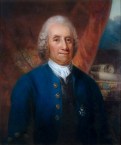
Emanuel Swedenborg
The Wikipedia article on Emanuel Swedenborg mentions his revelations, but doesn’t use the term “prophet” even once. Did Swedenborg not see himself as a prophet? What is a prophet, according to Swedenborg, other than someone receiving divine revelation and preaching it?
What follows just below is a slightly edited version of my response.
I should mention first that biblical scholarship over the past couple of centuries has made sense of many passages in the prophetical books of the Bible that were considered incomprehensible in Swedenborg’s day. My own view is that the biblical prophets were more aware of the meaning of their message for their own times than Swedenborg gave them credit for.
What remains true, I believe, is that their messages also had deeper “correspondential” meanings that they themselves were unaware of. Swedenborg explains many of these spiritual meanings in his theological writings. See: “Can We Really Believe the Bible?“
Meanwhile, since the question asked whether Swedenborg saw himself as a prophet, Swedenborg’s own view of the prophets of the Bible is the most relevant one in answering the question. That’s why I have quoted heavily from Swedenborg’s own writings in answering the question.
Introduction
Emanuel Swedenborg (1688–1772) did not refer to himself as a prophet, nor did he see himself as a prophet. Indeed, he saw a clear distinction between himself and the biblical prophets, based on at least three significant factors:
- Manner of inspiration
- Style of writing
- Purpose of the message
In general, Swedenborg saw prophets as biblical figures. He did not recognize prophets outside the narrative of the Bible.
1. Manner of inspiration
Swedenborg saw the biblical prophets as being inspired by God right down to the very words they spoke. He wrote:
The prophets through whom the Word was written . . . wrote exactly as the spirit from the Divine dictated, for the actual words which they were to write were uttered in their ears. (Arcana Coelestia #7055:3)
When the prophets were engaged in various representative actions, according to Swedenborg these were inspired into them through spirits sent by the Lord who possessed their bodies during the time they were engaged in this type of prophesying. Swedenborg stated that he himself was given an experience of what it was like for the prophets when they were being possessed by spirits in this way:
It is well known from the Word that the prophets received influx from the world of spirits and from heaven. It came to them partly through dreams, partly through visions, and partly through utterances. With some prophets it also entered into their own speech and gestures, thus things of the body; and when this happened neither their utterances nor their actions were their own but were those of the spirits who occupied their bodies at the time. Some behaved as though they were insane, as when Saul lay down naked [1 Samuel 19:18–24], some inflicted wounds on themselves, and others wore horns; and there are many other examples of the same thing.
Having the desire to know how spirits led them to do those things, I was shown through actual experience. So that I might know, I was possessed for a whole night by spirits who occupied my bodily powers so fully that I could not feel it was my own body except in a very vague way. . . .
This state which lasted through the night until morning taught me the way the prophets through whom spirits spoke and acted were possessed. The spirits occupied the prophets’ bodies so thoroughly that the prophets were left with hardly anything more than an awareness of their existence. There were particular spirits assigned to this function who had no wish to obsess people, only to enter a person’s bodily affections, and having entered them they entered all things of his body. The spirits normally present with me said that I had not been with them while I remained in that state. (Arcana Coelestia #6212)
Swedenborg’s experience of inspiration was very different. Though, as here, he was occasionally given experiences of what dreams, visions, and prophecies were like for the biblical prophets, this was not his regular ongoing experience. Rather, he remained fully in possession of his own mind and body. Further, though the prophets sometimes did not understand the meaning of the words they were speaking or writing under divine inspiration, Swedenborg’s inspiration was into his thinking mind. He wrote:
The Lord cannot manifest himself to everyone in person, as has been shown just above, and yet he foretold that he would come and build a new church, which is the New Jerusalem. Therefore it follows that he is going to accomplish this through the agency of a human being who can not only accept these teachings intellectually but also publish them in printed form.
I testify in truth that the Lord manifested himself to me, his servant, and assigned me to this task; after doing so, he opened the sight of my spirit and brought me into the spiritual world; and he has allowed me to see the heavens and the hells and to have conversations with angels and spirits on a continual basis for many years now. I also testify that ever since the first day of this calling, I have accepted nothing regarding the teachings of this church from any angel; what I have received has come from the Lord alone while I was reading the Word. (True Christianity #779)
For our current purposes, we will set aside Swedenborg’s concept of the Second Coming. (On that, please see: “Is the World Coming to an End? What about the Second Coming?“) Suffice it to say that he did not believe himself to be the Second Coming of Christ. Only a means by which the Lord accomplished that Second Coming, which Swedenborg saw as a spiritual coming, not another physical one.
The key point here is that unlike the prophets, who were possessed by spirits and heard words spoken to them that they were to pass on to the people, Swedenborg was not possessed by spirits, but fully conscious and aware of his own mind. His mode of inspiration, as described briefly here, was that the Lord inspired his mind to see and understand the truth while he was reading the Bible.
In short, Swedenborg’s mode of inspiration was entirely different from the mode of inspiration of the biblical prophets.
2. Style of writing
Swedenborg saw the style of writing of the biblical prophets as entirely symbolic—or “correspondential,” to use his term. Everything they wrote had a deeper spiritual significance, even where the literal meaning of their words is obscure to present-day readers. In Arcana Coelestia #66, he describes four different styles of writing in the Bible:
- The mode of people of the earliest church
- The narrative mode
- The prophetic mode
- David’s psalms (i.e., the style of the Book of Psalms)
The prophetic mode draws on the mode of the earliest church, which Swedenborg describes in this way:
The mode of [the people in] the earliest church. Their method of expressing themselves involved thought of the spiritual and heavenly things represented by the earthly, mundane objects they mentioned. Not only did they express themselves in words representing higher things, they also spun those words into a kind of narrative thread to lend them greater life. This practice gave the earliest people the fullest pleasure possible. (Arcana Coelestia #66)
Based on this, here is how he describes the prophetic style:
The prophetic mode. The inspiration for this was the mode used by the earliest church, a manner of writing [the authors] revered. But the prophetic mode lacks the cohesiveness and semi-historical quality of the earliest church’s mode. It is choppy, and almost completely unintelligible except on the inner level, which holds profound secrets forming a well-connected chain of ideas. They deal with our outer and inner beings, the many stages of the church, heaven itself, and—at the very core—the Lord. (Arcana Coelestia #66)
In other words, the prophetic style of writing is one of embedding spiritual symbolism within the words in a continuous sequence. Not that the prophets themselves realized or understood that their words had deeper meanings. As covered above, their words were given to them by God. It is God who placed those deeper meanings into the utterances of the Prophets.
Meanwhile, Swedenborg himself used three main styles of writing in his theological works:
- Exegetical
- Doctrinal
- Narrative
Swedenborg’s exegetical style is one of explaining the spiritual meaning of the Bible, often verse-by-verse, as in his exegesis of the books of Genesis and Exodus in the eight Latin volumes of Arcana Coelestia, and in his exegesis of the book of Revelation in his book Apocalypse Revealed.
His doctrinal style is one of orderly, point-by-point explanation of Christian doctrine, most notably in his final work, True Christianity, in which he provides an extensive presentation of his Christian theology in the format of a traditional Lutheran catechism or summa theologica.
His narrative style is one of telling stories of his experiences in the spiritual world. Though some of these do have extensive symbolic elements, this style is generally one of simple story-telling of events that he said he had experienced first-hand.
Unlike the symbolic style of the biblical prophets, none of these styles is intended to be symbolic or correspondential in nature. They are meant to provide explanation and understanding of the Bible, Christian doctrine, and the nature of the spiritual world.
Another way of saying this is that Swedenborg’s style is generally meant to be read literally, such that the meaning is in the plain words he wrote, whereas the style of the biblical prophets is meant to be read spiritually, for its deeper metaphorical meanings.
3. Purpose of the message
More briefly on this point:
In the Bible, though prophets do sometimes predict the future, and this has become the popular understanding of the meaning of “prophecy,” the primary purpose of the prophets’ message was to call God’s people to repentance, and to re-committing themselves to living according to God’s commandments.
Swedenborg’s theological writings, by contrast, contain few direct calls to repentance, worship, and so on. They are focused on explaining the meaning of the Bible, genuine Christian theology, and the nature of the afterlife. It is left to the reader to use this information as the reader sees fit.
In Swedenborg’s writings there is no ringing prophetic call to repentance and a changed life. Swedenborg instead explains how to repent, and how our spiritual rebirth happens. His writings are not prophetical, but informational.
Conclusion
Swedenborg saw his own mission as very different from that of the biblical prophets—so different that he did not think of himself as a prophet, nor did he refer to himself as a prophet. The reasons for this can be seen in the above explanation of the differences between the prophets and Swedenborg in their very different manners of inspiration, their different writing styles, and the different purposes of their respective messages.
(Note: This post is an edited version of an answer I originally wrote and posted on Christianity StackExchange. You can see the original question on StackExchange here, and the StackExchange version of my answer here.)
For further reading:
- Can We Really Believe the Bible?
- Why Isn’t Paul in Swedenborg’s Canon?
- The Bible: Literal Inerrancy vs. Divine Depths of Meaning
- Is the World Coming to an End? What about the Second Coming?
- Ezekiel 18: God’s Message of Hope . . . If You Think there’s No Hope for You
Share this:


Lee Woofenden is an ordained minister, writer, editor, translator, and teacher. He enjoys taking spiritual insights from the Bible and the writings of Emanuel Swedenborg and putting them into plain English as guides for everyday life.



 Spiritual Insights for Everyday Life
Lee, I’m currently in the process of reading a book by Leon James that says:
“I noticed that some of these appear in the literal meaning of the Writings, but many are underlying or hidden, and need to be extracted scientifically through the method of correspondences as outlined in the Writings which gives detail rules on how to extract knowledge from the Letter or literal meaning of the Threefold Word. The laws of spiritual-natural correspondences can be discovered from the Writings, and confirmed from the Bible, from children stories and fables, from our everyday linguistic expressions, and from inventive creations which we are inspired to do, notice, or perform.
But applying the correspondences mechanically does not yield spiritual meaning – try it and you’ll be convinced. We also need to be enlightened by the Lord synchronously to applying the knowledge of correspondences.”
James, Leon. Moses, Paul, and Swedenborg Volume 1 and 2: Stages of Growth in Rational Spirituality
where James seems to be asserting that Swedenborg’s writings themselves have a deeper meaning. Can you comment on that and perhaps where this idea comes from?
Ted
Hi Ted,
Unfortunately, Swedenborgians are not immune from the proclivity common among religious folk around the world of coming up with their own peculiar dogmas not found in the sacred writings and traditions of their religion, and setting up these newly minted, human-originated ideas as the fundamental distinguishing doctrines of their newly minted schismatic bodies. Protestants are famous or infamous for forming thousands of distinct churches, each with its own human-created doctrine that distinguishes it from all other Protestant sects. Each one thinks that its distinguishing belief is the be-all and end-all of Christian faith. The common denominator of all of them is that none of them are taught in the Bible, still less by Jesus Christ.
A group within the organized New Church fell prey to this tendency when the General Church of the New Jerusalem broke off from the main body of the New Church (Swedenborgian) in the U.S. in 1890, proclaiming that Swedenborg’s writings are the Third Testament of the Word of God, and as such are “authoritative”—by which they meant something very similar to fundamentalist Christians’ common view of the Bible as “inerrant.” I.e., if it is stated in Swedenborg’s writings, then it must be believed to be true exactly as written.
Of course, Swedenborg himself said nothing of the sort. In fact, this whole concept of the Word of God runs entirely contrary to Swedenborg’s own teachings about what makes the Word of God to be the Word of God. This, he said, is based on its having an internal sense—something he never said his own writings have. Swedenborg also rejected the common practice of accepting beliefs based on external authority, stating instead that one should accept something as true only if one sees and understands the truth of it for oneself.
The General Church’s view of Swedenborg’s writings as the Word is, in fact, based on a traditional non-New-Church Christian concept of what makes the Bible to be the Word of God: that it is literally “authoritative,” such that everything in it must be taken literally and absolutely believed. This is causing the General Church much trouble now that, for example, we know that none of the other planets and moons in our solar system is now or ever was inhabited by advanced human life forms, as Swedenborg said they were. There are a number of other things Swedenborg said that subsequent advancements in scientific and historical knowledge have shown not to be true. This is something that most people in the General Church don’t like to talk about because it calls into question the fundamental doctrine upon which their church was originally founded. However, eventually the falsity of false doctrines comes to light in ways that are hard even for its own adherents to entirely avoid.
Having steeped its people in this fundamental error about the nature of Swedenborg’s writings and of the Word of God, a group within the General Church came up with its own peculiar doctrine, broke off from the General Church when its new dogma was not accepted there, and formed its own schismatic body in 1937, which it called “The Lord’s New Church which is Nova Hierosolyma.” This group reasoned that if (as they believed, being a part of the General Church) Swedenborg’s writings are the Word of God, and Swedenborg said that the Word has an internal sense, then Swedenborg’s writings must also have an internal sense. Once again, Swedenborg never said any such thing about his own writings.
Thus they piled one error on top of another.
Leon James is apparently either a member of, or influenced, by this schism of a schism of the organized New Church.
I have read some of the “explanations of the spiritual sense” of Swedenborg’s writings written by some of the early leaders of the Lord’s New Church. To me, it reads like regurgitated and not very inspired repeats of things Swedenborg himself said much better and more cogently in his theological writings. By now, the Lord’s New Church has mostly given up on trying to “interpret” Swedenborg according to its “spiritual sense.” In fact, way back in the late 1970s one of its ministers said to me, “We used to put a lot of effort into interpreting the spiritual meaning of the Writings [a common in-house term for Swedenborg’s writings], but now we mostly focus on their literal meaning.” Riiiiight. Which is what you should have been doing all along, because that’s where the meaning of Swedenborg’s writings is.
One distinctive characteristic of such schismatic bodies, Swedenborgian, Protestant, or otherwise, is that they think theirs is the true faith, whereas everyone who doesn’t hold to the distinguishing dogma of their sect falls short of true faith and true understanding. This is true of the General Church, and it is also true of the Lord’s New Church. Speak to them, and they will assure you that theirs is the truest and most enlightened form of the New Church, and that all the other bodies are not really New Church because they don’t believe the particular dogma that distinguishes their own sect from the others.
In the case of the General Church, that dogma is that Swedenborg’s writings are the Third Testament of the Word of God, and as such are “authoritative.” In the case of the Lord’s New Church, that dogma is that as the Third Testament, Swedenborg’s writings have an internal sense. The people in these New Church sects who hold to these human-created dogmas think that they are the truest and most enlightened New Church people, even though the peculiar doctrines on which they base this rather hubristic belief are never taught anywhere in Swedenborg’s writings, let alone in the Bible.
It reminds me very much of Protestants believing that justification by faith alone is the central and most important doctrine of Christianity and the Bible, even though it is never taught anywhere in the Bible, and in fact is specifically and emphatically rejected there. No Christian believed in justification by faith alone for the first 1,500 years of Christianity, until Martin Luther originated that doctrine as part of his schism from the Roman Catholic Church, and set it up as the foundation of his new “Protestant” church.
And it reminds me of Catholic, Orthodox, and Protestant Christian alike believing that the Trinity of Persons is the essential Christian belief about God, even though it, too, is taught nowhere in the Bible, but was originated by human theologians and councils a few centuries after the last books of the Bible were written.
This belief among schismatic bodies of Swedenborgians that Swedenborg’s writings are the Word of God, and that as such they have an internal sense, is just another example of this common phenomenon among traditional Christians—and presumably in other religions around the world as well—of coming up with new doctrines not taught in their sacred literature and traditions, and setting them up as the central feature of their new sects.
The history of these schisms within the organized New Church is also told briefly in this article:
Who is Emanuel Swedenborg? Did He Start a New Church?
Leon James is a very earnest and dedicated man. Unfortunately, he has fallen prey to an error piled on top of another error that formed as part of two successive schisms within the organized New Church.
Lee,
Thank you for another very comprehensive response. It’s similar to what I suspected, but much more comprehensive.
There is one part you didn’t address, the last little bit: “But applying the correspondences mechanically does not yield spiritual meaning – try it and you’ll be convinced. We also need to be enlightened by the Lord synchronously to applying the knowledge of correspondences.”
I’ve also been slowly reading “The Science of Correspondences Elucidated” (https://archive.org/details/scienceofcorresp00made/page/85/mode/1up?view=theater). I’m trying to understand if Swedenborg’s correspondences are capable of being verified from the Bible as some of his examples imply or if there is some additional revelation required that isn’t in the Bible as Leon James implies above. Has this question been answered by Swedenborg or by those who follow him?
Ted
Hi Ted,
Yes, people need to be enlightened by the Lord to see and understand the spiritual meaning of the Bible. But this is not some arcane process of “secret study.” It is more a matter of people having their heart in the right place, and reading the Bible, and Swedenborg’s writings, in order to gain help and understanding in leaving their own selfishness and pride behind, and living a more kind, thoughtful, and loving life toward their fellow human beings.
During my two years in the late 1970s of attending college in Bryn Athyn, Pennsylvania, the episcopal seat of both the General Church and the Lord’s New Church, there were an awful lot of people walking around who thought they were awfully enlightened. Some of them were very smart people. But to my eyes, it all looked like “brain faith.” It caused such people to walk around with a sense of pride in their own great enlightenment and regeneration. Some of them were not very pleasant to be around. They made it very clear that they thought they were much smarter and more enlightened than you or anyone else. It was a whole lot of pride walking around.
I believe this is what was behind the fallacies that both the General Church and the Lord’s New Church set up as their key distinguishing doctrines. Yes, there are some good and humble people in those churches, both clergy and lay. But an awful lot of the written materials of their great scholars strikes me as more about intellectual pretensions than about a true desire to humbly serve the Lord’s people. Sometimes this leads them to say things that are far from what Swedenborg taught in his writings. Even when they are directly quoting Swedenborg, they sometimes get it wrong, and the old fallacious “Christian” dogmas creep in.
Being enlightened by the Lord is not about great intellectual study and acumen. That can certainly help to fill in the details of faith. But enlightenment comes, not to people who have great intellect alone, but to people who have a humble heart and read the Word of God with a desire to be led by the Lord toward a more kind, loving, thoughtful, and useful life.
The ones who have great intellect and a sense of their own rightness tend to write a lot of hifalutin’ stuff that seems to them to be the essence of spiritual enlightenment, but that to other people reads as very abstract, opaque, and hard to understand. The intellectual types who write these things think of themselves as having understanding and insight far beyond the common person. But I think they are just caught up in a sense of their own superior intellect and understanding, such that they cannot even see that what they are writing doesn’t make much sense to anyone but themselves.
When I read this sort of thing, and just keep scratching my head and trying to figure out what in the world this person is talking about, I generally just put it down as not useful or helpful. I don’t think people who write stuff like that are enlightened at all.
My model is Jesus Christ himself, who most commonly spoke in very plain words and imagery, such that even simple ordinary people can gain powerful lessons from his words, even as deeper thinkers find great metaphorical and spiritual wisdom from those same words. Yes, there are some very philosophical passages in the Gospel of John, opening up to us something of the deeper mind of Jesus. But even these philosophical passages are not an unending stream of abstractions. They are personal and heart-filled in a way that few of today’s intellectual leaders can touch or attain to.
So yes, study the correspondences. They are the key to opening up the spiritual meaning of the Bible. But don’t think that if you study them thoroughly enough, and get them all into your brain perfectly sorted and ordered, the Lord will enlighten you and show you all the secret meanings in the Bible. That’s not how it works.
Rather, as you study and learn the correspondences, when you read the Bible with a humble heart, seeking to be lead by the Lord out of your own particular evils and sins, and into a life of love, truth, and kindness toward your neighbors, then you will begin to see things in the Lord’s words in the Bible that touch your heart and your life, and give you what you need to walk the path in front of you.
Hi Lee, thanks for another good article. I’m still reading, but paused to ask you a question.
I’ve been thinking about how Swedenborg saw the second coming as spiritual and not physical.
I’m wondering how he interpreted Acts 1
9 After he said this, he was taken up before their very eyes, and a cloud hid him from their sight.
10 They were looking intently up into the sky as he was going, when suddenly two men dressed in white stood beside them. 11 “Men of Galilee,” they said, “why do you stand here looking into the sky? This same Jesus, who has been taken from you into heaven, will come back in the same way you have seen him go into heaven.”
It sounds to me like they are seeing something physical happening in these passages. Do you know how Swedenborg thought about these passages?
Thank you,
Paul
Hi Paul,
Glad you’re enjoying the article.
Swedenborg does comment on and explain Acts 1:9–11. As you might imagine, he interprets it spiritually, not literally. In particular, he interprets the “cloud” into which the Lord was taken as representing the literal meaning of the Bible, and says that this is where Jesus will appear when he makes his Second Coming. You can read his main commentary on these verses in Apocalypse Revealed #642 and #820.
You might also want to follow some of the links to the sections where he explains that “clouds” signify the literal meaning of the Word. This may seem a bit farfetched at first, but once you’re able to wrap your head around it, it makes perfect sense.
Of course, for people who think materialistically, Acts 1:9–11 is a slam dunk. Jesus will literally, physically return in the clouds of the sky just as his followers saw him taken up into the clouds of the sky. It is useless to argue with such people. Their minds are incapable of rising up to a spiritual level and reading these words metaphorically rather than literally. For them, the hope and assurance of a literal, physical return of Christ is the only thing that keeps them on the strait and narrow path. Best to leave them to their beliefs.
But consider what his followers actually saw, and how they saw it.
Did they literally see Jesus taken up into the physical sky, and hidden by a cloud there? If so, where did he go from there?
Back in those days, it was common for people to think in simplicity that God and the angels lived up above the clouds in the literal sky. This type of language occurs both in the Old Testament and in the New Testament. However, in the past century we’ve been up above the clouds, and there is no one up there. There is only the empty near-vacuum of space, in which no physical being can live without being surrounded by a rocket or space station complete with a complex life-support system. The idea that Jesus and the angels are literally up in the sky above the clouds is no longer possible for any thinking, knowledgeable person to believe. We now know that this would be impossible.
So what did his followers actually see on that day, and with which set of eyes did they see it? If we think that they saw it with their physical eyes, as just covered, it makes no sense at all.
Consider also that the original Greek word οὐρανός (ouranos) is sometimes translated “sky” and sometimes “heaven,” but it is the same word in the original language. So were Jesus’ followers literally looking up into the physical sky with their physical eyes, or were they looking up into heaven, or the spiritual world, with their spiritual eyes?
Given what we now know about what’s above the clouds, it makes much more sense that they saw Jesus’ ascension, not with their physical eyes, but with their spiritual eyes, and that Jesus did not literally get hidden by a physical cloud in the physical sky, but rather entered into a spiritual cloud in the spiritual sky. And as Swedenborg tells us, everything in the spiritual world is symbolic and correspondential of deeper spiritual things.
If, as seems clear to me, Jesus was taken up, not into the literal sky and a physical cloud, but into the spiritual clouds of heaven, then his coming back in the same way will also be a spiritual coming, in the spiritual clouds—which, as Swedenborg tells us, means coming in the literal sense of the Word.
And in fact, according to Swedenborg, everything he taught us about genuine Christian faith came “from the Lord alone while I was reading the Word” (True Christianity #779). Further, he says in Doctrine of the Sacred Scripture #50 and True Christianity #225 that “The church’s body of teaching has to be drawn from the Word’s literal meaning and supported by it.”
In other words, the Second Coming of the Lord did happen in the spiritual clouds of heaven. In the Second Coming, which is happening today for anyone whose eyes are open to see it, the Lord appears to our spiritual eyes through a spiritual understanding of the literal meaning of the Bible. These spiritual clouds—and not the literal clouds of the material-world sky—are the clouds into which Jesus’ followers saw him rise and disappear, and in which he has come again just as they saw him leave with their spiritual eyes.
In short, as with so much of what the Lord teaches us in the Bible, we are meant to read these words, not literally, but spiritually.
Thank you for your response Lee. I’m learning. If I can ask a follow up question: Are there great advantages for information to be conveyed symbolically as opposed to literally? I understand that Literature utilizes metaphor to create interest and color. Symbolism can be fun. But does it cause confusion for important information, if people are coming up with too many interpretations of what exactly the correspondence is? Is symbolism used in scripture for purposes of clarity or color? I like color in language, but clarity is nice too? Do you think literal language offers greater clarity than symbolic language? If so, why do you think God would value color more than clarity, by having his Word so full of symbolism?
Hi Paul,
These are all good questions. I can give only some general answers here, but at the end I’ll link you to a few more posts that go into more detail on some of these questions.
First, the most important information for our salvation is stated plainly in the literal meaning of the Bible. There are the Ten Commandments, repeated calls to repentance from sin, the two Great Commandments to love the Lord our God above all and our neighbor as ourselves, and so on. Everything required for us to walk the path toward heaven is stated plainly in the Bible, without the need for any interpretation. All that’s required is basic reading comprehension. If people don’t “get it,” it’s because they don’t want to get it because they’re not interested in becoming a good person and living a good life.
All the rest, the deeper aspects of Christian faith and life, is put into metaphorical language both to protect it from people who would misuse that deeper knowledge, and to put spiritual things into memorable physical imagery so that they will be stored away in a prominent part of our memory to be drawn upon when we are ready for it, at whatever level we are on spiritually.
Here is a very beautiful passage from Swedenborg’s writings about the nature of the Bible:
As Swedenborg says here, everything required for the teachings of the Christian church can be found in and supported by the plain literal meaning of the Bible. Everything else is “clothed” in correspondences, but even in these parts the meaning often shines through, especially for people who love to learn the truth so that they can put it into practice in their life.
We are all aware of corrupt religious leaders, both in the established churches and in the various sects and cults, that use their spiritual knowledge and understanding for corrupt purposes. Priests who inveigle parishioners, both adults and children, into illicit sexual liaisons using specious religious-sounding arguments are one example. Cult leaders who have some spiritual knowledge, and therefore look wise to their followers, but who use that position of respect to pile up wealth and power for themselves, not to mention sleeping with any of their followers that they find attractive, are another example.
This sort of thing cannot be completely prevented, unfortunately. But by clothing most of the deeper spiritual teachings in the Bible in symbolic and metaphorical language, God has made it harder for people who are not well-intentioned to gain access to deeper knowledge that they would only misuse for nefarious purposes.
Meanwhile, even most good people are not so good at thinking abstractly and remembering abstract concepts. So God has clothed most of the lessons of the Bible in parables: memorable stories of human and natural events that stick in our minds precisely because they are not abstract, but are expressed in concrete imagery based on the people, animals, and scenery of the world in which we live. In this way God ensures that these lessons will stick in our mind from childhood onward. Children can gain simple lessons from these stories, such as the Parable of the Sower, whereas adults can gain deeper meaning from them.
In this way, the Bible is able to serve, teach, and lead people of all intellectual, emotional, and spiritual levels, from the simplest to the wisest, all based on the same text. If all the spiritual ideas were expressed in direct, abstract language, most people would not pay any attention to it at all, nor would they understand it if they did. God put most of the Bible into vivid symbols and metaphors so that everyone can gain something from it, each at his or her own level.
I hope this much helps. Here are a few more articles that cover some of your questions in more detail:
Helps a lot! Thank you very much, Lee.
Hi Lee,
One thing i still don’t understand very well is about is the Truth part that Swedenborg talks so much in his books. This word is always side by side with Goodness, that i find easier to understand and apply in my daily life.
Is this Truth some sort of universal / objective truth? Like the commandments and other things that God / Jesus proclaimed or it’s more like something yourself feels as true, even if you don’t have an basis for it? This way probably leads to Subjectivism side, but I don’t think that is what Swedenborg was talking about.
Blessings!
Hi Caio,
It’s a standard joke among Swedenborgians that if someone asks you what something corresponds to, and you don’t know, just say, “good and truth.” Swedenborg uses these two words so often, and gives them as the correspondence for so many things, that it does seem as if everything corresponds to the same thing, and that thing is “good and truth.”
And it’s true that everything corresponds to good and truth, because that’s what everything boils down to. Or at a higher level, everything corresponds to love and wisdom, which are basically the same thing. Or everything corresponds to will and understanding, which are the same thing in the human mind. It’s all love and wisdom. It’s all will and understanding. It’s all good and truth. And from these two together come action and solid existence.
What’s missing here is that there are all different kinds of good, and all different kinds of truth.
On the truth side, water corresponds to truth, but light also corresponds to truth, and rocks also correspond to truth. However, water, light, and rocks are very different things from one another. Just so, the kinds of truth that correspond to these three very different things are also very different. Rocks are like facts, hard and unyielding. Water is like understanding, which ebbs and flows. Light is like inspiration, which lights up our mind.
There are as many different kinds of truth as there are different material things that truth corresponds to. So yes, there is universal / objective truth. And yes, there is truth that is more like something you feel as true even if you don’t have any (external) basis for it. And yes, there is subjective truth. And yes, there are many, many other kinds of truth as well—too many kinds to count.
Abstractly, truth is the form of things, and good is the substance of things.
Conceptually, truth is the way things actually are. If I say, “That barn is blue,” but it’s actually red, then that is not the truth. But if I say, “That barn is red,” and it is red, then that is the truth. If I say, “I’m an honest person,” but I’m always lying, then that is not the truth. But if I say, “I’m an honest person,” and I am always telling the truth, then that is the truth. And so on.
This applies to things on all levels, material, spiritual, and divine. If I say something about the nature of God, and that’s what God is actually like, then it is the truth. If I say that people of good heart live eternally in heaven, while people of evil heart live eternally in hell, then that’s the truth, because that’s what actually happens. And if I say the barn is red . . . well, I already told that story. 😉
In other words, when Swedenborg speaks about “truth,” he is speaking about many different things, depending upon the context. There are all different kinds and levels of truth, and each kind of truth goes with the matching good of its own kind and level.
Here is an exercise that can be helpful:
When Swedenborg speaks of “good and truth,” fill in some specific things that you know are good and true, or that have the qualities of goodness and truth. For example, fill in “friendship and honesty.” Or in the marital sphere, fill in “mutual love and mutual understanding.” Or in the sphere of daily life, fill in “healthful food and tasty food.” Or if you’re a physicist, fill in “force and vector” (I may not have the terminology quite right). Then read through Swedenborg’s whole explanation, filling in the two words you’ve chosen wherever “good and truth” appear, and see what comes out. This can bring to life many otherwise very abstract-sounding passages in Swedenborg’s writings.
Hi Lee. Does 2 Corinthians 12:4 mean that no one can talk about Heaven and why didn’t they say anything about what Swedenborg experienced in Heaven?
Hi Ray,
I suspect that Young’s Literal Translation is closer to what Paul actually meant to say in 2 Corinthians 12:4:
I.e., it’s not that there is some law against it so that it is not allowed, but that it’s just not possible due to “the laws of physics,” so to speak. And indeed, Swedenborg commonly said that it was not possible to put into earthly words some of the things he experienced in the highest (third) heaven especially.
Meanwhile, thousands, if not millions of near-death experiencers today have reported things about their experiences in the spiritual world that are very similar to, if not exactly the same as what Swedenborg described in far more detail several centuries ago.
Does the Bible say that Jesus is the last of the prophets?
Hi WorldQuestioner,
I’m not aware that the Bible says that Jesus is the last of the Prophets. But it does occasionally refer to Jesus as a prophet.
Does the Bible say that there will be no prophets after the New Testament ends? No more prophets after the apostle John writes down Revelation?
Hi WorldQuestioner,
Not that I know of. It says that “all the Prophets and the Law prophesied until John came” (Matthew 11:13, Luke 16:16). But it doesn’t say there will be no more prophets after that. Why do you ask?
Please Shalom Sir.
Please, hopefully you may remember me, but it is only Oloruntoba Akoni, from Nigeria.
Sir, please now, as I wish to be back please, I only have with me, YAHWEH, as from, Sir Yisrael Hawkins, please.
{Everything from Him, I believe, is the utmost now Sir –°Yahweh, and adherence to His (613) Laws. °Yahweh, in place of God, in our referencing, Sir.}
And, I just lost my only brother (older) this past Friday, please Sir. He’s been buried today.
And, I am thirty-one, unfortunately unestablished, I seem to be unable to just get my mum over this.
But, I trust you’ve been great, Sir, as well as the family please.
Please have a great time ahead Sir.
Hi Toba,
It is good to hear from you again, my friend.
I am very sorry to hear about your brother’s untimely death. May you and your mum find some comfort and peace in the aftermath. This may take time. The loss of a beloved family member goes deep into the soul.
As for me and my family, this seems to be a time of being unsettled, and of changes. My wife and I have recently felt obliged to leave South Africa. We are currently staying in Botswana, though we do not know if we can stay here long-term. We will soon be submitting a visa application for a long-term stay here in Botswana, but we are dubious as to whether it will be approved.
Meanwhile, we are in good health and moving forward, thanks be to God.
You and your family will be in our thoughts and prayers.
Hi Lee,
What is the difference between correspondence and representation? It seems Swedenborg uses them interchangeably but I’m not sure if one is different than the other. And does Swedenborg talk about other variations of correspondences
and representations in the physical and spiritual realities?
Thank you Lee
Hi Sam,
Good question!
The three most common words Swedenborg uses to refer to spiritual meanings are:
They’re related to each other, and sometimes Swedenborg does use them in a looser and more interchangeable way. Swedenborg is not a strict terminologist. Even when he defines a particular word in a particular way, he doesn’t always use it that way. So as always, it’s best to pay attention to the context to figure out exactly what he means by a particular word.
Having said that, when Swedenborg does use these words in a more specific sense (which is a lot of the time), they do have differences in meaning.
Correspondence is the most fundamental term. It is the living relationship between things on different levels of reality: divine, spiritual, and physical. When a specific spiritual thing, such as innocence, expresses itself in a specific physical thing, such as a sheep, that is a correspondence. Everything in the material world corresponds to something in the spiritual world, and everything in both worlds corresponds to something in God. The relationship is not just a general, overall one. Each specific thing in the material world corresponds to some specific thing in the spiritual world, and to some specific thing in God.
As an example, when you hug someone you love, the physical hug corresponds to the love between the two of you. (Our thoughts and emotions exist on the spiritual level of reality.) Love brings people together spiritually. Hugs bring people together physically. The two correspond to each other on two different levels of reality: spiritual and physical.
Representation relates to correspondence, but it is not quite as immediate and direct. A physical thing can represent a spiritual thing without actually corresponding to it. Most often “represent” is used of people in particular roles. For example, a king in the Bible represents the Lord. This is especially clear of king David, who was the idealized king of Israel, from whose lineage the Messiah (Christ) was to be born. And yet, David himself was quite violent and warlike, and he did some things that were, let’s just say, not exactly according to the Ten Commandments. David’s as a person didn’t correspond to the Lord because many of his actions were not good. But in his role as a king he represented the Lord.
Generally, representation comes in where we fallen humans have departed individually and culturally from the type of life God created us to live, so that our life no longer fully corresponds to the character of God. But in our fallen state, many people and things in our political and social structures represent good and true aspects of God even if they’re not actually in line with God’s way of doing things. An example of this can be found in these words of Jesus:
Since the scribes and Pharisees “sat on Moses’ seat”—meaning they were the spiritual leaders of the Jews—in that culture they represented God’s presence among the people. For this reason, Jesus told the people to do and follow whatever they taught. When people listen to what their spiritual leaders teach them, and live by it, they are showing their faithfulness to God. This is true even if some of the things their spiritual leaders teach them are not actually correct. However, personally, the scribes and Pharisees did not correspond to God’s presence among the people because they themselves did not live good lives in harmony with the character of God.
Swedenborg sums up the distinction between “representation” and “correspondence” in this pithy statement:
Signification is a more general term that can be used either of something that only represents some spiritual thing or of something that actually corresponds to it. Unlike representation, which draws our attention to the physical or cultural thing doing the representing (such as David in his role as king of Israel), signification focuses on the spiritual meaning without getting caught up in the role or position of the physical or cultural thing.
Put simply, when Swedenborg says that something “signifies” (or in some more recent translation “symbolizes”) something else, he’s simply saying, “This is what it means spiritually.” He’s not getting into the technicalities of whether it actually corresponds to that spiritual thing, or whether it just represents it in that particular culture or context.
For example, Swedenborg says that the great red dragon in Revelation 12 signifies Protestantism, which makes God into three Persons, and separates faith from kindness via its doctrine of justification by faith alone (see Apocalypse Revealed #537)
But does a dragon actually correspond to that corrupt church and its false teachings? Maybe, maybe not. If the Bible had been written in Chinese culture instead of in Middle Eastern culture, it is very unlikely that a dragon would would have been given such a negative meaning. More likely some other monster would have been used to symbolize what the dragon symbolizes in Revelation 12. That’s because Chinese culture, dragons have a very positive meaning—in contrast to Middle Eastern culture, in which they have a very negative meaning. Because of the negative connotation of dragons in Middle Eastern culture, in the Bible a dragon can easily represents something evil, but that may or may not mean that a dragon corresponds to that evil thing.
In explaining the meaning of the great red dragon, Swedenborg sidesteps all that, and says that it signifies Protestantism. He’s simply saying, “That’s what the dragon means in the prophecy.”
In short, something that represents some other thing may or may not actually correspond to that thing, but either way, in that particular context it signifies that thing.
I hope this helps you to sort out these words in your mind. If it’s still not crystal clear to you, don’t worry. Swedenborgian scholars have been debating the exact meanings of these words for over two centuries now, and they don’t always come to the same conclusions. But this should give you at least some idea of how Swedenborg uses these words.
Hi Lee,
Thank you so much, this helped a lot with understanding! This is the most clearest explanation I’ve heard or read about these words. I’m actually going to go back and re read like Heaven and Hell. Right now I’m on True Christianity Volume 1. But taking these meanings it’s going to bring a whole new perspective on what Swedenborg talks about. Which one thing I found about Swedenborg is that you can read a passage that didn’t really stand out and then come back at another time and be totally taken back by it and can gain so much insight from re reading it.
Thank you Lee
Hi Sam,
You’re very welcome. I hope it does open your eyes to some new insights!
And yes, I’ve been studying the Bible and Swedebnorg’s writings for decades, and to this day I regularly read something I’ve read many times before, and see something brand new in it that I’d never seen there before.
As an example, just a few days ago, as I was contemplating how and when the new church that Swedenborg spoke of would have its great expansion on our earth, it occurred to me that all those beasts and false prophets had to be thrown into the lake of fire, which didn’t happen until Revelation chapters 19 and 20, before the holy city, the new Jerusalem, could start coming down out of heaven from God, which happens in chapters 21 and 22—the last two chapters of Revelation, and of the Bible as a whole.
This suggests to me that the entire edifice of Nicene Christianity—Orthodox, Catholic, and Protestant—will have to come to its end and be completely rejected by the people before the true Christianity that Swedenborg spoke of can have its great rise on our earth. (In Swedeborg’s explanation of the book of Revelation, all those dragons, beasts, and false prophets represent various branches and factions of Catholicism and Protestantism. He didn’t say much about the Eastern Orthodox church.)
This is giving me a whole different perspective on exactly where we are in human spiritual history right now, and how things will likely unfold in the coming decades and centuries. And on what my own task is at this particular stage of the process.
In hindsight, it seems obvious. It’s right there! I just never saw it before, even though I’ve read these passages hundreds or thousands of times. It took many efforts and experiences in my life for my eyes to be open to seeing what was there all along. God opens our eyes to see things when we are ready to see them.
Hi Lee,
That’s really interesting, I’m not sure if this is related when Swedenborg said the second coming already happened in the spiritual world to reorder the hells? and will there be another one like that again? And would we feel it in the physical reality like
regarding the types or Christianity or other religions or with correspondence/significations? And that’s so true how God does open our eyes when we are ready, and what you said also reminds me how infinite God’s love and wisdom is of how we can read the Bible or Swedenborg like you said thousands of times and still gain so much more insights.
Thank you Lee
Hi Sam,
These are all good questions.
As for it happening again, meaning another end times and last judgment in the future, Swedenborg says no. That once this one is complete, and the New Jerusalem is descending out of heaven from God, there will be no need of another end and new beginning, because the New Jerusalem will last forever, as stated in the Bible.
However, I presume that even then, nations and cultures will rise and fall. There will still be endings and new beginnings. But they will be local and regional ones rather than universal ones that apply to all of humanity together.
Still, predicting the future is tricky. I wouldn’t want to stake my life on there never being any more general end times and new beginnings in the future.
As for whether the Last Judgment will be felt in the physical world, I believe it is being felt, but it’s happening over centuries, not over decades as it did with ancient Judaism. The Last Judgment that took place in the spiritual world in the 18th century set present-day institutional Christianity on a path of decline that I think will lead to its end as a significant institution and influence on this earth within the next few centuries.
Even at the time of the Enlightenment, which was in Swedenborg’s day, the Christian Church lost much of its grip on the intellectual life of humanity. But now it is going into physical decline as well, losing members and churches year after year.
But of course, we can’t predict the future with any certainty. We will just have to wait and see exactly how things unfold. It’s unlikely you or I will still be living on this earth by the time those churches are finally thrown into the lake of fire institutionally as they were spiritually in 1757.
Here is Swedenborg’s bold prediction about the effect of the Last Judgment on this earthly realm:
In other words: Now that the Last Judgment has happened, everything will continue just as it did before in this world! How amazing! And that prediction turned out to be absolutely correct! 😀 (But inwardly, I do believe people’s minds have been greatly freed, as Swedenborg says here.)
That last piece about “a particular group of people distant from the Christian World” is a reference to Swedenborg’s belief that the things he was writing about were also being revealed to Africans in the interior of the African continent. This, however, seems to have been a pipe dream. See my discussion of it in this article:
A Swedenborgian in Dialog with Black Consciousness and Black Liberation Theology
Hi Lee,
That’s really interesting and there’s definitely more freedom in the ways of religion and thinking for good and bad but that’s with everything really. But
is the last judgment completed or is it in the process still? And Swedenborg has the most practical and useful (I’m not sure if that’s the right word) explanation of the last judgment. There’s so many wacky ideas out there regarding that concept that causes a lot of fear.
And also what you said how this will be on a local and regional ones rather than universal ones that apply to all of humanity together makes a lot of sense because I hear people talking about “ascension” and go from “3D” to “8D” or whatever of how we’ll all be transformed and have all these powers like seeing through walls and floating or that there will be an apocalypse in 2026? Something like that lol. It seems everyone is focused on outward events rather than inner spiritual events. These ideas are super popular in the New Age field. Like in 2012 or during Covid or certain events happening, these are supposed to be ascension moments? So much is talked about these things and it seems everyone is trying to say “this is exactly what’s going on and what’s going to happen”. Which is cue for all the crazy ideas lol.
Thank you again Lee
Hi Sam,
The Last Judgment that took place in the spiritual world is complete. God reduced everything to order there. Before that, there were lots of bad people remaining in the world of spirits for centuries, clogging it up and detaining good people from moving on to their eternal homes in heaven. All of that has been cleared away now. People spend only a short time in the world of spirits—the equivalent of one to three decades at most—before moving on to their permanent homes in either heaven or hell.
The other thing that was clogged up was the flow of good and truth from God through heaven to people on earth. On earth, our closest connection is not directly with heaven (or with hell) but with the world of spirits. So if the world of spirits is clogged up, what flows to us on earth is also clogged up. This was one of the reasons for the previous lack of freedom of thought. When those blockages were cleared up, another effect was to free human minds here on earth, because there was a freer flow of good and truth to us from God and heaven via the world of spirits.
All of this is also why the effects of the Last Judgment are still working themselves out here on earth. As Swedenborg says, the Last Judgment in the spiritual world doesn’t directly change anything on earth. It only changes the spiritual environment, meaning it changes the atmosphere in which people think and feel. It’s up to the people on earth themselves to make any actual changes in the social, political, and religious landscape of the material world.
Hi Sam,
We already have technologies that allow us to see through walls to a certain extent. Google it. As for floating, we’re doing that too—sort of—with hovercraft and such.
These things are cool and all, but not particularly impressive from a spiritual point of view. It’s just technology. And if we figure out how to do it directly with our mind, it’s still just physical stuff. The real miracles of life are when selfish people are transformed into good and loving people through spiritual rebirth and growth. Compared to that, no amount of physical parlor tricks is all that exciting. And of course, the parlor tricks last only for our lifetime on earth, whereas spiritual change lasts forever.
Still, the very fact that we have made such fantastic progress in science and technology over the last few centuries is one of the effects of the Last Judgment. The freeing of the human mind that resulted from the Last Judgment has led to all sorts of new development in the world of knowledge and ideas, and their application to human life on this planet.
Hi Lee,
Thank you for the clarification on those topics and makes so much sense and ties in with other things that Swedenborg talks about that I didn’t realize before like where thoughts come from to communities of spirits and how that relates to the last judgment and all that. And how that relates about choosing good with what we have here and the importance on focusing on our eternity than superficial things. Really helpful!
Thank you again Lee
Swedenborg seems to get stuff wrong about science a lot. Like life on other worlds in the solar system, abiogenesis, and even color theory.
[
Swedenborg says that there are two general colors, red and white, and that “the other colors, as green, yellow, blue, and many more are composed of them,” modified by black (Apocalypse Revealed #915). This is evidently true of many colors; but we are in the habit of thinking of yellow and blue as pure, simple colors. Yellow is, however, white warmed by a red which is inseparable from it. Why it is inseparable we shall see presently. A decided blue is made by the mixture of white and black; or, better, by a thin layer of white over a black ground, as in black onyx.
]
– http://www.scienceofcorrespondences.com/colors.htm
In reality, black is the absence of light, and the primary colors of human vision are RGV (the violet is a blueish one). R & G make yellow, while white and red make a pink or faded red. White and black make grey, not blue.
Hi K,
Yes, and even today there are some Swedenborgians who are still grasping at the straw of Swedenborg’s illusive infallibility.
In particular, Swedenborg’s color theory is a real head-scratcher. There are at least two different color schemes, that of light and that of pigment. But in neither one of these can you make all colors by varying mixtures of red, white, and black. Swedenborg’s color scheme is one of his ideas that made my brief list of things he was wrong about, in this article:
Do the Teachings of Emanuel Swedenborg take Precedence over the Bible?
(But I missed the “black” part in mentioning that item. I’m going to add it now.)
Has anyone since Swedenborg had any spiritual experiences similar to those Swedenborg had, which back up what Swedenborg wrote?
Otherwise it seems odd that God would just speak to Swedenborg in the 18th century, and leave it at that.
Hi K,
Yes. Thousands, if not millions of people have had brief experiences in the spiritual world in the form of near-death experiences. What they experience in the spiritual world is very similar to what Swedenborg described. For a comparison of the experiences of NDEers with Swedenborg’s descriptions of the spiritual world, see my book Death and Rebirth.
There are also various “astral travelers” who describe their experiences in the spiritual realms, often sounding very much like Swedenborg’s descriptions, even if they interpret them differently than Swedenborg did. One example brought up recently by another reader here is Jurgen Ziewe, whose descriptions and artwork depicting his astral travels is very reminiscent of scenes that Swedenborg described.
By now, there is a large body of material recounting thousands of people’s experiences in the spiritual world, much of which corroborates what Swedenborg described from his visits there in the 18th century. It would indeed be strange if Swedenborg were the only one to see these things. But that is far from the case.
So there have been other people who had experiences that described the 3 levels of Heaven, the World of Spirits, the 3 levels of hell, stuff like God appearing as a sun in the spiritual, etc., and wrote about it in this life?
Hi K,
Most people who have visited the spiritual world did so only briefly. They didn’t have time, as Swedenborg did, to travel around and learn the lay of the land. A few have spent longer times there, and have described various levels. None that I’m aware of described its arrangement exactly as Swedenborg did. But different people see different things, and interpret them differently. None had nearly three decades of almost daily experience there to gain a comprehensive understanding of the spiritual world, as Swedenborg did. His Heaven and Hell remains the most detailed description of the spiritual world ever written and published, not to mention extensive material on the spiritual world elsewhere in his published and unpublished writings.
Hi, Lee and K,
I agree with Lee, but there are some who report extended experiences with the Spirit World. Here are some interesting books that appear to me to be reasonably consistent with Swedenborg:
Carl Wickland
From <https://en.wikipedia.org/wiki/Carl_Wickland>
Report by Psychiatrist on his work with spirits published in 1924:
Thirty Years Among the Dead by Dr. Carl A. Wickland, M.D.
Wickland, Carl A.; Wickland, Carl. Thirty Years Among the Dead: The supernatural is only the natural not yet understood (p. 1).
Andrew Jackson Davis
(August 11, 1826 – January 13, 1910)
From <https://en.wikipedia.org/wiki/Andrew_Jackson_Davis>
The Summerland Pocket Reader (Author – Andrew Jackson Davis)
Jackson Davis, Andrew. Andrew Jackson Davis : The Summerland Reader . Lulu.com. Kindle Edition.
Reports via medium Geraldine Cummins of deceased members of the Society for Psychical Research https://en.wikipedia.org/wiki/Society_for_Psychical_Research
Winifred Coombe Tennant
From <https://en.wikipedia.org/wiki/Winifred_Coombe_Tennant>
who died on Aug. 31, 1956.
SWAN ON A BLACK SEA
Cummins, Geraldine. Swan on a Black Sea: A Study in Automatic Writing: the Cummins-Willett Scripts . White Crow Books. Kindle Edition.
Frederic W. H. Myers
From <https://en.wikipedia.org/wiki/Frederic_W._H._Myers>
Who died on Jan. 7, 1901
THE ROAD TO IMMORTALITY
Cummins, Geraldine. The Road to Immortality . White Crow Books. Kindle Edition.
BEYOND HUMAN PERSONALITY
Cummins, Geraldine. Beyond Human Personality . White Crow. Kindle Edition.
There are many other books especially from the Spiritualist period in the 1800s and early 1900s, but it is hard to separate the truth from the fraud in these reports.
Ted
Hi Ted,
Thanks for all the great references! I’m far from an expert on people other than Swedenborg who have visited the spiritual world. I’ve heard of most of these names, but have read only smatterings of them here and there, mostly a long time ago.
Lee,
I’ve found these books uniquely compelling as I’ve been led away from the default ‘materialist’ philosophy from college to my present ‘idealist’ view of the nature of things. If people are stuck on ‘materialism’ I’d recommend the many books on Near Death Experiences and Edgar Cayce’s biography with an idea of how to explain his very well documented recent (March 18, 1877 – January 3, 1945) life in a materialistic framework. It’s what got me delving into a spiritual worldview since materialism had no answers beyond fraud … followed by Swedenborg’s explanations which opened everything up.
There is a river
Edgar Cayce: Ordinary Man, Extraordinary Messenger
Sugrue, Thomas. There Is a River: The Story of Edgar Cayce (p. 1). Penguin Publishing Group. Kindle Edition.
Ted
Hi Ted,
Thanks again. Back when I was a pastor of a small Swedenborgian church in Massachusetts, a woman who was a follower of Edgar Cayce started attending the church quite regularly. She found a lot of commonality between Cayce and Swedenborg. Traditional Swedenborgians tend to shy away from Cayce and others who claimed spiritual experiences. I do tend toward my mother’s view, which was, “Once you’ve read Swedenborg, why would you want to read anyone else?” Still, I don’t reject the experiences of others who have visited the spiritual world. Even if I may disagree with some of their interpretations of their experiences, I think most of their experiences are genuine. And as K said, it would be strange, and would give great grounds for skepticism, if Swedenborg were the only one to have visited and described the spiritual world.
But the reality is that thousands, if not millions, of people have visited the spiritual world either briefly or for longer periods of time, and there is a general commonality in their descriptions, even though of course there are also differences. Even people traveling to different lands on this earth don’t have the same experiences there, and don’t describe them exactly the same. We should expect no less for visitors to the spiritual world, which is an entirely different realm of its own.
Lee,
You will find those kinds of things and more in the books I cited.
What Cayce did for me was to destroy the ‘materialistic’ world view. Since his diagnostics were so well documented and so successful and there were no ‘materialistic’ explanations, I had to open my perspective to ‘something more’. I look at Cayce as just a step along my way. The other thing that Cayce’s biography did was to point me to ‘someone like Cayce but earlier’: Andrew Jackson Davis. And getting one of Davis’s books led me to four others before Davis:
[1] Aristotle.
[2] Demosthenes.
[3] Galen.
[4] Swedenborg.
Anyone with an open scientific mind (by then mine had been blown open) has to really consider what Swedenborg had to say. So, I do.
Ted
Hi Ted,
Thanks. This is another reason I don’t take a hard line on astral travelers, mediums, and other spiritual experiencers outside the Swedenborgian orbit. They all provide pathways out of materialism and into a spiritual understanding of life. Sure, they don’t all agree with each other. Even scientists don’t all agree with each other. But zooming back for the big picture, they all provide doors through which people can walk to exit materialism and open their minds up to God and spirit.
Beyond that, it’s good to have you here to provide information and sources that I don’t have so much knowledge about. Thanks again!
Have any so-called psychics or mediums ever wrote stuff similar to Swedenborg?
Hi K,
I’m not big on psychics and mediums, so this is a bit outside my wheelhouse. However, from what I do know, there are many similarities, such as people moving on to the spiritual world immediately after they die (rather than waiting for some future Last Judgment as traditional Christians believe); people still being themselves after they die, so that their personality is recognizable to their relatives and friends who are still living on earth; people continuing to live a life similar to the one they did here on earth; and so on.
Speaking of that book “The Road To Immortality”, there is a site called “The Structure of Heaven”, where the claim seems to be made that the New Church afterlife is really a temporary abode in “the plane of illusions”, above which there is more incomprehensible existence:
https://thestructureofheaven.com/emanual-swedenborg-and-frederick-myers/
Hi K,
Of course. Everyone wants to one-up Swedenborg. But Swedenborg is still the measure, not all these other wannabes.
Hi K,
There are lots and lots of sites each with their own opinion. The books I suggested include firsthand accounts if you believe that Cummins is credible. I do. Swedenborg is a firsthand account without a medium as an intermediary as is the Wickland and Davis book.
The Beyond Human Personality book is the second by the deceased Myers and goes into ‘moving beyond’ that you mention in your comment. Remember that is the account of just one person with no corroboration. There is nothing to assure that the person isn’t lying or simply mistaken. It’s just a report of what they think. There is also a communications problem apparently from spirits to mediums in general and garbling can occur there through no fault of either the spirit or the medium.
Anyone can spin a long-winded story that might or might not be true, but you can be sure that the longer the story and the further from observables the more likely it is to be false.
Ted
Thanks for the replies.
If it really did turn out that the New Church afterlife exists, and yet it is also illusory and ultimately temporary, then I think I would want to move on from that. Like how the Tibetan Book of the Dead advises moving on after death rather than getting caught up in illusions (IIRC).
A number of so-called psychic literature suggests the ultimate goal is becoming one with God and that at least the physical and so-called astral are illusory, along with multiple so-called planes of existence. Of course they may also claim that reincarnation exists, which of course is a horrifying concept.
PS: I think one or a number of people have claimed to channel Swedenborg. A test if that really happened would be seeing if there is consistency between such supposedly channeled writings and what Swedenborg wrote in life.
Hi K,
Usually it’s obvious to anyone who knows Swedenborg’s writings that the “Swedenborg” that the medium channels is an impostor. Not only has Swedenborg changed his mind about everything he wrote and come to agree with the medium (Surprise! Surprise!), but he says things that are factually incorrect about Swedenborg, such as that he wrote his spiritual writings by automatic writing, which he certainly did not. The real Swedenborg wouldn’t be misinformed about his own life and actions.
Hi K,
About the New Church afterlife:
You will find out for yourself after you die. Then, as Swedenborg himself said to an acquaintance who doubted his account of the afterlife, “You and I shall have much to talk about.”
I’ve already covered the fallacies of reincarnation, merging with the divine, and so on in other replies and articles here.
Believe me, when you reach your home in heaven, moving on is the last thing you’ll want to do! Remember this, and we’ll laugh about it together once we both get there. 😀
K,
You can search online and in old literature for speculation presented as truth forever. To the extent that the information is actually sourced in the spirit world it is most likely a lie wrapped in some truth to disguise it. Spirits who interact with living people are mostly evil and rarely angels. Wilson Van Dusen: The Presence of Spirits in Madness (theisticpsychology.org)
As to hell lasting forever being a problem, let me rephrase it based upon my understanding of Swedenborg’s writing: “Doing what you love forever.” What’s wrong with that? (BTW, the same applies to the heavens.) If my rephrase doesn’t make sense to you then you need to learn much more about what Swedenborg has written.
As to ‘shapeshifting’: Swedenborg’s writings prioritize the loves into four categories as: 1) Love of the Lord, 2) Love of Neighbor, 3) Love of World, and 4) Love of Self. When you transition to the spirit world, your material loves are sorted out and you gravitate to a community of like-minded spirits. If the community is in the category 1 or 2, you’re in a heaven. If in category 3 or 4 you’re in hell. Category 3 or 4 spirits torment each other because that’s what they love to do. Category 1 or 2 spirits help each other because that’s what they love to do. I suspect that if shapeshifting is appropriate to what they do, then there will be shapeshifting … although it may not be apparent to them. There are many examples of what could be shapeshifting in the spirit world in the religious literature and in reports of visitations in the material world.
I’m sure Lee has a better perspective.
Ted
Hi Ted,
Thanks for your thoughts. Sounds good to me! 🙂
The only 2 major issues I have with the New Church afterlife are hell lasting forever (even if it is somehow justified), and being stuck in human form for eternity. Even if the former is not an issue to me, it is to many, many spirits out there, apparently.
Hopefully at least the latter could be mitigated by having the ability to shapeshift and block unpleasant spirit senses, since a spirit body seems to have other abilities that in this life would be considered superpowers anyway.
I think the shapeshifting thing is possible in the New Church afterlife, as Swedenborg describes spirits appearing in non-human forms.
Also if one cannot die after death by having their body entirely destroyed (by a spiritual nuclear explosion at ground zero for example), then it means there is an essence that manifests in human form, but is not permanently stuck in it.
And hopefully if there is the New Church afterlife, it is not an illusory and temporary realm, otherwise Swedenborg would have been misled then.
Hi K,
This line of reasoning makes an artificial distinction between the soul and the body. The soul does not “manifest” in human form. It expresses itself in human form because it is human, and the human form reflects it. It is not some alien entity that takes on a human form as an avatar. It is a human being whose form is human.
There will be no spiritual nuclear explosion that vaporizes people at ground zero because that sort of thing doesn’t happen in heaven, and even in hell there are angels who moderate and control how much damage evil spirits can do to each other. No nuking of cities allowed.
And no, the New Church afterlife is not illusory and temporary. It is solid and real, and that realness and solidity lasts forever.
Thanks for the replies.
Still, I hope that there can be some way to temporarily (and at will) be free of the spiritual equivalent of corporeal form, or at least human form, despite human soul.
(I had a dream the other day where I was flying. Instead of taking a long flight of stairs the usual gravity-bound way, dream just floated all the way to the top between all the stairs. As dream me did so, dream me was still in human form, and it was depressing and repulsive to think of being stuck in that form for all eternity, with no relief from it.)
Hi K,
I can’t think of anything to say in reply to this that I haven’t already said. I think you’re just going to have to discover for yourself how this all works out for you after you enter the spiritual world.
I had a so-called showerthought: what if there are different afterlives for different kinds of life, and in the human one, everything appears human and God appears human, but beyond all the species-specific afterlives is some kind of transcendent and incomprehensible alien realm beyond any one form?
Of course according to Swedenborg the human afterlife is _the_ afterlife, so as I said before, if he is right and the New Church afterlife is _the_ afterlife, hopefully at least there can be temporary relief from being the spiritual equivalent of corporeal now and then. Like I said, I don’t like the idea of always being stuck as the spiritual equivalent of a corporeal and mostly hairless ape (Homo sapiens is technically a kind of ape) with all those gross organs and bodily functions for all eternity with no relief at all. TBH, that sounds like hell to me. Like a kind of spiritual equivalent of a flesh cage.
A century or so at most of being stuck as a corporeal ape-like being may not be so bad (this life), but being so with no relief for the spiritual equivalent of 10^100 years? 10^10^100? G1? Graham’s number? TREE(3)? ∞? Sounds hellish.
And this is all assuming there is an afterlife to begin with, of course. Mind-brain dependence is still a hard-to-refute argument against an immortal soul. Arguments I have heard against that so far currently seem somewhat unconvincing.
Hi K,
Once again, I don’t have anything new to say that I haven’t already said multiple times. It is unfortunate, in my view, that you have such a negative view of the human form. I don’t understand it, but people are free to think and feel as they want to.
PS: Everything in the natural supposedly has a spiritual counterpart, so hypothetically, could a spiritual nuclear explosion vaporize a spirit, or would they recover (or not even be harmed) by such a thing?
If a spirit body can be somehow destroyed one way or another and there is no external recovery process, that could mean that a spirit is ultimately mortal in the spiritual.
Hi K,
As I said in another recent reply to you, this would not be allowed. Angels would intervene before things got that far out of hand.
In one place, Swedenborg describes a man who had killed himself wrestling with what he had done. The man seemed to himself to have a knife in his hand, with which he repeatedly tried to stab himself. But each time, before he could actually do so, the knife was snatched out of his hand. This is just one small illustration of how spirits are prevented from actually dying.
Hi K,
Now that I’ve had a chance to look up that passage (I was on my phone when I replied before), I see that I was conflating two different passages. Here is the one about the person who had committed suicide:
This passage doesn’t say that the knife was taken away. Only that this man was trying to stab himself. Since it says he was trying to do this, we can gather that he was not succeeding.
Here is the one that explicitly says that the knife is taken away:
At any rate, the conclusion is the same: It is not possible to kill anyone in the spiritual world. This will always be prevented before it can actually happen, no matter how desperately people want to commit murder or suicide.
Hi Lee,
I just wanted to get your thoughts on some of these comments made about Swedenborg. I found them because Curtis was being interviewed by them. One of the channels names is called “Adeptus Psychonautica” which looks like they promote drug usage to attain spiritual experiences but they said how “This week I am joined by Curtis Childs who is a follower of the mystic and philosopher Emanuel Swedenborg. Swedenborg was a prominent scientist of the 18th century who began to have visions which sound exactly like those exactly like those experienced when taking DMT or other psychedelic substances.”
And another one called “JeffMara Podcast” about Podcast guest 366 is Curtis Childs, Vice President of Programming at the Swedenborg Foundation, a non-profit dedicated to sharing the insights of Emanuel Swedenborg, a 18th century Christian mystic who was allowed to witness the afterlife firsthand, as well as communicate with spirits and angels about the true nature of reality. It can be said that he live a near death like experience for 29 years.
“Emanuel Swedenborg was in direct communication with angels that showed him the process of ascension, also known as Spiritual Alchemy. Swedenborg’s divine revelation of Biblical ascension is now reaching a wider audience at the perfect time, when humanity needs it most.”
I just wanted to ask how can they compare Swedenborg to having a “DMT trip” and “29 year NDE”? And also I’ve never heard of Swedenborg talk about the “process of ascension, also known as Spiritual Alchemy”?
Thank you Lee
Hi Sam,
When people into various things such as psychadelic drugs and New Age thought encounter Swedenborg, they interpret him according to their own pre-existing beliefs. So they’re going to describe him as if he were one of them, even though he wasn’t.
DMT does produce experiences very similar to people’s non-drug spiritual experiences, but generally not quite as vivid and real as the real thing. Still, it’s pretty close. Probably because it temporarily lifts the veil that usually separates our conscious mind from the spiritual world, allowing us a brief glimpse into spiritual reality, but more into a movie version of it than like actually walking in the streets of heaven.
As for Swedenborg being living in a “near-death like experience for 29 years,” we could say that loosely, in that he regularly visited the spiritual world for almost three decades. But his experience was different from an NDE, and went far beyond what NDEers experience. An NDE lasts only a few minutes or hours, or maybe as long as a week if the person is in a coma. This is not enough time to get fully acclimated in the spiritual world. And the shorter ones aren’t even enough time to fully wake up in the spiritual world. They are more dreamlike states than states of being fully conscious in the spiritual world as Swedenborg was.
As far as “ascension,” that has various meanings to various people. What Swedenborg talks about is “regeneration.” The Latin word translated “regeneration” just means “born again.” It is a reference to Jesus’ teaching in John 3 about being born again. Regeneration does not result in our becoming gods, or part of God. It results in our becoming angels and living in heaven. But people who believe in other versions of what happens to us after death will naturally read Swedenborg’s regeneration as if it meant what they believe happens to us.
Also, many New Agers and people who follow Eastern religions think that Jesus became an “ascended master” or some such thing. That may also be what they’re referring to with the “ascension” thing. But in Swedenborg’s theology, Jesus did not become an ascended master. Rather, Jesus became fully God, unlike any other human being who has ever been born. This will not be accepted by New Agers, and if people who follow Eastern religions accept it, they will believe that the same thing has happened to many other “avatars” of God, such as Krishna. So they will not accept Swedenborg’s Christian version of who Jesus Christ was and is.
I think it’s fine for Curtis Childs to be interviewed by people who believe these things. It gets the word out. But as long as people are in the New Age or Eastern fold, they will not accept Swedenborg’s version of spiritual reality, and of our purpose here on earth. Still, it plants seeds. Some of them will reach a point at which they have problems with their existing belief system. If they’ve heard about Swedenborg, it will give them somewhere to go spiritually, at least to try it out. And that’s a good thing.
Hi Lee,
Sorry for the late response for some reason the notification that you wrote was sent to my spam folder which is annoying because none of the others ever did that. Also sorry if I am posting my reply multiple times for some reason word press isn’t allow me to post it.
But that makes a lot of sense what you said they will see Swedenborg as one of them but he wasn’t. So everything that Swedenborg wrote they will twist it according to their view essentially making it fit their narrative about the afterlife and even reality. Which also makes sense when people say that Swedenborg had a “drug trip” or a “NDE for years” when in reality it’s nothing like that but they are projecting their own narratives onto it to make it a believable story.
And “ascension” is a pretty popular topic in the New Age field they are always talking about how we are entering a “new era or 8D” constantly. But isn’t figures like Krishna a correspondence than an actually person with seven arms or whatever? I even heard the word “ascended master” apply to even people now that they claim themselves to be.
But like you said it’s good to get the word out in that field because it will definitely help save a lot of people who are now more confused than they were before even getting into it lol. But the downside is that those host of those channels will twist it taking away from the true meaning of what Swedenborg talks about.
Thank you again Lee
Hi sammyres,
Yes, your message went into spam a couple times, and when it finally didn’t go into spam, it was held for moderation. Perhaps it didn’t recognize the name and email address combo you used for this message.
Anyway, I’ve always presumed that Krishna is a mythical figure rather than a historical figure. But I don’t know enough about Eastern religions and their history to say that for sure.
Some people believe Jesus Christ is a mythical figure and was not a real historical person. But most scholars, including most secular scholars, do think he was a real historical person even if they don’t believe the Gospels provide a historically accurate portrayal of his birth, life, and death, and their aftermath.
Perhaps Krishna was also an actual historical person, around whom a mythology was later woven, as secular scholars believe about Jesus. I don’t know.
Hi Lee,
I’m glad it’s working now!
And ok that makes sense. I’m not versed with eastern religions or religions in general lol.
Thank you Lee
Hi Lee,
I was recently reading Secrets of Heaven and in the footnotes it said:
“The idea that Scripture possesses an inner meaning is an ancient one. Some of the earliest interpretations of the Bible using such a method come from Philo of Alexandria (also known as Philo Judaeus; around 20 b.c.e.-around 50 c.e.),… For a discussion of the similarities between Swedenborg’s perspective on the Bible and those of the church fathers, see Tulk 1994,… Swedenborg’s familiarity with these earlier sources is a matter of scholarly debate, but it is generally acknowledged that he had at least a broad conception of them, and indeed his interpretations often accord with them (see Lamm [1915] 2000, 55-58, 227-231). On the other hand, although he himself does occasionally show awareness of theories of an inner meaning much like his own (see, for example, §606), he repeatedly insists that his theology is derived from personal spiritual experience. [RS]”
But even if Swedenborg known about other people’s inner meaning of the Bible and it being an ancient concept wouldn’t that mean that Swedenborg along with others had a Divine inflow? Even though some may have more Divine inflow or more influence from spiritual communities depending on their ruling love? Making Swedenborg more correct than others coming from the Lord? Even though that deeper spiritual meaning of the Bible flows out from God that’s why some people have an instinctual feelings of there must be more to the Word?
Thank you Lee
Hi Sam,
As the note says, Swedenborg’s familiarity with earlier spiritual interpretations is a matter of scholarly debate. From what I know, there’s not much evidence that he was familiar with them, or if he was, that he spent any significant time studying them such that he would have drawn on them in writing his own spiritual interpretations of the Bible.
For one thing, a number of times Swedenborg says that no one has ever known about the spiritual meaning of the Bible before now. I don’t think we have to take these statements too literally. After all, Jesus himself explained to his disciples deeper meanings in some of his parables. What I think Swedenborg means is that no one has ever had the systematic understanding of the spiritual meaning of the Bible that he (Swedenborg) was given to see, courtesy of the Lord.
However, if, as Swedenborg says, the Bible does have inner levels of meaning, it should not be at all surprising that other people besides Swedenborg have believed this, and have made efforts to see and explain those levels of meaning. In fact, if Swedenborg were the only one ever to talk about spiritual meanings in the Bible, this would lead to more skepticism, not less, about his teachings on this point. If something is real, then it would make sense that more than one person would see it.
I have not spent significant time reading earlier explanations of spiritual meanings in the Bible. However, my general sense is that they do not have the comprehensive and systematic view of the Bible’s inner meanings that Swedenborg offers. Still, I also have the sense that others have come up with similar meanings in some Bible passage that Swedenborg came up with. And it’s perfectly possible that Swedenborg picked up some of his ideas about the Bible’s inner meanings from sources in the religious and philosophical culture in which he lived.
Swedenborg himself is not infallible. Sometimes he interprets the same verse differently in different places. An example I just came across is that in Apocalypse Revealed #744 and Apocalypse Explained #1074 Swedenborg interprets the words “and those with him are called and chosen and faithful” in Revelation 17:14, but in the Apocalypse Revealed version the three are interpreted as proceeding from the outmost to the inmost, or the lowest to the highest, so that “the called” are the outmost, and “the faithful” are the inmost, whereas in the Apocalypse Explained version he puts them in the reverse order, so that “the called” are the inmost, and “the faithful” are the outmost.
Skeptics could use this contradiction to doubt Swedenborg’s whole system of correspondences. Some conservative Swedenborgians who are inclined to think that Swedenborg’s writings are infallible have decided that because Apocalypse Explained doesn’t always agree with Apocalypse Revealed, and Swedenborg never actually published Apocalypse Explained, we shouldn’t consider Apocalypse Explained part of Swedenborg’s inspired writings. (But it would be a pity to ignore Apocalypse Explained. There are hundreds of verses that Swedenborg explains only in Apocalypse Explained. Our knowledge of the correspondences of many parts of the Bible, especially the Prophets and the Gospels, would be much poorer without it.)
But these are just quibbles based on the mistaken notion that Swedenborg is infallible—something he himself never claimed. Swedenborg was a human being who did his best to put into writing what the Lord was showing him about the spiritual meaning of the Bible. If he didn’t always get it exactly right, I think we can forgive him for that.
What he did offer that no one else (that I’m aware of) has is a comprehensive system of understanding the spiritual meanings within the Bible that also has the benefit of direct inspiration (to Swedenborg) from the Lord.
For that reason, while I believe we still have to keep our thinking mind active in reading Swedenborg’s interpretations of the Bible, and not believe everything he says just because he says so, I also think that reading Swedenborg’s explanations of the spiritual meanings in the Bible offers a clearer and deeper understanding of the Bible’s inner meaning than anyone else in history ever has.
The Bible is a complex book. Its various levels of spiritual meaning are even more complex. We shouldn’t expect to have a perfect understanding of the Bible, either in its literal meaning or in its spiritual meaning. What Swedenborg offers is a clear window into the depths contained within the Bible. As we read more and more of his explanations, we can begin to see for ourselves, as we read the Bible, what its deeper message is for our own lives, and for the life of human society as a whole.
P.S. You really are jumping right into the deep end of the pool! Secrets of Heaven is Swedenborg’s largest and most complex work by far. It is also, I think, his deepest and most beautiful.
Hi Lee,
Thank you kindly for the clarification on the footnote which makes a lot of sense as always! It shows how God is always trying to give us Divine inflow and we get peeks of that from time to time which is why Swedenborg resonates immensely when people read his work.
I also remembered hearing how Swedenborg wrote over like 7 million Latin words (I’m probably wrong on the exact amount) which would translate to even more words in today’s English so it’s truly mind boggling the amount of knowledge he was given to document by the Lord. So when skeptics pick out certain things it’s like saying like Newton, Einstein, or literally every scientist ever, never got anything wrong which every single scientist that ever lived did get things wrong! Swedenborg was tasked with documenting realities beyond the earthly mind which in actuality is harder than documenting physical reality phenomena!
Haha I couldn’t help it! I sort of bounce around reading his books Secrets of Heaven, Divine Love and Wisdom, True Christianity 1 & 2, White Horse, Secrets of Heaven a very little bit But it’s hard not to open up one of his books it’s like gems waiting to be discovered! But I definitely couldn’t agree more! It’s complex and beautiful all at the same time. I’ll definitely have to go back and re read the passages and volumes but it’s like a spiritual journey in itself understanding in an earthly sense, than more of a spiritual sense which is infinitely more.
Thank you again Lee
Hi Sam,
You’re welcome, as always.
Decades ago when the Swedenborg Foundation put out a film called “Swedenborg: The Man who Had to Know,” my father used to joke that the title should have been, “Swedenborg: The Man who Had to Write.” 😀
Haha so very true! That would be a perfect fitting title!
Just as the Bible has problems when read literally that may not be there spiritually, is it possible the same could be said of what Swedenborg wrote (especially Earths in the Universe)?
Hi K,
Swedenborg’s writings are not meant to be read symbolically as the Bible is. Yes, there are symbolic elements to them here and there, especially in some of the stories Swedenborg tells of experiences in the spiritual world. But for the most part, Swedenborg’s writings are doctrinal and exegetical, while having various narratives weaved in, and are meant to be taken at face value as directly, not metaphorically, expressing their meaning.
In other words, we are meant to take Swedenborg’s writings literally.
However, there is a parallel to the Bible (and other spiritual and revelatory writings) in that the science and history in Swedenborg’s writings is not revelatory, but is taken from the science and history of his day.
When the Bible’s human authors wrote their books, they simply adopted the view of the earthly realm that existed in their day. That’s what was available to them. If the general idea was that the earth was a flat disk that had a semi-spherical dome over it, then they wrote their cultural history, poetry, and prophecy in terms of that cosmology. They didn’t receive some divinely inspired science and history that gave an objective view of the actual nature of the physical universe. That’s not how revelation works.
Revelation is meant to deliver a spiritual and divine message, on spiritual and divine subjects. The physical trappings in which it is clothed are only vessels to deliver that spiritual and divine message. They are like clothing that can be taken off and put on, whereas the message itself is like the body underneath the clothing.
Swedenborg’s writings, like other revelations such as the Bible, were written within the context of the particular knowledge and understanding of earthly subjects such as history and science that existed at the time they were written. None of the science and history in them is divinely revealed or inspired. It is simply the vessel, or the clothing, in which the spiritual and divine message was delivered, because that was the vessel, and that was the clothing, that was available to Swedenborg at the time.
Earths in the Universe was written in the context of a culture in which it was very common to believe that the Moon and the other planets in our solar system were inhabited by human life, and that other stars also had planets inhabited by human life orbiting them.
Even up to the mid-20th century, much science fiction was woven around the idea that there were people on the Moon and the other planets in our solar system. In the late 19th century, H.G. Wells’s The War of the Worlds was completely believable as a possible real-life scenario. Even four decades later in 1938, Orson Welles’s radio dramatization of The War of the Worlds sparked a mass panic among people who thought it was real. Only after the Apollo moon landings of the late 1960s and early 1970s did it really sink into the public’s mind that the other planets in our solar system are barren and uninhabitable.
Now that we are aware of this, Swedenborg’s Earths in the Universe looks just as impossible as H.G. Wells’s The War of the Worlds. Developments in scientific knowledge since they were written have definitively shown that what they describe is not possible.
In the case of the Bible, we can simply say that since the main message of the Bible is spiritual, and the Bible also has a spiritual meaning, there is no need to take many of the things it says literally, such as the idea that the world was created in six days. These are metaphorical stories, not literal ones.
In the case of Swedenborg’s writings, that doesn’t work because Swedenborg’s writings don’t have a spiritual meaning (though there is a sect of Swedenborgians that mistakenly believes they do). They are meant to be read at face value.
We still don’t have to accept Swedenborg’s science as revelatory. We still don’t have to believe that there are men on the Moon. But the corresponding adjustment is to say that the important thing about Earths in the Universe is not its pronouncement that every planet and satellite is inhabited by human beings, which is a scientific statement that we now know to be incorrect, but that wherever intelligent human life exists in the universe, its people worship the same Lord and God as we do here on this earth. That is the main spiritual message of Earths in the Universe, and it is the primary reason Swedenborg wrote the book.
As with the Bible, the problem is with thinking the science and history in Swedenborg’s writings is divinely inspired and must be believed by the faithful. The reality is that the science and history in revelatory books is just the human clothing in which the spiritual message is delivered. One set of historical and scientific clothing can be taken off and another one substituted for it, but the underlying body of spiritual and divine truth remains the same.
Another objection I heard to New Church writings is that there’s supposedly differing accounts of Swedenborg first being supposedly spoken to by Christ. And differing accounts of supposed ESP events that Swedenborg was involved in, such as that fire in Sweden or involving Swedish royalty.
Hi K,
No two people ever see or hear things the same as each other. Witnesses in court trials commonly give different descriptions of the same events. That doesn’t mean it didn’t happen. Just that different people saw it differently. Judges and juries try to piece together the most likely way things happened based on the varying accounts.
If it’s Christians who are making this objection, they should try reading the four Gospels. Even the three synoptic Gospels (Matthew, Mark, and Luke) differ on the details of exactly what happened and exactly what Jesus said. Did the cock crow once or twice? Was there one angel, or two angels at Jesus’ tomb? And so on. Meanwhile, the Gospel of John has major differences in the timeline and in what sorts of things Jesus said. Should Christians reject Jesus because the Gospels have differing, and sometimes conflicting, accounts of him and his story?
Some of the accounts of Swedenborg’s visions of Christ came, not directly from him, but from third parties who later wrote down what he told them. All the famous accounts of his publicly demonstrated clairvoyance came from third parties. The same thing applies. No two people ever hear the same thing even if they listen to the same story, or see the same thing even if they are witnessing the same event. Their own ideas and mental states color what they see and hear. What exactly happened we will probably never know. But it’s reasonably certain that something like the reports happened that then got told differently through the eyes, ears, and minds of different people.
Hi K,
We do have one account from Swedenborg himself of what was probably his first in-person encounter with Christ. It is in his Journal of Dreams, #49–54, which is the first half of his entry for April 6–7, 1744. Since this is a first-person account written immediately after it happened, we can be quite sure that it is a reliable account. In the rest of the entry after #54 he comments further on this encounter with Christ.
Another problem with the writings is that at the end of “Divine Love and Wisdom” (at #432), Swedenborg seems to say that a fetus is formed out of a magical spiritual substance, instead of from the fertilized egg via cell division as science has shown.
And IIRC he also claimed that diseases magically mutated from evil which contradicts germ theory, and doesn’t explain how diseases were around before humans were.
Hi K,
The science in Swedenborg’s writings is no more advanced than Swedenborg’s own scientific knowledge was at about the time his spiritual eyes were opened in the mid-1740s. At that time he ceased his scientific studies, and devoted all his time and mental energy to his new spiritual studies and mission. Swedenborg was unaware of the present-day science of genetics, DNA, and so on. Though he was aware of the existence of sperm, he didn’t think they had any important function in reproduction except perhaps helping the seminal fluid containing the soul of the father (as he believed) to move along on its journey toward fertilizing the egg. If, indeed, he even knew about human eggs and their function. He seems to have thought that the embryo formed from the menstrual blood of the woman in the uterus under the influence of the soul from the father contained in the seminal fluid.
All of this, of course, we now know is not how reproduction works. But Swedenborg didn’t know that. He was going on the best information he had at the time.
Even angels clearly don’t have any more advanced scientific knowledge than the earthly scientific knowledge of the time. There are plenty of examples of angels saying things to Swedenborg along scientific lines that we now know to be incorrect, but that would have been reasonable given the level of scientific knowledge that existed at the time. Their description of the early form of a human being therefore cannot be said to be based on any scientific knowledge that existed at the time. Swedenborg even starts out Divine Love and Wisdom #432 by saying:
Not only is it tiny and “composed of a spiritual substance that is not visible in physical light,” as he goes on to say, but it is also inside the fallopian tubes and uterus of the mother, inaccessible to the scientific instruments of the day.
Incidentally, “magical” in this context is a pejorative. What Swedenborg is saying here is that the initial human form is spiritual, not physical. Unless a person rejects the existence of spiritual reality altogether, this is not “magical,” but spiritual. And for all we know, the initial form of the human spirit may be as the angels are depicting here.
More to the point, what the angels depict doesn’t entirely correspond to what we now know about the early stages of the formation of the embryo. However, Swedenborg wasn’t as far off as scoffers and skeptics might like to think. First, he explicitly rejected preformationism, which was a popular theory at the time:
In this, he was in line with subsequent developments in scientific knowledge, which have decisively disproved preformationism. Further, though the hemispheres of the brain and the cerebrum/cerebellum distinction are not (based on my rudimentary knowledge of embryology) present in the earliest form of the embryo, the neural tube is one of the first things to form, so Swedenborg’s angels are not entirely off-base in making a rudimentary brain the initial state of the human embryo.
None of this is an attempt to say that Swedenborg and the angels he spoke to were correct about the process of reproduction after all. Rather, it is to say that at least they were punting in the right direction, given the very rudimentary level of knowledge of human reproduction that we possessed at the time.
Of course, materialistic scientists will reject the idea that there is a soul behind the formation of the body. But even if there is, it is beyond the purview of science, which is the study of material things. Science cannot tell us anything about whether there is or isn’t a soul involved in the gestational process, and if there is, what its role is.
I continue to believe that there is a proto-soul that plays a key role in the beginnings and development of the body, just as I believe that the fully developed soul is what gives life to the body throughout our adult life, not to mention being the locus of our consciousness. I am currently working on an article about the origin of the soul and its connection to the developing body. However, it’s a major piece, and it may be weeks or even months before I’m able to complete it and post it on the blog. This is an area where it is necessary to modify and update Swedenborg’s statements on these subjects in order to bring them into harmony with advances in scientific knowledge since his time.
Back to the big picture, I think it’s best not to get distracted by the fact that Swedenborg’s, and the angels’, scientific knowledge was limited and in some instances inaccurate. That’s not the point of Swedenborg’s theological writings anyway. The science in them is mainly for purposes of illustration and material-world tie-ins for the spiritual concepts he is presenting, which are the real point and message of his writings.
Rejecting Swedenborg’s writings because he got some of his science wrong would be like saying that you can’t trust a radio sports commentator who is calling the plays of baseball game because at a slack time in the game, while he’s chatting with the other commentators, he says that the earth is flat. Knowing the shape of the earth has nothing to do with the ability to call the plays in a baseball game. You could get into a big argument about whether the baseball field is actually slightly curved rather than truly flat, or whether if the field is flat, this distorts the game because really, the gravitational effects upon the ball are slightly curved. But it would all be a silly red herring. The curvature of the earth has no appreciable effect upon the rules and mechanics of a baseball game, and a sports commentator doesn’t need to know that the earth is spherical in order to accurately call the play-by-play of the game. Physics and baseball are two very distinct realms of knowledge.
Similarly, earthly science has no appreciable effect upon spiritual reality. It’s in a whole different realm. We just have to make some adjustments to bring our understanding of the spiritual concepts into correspondential line-up with what we now know of the nature of the material universe based on further advancements in science since Swedenborg’s day. This is one of the things I do here on this blog in some of my more in-depth articles, including the upcoming one on the origins of the soul and when (conjecturally) it becomes eternal. My thesis is that since God created both the spiritual universe and the material universe, the more we learn about each, the more they will dovetail with each other correspondentially.
We don’t read science books to learn about theater. Neither do we read theological works to learn about science. Swedenborg’s writings are about theology, not about science.
About “diseases magically mutating from evil,” I’d have to see the passage you’re talking about. Again, “magically” is a pejorative here. Presumably Swedenborg is talking about the spiritual origins of disease, not the physical origins. He was aware that diseases have physical causes as well. But by correspondence, even if something has a physical cause, it still also has a spiritual cause, because everything physical is produced from something spiritual via correspondences.
About “evil” things such as disease existing before humans came into being, this is a reasonable objection to Swedenborg’s ideas about the origin of evil. But it is another area where we just have to make some adjustments to account for the developments of science since his time. In particular, though Swedenborg didn’t read the early chapters of Genesis literally, science had not yet arrived at anything like the idea of the old earth that we have today. It was still reasonable at that time to suppose that the earth was about 6,000 years old. The theory of evolution was still well into the future also. So the idea that diseases, natural disasters, and other physical “evils” came into existence as a result of human evil was still a viable theory.
It’s obviously no longer a viable theory today. My stab at making the necessary adjustment is found under the heading, “2. Violence, pain, and suffering exist in the universe because the universe was created for us” in the article: “How can we have Faith when So Many Bad Things happen to So Many Good People? Part 2.”
As for germ theory, I think that in the future this will be seen as an early, faulty scientific effort to understand the nature of disease. There are many problems with the germ and virus theory of disease, such as why some people fall prey to germs and viruses, whereas others don’t. If germs and viruses were truly the cause of disease, then they should cause disease in everyone, not just in some people. Health, in my view, has much more to do with healthful living, within the confines of a person’s constitution based on genetics and upbringing, than it does with germs and viruses. Thinking that germs cause disease is like thinking that vultures cause dead cows. Germs are the clean-up crew for already unhealthy tissue. They do have a role in disease, but it’s nowhere near as significant as present-day medical science believes.
But it’s probably best if I stop here, since this is a spiritual blog, not a medical blog. 😉
I’ll just add that this ties in with Swedenborg’s principle that evil spirits can attack only the evil parts in us, not the good parts. Germs and viruses can attack only unhealthy tissue. Healthy tissue shrugs them off. But since people today live very unhealthy lifestyles, resulting in much unhealthy tissue in their bodies, germs and viruses have a field day with the current population of the earth. This makes it easy to believe that germs and viruses are the cause of disease. But it’s a superficial and faulty understanding of health and disease. This faulty understanding does cause damage by lulling people into relying upon drugs to cure disease instead of changing their lifestyle so that they don’t get sick in the first place.
I could write a whole essay just on this—and maybe I will at some point in the future. But although I do have some knowledge and interest in some other areas of human thought and investigation, I do my best to keep this blog focused on spiritual topics.
Anyway, I hope this rather long essay sufficiently addresses the issues you raised. Feel free to continue the conversation if you think I’ve missed something important.