The Myth of Ownership: A Thanksgiving Reflection

Title Deed

Title Deed

One of the most powerful and enduring fictions of human society is the idea that we can own things. A large part of our legal, civil, and social system is based on property ownership and the right to possess what is “ours.”

Further, in much of present-day society our sense of self-worth is heavily bound up in how much money we make, and what we can afford to buy and own. What sort of a house (or apartment) do we live in? Do we own it or rent it? What kind of car do we drive? How nice are the clothes we wear? We even speak of our “net worth,” which is the dollar value of everything we own minus the dollar value of everything we owe.

How much are you worth? Can it be counted in dollars? And more fundamentally, do any of us really own anything?

For more on the myth of ownership, please click here to read on.

Tagged with: , , , , , , , , , , ,
Posted in All About God, Spiritual Growth

Dani Mathers, Body-Shaming, and How to Develop Beauty

Dani Mathers Snapchat photo

Dani Mathers Snapchat photo

Dani Mathers, the 2015 Playboy Playmate of the Year, is in trouble. She is facing possible jail time.

In July, 2016, she accidentally posted publicly on Snapchat a selfie in which she feigns shock next to a surreptitiously taken photo of a nude elderly woman showering in the locker room of an LA Fitness exercise center. “If I can’t unsee this then you can’t either,” she posted.

The public reaction was swift and brutal. About the nicest thing said was, “Shame on you for body-shaming a woman who should be applauded for caring about her physical health!”

Mathers quickly deleted the photo, and issued several apologies:

In those apologies she said, among other things:

“That is not the type of person I am.”

When Annette and I saw the story, our reaction was:

Well yes, Ms. Mathers, that is exactly the type of person you are. It was a rude and shameful thing to do, regardless of whether you sent the photo and message publicly or only as “part of a personal conversation with a girlfriend,” as you originally intended.

The good news, however, is that you don’t have to keep being that type of person.

For more on developing real beauty, please click here to read on.

Tagged with: , , , , , , , , ,
Posted in Current Events, Spiritual Growth

The Evangelicals are Right: The World IS Coming to an End!

The end of this world

The end of this world

Ever since the time of Jesus, Christians (not to mention various other groups) have been predicting the end of the world.

The Essenes believed that the Jewish revolt against the Romans in 66–70 AD was the end-time battle. And as this list shows, there have been end-of-the-world predictions in almost every century since then.

In recent centuries, these end-time predictions have been coming thick and fast. And these days, there is always someone shouting that the end of the world is nigh!

It should come as no surprise, then, that the recent surprise election of Donald Trump as the 45th President of the United States has caused conspiracy theorists to suddenly “discover” that over 400 years ago, Nostradamus predicted Trump’s rise to power and the resulting end of the world.

Then again, as Alyssa Wilkinson points out in her article, “It’s the end of the world as we know it, again,” apocalyptic predictions about what will happen if the opposing candidate is elected are nothing new in American politics. The same was said about Barack Obama, Barry Goldwater, and many other presidential candidates. Some of them went on to get elected—and then abysmally failed to bring about the promised apocalypse.

So it’s easy for thinking, rational people to laugh off all the latest prophecies and prognostications made by evangelical Christians that this time the sky really is going to come crashing down!

And yet, the Evangelicals are right. Their world is coming to an end.

For more the end of this world, please click here to read on.

Tagged with: , , , , , , , , , ,
Posted in Science Philosophy and History, The Bible Re-Viewed

What is the Source of the Belief that the Deceased become Angels?

Heaven: A History, by Colleen McDannell and Bernhard Lang

Heaven: A History, by Colleen McDannell and Bernhard Lang

In Heaven: A History (1995: Yale University Press) the authors, Drs. Colleen McDannell and Bernhard Lang, state that Emanuel Swedenborg (1688–1772) had a pivotal role in bringing about a changed view of heaven, including the idea that angels are humans who have died and gone on to heaven, rather than a separate race of pre-created beings as mainstream Christianity had held for many centuries previously. See especially Chapter 7: “Swedenborg and the Emergence of a Modern Heaven.”

For more on humans becoming angels, please click here to read on.

Tagged with: , , , , , , , , ,
Posted in The Afterlife

What is the Difference between Justification and Salvation in Swedenborg’s Theology?

In the theology of Emanuel Swedenborg (1688–1772), as in other Christian theologies, justification is seen as part of a process that results in our salvation. In a nod to the traditional Christian concept of the ordo salutis (“order of salvation”), Swedenborg lists justification as one among many elements of the process of salvation. For example, he writes:

The Divine power and activity meant by the Holy Spirit are, generally speaking, reformation and regeneration, which lead to renewal, quickening, sanctification and justification; and these lead to purification from evils and the forgiveness of sins, and ultimately to salvation. (True Christianity #138)

However, his view of justification, in particular, is significantly different from the Roman Catholic and Orthodox perspectives, and radically different from the Reformed Protestant perspective.

For more on justification and salvation in Swedenborg’s theology, please click here to read on.

Tagged with: , , , , , , , , , ,
Posted in The Bible Re-Viewed

Can we Keep our Friends in the Afterlife?

Here is a Spiritual Conundrum submitted to Spiritual Insights for Everyday Life by a reader named Maria:

Ever since I encountered Swedenborg, I’ve struggled with the mechanics of the afterlife: it sounds both beautiful and terrible. I’ve been told we forget much of our life on Earth and can’t remember the people we’ve loved. When I’ve expressed disturbance at the idea, the answer tends to be “you won’t care, you’ll find better people and will feel like you always had them, etc.” I’m sick to tears of the “it’s like growing apart from dear friends as you mature” simile, because it isn’t the same thing at all.

Say we’ve been open and genuine and generally dedicated to being who we are truly in life. Say we’ve built real and healthy relationships, loving and warm. Will it still be “bye, I’m off on my own way and I’ll forget you!” after passing the stage of the spirit world? Even if our loves are different, will we simply never see or know these people again?

With all due respect to my fellow Swedenborgians, some of them have not quite gotten the message about what the afterlife is really like. Many of them are still affected by the old, outdated view of heaven as a totally alien world where we have some sort of wispy, ethereal existence that is completely different from anything we’ve ever experienced here on earth.

But that’s not how Emanuel Swedenborg (1688–1772) describes the afterlife at all. Instead, he describes it as a seamless continuation of our life here on earth. We take with us everything that makes us the unique person we are. And we live a life very much like the one we had lived here on earth, only better (assuming we have chosen heaven over hell).

Old friends

Old friends

Although Herbert Hoover’s ideal of “rugged individualism” has taken on almost mythic meaning in much of today’s society, the reality is that we humans are not islands unto ourselves. We are community beings. Our loves, ideals, beliefs, identity, and character have no meaning or reality on their own, but only in the context of our complex web of relationships with family, friends, co-workers, and other people in our community.

This means that we take with us into the afterlife not only our individual character, but also the many and varied relationships in which that character exists and is formed. So it should be no surprise that Swedenborg describes heaven as an intensely human community. And the relationships we leave behind are not the ones we love, but the ones that don’t feed our soul, or that turn out not to be what we thought they were.

Let’s take a closer look. Along the way we’ll explode a few common Swedenborgian myths about the afterlife.

For more on our friends in the afterlife, please click here to read on.

Tagged with: , , , , , , , ,
Posted in Sex Marriage Relationships, The Afterlife

The Meaning and Power of Baptism

Two Spiritual Conundrums have been submitted to Spiritual Insights for Everyday Life on the subject of baptism. First by a reader named Harshit Anjalika Murmu:

Hello sir, I liked your website very much. I want to ask a question about baptism. As born again Christian I took baptism second time. I want to know are people not in Christ who had taken child baptism? Also I don’t think that taking baptism a certain way will make God love you.

And more recently by a reader named Michael:

Thank you so much for your writing! I’ve been away from Christianity for a long time and learning about Swedenborg’s teachings had been an enlightening experience. One question I’m wrestling with is baptism. Do I need to be baptized? According to Swedenborg is it enough to be born again as you’ve written in another post? Baptism for me right now is definitely not practical, but I want to live these teachings. Thank you so much!

Thanks for bringing up the subject of baptism, which is one of two rituals (the other being the Holy Supper) that Jesus Christ commanded us to observe.

The Baptism of Jesus by John the Baptist in the Jordan River

The Baptism of Jesus by John the Baptist in the Jordan River

Baptism is a ritual of cleansing. It does not have any magical power by itself. Rather, it is a spiritual and social symbol of:

  1. Becoming a Christian
  2. Believing in Jesus Christ and living by his teachings
  3. Being spiritually reborn by being cleansed from evil and falsity in our heart, mind, and actions.

Let’s take a closer look. Along the way, we’ll answer the questions raised in these two spiritual conundrums.

For more on baptism, please click here to read on.

Tagged with: , , , , , , , , , , ,
Posted in Spiritual Growth, The Bible Re-Viewed

Today’s Christianity: Vastly Void of Truth

Here is a comment that a reader named Kyle left recently in response to the most popular post on this blog: “If there’s One God, Why All the Different Religions?

Walking in Darkness, by Linda Hedenljung

Walking in Darkness, by Linda Hedenljung

Lee, I found your article tickled the ears of culture but was vastly void of truth. By Jesus saying, “I am the way, the truth, and the life. Nobody comes to the Father except through me”… he’s making an absolute truth statement. Therefore anything that contradicts his statement is by definition false. There is one God. One Lord. One Savior by which man is saved. No other religion can save its followers, forgive sins, and offer hope for today and eternity. Our culture will scream, “Offensive! How dare Christians claim Jesus is the only way to God.” But Jesus himself said it. For Christians not to profess this truth is to not trust in Jesus at all. Therefore, not all religions are true or lead to God. In fact, any religion that is contrary to the claims of Jesus (his words, not mine) is false. Forget religions. It’s who you say Jesus is that matters. Living a “good and kind life” can make things pleasant for today but that does nothing for your eternal standing once our time on earth is done. I would think satan is quite pleased we have more religions than we can count.

Later that day, Kyle submitted this Spiritual Conundrum to Spiritual Insights for Everyday Life:

Lee,

I’m confused, and it’s actually from reading your posts and responses to people. You said you’re a christian and actually believe that salvation and heaven are only possible through Jesus Christ. Yet, you also say that every religion is right in its own way and leads people to the same God. Isn’t that completely hypocritical of your own faith? How in the world are all religions right and serving the same God?

Kyle

That got me to thinking.

Yes, Kyle and hundreds of millions of other Christians are confused.

They’re confused because their preachers have drilled into their heads a false “Christianity” that is so vastly void of truth that they can’t even read and understand the Bible’s own plain words about who is saved, and how.

(Photo credit: Linda Hedenljung)

For more on a “Christianity” void of truth, please click here to read on.

Tagged with: , , , , , , , , , , ,
Posted in The Bible Re-Viewed

Serving the Neighbor: Simple yet Profound

Here at Spiritual Insights for Everyday Life we are constantly preaching about serving the neighbor. But what does that mean? It means many things. But it also means serving someone when you least expect it.

Here’s an example that recently went viral: Photo of a Shoe Salesman Helping a Boy With Autism Is Going Viral For All the Right Reasons.

Here’s the story that goes with the photo, as told by the boy’s parents:

River Salter getting shoes

River Salter getting shoes

Last week we brought our 6-year-old son, River, to the Clarks Village outlet store in Street to be measured for school shoes. Being autistic, he really struggles with crowds, long queues and noisy places. The store was heaving! I knew there was no way he would cope with that environment so I explained the situation to a member of staff. Without hesitation, Aaran led us away from the noise and crowds to a staff room and placed a Do Not Disturb sign on the door. He was very patient with River, who was anxious, and went and got lots of different shoes for him to try on. We left with a great pair of shoes, a very happy boy—and Aaran also gave us the store number and said they’d happily book us an appointment before the store opens so that it’s quiet. Autism acceptance at its best! Thank you Clarks in Street, and a massive thanks to the shop assistant Aaran Daniels.

Mr. Daniels probably didn’t go to work that day thinking he would make a difference in the life of an autistic boy and his parents. But when the situation presented itself, he acted with thoughtfulness and with heart. And that did make a difference.

It was a simple act; yet it made a profound difference to the people he helped.

For more on serving the neighbor, please click here to read on.

Tagged with: , , , , , , , ,
Posted in Current Events, Spiritual Growth

Pain, Punishment, Prison, and Hell

In the course of a discussion on the recent article, “How Imagination and Fantasy Help our Spiritual Growth,” a reader named Frankly Frank said:

“And hell is not a punishment”…….

I dunno about that one, Lee.

There are vivid accounts from Swedenborg where in one example he describes IIRC two angels holding a hell detainee off the ground by the head and feet and then “twirling” them back and forth repeatedly in opposite directions so that their spine felt like it was being torn apart. Yeah, I think that could be called “punishment” but if it isn’t I’d hate to see what qualifies. (lol?).

I don’t see how a spade here isn’t a spade. And I don’t see how one honestly could interpret that it’s actually God’s love and not punishment in that particular scenario as an easy way out to explain it either. Bottomline hell is inherently a PRISON. Aren’t prisons defacto punishment?

Frankly Frank was responding to something I had said in an earlier comment. You can read the whole comment thread starting here.

"El Chapo" inside the Altiplano maximum security prison

“El Chapo” inside the Altiplano maximum security prison

Yes, hell is a type of prison. And yes, there are punishments in hell.

But as I had said in previous comments, the main purpose of hell is not to punish evildoers, but rather to provide them with a place where they can live in the way that they want to live—or at least, as much as that’s possible given the self-defeating nature of their desires and actions.

This post is an edited and expanded version of my own long comment in response to Frankly Frank’s statement and question above.

TL;DR: Even if prison is a punishment, and even if there are punishments in hell, both prison and hell are more about protecting the innocent from being victimized than they are about punishing criminals. There’s no other way to effectively accomplish this, because hardened criminals are going to victimize innocent people if they are allowed access to them. And yet, pragmatically speaking, prison and hell really are the choice of those who go there.

Now let’s look at all that twisting, twirling, pain, and punishment.

For more on prison and hell, please click here to read on.

Tagged with: , , , , , , , , , , ,
Posted in The Afterlife
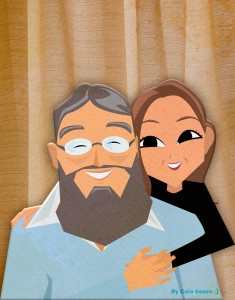
Lee & Annette Woofenden

Lee & Annette Woofenden

Donate

Support the work of Spiritual Insights for Everyday Life by making a monthly donation at our Patreon

Join 1,270 other subscribers
Earlier Posts
Featured Book

Great Truths on Great Subjects

By Jonathan Bayley

(Click the title link to review or purchase. This website receives commissions from purchases made via its links to Amazon.)

Blog Stats
  • 4,242,759 hits