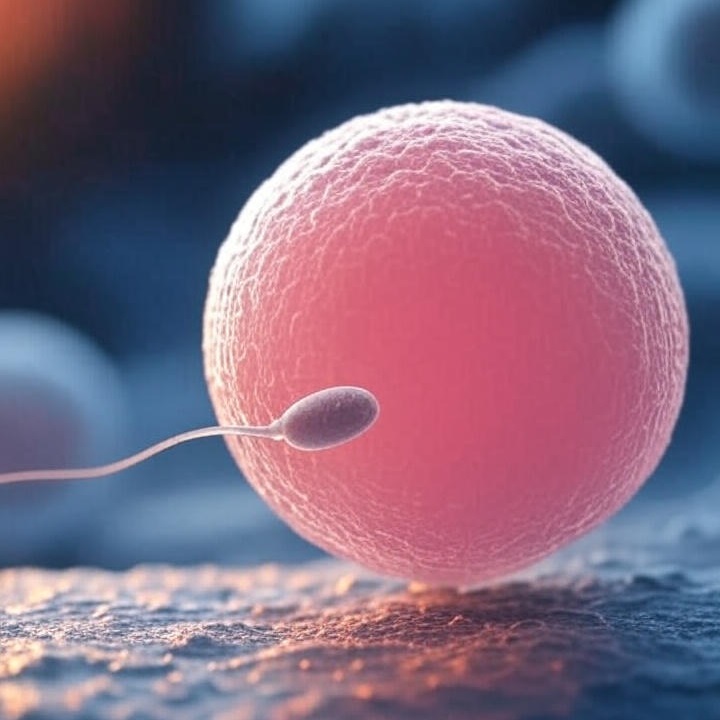
 People of all religions and spiritual paths believe that we have souls. But where does our soul come from? Is it eternal, living on after death? Has it always existed, or does it come into existence at a specific time? And if it does have a starting point, when does it become eternal, and live forever? At conception? At birth? At some other time?
The ancient Greek philosopher Plato, who lived four centuries before Christ, was among those who believed that the soul has always existed. He also believed that souls pass from one body to another in a process known in Greek as metempsychosis, more popularly known today as reincarnation.
Plato’s famous student Aristotle (384–322 BC) disagreed. Our soul, Aristotle said, has not always existed. Instead, he said, it comes from our father. Aristotle left the door open to the possibility that that the soul lives on after death, but separate from the physical body. He rejected the idea that a soul could enter another body, for reasons we’ll get into in a moment.
Eastern religions generally hold that the soul has always existed, and that it passes from one body to another. This is not based on Greek philosophy, but on Eastern sacred texts such as the Bhagavad Gita—though I would add that it is based on a literal interpretation of those texts.
Early Christian theologians added a third theory: God newly creates each soul and infuses it into the body either at conception or later. This theory is known as creationism (not to be confused with the belief that the world was literally created in six days). This is the belief held to in Catholic and Orthodox Christianity, and in some Protestant churches.
The idea that the soul comes from one or both parents, which is held to in other Protestant churches, is known in Christian circles as “traducianism.” Even among Christians, the debate about the origin of the soul goes back almost to the beginning of Christianity, mostly between the creationists and the traducianists. Almost all Christians reject the pre-existence of the soul, and reincarnation along with it.
Where does Emanuel Swedenborg (1688–1772) stand on all this? Swedenborg largely adopted and expanded upon Aristotle’s views, which Christians would class as “traducian.” But Swedenborg also included an element of creationism in his theory in that ultimately, all things come from God and are created by God, including the human soul.
Where do I come down on these questions?
That’s what this article is all about!
This topic has long fascinated me. I have spent many hours over many years studying and contemplating it. My tentative conclusions follow the arc of Aristotle’s and Swedenborg’s thought, but make further modifications based on developments in science since Swedenborg’s day, viewed in the light of Swedenborg’s teaching about correspondences in the Bible and in nature.
Having dashed off parts of my thinking on this subject here and there in various forums and discussions, it’s time to write it all out in an organized way.
Fair warning: This article is going to get technical in places, and it will not be short. Nothing else would do the subject justice. Also, although it draws on Aristotle, Swedenborg, present day science, and other sources, the theory presented here is my own. This article does not speak for any organization or school of thought.
Here we go!
For more on the human soul and its origin, please click here to read on.













 Spiritual Insights for Everyday Life