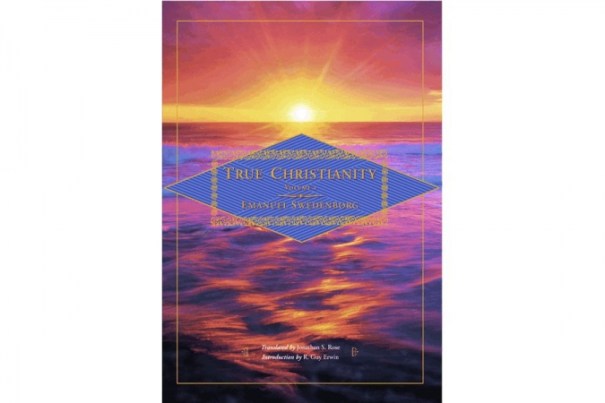
True Christianity, by Emanuel Swedenborg

Are you searching for a more modern, more rational, and more Bible-based view of Christian theology?

The Christian Church as it has existed for the past two thousand years is on the wane. Thinking people have trouble accepting many of the doctrines that were developed by various Christian theologians over the centuries and made into cornerstones of the various branches of Christianity. As science and reason have taken the lead in human thought, and human society has moved in new directions, traditional Christian theology has looked increasingly out of date and unacceptable.

Two and a half centuries ago, Emanuel Swedenborg (1688-1772) had the same problem. As a scientist, engineer, and practical man of industry, he could not accept many ideas that were taught in the Christian churches of his day—such as an angry God, a dogmatically literal interpretation of the Bible, and all non-Christians going to hell.

His response to traditional Christian theology is contained in the last book he published in his long career: True Christianity (traditionally titled True Christian Religion).

In True Christianity, Swedenborg offers a whole new take on Christian theology, based solidly on the Bible. He reinterprets the nature of God, the Trinity, Jesus Christ, and Redemption. He then goes on to give new light on a whole spectrum of traditional Christian beliefs.

True Christianity
By Emanuel Swedenborg

True Christianity was originally published in Amsterdam in 1771. I recommend the New Century Edition linked here for the most readable and accurate modern translation.

To purchase True Christianity, Volume 1 on Amazon, click the cover image, or any of the title links above. To purchase True Christianity, Volume 2 on Amazon, click on this link.

To purchase direct from the publisher in various formats, or to download a free PDF or epub version (without the scholarly introduction and notes), click this link for volume 1, this link for volume 2, or any of the title links below.

For further description and review, please click here to read on.

Tagged with: , , , , , , , , , , ,
Posted in Books and Literature

How do I Love God with my Whole Heart?

The greatest commandment: Love the Lord your God

The greatest commandment

The title of this post is a spiritual conundrum submitted by a reader named Sheena.

It’s a great question!

It is also a question with many answers.

And according to Jesus Christ, it is the most important commandment in the entire Bible:

Hearing that Jesus had silenced the Sadducees, the Pharisees got together. One of them, an expert in the law, tested him with this question: “Teacher, which is the greatest commandment in the Law?”

Jesus replied: “‘Love the Lord your God with all your heart and with all your soul and with all your mind.’ This is the first and greatest commandment. And the second is like it: ‘Love your neighbor as yourself.’ All the Law and the Prophets hang on these two commandments.” (Matthew 22:34–40. See also Mark 12:28–34; Luke 10:25–28.)

It’s not so hard to figure out how to love our neighbor as we love ourselves (though it’s a lot harder to actually do it). But how do we love God? And how do we love God with all our heart, soul, and mind?

To adapt the famous line from Elizabeth Barrett Browning’s Sonnet 43, “How do I love Thee? Let me count the ways.”

Here are just a few of the many ways we can love God with our whole heart:

  1. By keeping God’s commandments
  2. By caring for the people God has made
  3. By feeling joy in the things God feels joy in
  4. By putting God first in our life
  5. By giving our life to God
  6. By opening our heart to God’s love

Let’s look a little more closely at each one.

But first, it might help if we have some idea of what this love thing is.

For more on loving God with your whole heart, please click here to read on.

Tagged with: , , , , , , , , , , ,
Posted in All About God, Spiritual Growth

Rx for a Rare Disease: Create a Mob

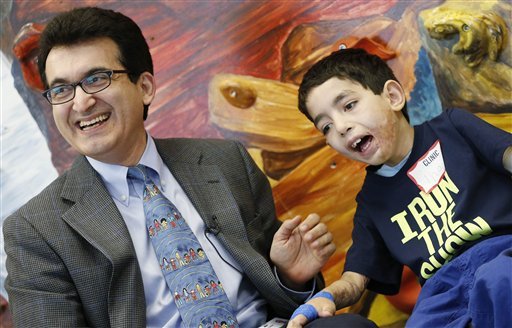
Ashley and Donna Appell, leaders in the Hermansky-Pudlak Syndrome Network

Ashley and Donna Appell

Here’s the problem with rare diseases: they’re rare. Not many people have them.

Unfortunately, the average cost for developing a new drug to treat any disease currently runs between $350 million and $5 billion. If only a few thousand people have a particular disease, the numbers just don’t work out. Who has the time or money to research such rare diseases?

As recounted in a recent segment on Marketplace, that was the problem faced by Donna Appell. Her infant daughter Ashley had a rare congenital disease called Hermansky-Pudlak syndrome (HPS), which would probably kill her within thirty years.

What’s a mother to do?

Here it is in Donna Appell’s own words: “Really who’s gonna care about one person? I just had this feeling like we needed to create a mob.”

Sometimes mobs are a good thing!

For more on creating a mob for a good cause, please click here to read on.

Tagged with: , , , , , , , , , , , ,
Posted in Current Events

How does The Force in Star Wars relate to God and Spirit?

I recently finished watching the animated 2008–2014 TV series “Star Wars: The Clone Wars,” along with the feature film of the same title that forms an opener for the series.

Yes, I’m a fan of science fiction from way back. To be honest, I’m more of a Star Trek guy than a Star Wars guy. Star Trek is a real science fiction powerhouse, covering many classic sci-fi themes and storylines, and dealing with plenty of great moral, ethical, and social issues along the way.

Star Wars space battle scene

Star Wars space battle scene

Star Wars is more of a big American action movie franchise, complete with the required big battles between good and evil.

Besides the bigger, more action-packed battle scenes and the crazy alien-packed bar scenes that made Star Wars so hugely popular, Star Wars did bring one thing to the screen that the original Star Trek series didn’t: spirituality.

Yes, it’s spirituality lite. But it’s still spirituality.

George Lucas, the creator of Star Wars, intentionally injected spiritual themes into the Star Wars narrative. One of the major ways he did this was through a pervasive plot element called “the Force”—a sort of supernatural energy source that those who are attuned to it can use to improve their skill and agility on the battlefield, not to mention throwing around the scenery and their enemies through telekinesis.

Yes, the Force makes for some great big-screen combat effects. And the samurai-like Jedi evoke classic martial arts good-guy memes that movie viewers flock to see.

But Lucas also wanted to get young people and adults alike talking about God and spirit.

Did he succeed?

For more on Star Wars, the Force, God, and spirit, please click here to read on.

Tagged with: , , , , , , , , , , , ,
Posted in Popular Culture

If You’ve been Married More than Once, Which One will you be With in the Afterlife?

Here is a Spiritual Conundrum submitted to Spiritual Insights for Everyday Life by a reader named Anna:

If a widow remarries after Death of her husband, which one will she be with in her afterlife?

Thanks for the good question, Anna.

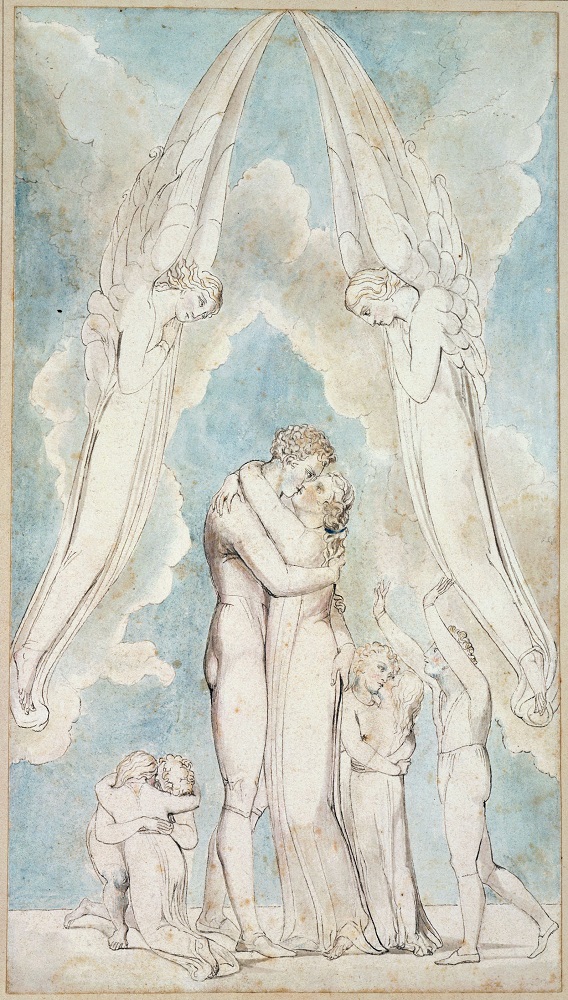
The Meeting of a Family in Heaven, by William Blake

The Meeting of a Family in Heaven, by William Blake

I’m sorry if you had to go through the death of a husband. This is not only a difficult and painful experience, but it’s also one that can cause us to rethink our whole life and character. That’s especially so if we had a good and loving relationship with the husband—or wife—we lost. Moving on to a new marriage means becoming a different person than we were before in at least some ways. We must form a new relationship with a different person, and adapt ourselves to that new relationship.

Which love is real?

Probably both of them.

But we can be married to only one person in heaven.

So which will it be?

The basic answer is: the one we are then closest to in spirit.

Let’s take a closer look.

For more on who we’ll be married to in heaven, please click here to read on.

Tagged with: , , , , , , , , , , ,
Posted in Sex Marriage Relationships, The Afterlife

How God Speaks in the Bible to Us Boneheads

In a recent post titled, “Do the Teachings of Emanuel Swedenborg take Precedence over the Bible?” I wrote:

If any truth were to come to us direct from God, we wouldn’t be able to understand it. Pure truth as it exists in the mind of God is far beyond the capacity of our limited human minds to grasp.

For many people this might be a surprising thought. In fact, it might sound like it’s just some fancy philosophical mumbo jumbo.

But the fact is, if God were to speak to us the way God actually thinks, we humans would not even be able to understand the words, let alone the ideas behind them. We would be like a kindergarten class attending a lecture by a nuclear physicist.

Here’s how the Bible poetically expresses the great gap between how we think and how God thinks:

For my thoughts are not your thoughts,
neither are your ways my ways, says the Lord.
For as the heavens are higher than the earth,
so are my ways higher than your ways
and my thoughts than your thoughts.
(Isaiah 55:8–9)

Let’s take a practical look at the question of how God speaks to us, using a famous story from the Bible.

Charlton Heston as Moses in the epic 1956 Cecil B. DeMille film, The Ten Commandments

Charlton Heston as Moses in The Ten Commandments

The book of Exodus tells how God gave the Ten Commandments to the people of Israel. First, God spoke the Ten Commandments to the people in a loud voice from the mountain, which was enveloped in smoke and fire, and shaking like an active volcano. Then Moses spent forty days up on the mountain getting the written version from God on tablets of stone, along with many other laws for the people of Israel.

The crowd of people down below waited . . . and waited . . . and waited . . . until they got tired of waiting. Finally, they decided this would be a fine time to make a golden calf, worship it, and have an orgy—thus breaking at least half the commandments God’s booming voice had decreed only a month earlier.

One of the most fascinating details in the whole story has to do with the stone tablets that the Ten Commandments were written on. As it turns out . . .

Wait! No more spoilers!

Let’s look at the story as found in Exodus 19–20 and 32–34, with some help along the way from the parallel account in Deuteronomy 5 and 9:7–10:5. As you will see, both in its plain meaning and in its deeper symbolism, it illustrates the fact that God has to dumb down divine truth for us. God has to veil it in low-level human language so that we stubborn, boneheaded human beings can have some hope of comprehending it.

For more about how God talks to us nitwits, please click here to read on.

Tagged with: , , , , , , , , , , ,
Posted in All About God, The Bible Re-Viewed

I’m a Christian . . . But it’s Not What You’re Thinking

Here is a guest post I wrote for Eva over at The Aspirational Agnostic: Searching for a God who’s playing hard to get. The post is in answer to the question, “What do you believe and why do you believe it?” While you’re over there, take the opportunity to browse through some of Eva’s thoughtful and thought-provoking posts.

Eva's avatarThe Aspirational Agnostic

Today’s guest post comes from Lee Woofenden, who blogs at Spiritual Insights for Everyday Life, a rich and thoughtful site that will, I’m sure, give you many hours of blog reading pleasure. This is a wonderful post that I’m sure you will enjoy.

By Lee Woofenden

I grew up in a family that was materially fairly poor, but spiritually very rich.  I grew up in working class neighborhoods, wearing hand-me-downs from my older brothers. Yet despite modest material circumstances, our world was rich withspiritual love and understanding.

My parents were steeped in a deep, thoughtful, and satisfying faith that went back several generations on both sides. Yes, they inculcated that faith in us. But more than that, they lived their faith. This meant giving us love, respect, and practical guidance through the many events and issues of our childhood and teen years.

Their lives expressed their faith. Here…

View original post 483 more words

Posted in Spiritual Growth

Do the Teachings of Emanuel Swedenborg take Precedence over the Bible?

Here is a question that a reader named Lara asked in a comment on the article, “Did Jesus Really Die to Pay the Penalty for our Sins?”:

I was wondering why so much of your site and the large majority of your beliefs about God, heaven and hell and Jesus are based on the teachings of Emanuel Swedenborg? Why do you think that he holds special precedence in knowing the mind of God? after all he was just one man who believed he had undergone a spiritual experience from God, which many many other people throughout history have also claimed. I was just wondering why your site and theology weigh so heavily on his thoughts, even almost more than what the Bible has to say? If you could give me some points on why you take his ideas and experiences as unquestionable truth that would be much appreciated!

Thanks for the great question, Lara!

Emanuel Swedenborg

Emanuel Swedenborg

Between 1749 and 1771, Emanuel Swedenborg published twenty-five books written in Latin, which was the universal scholarly language of the day. He wrote but never published almost as many additional volumes, some of which were first drafts for books he later published. These books tell about the deeper meanings in the Bible, Swedenborg’s experiences in the spiritual world, and the true meaning of Christianity as he understood it.

Ever since, readers and followers of Swedenborg’s teachings have debated exactly what to make of his writings, and how Swedenborg’s teachings relate to the Bible and to the mind of God.

The Holy Bible

The Holy Bible

Having grown up steeped in the Bible and in Swedenborg’s teachings, I have spent many years pondering these very questions. It’s not enough to believe something just because that’s what you were taught. To make beliefs truly our own, and feel that we can trust them, we must weigh them against other possibilities, consider them from a rational perspective, and measure them against our own experience of life.

Of course, Christians must also measure them against the Bible. As pointed out in the article, “Christian Beliefs that the Bible Does Teach,” Swedenborg’s basic teachings pass Biblical muster in a way that many traditional Christian teachings simply do not (see the article, “‘Christian Beliefs’ that the Bible Doesn’t Teach”).

This article will focus more on Swedenborg’s writings themselves: what they are and what they are not, how they are different from the Bible, and why Swedenborg’s teachings are worth paying attention to.

Here are some key points:

  1. Swedenborg’s writings are not unquestionable, inerrant truth.
  2. Swedenborg’s experience in the spiritual world was unique in known history.
  3. Swedenborg’s inspiration from God was very different than that of the Bible writers.
  4. Even if we don’t realize it, our understanding of the Bible depends on human teachers.
  5. Swedenborg’s teachings are not an addition to the Bible; rather, they help us understand the Bible.
  6. Only you can decide whether Swedenborg’s teachings are worth paying attention to for you.

Let’s take a closer look. It’s a lot of material to cover, and it’s going to take some time. However, it will answer the question of why this website draws so heavily on the teachings of Emanuel Swedenborg, and what particular perspective on his writings, and on the Bible, is behind the articles here.

For more on the Bible and Emanuel Swedenborg’s teachings, please click here to read on.

Tagged with: , , , , , , , , , , ,
Posted in Science Philosophy and History, The Bible Re-Viewed

The Mother of All the Living

Eve, painted by Hans Baldung Grien

Eve, the mother of all the living

In Genesis 3:20, after Adam and Eve have earned themselves a one-way trip out of the Garden of Eden, we read:

The man named his wife Eve, because she was the mother of all the living.

I am struck by that phrase, “The mother of all the living.” Each year Mother’s Day brings to mind mothers with two, three, and more children, not to mention grandmothers and great-grandmothers with a growing number of grandchildren. But “the mother of all the living”?

If we take this Bible story literally (which I don’t), there can be only one mother of all the living. She is the first woman created by God. As the story goes, she and her husband Adam are the only people created directly by God. All the rest are created through the reproductive ability God gave to humans. So Eve becomes the mother of all the people on earth, in all their succeeding generations, right up to the billions who are on earth today.

Of course, science would never support such a proposition.

Or would it?

For more on the mother of all the living, please click here to read on.

Tagged with: , , , , , , , , , , ,
Posted in All About God, The Bible Re-Viewed

“And They Lived Happily Ever After”

I have a pet peeve about the love stories in many popular movies and novels. We could call it the and-they-lived-happily-ever-after complex.

For classic fairy tales, “And they lived happily ever after” is the most popular ending. Here’s the pattern: The story opens with, “Once upon a time. . . .” Then the characters are introduced, and they get into various adventures and troubles. Finally, their troubles are resolved, their adventure ends in success, and they live happily ever after.

Wedding Rings

Wedding Rings

This is also the most common format for love stories in popular movies and novels. The basic plot runs like this: “Boy meets girl, boy and girl separate, boy and girl join again and get married.” Sometimes the separation is emotional rather than physical; often it is both physical and emotional. This pattern is followed in thousands and thousands of love stories.

For children’s fairy tales, a happy ending is nice. It conveys the idea that even if we have to go through many troubles and hardships in life, things will all work out in the end. True, often that is not the case in the material world. But from a spiritual perspective, unless we willfully choose to turn our back on God and our fellow human beings, things will work out in the end. No matter what pain and struggle we have to suffer through here on earth, we will ultimately find happiness as angels in heaven.

I suppose adults, too, need continual reassurance that things will all work out in the end. Happy endings are very popular in adult fiction and movies as well.

But here’s my pet peeve: Over and over again, love stories are all about the boy getting the girl and the girl getting the boy. What about their lives after that?

For more on before and after the wedding, please click here to read on.
Tagged with: , , , , , , , , , , , ,
Posted in Sex Marriage Relationships
Lee & Annette Woofenden

Lee & Annette Woofenden

Donate

Support the work of Spiritual Insights for Everyday Life by making a monthly donation at our Patreon

Join 1,296 other subscribers
Earlier Posts
Featured Book

Great Truths on Great Subjects

By Jonathan Bayley

(Click the title link to review or purchase. This website receives commissions from purchases made via its links to Amazon.)

Blog Stats
  • 4,201,937 hits