In a comment here, a reader named leeannemeredith wrote:
Do you think God is a Spirit Being? I get tied up in these questions regarding the nature of God. Where or how God came into being. Sometimes I think of the old movie Jason and the Argonauts and a group of godly figures standing around and discussing the human travails and laying bets on the fragile choices we make.
This post is an edited version of my reply, whose original you can see here. The question and answer in this post are a follow-up to the ones in the previous post: “If God Sees Everything, Is Everything that has Ever Happened Still Happening?” Here we go:
You don’t ask any small questions!
In a colloquial sense, God is a spirit being in that God is not a material being, but inhabits the spiritual realm. But in a strict sense, God is not a spirit being because God is a divine being, inhabiting and constituting a realm above the spirit realm.
This is why the Bible says that God is a spirit in John 4:24, but after his resurrection, Jesus—who is God with us (Matthew 1:23)—assured his disciples in Luke 24:39 that he is not a spirit. Yes, modern translations commonly use the word “ghost” instead of “spirit” in this verse, but it is the same Greek word. I am linking to the King James Version this time because its translation is closer to what the original Greek says. Jesus wanted us to know that he, God (John 20:28), is not a mere spirit being.
God is a spirit in the sense that God is not a material being. But God is not a spirit in the sense that God is a divine being, not a spiritual being.
For more on God and spirit, please click here to read on.




 This harsh, arid desert environment is precisely where Jesus fought the first of his temptations recorded in the Gospel story. It was right after he was baptized in the cooling waters of the Jordan that the spirit led him into the desert. We read that he fasted forty days and forty nights—and the number forty, especially when it is mentioned together with fasting, corresponds to temptation. The Children of Israel wandered forty years in the desert before they could enter the Holy Land. And Moses twice fasted forty days and forty nights on Mt. Sinai when receiving the Ten Commandments and all the accompanying laws.

 As the Africans surpass all others in interior judgment, I have talked with them on matters requiring rather deep consideration, and recently on God, on the Lord the Redeemer, and on the interior and exterior man; and since they derived great pleasure from that conversation, I will here mention what their perceptions were from their interior sight on these three subjects. (Emanuel Swedenborg, True Christian Religion §837)
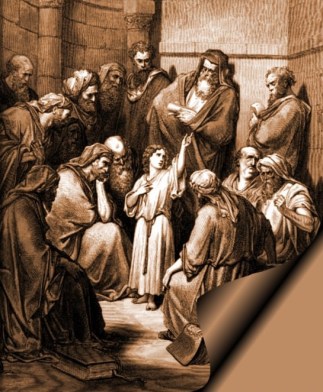 The story of Jesus as a boy at the Temple in




 Spiritual Insights for Everyday Life