(This is Part 5 and the conclusion of my response to the article, “God Is Unconvincing To Smart Folks,” by J. H. McKenna. For Part 1, click here. For Part 4, click here.)
Points 19–21 of Dr. McKenna’s article make the closing argument, which in a nutshell is: “There just plain ain’t no God, and if you’re smart, you’ll figure that out!”
19. God belief can be explained naturally (and that makes God unconvincing)
Under this heading, Dr. McKenna writes:
Modern university disciplines like anthropology, psychology, sociology, evolutionary biology, and evolutionary psychology adequately explain the rise and success of religion and God belief. In prehistoric times, simple ignorance of natural causes led people to suppose there were super-natural causes for things. And when the natural causes were eventually discovered by some new science, some part of the super-natural God dissolved. It was thought for thousands of years that a God dragged the sun across the day-time sky in a chariot. Then came astronomy and cosmology and astrophysics to explain the real reason the sun appears to move across the sky. It was thought for thousands of years that God or demons cause diseases. Then medical science and biology uncovered germs. It was thought that God painted all the rainbows. Then came meteorology and optics with the true explanation. And on and on. Psychology has credible ideas about the rise of the ‘Father-Figure’ God.
I already dealt with some of this under point 14, in Part 4.
The idea that “In prehistoric times, simple ignorance of natural causes led people to suppose there were super-natural causes for things” is simply a matter of opinion. It begs the question. Were these university-trained Smart Folks actually there in prehistoric times? Do they actually know that this is where the earliest concepts of God came from?
No. They don’t know this at all. It’s simply an explanation they’ve come up with that sounds plausible to people who don’t believe in God and are trying to figure out where the idea of God came from. It is based on an already existing assumption that there is no God and no spiritual realm.
This is no different from religious folks who have already decided what they believe going to their holy books to “prove” that their beliefs are right. The human mind can be very ingenious in coming up with “explanations” for what it already believes. And this applies to atheists just as much as it applies to religious folks.
In reality, all of this is pure speculation.
It is just as plausible to believe that humans, who from a biological perspective are merely large-brained animals (relative to body size), would never have come up with the idea of God if God didn’t actually exist. No other animal shows any indication of any such supernatural belief.
And according to the very same skeptics and atheists who have come up with this theory of the origin of the idea of God, there is absolutely nothing anywhere in nature that gives any indication whatsoever that there are any such things as God and spirit. Why would early humans come up with an idea for which there is no physical evidence whatsoever?
Once again, the idea that early humans came up with the idea of God to explain things they didn’t understand is pure speculation. They could just as well have shrugged their shoulders and said, “That’s weird!” and kept right on walking.
I find it much more plausible that the reason early humans gained an idea of God is that there actually is a God, and there actually is a spiritual realm of existence, and those early humans, once their brains had developed sufficiently to be able to handle less concrete and more abstract thoughts and realities, became aware of God and the spiritual realm.
That awareness has persisted in human culture right up to the present day, despite the long history of atheism and despite the rise of modern science.
Keep in mind that there are also many Smart Folks, including scientists in disciplines such as anthropology, psychology, sociology, evolutionary biology, and evolutionary psychology, who do believe in God.
The roles of science and religion
Yes, science did progressively explain natural phenomena that had formerly been attributed to God. That’s what science is for: exploring and explaining natural phenomena in the material universe.
Religion, meanwhile is for exploring and explaining phenomena in the spiritual realms, and exploring the nature of God.
Science has done religion—real religion—a huge favor by progressively pushing religion out of the business of explaining physical and material phenomena. This allows religion to get back to doing what it was meant to do in the first place: bringing a fuller awareness and knowledge of God and spirit to humanity.
Along these lines, Stephen Jay Gould’s Non-overlapping magisteria (NOMA) concept is very useful. In a nutshell, Gould’s NOMA concept states that science and religion each have their own proper areas of inquiry, or “magisteria,” and that as long as they stick to their own areas, they can get along just fine. It’s when churches try to dictate natural science, and scientists try to make pronouncements about God and spirit, that things get messy.
Clergy simply are not qualified as clergy to make statements and draw conclusions about the nature of the material universe. That’s not their area of expertise.
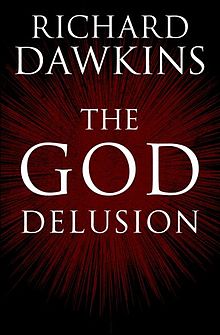
The God Delusion, by Richard Dawkins
And scientists simply aren’t qualified as scientists to make statements and draw conclusions about God and religion. That’s not their area of expertise.
That’s why when good scientists such as Richard Dawkins (1949–2011) step out of their area of expertise and write books about God and religion, those books are full of gaping holes from the perspective of Moderately Smart Folks who have spent their careers studying God, religion, and spirituality from a position of faith.
20. God is not a ‘certainty’ when many, many competent thinkers doubt God
Hundreds of millions of people on planet earth lack God belief. That is a not a trivial number of people. Tens of millions of Americans doubt God. And that’s not a trivial number either. The quality of many of the minds doubting God must be noticed, because many are highly educated and some are even geniuses. For a thousand years ALL the intellectuals and geniuses (100%) in the West (probably) believed in God. Nowadays, a majority of our intellectuals and geniuses (60%? 70%?) do not believe in God (most Nobel Laureates, most top scientists.) Though their intelligence is not infallible and they could be wrong, these people are not evil and are not disbelieving as an excuse to ‘disobey God’ and act immorally. They have real problems believing in the idea of God, as evinced in this very list of 21 items. As Emerson said of them, their skepticisms are not gratuitous or lawless but suggest real limitations on affirmative statements about God.
This really just amounts to an appeal to authority, with a dash of snob appeal thrown in. If Smart Folks don’t believe in God, it must be wrong—especially if more and more Smart Folks don’t believe in God. But I’ve already dealt with that in the opening sections in Part 1 of this article. Truth is not determined by what we believe, or even by what Smart Folks believe.
It is no more valid for atheists and non-religious people to take comfort in the “truth” of their beliefs because of their currently large and growing numbers than it is for Christians, Muslims, or Hindus to take comfort in the “truth” of their beliefs because they each have over a billion adherents worldwide. That’s simply not what determines the truth.
However, I do have a lot of sympathy for Smart Folks who don’t believe in God.
Unfortunately, a lot of Very Stupid Stuff has been said about God for many centuries by some Very Big Churches. When I read atheist literature, I continually smack my forehead, not because the authors are making good arguments against the existence of God, but because so many of the “god concepts” they’re arguing against are so widely held among traditional Christians—and are so terribly wrong. If the God they’re arguing against were what God is really like, I wouldn’t believe in God either. It is that God that is evil and immoral, not the atheists who reject that God.
I have come to believe that atheism is a tool in the hands of God to destroy the faulty and outmoded old religious paradigm along with its faulty and outmoded concept of God so that a new and better understanding of God can take its place.
And this brings us to Dr. McKenna’s final point:
21. God belief may be an early phase of human evolution
Cro-Magnon peoples thought they were at the height of the human ascendancy (and they were!) They had their well-appointed caves, their tattered clothing, their grunts, their flailing gestures, their ability to count to five. But 30,000 years have passed since Cro-Magnons and homo sapiens have become quite a bit more sophisticated since then. What will another 30,000 years bring to the human race? And another 30,000 years after that? And another 30,000 after that? You and I have not arrived late to the story of humanity: we have arrived when humanity is still in its infancy. We are fresh with morning dew. And we have much evolving to do yet. None of today’s religions will survive. Religion itself won’t survive either. God belief will be seen as a human-contrived AID that humans outgrew (as a child outgrows a pacifier). God belief is not innate to human beings, nor is it necessary for human well-being, and the proof of this is the millions and millions of people who do not believe in God and feel nothing is lacking in their lives without God. (The most secular nations have the most civil societies, as Scandinavian countries.) In 30,000 years, no one will believe in God, just as no one now believes in the Gods of ancient Greece and Rome.
This also strikes me as very funny.
Here’s what immediately ran through my mind upon reading it:
Five or six centuries ago European peoples thought they were at the height of human scientific ascendancy. (And maybe they were?) They had their Ptolemaic model of the universe, their flat earth, their four (or five) basic elements of nature, their spontaneous generation—and they were quite comfortable in their small, womb-like cosmos.
Buuut . . . human culture has become quite a bit more sophisticated since then. What will another 30,000 years bring to the human race? And another 30,000 years after that? Clearly, in that time the ridiculous, superstitious science that those people way back in the dark ages were prattling on about is merely a phase in human evolution—a mere pacifier that kept us comfortable in our sense of our own intelligence and mastery over nature until we no longer needed it.
30,000 years from now, no one will believe in science just as no one believes in those ridiculous old notions about a flat earth ruling the universe from a stationary position at its center. By that time, science will be of no further use to a humanity that has grown far beyond this infantile state of human evolution.
Once again, this whole rather poetic statement about God belief as an early phase of human evolution is pure speculation.
For those who don’t believe in God, it feels good to say that God is an outmoded idea of the past, and that in the distant future no one will believe in God. But all of these very same arguments could also be used to argue that science and technology are merely an early stage in our still infantile existence as human beings, which we will outgrow in the course of time when we no longer need them.
In fact, this is a fairly common theme in science fiction: highly evolved species (sometimes the future descendants of humanity) living simple, idyllic lives in which they produce what they need and protect themselves from danger through pure thought and pure energy, with no need whatsoever for the science and technology of which we humans in our era are so proud.
Human spiritual evolution
I simply disagree with Dr. McKenna about the eventual demise of religion and belief in God.
Instead, I believe what will happen to religion and our concept of God is the very same thing that has happened to science as it has developed over the years. Old, faulty, and insufficiently accurate and helpful concepts of God will be left behind as humans grow in mind and heart, and are able to see and comprehend greater, truer, and more accurate and helpful concepts of God.
And yes, this may mean that many of the religions and religious institutions that exist today will go out of existence—if they are unable to change and adapt to humanity’s changing and growing concepts of God and spirit.
The changing theories of human science haven’t changed the actual physical realities of the universe at all. The universe, our earth, and its biosphere have continued to operate in their same incredibly intricate, complex, and elegant way whether we understood them rightly or wrongly. Science is a process of increasing discovery as we humans grow in knowledge and understanding.
Likewise, the changing human concepts of God and spirit haven’t changed the actual realities of God and spirit at all. God has continued to be the same being all along, far above our cloudy and evolving human conceptions of God. And the spiritual realms have continued to operate by their own incredibly intricate, complex, and elegant spiritual laws whether we understood those laws rightly, wrongly, or not at all.
It is quite true that a few thousand years ago nearly everyone on earth was polytheistic. But in the midst of that polytheistic world, a radical new idea began to develop: monotheism. And that idea was an improvement on the old polytheism. It was a major example of humans moving away from earlier, cruder ideas about God toward newer and better ideas about God.
Isn’t that what human evolution, development, and advancement are all about?
Today, human science is making huge, unprecedented strides forward in a very short time. Ever since the Age of Enlightenment, the unshackled human mind has been pressing forward, learning, and growing at a pace that it never has before in all of human history.
I believe that the same thing is now happening in the spiritual evolution of humanity.
A new understanding of God for a new era of humanity
We have gotten to the point where the old, traditional Christianity with its rather backward, monarchy-based ideas about God are no longer sufficient for the present-day human mind and heart. Just as science regularly throws out old theories to make way for newer and better ones, we are now in the process of throwing out many old religious ideas that we have outgrown in order to make way for newer and better ones. And the atheist movement itself is one instrument hastening that process.
In 30,000 years, I believe humanity will still believe in God and spirit. But their belief will not be in the old, arbitrary concepts of God based on the vanishing institution of human monarchy. God will not be seen as an absolute ruler sitting on an imposing throne up in heaven, rewarding those who toady up to Him and zapping His enemies with lightning bolts.
Such ideas of God, which worked perfectly well through many centuries of monarchical cultures in the earlier history of human civilization, are no longer adequate for present and future human cultures that have grown beyond these arbitrary and oppressive human institutions.
The concept of God that will replace that old and rather limited concept of God will be vast and cosmic in its reality and presence. It will be a concept of God big and broad enough to make sense to us and give us meaning in the vastness and complexity of a physical universe that has expanded many orders of magnitude from our small and limited conception of the universe in previous ages.
The old God-as-Big-King-in-the-Sky concept will fade away as humanity continues to move forward in its scientific, cultural, and spiritual evolution. And any religions that continue to cling to that God concept will fade away along with it.
But that’s never what God was really like anyway.
Just as science has developed as we have gained a more and more realistic and accurate picture of the nature of the physical universe, so religion will develop as we gain a more and more realistic and accurate picture of the nature of God and spirit.
Now that we’re getting our first glimpses of just how vast and incredible is the physical universe in which we live, our minds are finally beginning to open and expand enough to gain a real sense of the far vaster love, wisdom, and power of God, who is behind everything we are discovering with our increasingly powerful telescopes and microscopes.
Just as humanity is still in its evolutionary and scientific infancy, so humanity is still in its spiritual infancy. The new discoveries and experiences of God and spirit that await us will go far beyond anything humanity has ever been able to conceive of or experience before.
And I believe that as the decades and centuries pass, the children, grandchildren, and great-grandchildren of today’s atheists, agnostics, and skeptics will return with joy to a knowledge and experience of God and spirit that lie at the core of our being, just waiting to be discovered anew.
For further reading:
- Who is God? Who is Jesus Christ? What about that Holy Spirit?
- Can We Really Believe the Bible?
- Do Atheists Go to Heaven?
- Wavicles of Love
- Do the Teachings of Emanuel Swedenborg take Precedence over the Bible?
- Heaven, Regeneration, and the Meaning of Life on Earth
Share this:


Lee Woofenden is an ordained minister, writer, editor, translator, and teacher. He enjoys taking spiritual insights from the Bible and the writings of Emanuel Swedenborg and putting them into plain English as guides for everyday life.



 Spiritual Insights for Everyday Life
It always fascinates me when people say they have faith, yet try to use the Bible to prove scientific facts to prove what they believe is true! God is much more that anything we can imagine or perceive.
Hi rothpoetry,
Yes, I find that strange as well. But different people’s minds work in different ways, I guess.
I wish there was no God. Wouldn’t it be great if there was just us and the universe, and dying simply meant disintegrating back into the cosmos? Just brief consciousness and then the sweet embrace of nothingness.
Nothingness sounds awfully boring, don’t you think?
But if one were to cease to exist after death, they wouldn’t be around to experience the lack of experience.
I don’t wish there was no God. I want a God to help us defeat our enemies. A God to end our sufferings and defeat death. A God to help us in times of trouble. From political injustice to diseases like COVID.
I really love the idea of life everlasting
https://en.wikipedia.org/wiki/List_of_prizes_for_evidence_of_the_paranormal
Skeptics may claim that there is no supernatural because not one prize has been awarded for any demonstration of the supernatural.
Hi K,
The supernatural never has been and never will be demonstrated to people who are confirmed materialists. Doing so would violate the laws that God has established to protect our spiritual freedom. Short version: God will not force belief in God and spirit on anyone, nor allow such belief to be forced upon them by others.
Material (scientific) proof of the existence of God and spirit would force belief on materialists. Some might think this would be a good thing. But in fact it would either destroy their humanity by fracturing their mind or it would lead to even more profound denial of God and spirit when their thinking mind rallied to find reasons that the proof was not valid. Then “fool me once, shame on you; fool me twice, shame on me” would into full effect, and their atheism would become even more profound and unshakeable than before.
As it is, God allows atheists and skeptics to believe that they have an airtight case against God and spirit, and does not force the issue. For some of them, the crises and events of life will bring them around. For others, if they are good-hearted, they will learn the truth about God and spirit when they die and enter the spiritual world.
Meanwhile, as long as they live a good life according to an adopted set of humanitarian principles, they will still be walking the path toward heaven even if they deny that heaven exists. God is merciful that way.
If God didn’t exist, hunter-gatherers would be atheist and secular. There’d also be atheists in the Aztec and Maya empires rejecting the gods of the mesoamerican Indians. There’d be atheists in Egypt denying the deity of Pharaoh. Atheism would not be illegal in virtually any ancient civilization.
There is no evolutionary advantage to being hardwired or softwired into believing in something that doesn’t exist.
If there was no supernatural, humans would evolve to be predisposed to be materialistic and pragmatic, not idealistic. What evolutionary disadvantage is there to being rational and realistic? None! What evolutionary advantage is there to being wired for delusions? None!
Hi World Questioner,
Agreed. I see no reason why people would come up with the idea of God if there isn’t actually a God. The very fact that people, unlike animals, have the ability to think about God and spirit suggests that there is more to this life, and especially more to humans, than our physical self and our physical surroundings.
If there was no God, religion wouldn’t arise in the first place. Belief in God would provide no survival advantage. Hunter-gatherers would be rational, pragmatic, and materialistic, not spiritual.
World Questioner,
I agree with you on this. But atheists and skeptics will obviously not agree with you on this.
Hi Lee,
After reading all five parts I thought of these several Swedenborg quotes in response on all these materialistic ideas.
“They had thereby acquired an ability to reason about truths and to prove the ones they accepted as fundamental, notions that looked true once they were proved, even though they were false.” – Heaven and Hell 518
“I have talked with some people who had believed in the world that wisdom depends on how much we have in our memory and who had therefore filled their memories to bursting. They talked almost exclusively from these items, which meant that they were not talking for themselves but for others; and they had not developed any rational function by means of these matters of memory. Some of them were dense, some silly, with no grasp of truth whatever, no sense of whether anything was true or not. They seized on every false notion sold as true by people who called themselves scholars. They were actually incapable of seeing anything as it actually was, whether it was true or not, so they could not see anything rationally when they listened to others.” – Heaven and Hell [4] 464
“I have talked with some people who had written a great deal in the world, some of them in all kinds of academic fields, people who had therefore gained an international reputation for learning. Some of them could quibble about whether truths were true or not. Some of them understood what was true when they turned toward people who were in the light of truth; but since they still did not want to understand what was true, they denied it when they focused on their own false opinions and were therefore really being themselves. Some of them did not know any more than the illiterate masses. So they varied depending on the way they had developed their rational ability through the treatises they had written or copied. Still, if people had opposed the truths of the church, had based their thinking on the arts and sciences, and had used them to convince themselves of false principles, they had not developed their rational ability but only their skill in argumentation – an ability that is confused with rationality in the world, but is in fact a different ability from rationality. It is an ability to prove anything one pleases, to see false things rather than true ones on the basis of preconceptions and illusions. There is no way people like this can be brought to recognize truths because it is impossible to see truths from false principles, though it is possible from true principles to see what is false … Angels are profoundly grieved that scholars for the most part keep attributing everything to nature and therefore close the deeper levels of their minds so that they can see no trace of truth from the light of truth, the light of heaven. As a result, in the other life they are deprived of their ability to reason so that they will not use reason to spread false notions among simple people and mislead them. They are dismissed to desert areas.” – Heaven and Hell [5] 464
“The ones who at heart denied the Deity, whether or not they acknowledged the Deity out loud, had become so stupid that they could scarcely understand any civic truth, let alone any spiritual truth. I could both comprehend and see that the inner levels of their minds were so shut off that they looked inky black (things like this are made visible in the spiritual world), and that this meant they could not bear any heavenly light or let in any inflow from heaven. The blackness that enveloped their deeper levels was greater and more extensive for people who had convinced themselves of their opposition to the Divine by means of their secular scholarship.” – Heaven and Hell 354
Hi Sam,
Great quotes! You’ve been doing your homework! 🙂
The last two, in particular, point out that it’s when people reject God that all their learning becomes darkness instead of light. For people who do believe in God, and who humble themselves before God, the very same learning can serve to support the light of understanding.
I should add that many people today reject God because the Church has so destroyed the concept of God that many thinking, caring people just can’t accept the “God” that they have been presented by the Church. Many of these people would believe in God if they had a right idea of God’s nature. These people have not plunged themselves into darkness in the same way as people do when they reject God because they are far too proud of their own brilliance to admit that there is any being in existence greater than themselves, before whom they must humble themselves. See:
Do Atheists Go to Heaven?
Hi Lee,
Haha yes, thank you! I’m focusing on true spiritual knowledge only.
And so true on what you said. I appreciate the further explanation on the quotes.
Hi Lee,
I remember watching a counter argument against an atheist ( Krauss I think was his last name who calls himself an anti-theist) who claims he proved that the laws of physics created itself and everything else which he says is the “ultimate free lunch” and that the “escape hatch” he relies on “works on paper”. This was the counter argument quote to that:
“That the laws of physics created themselves along with everything else. This reasoning is circular. The laws of physics cannot explain their own existence. An orderly universe could not spring into existence from a random event.”
Is this an example by what you mean as self existent? I feel like there is so many “explanations” like this from like you said a material that has always exited or infinite regress or whatever new shiny idea they come up with next. (I think the infinite regress is from all the infinite theories they create lol) I also remembering hearing how cave people heard wind and trees moving therefore they created God to appease but it was just weather. I heard others as well but it all comes down to a materialist nature explanation. But what are your thought on these things and an atheist claiming to have proved this?
This reminds me of the passage I just read of the conversation Swedenborg had with spirits about the creation of the universe in True Christianity 79.
Thank you kindly again Lee
Hi Sam,
The fascinating thing about that debate with philosophers in the spiritual world in True Christianity #79 is that all these materialistic philosophers were arguing on the basis of the now-outdated science of their day, but they still came to the same conclusions: that nature either created itself or that it has existed forever. Today, the science is different, but the conclusions of the materialistic scientists and philosophers are the same.
It all goes to show that it is not science or reason or logic that brings people to these conclusions, but their own materialistic view of reality.
The philosophers Swedenborg described were bad people, who did evil things to others. Not all of the materialistic scientists and philosophers today are like that. But some of them are. And there are probably similar debates going on with them and among them in the world of spirits today. But the ones that are not bad people, but who just can’t accept the false gods of today’s Christianity, will give up these materialistic views and happily accept the true God of infinite love and wisdom before moving on to their eternal homes in heaven.
About things being self-existent, the only defensible materialistic viewpoint is that nature has always existed in some form: that the fundamental building blocks of nature didn’t come into being, but are self-existent, meaning they always existed. This is tantamount to saying that the core essence of nature is God. And there are many people in the world today who believe that God is simply the essence of nature, or that the entire universe is God—which is pantheism.
The problem with the idea that nature has always existed is that current cosmological science says that our universe did come into existence at a specific point of time in the past known as the Big Bang. Ironically, when the Big Bang theory first came out, many secular scientists fought hard against it because it looked to them too much like a “Creation event” that would lend itself to the idea that God created the universe. Unfortunately for them, it has proven to be a very robust theory, whereas the alternative theories these secular Big Bang skeptics came out with, such as the steady state model, have been steadily disproven by actual observations of the universe.
If current, well-tested theory holds that the universe came into existence at a specific time in the past, where does this leave people who want to believe that nature has always existed? It’s a thorny problem in physics that has no generally accepted solution. Why was there a Big Bang in the first place?
Hi Lee,
I wanted to get your thoughts on some of these ideas from videos that I remembered hearing. I remember I was watching spiritual videos on YouTube, this was before learning Swedenborg but it was a video being promoted because it was under every video for a while that I watched even under non spiritual videos. But it was being promoted by this materialist doctor named Sean Fisher and there was another doctor as well. But they were promoting two ideas that supposedly “debunked” spiritual experiences.
(They seemed very proud telling people this in the auditorium as if they were mosses bringing down the Ten Commandments I remembered!) (hopefully my Bible analogy is correct lol)
The first one was that “We are made up out majority of water and how sound effects water which effects neuro activity … how we are basically living water/Dynamic Patterns in Water. So when someone hears a spirit or experiences a spiritual experience it’s just water molecules impacting our neuro activity from sound produced by other people, atmospheric, space, electromagnetic weak forces, strong forces etc. via wave forms to connect people in sound and vision which how life springs from sound which creates pattern, the base of all life, which can be found throughout nature. That’s why Patterns and Fractals appear during spiritual experiences like deep meditation or NDEs and is what consciousness is… particles/matter which vanishes at death.
And my second one I heard is basically the same thing it’s just quantum entanglement/physics instead.
This materialist doctor said that when we experience like for example hearing spirits it’s actually just quantum entanglement phenomena taking place that you’re responding to an entanglement with someone else’s particles. It’s just matter existing simultaneously in two places at once. Which relates to being well over ten dimensions. And when we have any spiritual experience we are just tapping into other quantum fields, spaces entanglements, or whatever like the cat analogy use in quantum mechanics not the afterlife or God or like angels. So we are again just particles/matter that we vanish / no longest exist once we die.
There is this video here I remember watching basically promoting the ideas like above like how New Atheist materialist like Sean Carrol, Brian Cox, Sam Harris and Steven Hawkings saying how shadow people are from another dimension (that’s supposedly near ours?) because according to quantum mechanics or theory or whatever says how every action or cause/effect or whatever, a new universe is created with all the possible outcomes or the opposite outcome? And of course the YouTuber promotes the ideas of our consciousness are particles or energy because how “energy can’t be create or destroyed” basically adding more materialism to all these other materialist debunking attempts.
But what are your thoughts on this another materialist “debunking” arguments?
Thank you so much Lee!
Hi Sam,
Sounds like these materialists are willing to engage in all sorts of crazy conjectures and guesses and opinions all to avoid the most obvious explanation of spiritual experiences. None of these “theories” would get past the first gstepost if these guys were engaging in actual scientific methods in pursuit of scientific knowledge. But since they’re dealing with the supernatural, which they reject out of hand, they think it’s A-OK just to fling wild suppositions at the wall and hope something sticks.
Hi Lee,
Thank you for guidance on this and how these are just more ways materialist try to avoid God and spirits.
Thank you again!
Hi Lee,
I hope all is well! I just wanted to ask you a question regarding a video I watched on OTLE regarding God entitled Why Doesn’t God Make Himself Known to Us? – S&L Short Clips – Viewer asks: Why doesn’t God make or allow himself to be known to us? Does he only exist in heaven and not with us on earth? There were some arguments mentioned for why God isn’t present because there isn’t one and some of the panels response? I’m sure those are good responses but I felt like there could be better ones? And I’m sure once we open ourselves up to accepting God and aligning with helping our neighbor would that be ways to make God more known to us?
Thank you kindly Lee!
Hi Sam,
Good to hear from you again. I hope all is well with you.
I do think that the answers the panel gives in the video are good ones. They bring in both philosophical and personal angles on the question.
Leaving us free to feel that we are our own person is a big one. If we felt just how intimately present God is in every tiniest detail of our life (which is the reality), it would be hard to feel that we are free and autonomous, and can direct our own life and make our own decisions. Plus, a lot of times we would resent God “spying” on us.
As the panel also brings out, it’s not as if God is never present. Many people have felt God’s presence very strongly at critical points in their lives, or even just in passing when they were least expecting it. Plus, there are the Scriptures and many other revelations and spiritual writings where God speaks to us. The idea that God is not at all present with us in a way we can see and feel, as atheists seem to think, just isn’t true.
But of course, this is a huge topic and issue, so there is always more to add.
On the philosophical side, much of it has to do with the materialistic nature of our culture and times. Most people are mostly focused on the material world and on material and social things most of the time. For most people most of the time, spiritual things seem unreal, whereas material things seem real. And if our attitude is, “Things I can see and touch are real, whereas those ‘spiritual’ things are not so real,” then indeed, we won’t have any living sense of the presence of God and spirit except in the extraordinary circumstances, such as a couple of the panelists describe, when we are intensely focused on God and spirit. That is when God sometimes (not always) does make God’s presence felt.
Also on the philosophical side, during our time on earth we are making our decisions and forming our character. That is something we must do “as if of self,” to use Swedenborg’s phrase. For us to be human beings distinct from God, we must feel that we have our own autonomous life, make our own decisions, direct our own life, and form our own character, making ourselves the person we want to be. Especially in today’s individualistic world, it would be very difficult for us to do that if we felt God’s presence leading and directing us toward good and truth all the time. If we could clearly see that every good (vs. evil) alternative we face when we are making a decision is actually God’s, and God is prompting us to turn in that direction, then we would feel that the good isn’t ours, and we wouldn’t claim it as our own and make it a part of ourselves.
Once we die and move on to the spiritual world, all of our big decisions have been made, and our character has been formed. At that point, there is no more need for God to hide. We will be able to experience God very directly and personally even if we didn’t here on earth. There is no more danger of us feeling as if we aren’t our own person. We had a whole lifetime on earth of feeling independent and in charge of our own life so that we could make our own decisions about who and what we want to be. In the spiritual world, we never lose that sense of being our own person. But especially in the higher heavens, we gain a living sense of God’s constant presence with us.
Moving toward something that we feel much more personally, it is true, as the panelists in the video mentioned, that sometimes even at times when we are in great crisis, and we are praying fervently for some sign of God’s presence with us, our prayers go unanswered (from our perspective), and God does not appear to us in any way that we are aware of. This has to do with the nature of temptation (see my recent article “What are ‘Temptations’? How Bad Do They Get?”).
Our most severe temptation are not temptations of the head, but temptations of the heart. They are also tests of a) what we will do when we feel that there is no benefit left for ourselves, and b) whether we will let go of control of our own life, and hand our life over to God.
On the first point, if we were to always feel God’s presence every time we were in severe crisis, it would take away the severity of the crisis. We would use God as a crutch, and we wouldn’t face the true depths of the challenge and decision we are facing.
One aspect of that challenge and decision is a test of our character at a very deep level: are we doing what is good mainly because we expect some benefit for ourselves from it, such as eternal happiness in heaven as a reward for our good behavior? When we are entangled in a crisis so deep that we doubt whether God and heaven even exist, or that they are real and present and not just some distant theoretical thing, our character is truly tested. What if there is no God? What if there is no afterlife? Will I still do what’s good and right just because it is what’s good and right? Or will I say to myself, “Eff that, why should I be good if we’re all going to die anyway?”
When we choose what is good, right, and compassionate even when everything seems lost for us and there is nothing in it for us, then we have truly chosen what is good, right, and compassionate for its own sake, and not for any expected benefits to ourselves.
In my own point of greatest doubt about the reality of God and spirit, which occurred way back when I was a teenager, I realized that I couldn’t intellectually assure myself of these things. I realized that I could decide to believe in God and spirit, or not believe in God and spirit, and that either way, I would go on to convince myself that I had made the correct choice, and would marshal all my intellectual capabilities to support the choice I had made.
What pushed me over the edge toward belief was a recognition that belief in God and spirit as I had been taught to believe in them would lead to far more good for people and for the world than not believing. It wasn’t some rational argumentation that tipped the scale for me. It was really a desire for things to be good and not bad for the people of this earth that tipped the scales.
I should add that this wasn’t some deep temptation of the type I was describing just above. I was only a teenager. I was in no way ready for anything like that. But for me it is an experience and illustration that it’s where we land when there is no clear answer, and we could go either way, that is the true test of our motives and character. If at that point God had suddenly popped up in front of me and said, “Of course I’m real!” it would have completely taken away that point of personal decision in which I decided that even if I can’t prove that God is real, I’m going to choose what is good and not what is bad.
In a way, our whole life on earth is a lot like that. We’re continually making choices without a full and clear sense of the presence of God and the angels, and often even without a clear sense of what is true and what is false, and of what is good and what is evil. This means that our decisions really are our own, because we’re making them when we don’t have everything laid out clearly in front of us, including the eternal consequences of our choices and actions. The choices we make under these difficult and murky circumstances continually test and challenge us to choose what is good, true, and right for its own sake.
When we do that, God truly is present with us whether or not we actually see or feel God’s presence. That’s because God is what is good, true, and right. Every time we choose love, compassion, truth, justice, and selfless service for their own sake, we are choosing God, and bringing God into our life more closely and personally, even if we are not aware of it at the time. Only after our life on earth is over will we see fully and clearly just how present God was with us at all times, especially those soul-sifting times of terrible personal and spiritual crisis.
Hi Lee,
Thank you for the in depth clarification which was very insightful on the topic and the video. I know Swedenborg says it a lot but hearing the act of goodness and truth, love and wisdom is actually God itself. It’s not something you can separate from which is a really good feeling because it shows how God is there for us and how the bedrock of reality which is love and wisdom aka God. I find that I experience God when looking back at trials like when you’re in the present you can’t see what’s happening and obviously that pertains to the future but when looking back on experiences you can see how God is there for you simply because if the event turned out one fraction of a second different it wouldn’t of helped or brought us to our current state now and when looking back it’s always such amazement because it’s like wow if I would of done this instead of that I wouldn’t be where I am now and the growth that’s been made. And how even some totally separate events come full circle and can relate on a single experience.
Some people may call that chance or luck or whatever but I find those words arbitrary and cold like a roulette wheel and it doesn’t describe the experience. When learning about Providence that’s what exactly describes the experience. But thats exactly like you said how people are going to see things materialistically because “Most people are mostly focused on the material world and on material and social things most of the time. For most people most of the time, spiritual things seem unreal, whereas material things seem real.” So that makes sense why they would see God materialistically or makes arguments for no God at all. Which reminds me like a Swedenborg quote: Divine Providence 182 [2]”This is the voice of the strict materialist, but spiritual-minded people speak differently. Since they acknowledge God, they acknowledge divine providence too. They see it as well, but they cannot show it to anyone who thinks only in physical terms, on the basis of physical events. These people cannot raise their minds above the material world and see the signs of divine providence in its outward appearances. They cannot figure out anything about it on the basis of its laws, which are laws of divine wisdom. So if they were to see it with any clarity, they would make it material and thereby not only becloud it with distortions but also profane it.” It really goes to show how sometimes the simple minded are leagues ahead of smart folks!
Thank you kindly again Lee
Hi Sam,
You are very welcome, as always. And it’s a good point that even if we can’t usually see God working in our life in the present, we can look back at our past and see God’s fingerprints all over it. This is another way that we do see God . . . if we are looking for God.
You should check out https://www.quora.com/profile/Ian-3475. Check out https://medium.com/@ian_5250/the-evolution-of-gods-religion-and-religious-belief-2e8657f7933b, but also check out his other answers and posts.
Hi World Questioner,
This “Ian” fellow seems like a fairly standard materialistic atheist. He demands scientific proof for spiritual things, which he’ll never get, because science is the study of the material world, whereas spiritual things are, by definition, non-material. It’s like demanding auditory proof that colors exist. It’s the wrong mode of approach. Spiritual things provide spiritual evidence, not material evidence. See:
Where is the Proof of the Afterlife?
He says:
That’s like saying dogs, cats, and gorillas are atheists. They’re not atheists. They don’t have the capacity for abstract or spiritual thought. Their minds are entirely tuned to material things. Our early evolutionary ancestors were all animals, not atheists.
And we didn’t “find” religion somewhere along the way. We developed the ability to conceptualize things higher than the material level. This likely happened over 100,000 years ago, corresponding to the time we started burying our dead. This is the “internal historical” meaning of the Creation story in Genesis, as it relates to the development of humanity. The days of Creation describe, internally, the “historical” event of God first raising a group of early hominids from being mere animals to being human, which includes the ability to engage in abstract and spiritual thought, and therefore to know about and have a relationship with God and the spiritual world.
Much of this author’s argument rest on the classic “God of the Gaps” argument, in which God fills in all the gaps in our material-world knowledge, but as our scientific knowledge grows, those gaps become smaller and smaller, so that eventually there will be no more room for God at all.
The fallacy in this argument is the idea that God is a material phenomenon, and manifests only in material ways. But God is divine, not material. And the spiritual world is spiritual, not material. The material world operates by its own laws, the spiritual world operates by its laws, and God operates by God’s laws. Perhaps primitives did think that lightning bolts were weapons wielded by angry gods. But that is precisely a primitive and materialistic view of God. We humans are capable of much higher ways of thinking than that.
Unfortunately, atheists limit themselves to the material world, and material things, so they simply assume away everything non-material. This author is no exception. He demands scientific evidence for God. It’s the only kind of evidence he will accept. And that’s why he’ll never believe in God until he wakes up on the other side and realizes, likely with considerable embarrassment, just how wrong he was.
You’d really think that someone with high IQ would be smart enough to consider spiritual-mindedness. Afterall, intellect = harder to deceive, less mistaken, right?
Hi World Questioner,
Having a high IQ is a two-edged sword. On the one hand, it can, as you say, make a person harder to deceive and therefore less mistaken. On the other hand, it can lead to the adoption of belief systems, whether materialistic or spiritual, that are at odds with reality, and therefore lead to the person being mistaken about practically everything, because everything is interpreted through the lens of that belief system, and the person’s intellectual pride is engaged with that system, making it harder for the person to break through to reality.
In the Myers-Briggs types (MBTI), you’d think that intuitive (N) types would be more spiritual-minded and sensing (S) would be more materialistic-minded, don’t you think? Afterall, abstract reasoning should be correlated with spiritual-mindedness, while concrete thinking should be correlated with fleshy/materialistic-mindedness, as should thinking about what things could be and what things are respectively.
Hi World Questioner,
Perhaps, but that’s just on the head level. And what matters most for our spiritual life is our heart, not our head. If we live from love for God and the neighbor, we are more spiritual than if we have an excellent grasp of theological concepts through intense N-type contemplation, but it doesn’t make it to our heart and hands.