This post will be a little different from most of the articles we publish here on Spiritual Insights for Everyday Life. It is the final paper I wrote for my high school senior philosophy class when I was seventeen years old. I’ve updated the punctuation a bit and fixed a few typos, but otherwise it’s exactly what I turned in to my philosophy teacher almost five decades ago.
Though I haven’t changed anything substantive in the paper, one point does require correction. Swedenborg is often credited by his followers with proposing the nebular hypothesis of the formation of the solar system decades before either Immanuel Kant or Pierre-Simon Laplace. However, though some elements of Swedenborg’s theory may have made their way into the development of the nebular hypothesis, in Swedenborg’s system, published in 1734 during his earlier scientific period, all the bodies in the solar system spin out from the central sun. However, in the nebular hypothesis, the solar system condenses from a vast cloud of dust and gas. Planets, asteroids, and so on were never part of the sun (specifically, originating in a crust that built up around the sun) as Swedenborg theorized.
I should also mention that this paper was written before gender-inclusive language became the academic standard.
If this article isn’t your cup of tea, feel free to skip it. However, for some readers it might still be of interest all these years later. First, it shows one way in which Swedenborg’s thought made its way into the broader currents of present-day human ideas through the famous and influential philosopher Immanuel Kant. Second, much of Kant’s description, summarized in the paper, of how spirit and matter interact comes directly from Swedenborg’s Arcana Coelestia (Secrets of Heaven), and may therefore be fruitful for readers of this blog.
Please enjoy (or not!) this production of my youth.
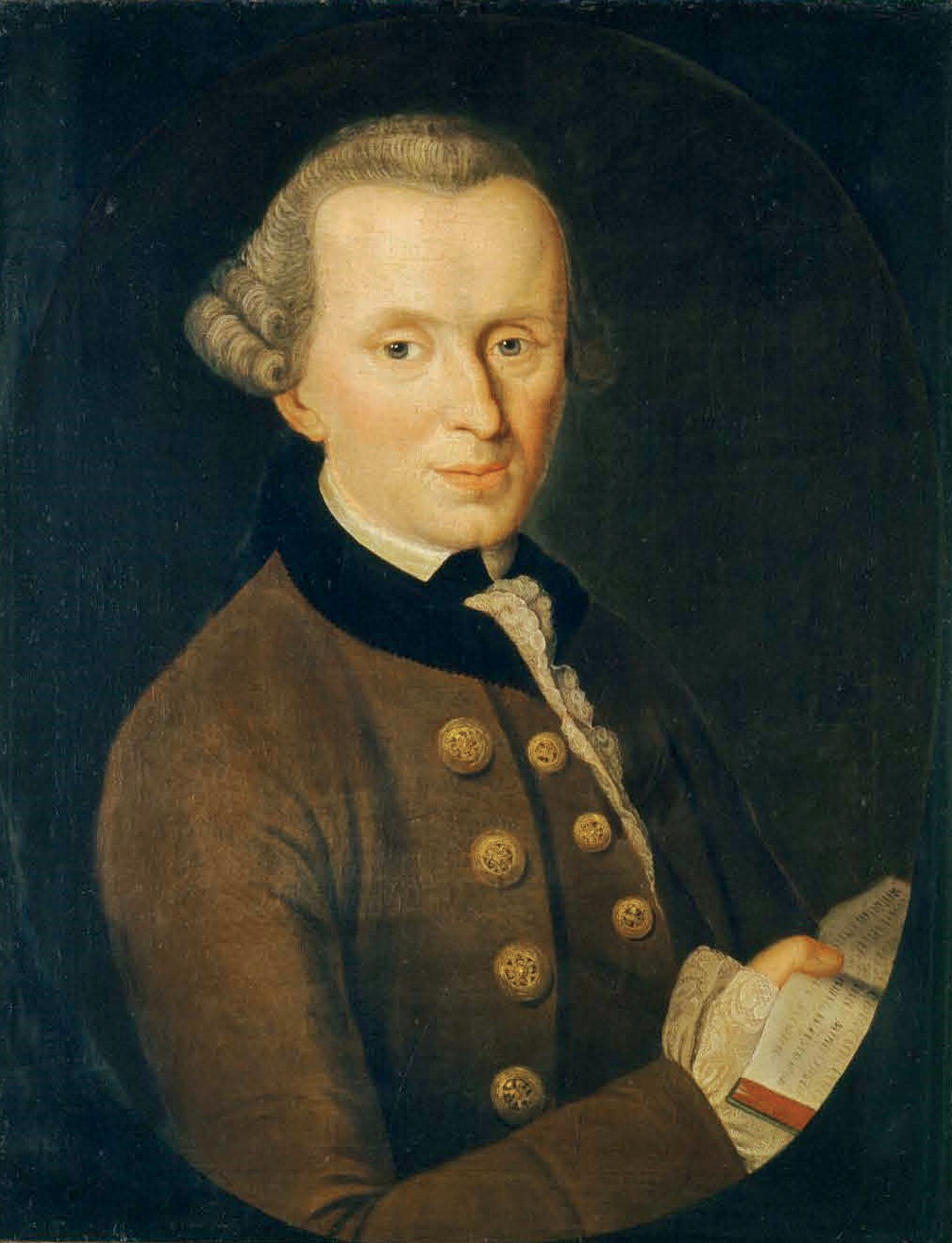
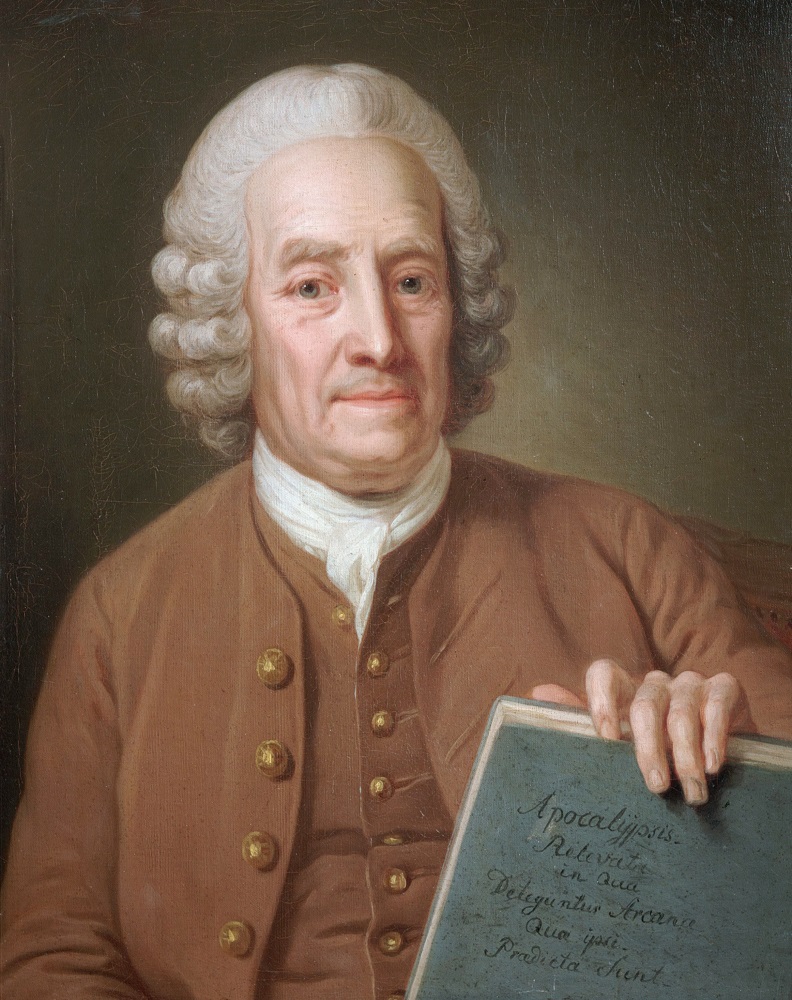 Immanuel Kant’s Dreams of a Spirit-Seer
Lee Woofenden
Int. Philosophy
May 8, 1978
In the year 1766, in Konigsberg, Germany, Immanuel Kant, who was just beginning to make a reputation as a philosopher, published anonymously a little-known work entitled Dreams of a Spirit-Seer.1 Across the Baltic from Konigsberg, in Stockholm, Sweden, lived the man who had at least partly caused Kant to write the book, and against whom it was specifically directed. His name was Emanuel Swedenborg.
Swedenborg (1688–1772) had been a very distinguished citizen of Sweden. In 1716 he had been appointed an assessor on the Swedish Board of Mines, which post he held creditably for 31 years, and in 1719 his family was ennobled by Queen Ulrica Eleanora, and Swedenborg took his seat in the House of Nobles as a member of the Swedish Diet. He was a brilliant scientist and philosopher, and by 1745 had published many volumes on a wide variety of practical, scientific, and philosophical subjects. In 1734, twenty-one years before Kant published his General History of Nature and Theory of the Heavens, Swedenborg published his Principia, containing a nebular hypothesis similar to the Kant-Laplace theory.
In 1745, however, Swedenborg began having visions and claimed that his spiritual eyes had been opened by God so that he could be fully conscious in the world of spirits and describe it to men along with the true principles of the Christian religion. In 1749 he began to publish, at first anonymously, a work which finally consisted of eight volumes entitled Arcana Coelestia,2 containing explication of Genesis and Exodus, and experiences he claimed to have had in the spiritual world. This work created quite a stir, especially when people found that the author was the respected Emanuel Swedenborg, who was one of the most sober and useful members of Swedish society.
One of the people who heard of the claims of Swedenborg was Immanuel Kant. Kant began to make investigations about Swedenborg. He found out about some incidents in which Swedenborg seemed to demonstrate to very reliable witnesses his ability to speak with spirits.3 The reason he made these investigations is given in a letter written by Kant to Moses Mendelssohn dated April 8, 1766, soon after the publication of Dreams: “So far as these stories are concerned, I cannot help having a slight inclination for things of this kind, and indeed, as regards their reasonableness, I cannot help cherishing an opinion that there is some validity in [them].”
Kant almost seems to want to be convinced of their validity, and if the experiences of the famous and respected Swedenborg weren’t valid, whose could be? In order to satisfy his curiosity, Kant bought Swedenborg’s eight volume work, and read the whole thing. This in itself attests to Kant’s great interest in Swedenborg, for 1) Kant was a fairly poor man, and such a large work as the Arcana was fairly expensive, and 2) “He would never have wasted his time on studying the bulky Arcana Coelestia if, as Cassirer remarked, there had not been a direct and strange connection between Swedenborg’s thought and his own.”5 Dreams of a Spirit-Seer, Kant says in his preface, was a result of reading the Arcana.
Here he tells the reader that the time spent in reading the Arcana had been profitable for nothing. He says that he wrote Dreams just so he wouldn’t have wasted all that time, and because of the pressure of friends for his views on the subject. Thus he begins by belittling Swedenborg’s work, which sets the tone of the whole book. Though he wishes to give the impression that he regarded the Arcana as foolish, and not worth thinking about, this could not be his real feeling, first because of the second reason given above, and second, because Kant, according to his own principle of not yielding to the pressure of others in areas of knowledge, would not have written the book unless he had some genuine and deep interest in the subject.6
Let us, then, examine Kant’s book to see what this interest was.
The book is divided into two parts, the first of which is called “dogmatic,” and the second “historical.” Each of these is divided into several chapters, which will be taken in their order.
The first chapter of Part One is entitled “A Complicated Metaphysical Knot Which Can be Untied or Cut According to Choice.” The “metaphysical knot” being considered is the problem of the nature of immaterial (spiritual) substance as opposed to material substance, and the interaction between the two. Kant tries first to arrive at a privative definition by giving characteristics of matter which must be lacking in spiritual substance. Matter, he says, possesses mass, and solidness, or impenetrability. Spirit must not have these attributes; it must be able to be present in space that is already filled with matter.
Now he asks whether the soul is a spirit, and if so, how does it communicate with the body, and where in the body does it reside or flow in? He says he is inclined to believe that the soul is an immaterial being, which is possessed of reason. As to where the soul resides in the body, since the soul is the life of the body, and we feel life, or sensation, in our whole body, he comes to the intuitively derived conclusion that the soul communicates with the whole body. This he puts in opposition to the philosophers who say that it communicates with some miniscule part of the brain, and operates the body from there. He is careful to say that the soul is not extended in space, as matter is, but only acts upon things extended in space, affecting, not the forces between them directly, but the “inner principle of their state.” Then he goes on to ask what brings spirit and matter together, and what separates them (in death). Here he admits that he doesn’t know the answer to this, nor can he be sure about the other questions.
The second chapter he calls “A Fragment of Secret Philosophy Aiming to Establish Communion with the Spirit World.” This, of course, is a reference to Swedenborg’s claimed experiences. In this chapter, Kant begins to develop in a more positive way what the spiritual world is like. From the title, the reader might come to the conclusion that Kant had derived this from the Arcana, which, as we shall see, probably was the case, despite Kant’s protestations to the contrary.
Kant now postulates a spiritual world with a community of spirits. This world is not limited by fixed space and time. The effect of this is to make communication between separate spirits easier, and consequently, I might add, to solve one of the basic human problems on earth, which is the necessity of being separated from loved ones. This spiritual world is where the souls of men reside after death, and also during life on earth, though the person is not aware of it. The spirits in the spiritual world act upon the souls of men, and only through these can they affect man’s natural mind, which is the only part of his mind in which he is normally conscious during earthly life. The manner in which this communication takes place is very interesting, and can be traced back to Swedenborg’s doctrine of “correspondences.” It consists in a symbolic representation of concepts of reason (spiritual thought) in concrete images. This, he says, is the mechanism that works in dreams, hallucinations, visions, etc. He regards these things as real spiritual influences, but gives the opinion that visions only come to diseased minds, which distort them so much that they are useless. He concludes this by saying that for this reason visionaries must be foolish in outward affairs. This is another attempt by him to discredit Swedenborg’s visions, but unhappily for him, is one that is not borne out by experience. Even while Swedenborg was having his visions, he was still trusted as a member of the House of Nobles, and though his activities there were necessarily cut back, he still took an active interest and presented several papers on practical matters of the state.7 History provides us with other examples of this, Buddha being among the greatest.
Another very interesting idea appears in this chapter, which contains the seeds of Kant’s later thought on morality. He speaks of a morally unifying Universal Will which tends to make man think of others and not merely himself, and often conflicts with the selfish ego. It bears a striking resemblance to Lao Tsu’s “Tao” in that it cannot be known, or understood, but underlies all existence.
These ideas on the spiritual and natural worlds lead to Kant’s later theory of noumena and phenomena. The spiritual world becomes the unknowable noumenal world which is the origin of morality and purpose (teleology), and the natural world becomes the knowable phenomenal world, which is the effect of the noumenal world. Before they reach this development, however, they become the intelligible and sensible worlds (mundus intelligibilis et mundus sensibilis) of his marginal dissertation of 1770.
The third chapter bears the title “Antikabala: A Fragment of Common Philosophy Dissolving the Community with the Spirit World.” In it, Kant says that the visions of the seers (implying Swedenborg) are products of a diseased mind, and compares them to the metaphysical “dreams” of Wolff and Crusius. In this way he tries to discredit the metaphysicians of his time, whom he saw as building great dream castles with no foundation. This was probably the purpose of Dreams, as is said by Kuno Fischer:
That the “Dreams of a Spirit-Seer” was a humorous critique aimed chiefly at the philosophers of his day, using Swedenborg as a non-combative and comparatively unknown mark for his blows, is now generally conceded.
He goes on to say:
[But Kant’s] great indebtedness to him is now first seriously arousing the attention of students of German philosophy . . . . In these investigations it comes to light that not only did Kant find in Swedenborg a system of spiritual philosophy so parallel to that of the philosophers in reasonableness that the validity of the one could be measured by that of the other, but that the very system finally followed by Kant himself when he came later in life, as a lecturer in the University of Psychology and Metaphysics, to enter upon the domain of these inquiries, was largely identical with that of the Dreams he had once affected to be amused at.8
This is borne out in Chapter II of Part II of Dreams, where Kant says, “the Arcana is totally devoid of reason,” and yet goes on to say, “nevertheless his work does contain a large measure of agreement with the loftiest speculation which reason could ever derive from this type of subject.”9
In his conclusion to the first part, Kant states that he wouldn’t say anything about the world of spirits unless he had an interest in them derived from a kind of hope. Since the reality of the spiritual world can never be proven either way, as he stoutly affirms, man would never think about them unless there was this hope for a higher reality.
In the second part, Kant tells about Swedenborg’s experiences and descriptions of the world of spirits, which is very interesting to study, but for the sake of brevity cannot be included in this paper.
In his “Practical Conclusion Derived from the Whole Treatise,” Kant basically says that, though philosophy has its use in clearing our thinking, it must always be based on experience and not wild speculation. This is obviously directed at the metaphysicians of his day, and so we come back to the conclusion of Kuno Fischer.
Kant wished, by this small treatise, to base reason on the firm foundation of experience. Swedenborg would have been quite sympathetic to that goal; in fact, he saw it as his mission to provide through his experience a rational understanding of the spiritual world, which would otherwise be left in the realm of ghostly shadows.
Notes
- Hereafter referred to as Dreams.
- Hereafter referred to as Arcana.
- See Kant’s letter to Charlotte Van Knobloch in Georwitz ed. of Dreams, Appendix II.
- Letter to Moses Mendelssohn in Goerwitz op.cit. Appendix IV.
- Manolesco, Dreams of a Spirit Seer, p. 25.
- See Manolesco op. cit. note 7 P. 100 for more on this.
- Goerwitz, op. cit. note 39 P. 141.
- Ibid. p. viii.
- Manolesco, op. cit. p. 81.
Bibliography
Kant, Immanuel. Dreams of a Spirit-Seer Illustrated by Dreams of Metaphysics. Translated by Emanuel F. Goerwitz. Ed. intro. and notes by Frank Sewall. New Church Press, Ltd., London, 1915.
Manolesco, John. Dreams of a Spirit Seer by Immanuel Kant and other related Writings. Translation and commentary by John Manolesco. Vantage, N.Y. 1969.
Sewall, Frank. “Kant and Swedenborg on Cognition.” The New-Church Review, October, 1898, Vol. V, No. 4.
For further reading:
- How did God Create the Universe? Was the World Really Created in Six Days?
- Do Galaxies Have Heart and Lungs?
- Wavicles of Love
- Are We All Just Bundles of Quantum Energy?
- On Pluto, Atoms, and Other Things (such as Heaven) that Just Keep Getting More Complex
- God: Puppetmaster or Manager of the Universe?
Share this:


Lee Woofenden is an ordained minister, writer, editor, translator, and teacher. He enjoys taking spiritual insights from the Bible and the writings of Emanuel Swedenborg and putting them into plain English as guides for everyday life.



 Spiritual Insights for Everyday Life
Wow, I’m afraid I’m not smart enough to digest your paper. I find it quite interesting, but I don’t have the background necessary to understand many of the words. While reading I was wiki’ing almost every other word trying to grasp their definitions and/or concepts. I wish I could have been that smart as a senior. Hats off to you. I have read through it several times because anything to do with spiritual nature is of utmost interest to me. That interest really perked the very second my wife passed away as I sat by her bedside and saw her breathing stopped. I wanted to feel her spirit leave her body and the room as though hopefully I could say my goodbye. 😦
Paul
Hi Paul,
Well, as I said, this article isn’t everyone’s cup of tea! It’s not like our usual offerings here on Spiritual Insights for Everyday Life. I hope you got at least a little out of it. 🙂 And yes, I was just a wee bit of a nerd in high school! 😀
I do understand about your wife passing away, and your renewed interest in spiritual things when that happened. Half of you is now in the spiritual world with her. It’s only natural that you’d want to know more about what she’s experiencing now, and the realm where she’s experiencing it, not to mention what you can do in your remaining life here on earth to prepare yourself for a happier reunion with her.
Fortunately, we don’t have to be in the dark about the afterlife anymore since the Lord opened Swedenborg’s spiritual eyes and gave him an extensive tour of the spiritual world so that he could tell us what it is like there, and how things work. And of course, now we have many reports of much briefer visits to the spiritual world in the form of near-death experiences. There’s no lack of information for those who are willing to accept the reality of God and spirit.
Putting that information into ordinary language for people such as you who have a love-sized hole in your heart is what this website is all about. The above article . . . well . . . it’s something a little different! 😉
Meanwhile, I’m sure you’ve already read it, but for those reading in, here’s an article to get started about the spiritual world:
What Happens To Us When We Die?
Lee, I did get somethings from it and though my my understanding isn’t great it was and is very interesting. Especially learning more about Swedenborg and Kant, I had no idea that anyone that far back had made claims to have seen in some way the future beyond this life. That is of greatest interest to me. All of your writings are and I always am looking forward to more.
Best regards & Thanks,
Paul
Hi Paul,
If you haven’t already gotten yourself a copy of Swedenborg’s book Heaven and Hell, then you’re in for a real treat! The link is to my book notice for Heaven and Hell. It provides links to where you can buy a copy from Amazon or even get a free downloadable version from the Swedenborg Foundation.
Not sure I sent the comment correctly. Have no idea on what teenagedelicately409f2a83fc is or who?????
Paul
Hi Paul,
Those weird names started showing up a year or two ago. I don’t know where they come from, or what they’re all about. Maybe it’s a gmail thing?
Thank you, Lee. It is always good to follow you in your posts. I learned more about Kant from your paper – good information to know. Be well, my friend.
All the Best,
Chris
Hi Chris,
Wonderful to hear from you, old friend! I hope all is well with you these days. Glad you enjoyed my old high school paper. I figured at least a few people would! 🙂