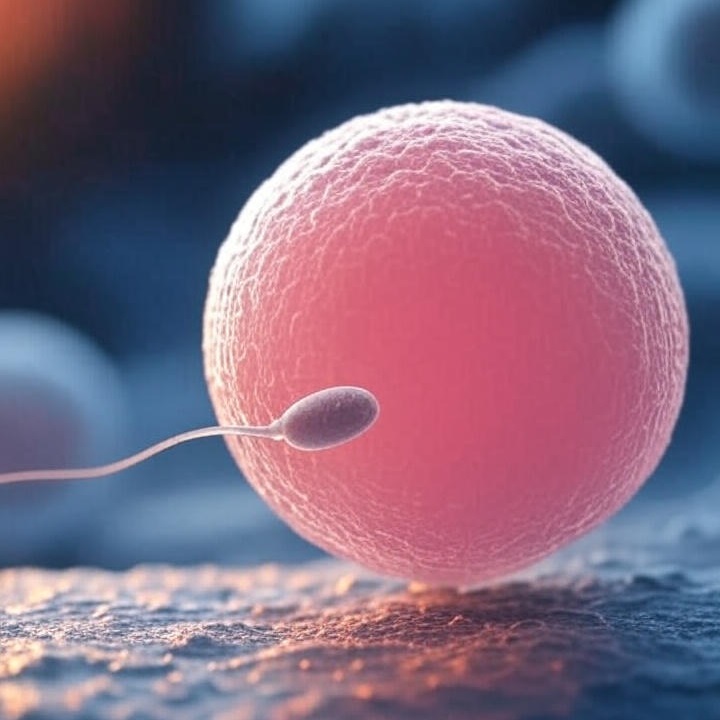
 People of all religions and spiritual paths believe that we have souls. But where does our soul come from? Is it eternal, living on after death? Has it always existed, or does it come into existence at a specific time? And if it does have a starting point, when does it become eternal, and live forever? At conception? At birth? At some other time?
The ancient Greek philosopher Plato, who lived four centuries before Christ, was among those who believed that the soul has always existed. He also believed that souls pass from one body to another in a process known in Greek as metempsychosis, more popularly known today as reincarnation.
Plato’s famous student Aristotle (384–322 BC) disagreed. Our soul, Aristotle said, has not always existed. Instead, he said, it comes from our father. Aristotle left the door open to the possibility that that the soul lives on after death, but separate from the physical body. He rejected the idea that a soul could enter another body, for reasons we’ll get into in a moment.
Eastern religions generally hold that the soul has always existed, and that it passes from one body to another. This is not based on Greek philosophy, but on Eastern sacred texts such as the Bhagavad Gita—though I would add that it is based on a literal interpretation of those texts.
Early Christian theologians added a third theory: God newly creates each soul and infuses it into the body either at conception or later. This theory is known as creationism (not to be confused with the belief that the world was literally created in six days). This is the belief held to in Catholic and Orthodox Christianity, and in some Protestant churches.
The idea that the soul comes from one or both parents, which is held to in other Protestant churches, is known in Christian circles as “traducianism.” Even among Christians, the debate about the origin of the soul goes back almost to the beginning of Christianity, mostly between the creationists and the traducianists. Almost all Christians reject the pre-existence of the soul, and reincarnation along with it.
Where does Emanuel Swedenborg (1688–1772) stand on all this? Swedenborg largely adopted and expanded upon Aristotle’s views, which Christians would class as “traducian.” But Swedenborg also included an element of creationism in his theory in that ultimately, all things come from God and are created by God, including the human soul.
Where do I come down on these questions?
That’s what this article is all about!
This topic has long fascinated me. I have spent many hours over many years studying and contemplating it. My tentative conclusions follow the arc of Aristotle’s and Swedenborg’s thought, but make further modifications based on developments in science since Swedenborg’s day, viewed in the light of Swedenborg’s teaching about correspondences in the Bible and in nature.
Having dashed off parts of my thinking on this subject here and there in various forums and discussions, it’s time to write it all out in an organized way.
Fair warning: This article is going to get technical in places, and it will not be short. Nothing else would do the subject justice. Also, although it draws on Aristotle, Swedenborg, present day science, and other sources, the theory presented here is my own. This article does not speak for any organization or school of thought.
Here we go!
Aristotle on the origin of the soul
Aristotle would have been well aware of the views of his teacher and mentor Plato supporting reincarnation. But he ultimately disagreed with Plato on this—and so do I. For a full analysis of reincarnation and why I believe it is a mistaken idea, please see:
The Bible, Emanuel Swedenborg, and Reincarnation
As for Aristotle, he saw the soul as building and inhabiting a body that reflects its own character. It would therefore be impossible, he reasoned, for a soul to inhabit a body other than its own. Here is what he said about this in his treatise on the soul, written around 350 BC:
. . . as if it were possible, as in the Pythagorean myths, that any soul could be clothed upon with any body—an absurd view, for each body seems to have a form and shape of its own. It is as absurd as to say that the art of carpentry could embody itself in flutes; each art must use its tools, each soul its body. (Aristotle, On the Soul, Book 1, Part 3)
And more fully:
Since, then, the complex here is the living thing, the body cannot be the actuality of the soul; it is the soul that is the actuality of a certain kind of body. Hence the rightness of the view that the soul cannot be without a body, while it cannot be a body; it is not a body but something relative to a body. That is why it is in a body, and a body of a definite kind. It was a mistake, therefore, to do as former thinkers did, merely to fit it into a body without adding a definite specification of the kind or character of that body. Reflection confirms the observed fact; the actuality of any given thing can only be realized in what is already potentially that thing, i.e. in a matter of its own appropriate to it. (Aristotle, On the Soul, Book 2, Part 2, emphasis added)
This is a key reason for Aristotle’s rejection of reincarnation. Each soul is different in character. Each must inhabit a specific body that reflects the soul’s specific character. A soul therefore cannot pass into another body. Any other body besides its own would not match the character of the soul.
If Aristotle is right about this—as I think he is—and the soul does not pre-exist the body as in reincarnation theory, but inhabits only one body, where does the soul come from?
Aristotle on the role of man and woman in reproduction
Here is Aristotle’s most succinct answer to that question:
While the body is from the female, it is the soul that is from the male. (Aristotle, On the Generation of Animals, Book 2, Part 4)
The soul comes from the father, Aristotle said. It is contained in his semen, which delivers it to the womb of the mother. The mother contributes the materials that the soul uses to build a body for itself. This is in line with classical concepts of the male as the active element and the female as the passive element in interactions between man and woman.
Since Aristotle’s thought on this subject had a major influence on European and Christian beliefs about the soul right up to the time of Swedenborg, let’s lay it out in some detail, in his own words.
Here is the beginning of the sequence in which Aristotle explains how this process works:
That, then, the female does not contribute semen to generation, but does contribute something, and that this is the matter of the catamenia [menstrual blood], or that which is analogous to it in bloodless animals, is clear from what has been said, and also from a general and abstract survey of the question. For there must be that which generates and that from which it generates. Even if these be one, still they must be distinct in form, and their essence must be different. In those animals that have these powers separate in two sexes, the body and nature of the active and the passive sex must also differ. If, then, the male stands for the effective and active, and the female, considered as female, for the passive, it follows that what the female would contribute to the semen of the male would not be semen, but material for the semen to work upon. This is just what we find to be the case, for the catamenia have in their nature an affinity to the primitive matter. (Aristotle, On the Generation of Animals, Book 1, Part 20)
Clearly Aristotle did not have today’s knowledge of the reproductive organs and their functions. Neither sperm nor human eggs had yet been discovered. His theory was that the menstrual blood provides the material that the soul, carried in the male semen, uses to begin building a body for itself.
For now, I am simply presenting what Aristotle believed about the origin of the soul and the body. Naturally, his views were dependent upon the scientific knowledge available to him. They were also shaped by the ideas of his time and culture on the nature of man and woman in relation to one another.
Later, when we get to my own theory, I’ll make the required modifications to Aristotle’s views, as adopted and developed by Swedenborg two thousand years later in the eighteenth century, and in light of today’s much more specific and detailed twenty-first century knowledge about sexual reproduction.
Explaining himself further, Aristotle writes:
So much for the discussion of this question. At the same time, the answer to the next question we must investigate is clear from these considerations—I mean how it is that the male contributes to generation and how it is that the semen from the male is the cause of the offspring. Does it exist in the body of the embryo as a part of it from the first, mingling with the material that comes from the female? Or does the semen communicate nothing to the material body of the embryo, but only to the power and movement in it? For this power is that which acts and makes, while that which is made and receives the form is the residue of the secretion in the female.
Now the latter alternative appears to be the right one both a priori and in view of the facts. For if we consider the question on general grounds, we find that whenever one thing is made from two, of which one is active and the other passive, the active agent does not exist in that which is made. And still more generally, the same applies when one thing moves and another is moved; the moving thing does not exist in that which is moved. But the female, as female, is passive, and the male, as male, is active, and the principle of the movement comes from him. Therefore, if we take the highest genera under which they each fall, the one being active and motive and the other passive and moved, that one thing that is produced comes from them only in the sense in which a bed comes into being from the carpenter and the wood, or in which a ball comes into being from the wax and the form. It is plain, then, that it is not necessary that anything at all should come away from the male, and if anything does come away it does not follow that this gives rise to the embryo as being in the embryo, but only as that which imparts the motion and as the form; so the medical art cures the patient. (Aristotle, On the Generation of Animals, Book 1, Part 21)
In short, the man contributes the power of motion, while the woman contributes the materials it works on. To make this abstract idea more concrete, Aristotle compares the male’s contribution—the soul—to an artisan, and compares the female’s contribution—the body—to the material from which the artisan forms the object being made:
For the same reason the development of the embryo takes place in the female; neither the male himself nor the female emits semen into the male, but the female receives within herself the share contributed by both, because in the female is the material from which is made the resulting product. Not only must the mass of material exist there from which the embryo is formed in the first instance, but further material must constantly be added so that it may increase in size. Therefore the birth must take place in the female. For the carpenter must keep in close connection with his timber and the potter with his clay, and generally all workmanship and the ultimate movement of matter must be connected with the material concerned, as, for instance, architecture is in the buildings it makes. (Aristotle, On the Generation of Animals, Book 1, Part 22)
Summing it all up, he writes:
From these considerations we may also gather how it is that the male contributes to generation. The male does not emit semen at all in some animals, and where he does this is no part of the resulting embryo. Just so, no material part comes from the carpenter to the material, i.e., the wood in which he works, nor does any part of the carpenter’s art exist within what he makes, but the shape and the form are imparted from him to the material by means of the motion he sets up. It is his hands that move his tools, his tools that move the material; it is his knowledge of his art, and his soul, in which is the form, that moves his hands or any other part of him with a motion of some definite kind, a motion varying with the varying nature of the object made. In like manner, in the male of those animals that emit semen, Nature uses the semen as a tool and as possessing motion in actuality, just as tools are used in the products of any art, for in them lies in a certain sense the motion of the art. Such, then, is the way in which these males contribute to generation. (Aristotle, On the Generation of Animals, Book 1, Part 22)
Even the semen, then, is simply a tool that the soul, which Aristotle saw as derived from the male, uses to accomplish its purpose. That purpose is to form a body for it to inhabit—a body that reflects the soul’s own character.
There is no need to provide a full account of Aristotle’s thinking about the soul. If you are interested, his treatise On the Soul is freely available to read online at the linked website and elsewhere. In this section I have covered the parts of his theory that are relevant to the question of the origin of the soul.
Aristotle on the soul’s immortality
There is some debate about Aristotle’s views on the immortality of the soul. But he did seem to think the soul was immortal in at least some form. For example, he says:
When mind is set free from its present conditions it appears as just what it is and nothing more: this alone is immortal and eternal. (Aristotle, On the Soul, Book 3, Part 5)
However, Aristotle generally connected the soul with the body, believing that the soul could not engage in most of its functions without a body. Hence his diffidence on the existence and character of the soul after it has departed from the body.
All these things, however, were slated to be developed in much more detail in later Christian thought, in which there is a definite and embodied afterlife that the soul moves on to. Though we could survey the development of the arc of Aristotle’s thought through Christian theologians over the past two thousand years, my knowledge and expertise is primarily in Swedenborg’s teachings. That is where we will go next.
Swedenborg on the origin of the soul
In the Christian world of Swedenborg’s day, Aristotle had come to hold an outsized stature compared to any other secular thinker of the past. Arguments could be settled by saying “Ipse dixit,” Latin for “He himself said it.” This did not refer to Jesus. It referred to Aristotle. On non-theological subjects, if Aristotle made a statement about it, that settled the matter.
During Swedenborg’s lifetime Aristotle’s influence began to wane as scientific discoveries started to come in thick and fast, many of them contradicting what Aristotle had said. However, during Swedenborg’s earlier scientific and philosophical period Aristotle’s influence was still very strong. The idea that the soul comes from the father and the body from the mother was still “settled science,” because ipse dixit.
Swedenborg did have considerably more knowledge of anatomy and physiology, and specifically of embryology, than Aristotle did. But he still had only rudimentary knowledge of the microscopic processes of reproduction. He did know about the human ovum (egg), but he did not give it the level of importance in reproduction that today’s science does. Sperm had only recently been discovered. There was still much debate about its function. Swedenborg came down on the side of sperm not having any significant function in reproduction. In his earlier scientific works he referred to them dismissively as “little eels.” (If you see the word “sperm” in one of Swedenborg’s theological works, it is an erroneous translation of the Latin word semen, which means “seed,” but which is also used for the male seminal fluid.)
In other words, in Swedenborg’s day there was still no compelling reason to doubt Aristotle’s teaching that the soul comes from the father and the body from the mother. Mendel, the science of genetics, and the discovery of DNA were still in the future. Swedenborg wove the “settled science” from Aristotle on this subject into his theory of human reproduction. He also wove it into his teachings about the Incarnation (God coming to earth as Jesus), but that will be a subject for a future article.
Swedenborg made no claim to originality on the idea that the soul comes from the father and the body from the mother—and he certainly never said that it was revealed to him by God. He presents it as common knowledge, and defends it on logical grounds. It is what educated people of his time commonly believed. Based on the available scientific knowledge, and on the views in that culture about the roles of men and women, it made perfect sense to them.
Swedenborg himself had no reason to doubt it. It was the best concept of the soul’s origin available to him, and he built upon it.
Swedenborg’s scientific background
In fact, he took it and ran with it!
For many years before his spiritual eyes were opened in his mid-fifties, Swedenborg was a scientist and a philosopher. As time went on, he increasingly focused his studies on a search for the human soul. During this period of his life, he wrote many books on anatomy and physiology. Since he saw the human body as the dwelling place of the soul, he reasoned that if he could delve deeply enough into the secrets of the human body, the secrets of the soul might be revealed to him there.
One of the books he wrote but never published during this period was his Draft on the Reproductive Organs, traditionally known as On Generation. This is where he laid out his theory of where new human souls come from in the greatest detail. His descriptions of the process in that book are very long, and go into considerable anatomical detail. What I will present below is a simplified summary.
I should add that most of Swedenborg’s schema of the origin of new souls was not original to him. Earlier thinkers had proposed many of the same ideas, which were common intellectual currency among the educated people of Swedenborg’s day. For the most part, Swedenborg created his theory by synthesizing and further developing ideas that were already in circulation, some of them originating in ancient Greece, and others in the writings of more recent thinkers.
This is not to say that Swedenborg just uncritically copied earlier thinkers. There was tremendous debate on these issues. Swedenborg’s theory involved taking specific positions in that debate.
For example, one long-held and very popular theory was preformationism: the idea that each new human being or animal starts out as a tiny, miniaturized version of a full-grown individual, which simply grows bigger until it reaches adulthood. Swedenborg rejected this theory (see Divine Love and Wisdom #432). He settled instead on today’s accepted alternative to preformationism, which is epigenesis: the idea that each new plant or animal starts with a relatively undifferentiated seed or egg, which then develops and grows the various parts of the mature organism in a step-by-step process.
With that as a preface, let’s get to Swedenborg’s particular theory of the beginnings of the individual soul.
Swedenborg’s theory of the generation of new souls
The soul, Swedenborg believed during his earlier scientific period, was a sort of spiritual fluid that flowed through the body, giving it life. In particular, it flowed through the tiniest fibers of the body, which were like tiny tubes that were gathered together in bundles to form the nerves that run from the brain to the entire body. These fibers were also continuous with the blood vessels, which provided other, less fine fluids and materials that the body requires for life. The finest of these fluids that flow through the blood vessels he referred to as “animal spirits.” These were the next step down from the soul, or spirit, itself.
More specifically, the soul flowed from the “cortical glands” described by anatomists of the time. We now know that these “cortical glands” do not exist. They were based on faulty early examination of brain tissue. However, in Swedenborg’s treatment of them they served as a crude early analog to what we know today as neurons. The electrochemical nature of brain activity was not yet known. But like neurons, the “cortical glands” were located in the cortex, or outer layer, of the brain, and in Swedenborg’s view they handled both sensation and motor control via the “fibers” running from them to all parts of the body. From these cortical glands the soul flowed through the tiniest of fibers (really, tiny tubes), and supplied the entire body with life-giving soul.
This process of the soul flowing from the cortex of the brain and being circulated throughout the body by the nervous system applies to both males and females. However, in Swedenborg’s elaboration of Aristotle’s theory about the origin of new souls, when the male testicles receive this flow of soul, they do something unique with it. Of course, the flow of soul gives life to the testicles themselves just as it does to every other part of the body. But the specific function of the testicles is to take some of this soul and “package it up,” so to speak, for delivery to the womb of the female.
This packaging (my word, not Swedenborg’s) is anything but simple. First, the highly volatile fluid of the soul is surrounded by a tiny little shell of the animal spirits mentioned earlier. This begins the process of containing the highly volatile soul so that it won’t escape out into the surrounding fluids and tissues, and be lost. Then, at each step of the way, as each of these tiny little spheres, which are the “seed” of a new human being, moves from the testicles through the passages of the epididymis, the vas deferens, and so on right out to the glans penis just before it is sent out of the father’s body, it is coated with more and more layers, each one coarser than the last, until it forms a little globule that securely contains the central offshoot of the father’s soul so that it can be delivered safely and securely into the womb of the mother.
In the mother’s womb, each of these coatings is peeled away one by one in reverse order, releasing its tiny, precious offshoot of the father’s soul to do its work of forming a new human being.
If you want to read for yourself Swedenborg’s descriptions of these processes involved in generating new souls, here are references to most of the relevant sections in his draft on the reproductive organs: #36–37, 40–53, 70–74, 80–90, 103–114, 149–151, 163–176. (Don’t say I didn’t warn you!)
Keep in mind that Swedenborg theorized and wrote all of this before his spiritual eyes were opened. After the opening of his spiritual eyes, he had quite a different understanding of the nature of the soul, though he retained from his earlier scientific period the idea of the soul being packaged up in the testicles for delivery to the womb of the mother.
Swedenborg’s theory of how the soul builds the body
In Swedenborg’s theory, it is in the mother’s womb that this tiny offshoot of the father’s soul, now delivered to the mother, begins its task of building a body suitable to it—a body that reflects its own specific character.
Since the function of the sperm and the egg in reproduction was still not well-established in Swedenborg’s day, and DNA was as yet unknown, Swedenborg largely fell back on Aristotle’s theory of how the soul forms a body for itself in the womb of the mother. The tiny offshoot of the father’s soul, now liberated from its coatings, sets about the task of building a body for itself, first using as its building materials the menstrual blood in the womb of the mother (remember, Swedenborg did not have the benefit of today’s much more detailed knowledge of human physiology), and later using material supplied by the mother from the placenta via the umbilical cord.
As in Aristotle’s theory, in Swedenborg’s theory the soul progressively builds a body for itself that corresponds to its own character. Swedenborg, though, developed this idea of correspondence much more fully than Aristotle did, building it into a major component of his cosmological theory. We will take that up in a moment.
For now, I will simply point out that Aristotle’s concept of the soul from the father as the active organizing principle, in contrast to the body or material substance from the mother as the passive principle that the soul worked on, is carried directly over into Swedenborg’s theory of human reproduction.
However, there are also some significant differences in the two theories. For example:
- Swedenborg posited the soul as a distinct spiritual entity, whereas for Aristotle the soul was simply the “form” or organizing principle of the new human being, and the body was its substance.
- Aristotle said that the development of the embryo began with the early formation of the heart, whereas Swedenborg said that it began with the early formation of the brain.
- Aristotle was diffident about the eternity of the soul, believing that it could not engage in most of its functions if disconnected from the body, whereas Swedenborg stated definitively that the soul is eternal; he said that the soul has its own spiritual body, made of spiritual substance, distinct from the physical body, and that after death the soul lives forever in its spiritual body, in the spiritual world.
There are many more elements to Aristotle’s and Swedenborg’s theories of the nature and origin of the soul and the body, such as their parallel views on plant, animal, and human souls, and Aristotle’s conjecture that perhaps there is an “intellect” infused into the new human being from some unknown outside source that is distinct from the soul derived from the father, and that may survive death. However, what I have presented here is sufficient background information on the Aristotelian origins of Swedenborg’s theory of the origin of the soul and the body of a new human being.
Correspondence
The concept of a nous, or higher mind that expresses itself in the human form and in the world of nature, was a common one in ancient Greek philosophy, best known in its Platonic and Aristotelian forms. However, Swedenborg went far beyond any of the ancient philosophers, or anyone else before or since, in developing this concept into a grand and highly detailed theory of the relationship between God and the created universe, between the spiritual realm and the material realm, and between the human mind and body.
Swedenborg rejected the traditional Christian concept of creatio ex nihilo (Latin for “creation out of nothing”), which, as its name suggests, holds that God created the universe and everything in it out of nothing. Instead, he said that God created everything out of “substances put out from himself,” on which God imposed limits so that they were no longer infinite and divine, but finite and created. On this, see True Christianity #33.
Since the substance and form of the spiritual and material universes derive from and reflect the divine love and wisdom that are the substance and form of God, everything in the created universe, Swedenborg said, corresponds to something in the nature of God. The entire universe, both spiritual and material, is therefore a reflection and expression of God.
Further, this relationship exists between the spiritual and material universes both on the broad level and on the individual level. Every part of the material universe reflects, or corresponds to, some specific thing in the spiritual universe. And in an individual human being, every part of the human body reflects or corresponds to some specific thing in that person’s spirit or soul, which we know as the human mind or psyche.
Further, the flow is always from God to spirit to nature, and never the reverse. God’s nature is reflected in the spiritual universe, and the spiritual universe’s nature is reflected in the material universe. Similarly, God flows into each individual human soul at its center, giving it being and life, and each person’s soul flows into his or her body, giving it being and life.
The bulk of Swedenborg’s voluminous theological works is devoted to explaining the specific correspondences between particular people, places, and things in the Bible, in nature, and in the human body to specific elements of spiritual reality, and of God. For just one simple example, the eyes, Swedenborg says, correspond to the understanding. This is why when we say, “I see,” it can mean either “I see that house over there” or “I understand what you are saying.” Every other part of the human body also corresponds to some specific part of the human spirit, such as the commonly understood connection between the heart and love.
This vastly more detailed working out of the correspondence, or relationship, between spiritual things and material things, and specifically between the human spirit and body, provides the basis for Swedenborg’s idea, parallel to that of Aristotle, that each human spirit builds a body specifically suited to and expressive of itself. Like Aristotle, Swedenborg rejected the idea that a soul could enter any other body than the one it built for itself in the womb, and continued building to adulthood.
However, as it turns out, Swedenborg’s concept of correspondence also puts the nail in the coffin of Aristotle’s idea that the soul comes from the father and the body from the mother. And here is where we must depart from both Aristotle and Swedenborg, and use Swedenborg’s own principles to begin developing a better theory of the origin of the human soul.
Present-day science on reproduction
You see, today we do know the functions of the sperm and the egg in reproduction, and we do know about genetics and DNA.
Specifically, we know that in both the sperm and the egg there is a unique set of genetic material from the father and mother, respectively, which in turn combine in the womb to form a unique new full set of human DNA that forms the blueprint for a unique new human being.
If Swedenborg’s concept of correspondence is correct—as I believe it is—then this physical process of forming a new human body must correspond to and express the spiritual process of forming a new human soul.
Yes, there is a wee little difference between the male and female half set of DNA contained in the sperm and the egg. The DNA in the egg has one X chromosome, whereas the DNA in the sperm can have either an X chromosome or a Y chromosome. If it has an X chromosome, the baby will be female. If it has a Y chromosome, the baby will be male. The father’s contribution to the DNA therefore determines the baby’s sex, and certain sex-linked traits.
Some Swedenborgians have argued that this means that the father does provide the soul, since gender is an inherent and eternal part of a person’s soul. But this is grasping at straws. There is one sex-linked chromosome pair, compared to twenty-two non-sex-linked chromosome pairs. Singling out one of the twenty-three pairs of human chromosomes and linking that, and not the others, to the soul makes no sense.
The reality is that the father and the mother contribute equal parts to the formation of the specific and unique set of DNA that the offspring will have. And it is that DNA as a whole, not the one sex-linked chromosome pair, that will build the new human being in the womb.
As a case in point, Aristotle’s and Swedenborg’s theories that the heredity from the father is dominant and the heredity from the mother is recessive conflicts with well-established genetic science. Yes, there are dominant and recessive genes. But the dominant ones can come from the mother just as much as they can come from the father. If the mother contributes a dominant trait and the father contributes a corresponding recessive trait, it is the trait from the mother that will prevail.
So much for the idea that the male is always the active element and the female is always the passive element in the relationship between man and woman.
Further, Swedenborg said that in succeeding generations of children, the traits derived from the father would tend to reassert themselves over the traits derived from the mother (see Arcana Coelestia #6716:2; Marriage Love #206; True Christianity #103:2). But this has not been borne out in reality.
One example is the “Coloured” people of South Africa. (Note that in South Africa, “Coloured” is not a pejorative term.) The Coloureds, who are seen as a distinct racial group in the African context, originated in pairings of European fathers and African mothers starting in the Dutch Cape Colony in the seventeenth century. For many generations, Coloured people have mostly married one another. Yet contrary to Swedenborg’s theory, they have not gradually become more European in appearance due to having originally come from European fathers. They continue to maintain the same mixed-race traits and appearance generation after generation.
This example, and others like it, also refutes the Aristotelian idea that the soul comes from the father and the body from the mother so that the father is the active element and the mother is the passive element in the generation of a new human being.
The origin of the soul
The bottom line is that in light of today’s far greater scientific knowledge, we cannot preserve both Swedenborg’s concept of correspondence and Aristotle’s theory that the soul comes from the father and the body from the mother.
However, for the faithful, not all is lost! In fact, today’s genetic science provides strong support for the idea that each soul is a new creation, contrary to reincarnation theory. Further, it provides strong support for the idea that the soul is not some direct creation of God infused into the fertilized egg or into the fetus at a later stage of development, but comes from the parents, and is present from conception.
Think about it. Biologically, we now know that each new human being begins as a unique combination of unique offshoots of the DNA of the father and the mother. If, as Swedenborg teaches, everything in the material world is a corresponding expression of something in the spiritual world, then this means that each new soul is not some special creation direct from God, but is also a unique combination of unique offshoots of the souls of the father and the mother.
Of course, everything, including the human soul, ultimately comes from God. But God works in specific ways, through specific means. And modern biology informs us that the means God uses to create new human souls is to have the mother’s and the father’s sprits each produce many unique combinations of their “spiritual DNA,” meaning their specific spiritual character and personality, one of which from each parent combines together with one from the other parent to provide the blueprint for a unique new human being who has never existed before, and is a brand new creation.
This is how the vast creativity of God works when it comes to making new human beings. God doesn’t just continually recycle old souls into new bodies. God continually produces new souls through human fathers and mothers, adding new variety and complexity to humankind with each new conception and birth. As in the broader world of nature around us, each new birth is a unique new variation of the overall theme of humanity.
In short, it is now clear that Aristotle and Swedenborg were on the right track. It’s just that instead of new souls coming only from the father, new souls come from both the father and the mother.
The basis for this view
Obviously this fits far better with today’s move away from historical gender inequality and toward the view that men and women are different but equal, just as they were originally created by God in Genesis 1:26–27. However, the conclusion that the soul comes from both the father and the mother is not based on any currently popular social or political ideology. It is based on fundamental, well-established scientific knowledge about human reproduction.
The egg and the sperm each carry twenty-three chromosomes, which are derived from each parent’s DNA. This happens through the complex process of meiosis, which, unlike common cell division, or mitosis, does not merely copy over the same DNA, but produces unique new combinations of DNA. One sperm then fertilizes one egg in the mother’s womb, and their respective DNA combines to form the DNA of the fertilized egg. Unlike eggs and sperm by themselves, which will die out on their own, a fertilized egg has the capacity to grow into a new human being.
To sum up, my theory of the origin of the soul is based on Swedenborg’s principle of correspondence combined with today’s knowledge of reproduction and genetics. The theory is that not only the body, but also the soul of each new human being is a unique new product of the combination of unique offshoots from that individual’s father and mother. To put it plainly and simply:
Each new soul comes from both the father and the mother.
Given today’s vastly greater, more detailed, and more solidly established understanding of human reproduction compared to what existed in Aristotle’s day, or even in Swedenborg’s day, I don’t see how we can come to any other conclusion.
For those familiar with Swedenborg’s theology, I am aware that this adjustment to our understanding of the origin of the human soul requires significant changes to Swedenborg’s teachings about the Incarnation (God being born in the flesh as Jesus). However, as I will explore in a future article, making this adjustment actually saves Swedenborg’s teachings about the Incarnation from insuperable obstacles caused by Aristotle’s theory of the respective contributions of the father and the mother to a new human being.
Building a new human being
Now let’s turn to the even thornier issue of the building of a new human being, and when the soul becomes eternal.
If we look at the universe and at the world of nature around us, we see that nothing springs into being fully formed in an instant. Everything develops into its form over time.
- The universe as a whole began with a “singularity,” in which all matter and energy were compressed into a point-like space, and it expanded and developed stars and galaxies from there.
- The solar system began as a vast cloud of gas and dust, which compressed into a much denser disk, in the center of which the sun formed, and the planets formed from the disk around it.
- The earth began as bits of dust and rock that gradually clumped together, forming a molten ball that then gradually cooled into the planet that we live on today.
- Trees grow from a seed, which sends out tiny roots, stalks, and leaves, and only gradually grows into a sturdy full-grown tree having a solid trunk, a broad canopy of branches and leaves, and an extensive underground root system.
- Animals begin with a fertilized egg that is only a single cell, which divides over and over again, its cells differentiating and forming all its parts and organs.
The list goes on and on.
We humans are no exception. We do not start as mini-humans, as the old preformationist theory held. We start as a fertilized egg, which does have its own internal structure, but does not have any of the parts and organs of an adult human body. These must all be formed over time, rudimentary at first, and only gradually taking on their fully developed and functional forms.
In recognition of this, as already mentioned, Swedenborg rejected preformationism, instead describing a process in which a new human being is formed gradually over time, starting with the primitive beginnings of a brain. In the very last section of Divine Love and Wisdom, #432, you can read his description of our early form in utero, which he said was shown to him by an angel. It may not exactly match what today’s anatomical studies have discovered, but the overall idea of early rudimentary forms that later develop into full-fledged organs is very much in line with today’s knowledge of the process of gestation in the womb. He ends this description, and the book, by saying:
Further, since love and wisdom are the essential person, love and wisdom being the Lord in essence, and since this primal stage of ours is a vessel, it follows that there is in this primal stage a constant striving toward the human form, a form that it gradually takes on. (emphasis added)
When do we become human?
This leads to a thorny question: When do we become human beings?
Of course, at conception we each have a full set of human DNA. But does this make us a human being? If I accidentally slice off a piece of my finger, and that piece of me is in the palm of my hand, am I holding a human being in my hand? Of course not. Even though each of its cells has a full set of human DNA, it is only a piece of human skin.
A human being is not an abstract idea. A human being has specific characteristics, both mental and physical. Mentally, we have human capabilities of motivation and thought, and of expressing these in speech and action. Physically, we have a human body, which includes not only the vital organs, such as brain, heart, and lungs, but also the limbs—arms and legs, hands and feet—that make it possible for us to act on our thoughts and desires.
Of course, a person can have lost all his or her limbs and still be a human being. But if the brain or heart or lungs are missing, there is no human being. There is a vegetable at best, and a corpse at worst. If we boil it down to fundamentals, to be a human being physically, we must have the vital organs that make it possible for us to live, feel, think, and act. And to be a human being mentally and spiritually, we must have the human ability to be self-reflective, make rational and moral choices, and so on—or at least have that potential, even if it has been blocked by damage or malfunctions in the brain and body.
Focusing on the physical side of things, when do we have all these vital functioning parts that make it possible for us to live as a human being?
This question has a definite answer: at the time of fetal viability. This is the time when a fetus is capable of surviving outside the womb. Before that time, one or more organs have not developed sufficiently for the embryo or fetus to live semi-independently as a human being.
Practically speaking, since the lungs are not needed in the womb, and are one of the last major vital organs to develop full functional capacity, the development of the lungs is a key limiting factor on fetal viability. Underdeveloped lungs, and resulting lack of proper lung function, is a common problem in premature babies.
What happens in the womb is the development of a human being. And as with everything else in the universe, this is not an instantaneous event. It takes place over time.
When we see an automobile production line, and all that’s been produced so far is a chassis, without wheels, engine, controls, and passenger compartment, do we call it a car? No. But if the process continues, it will become a car.
When a contractor has laid the foundations of a new building, and is beginning to put up walls, do we call it a house? No. But if the process continues, it will become a house.
When a chicken lays an egg, and within the egg the cells start to divide and differentiate, do we call it a chicken? No. But if the process continues, it will become a chicken.
It is the same with human beings. We don’t start out as human beings. We develop into human beings.
I am aware that this is a controversial position. But objectively speaking, we become a human being physically when all our vital parts and organs have developed sufficiently for us to live as a human being.
In other words, once again, we become human beings at the time of fetal viability. Before that, if the process continues, we will become a human being, but we are not a human being yet.
The generation of a new human soul
However, our physical body is not the part of us that lives after death. The afterlife is in the spiritual world, not in the physical world. And physical things cannot enter the spiritual world. Instead, we live forever in our spiritual body, which is just as solid and real as our physical body, and has all the same parts, organs, and structures right down to the cellular level as our physical body does, only it is made of spiritual substance, not of physical matter.
This, too, cannot just suddenly pop into existence. Like everything else that has complex form and structure, our spiritual body must develop over time. Drawing on the principle of correspondence covered earlier, we can conclude that if the development of our physical body is an expression of spiritual things, then our spiritual body, too, must go through a similar process of development and growth.
This does not mean that there are angel mothers pregnant with our spiritual body while our earthly birth mother is carrying us in the womb. No. Rather, our developing spirit, including our spiritual body, is within our developing physical body, growing along with it.
More precisely, our “proto-soul”—which as discussed earlier, I believe is a combination of unique offshoots from our father’s and mother’s souls—is building both our spiritual and our physical body simultaneously. This idea of the primordial soul building a body for itself is a key concept that Swedenborg adopted from Aristotle and placed at the center of his own theory about the origin of the soul and the body, and their relationship with one another.
In this process, bringing in today’s science, the soul uses the blueprint of our DNA to build the body. However, based on the principle of correspondence explained above, even our physical DNA is a precise (albeit not always perfect) expression of a corresponding spiritual DNA that we receive from the spirits of our father and mother, just as we receive our physical DNA from the bodies of our father and mother. Presumably a process similar to the one in the mother’s physical womb is also happening in the building of our spiritual body.
And it only makes sense that these processes are happening in parallel with each other. Each new development of our spiritual body is reflected in a corresponding new development in our physical body. This continues throughout the entire process of gestation, from the point of fertilization through the embryonic and fetal stages right up to birth, and then onward to adulthood.
Forming a new eternal human soul, then, is a process, not an instantaneous event, just as forming a new human being physically is a process, not an instantaneous event.
When do we become eternal?
If you’re with me so far, then the question of when we become eternal should already be answering itself. To live to eternity, we must be a human being, having the psychological structures that give us our humanity. These are a human will, a human understanding, and the ability to act upon them.
A human will is one that can desire spiritual things, such as loving other human beings for their own sake, and wanting them to be well and happy regardless of any benefit or lack thereof for ourselves. A human understanding is one that can think about God and spirit, and can direct our life according to higher principles of love for God and the neighbor so that we live by moral and ethical standards.
Obviously, these capabilities are not present at the time of fetal viability. However, the structures capable of supporting these functions are present. Specifically, according to Swedenborg, our heart corresponds to our will, and our lungs correspond to our understanding.
Remember how I said earlier that the lungs are one of the last vital organs to develop sufficiently to function outside the womb? In our spiritual development, this corresponds to the time when we have developed the mental structures required to think rationally and morally—even if we’re not actually exercising that capacity yet.
This also answers the thorny problem of developmentally disabled people who never develop full adult rational and moral capabilities. These people are still human beings, and we still treat them as such, because they have the potential to develop these capabilities—and according to Swedenborg, they will develop these capabilities after death, where the genetic or physical damage that limited their mental development here on earth is left behind along with the physical body.
Back to the main point, I have come to believe that our soul becomes eternal, meaning that we will live forever if we die, when the structures of our spiritual body that are necessary for functioning as a human being have become sufficiently developed to support those capabilities. And since, I believe, this is happening in parallel with our physical development, this is the conclusion I have come to:
Our soul becomes eternal at the time of fetal viability.
In this I am not disagreeing with Swedenborg as I am when I say that the soul comes from both the father and the mother, because Swedenborg never made any clear statement on when the soul becomes eternal. But I am differing from the two main competing theories historically held by Swedenborgians: that the soul becomes eternal at conception and that the soul becomes eternal at first breath. I used to hold the “eternal at conception” position. However, in light of all the above science, reasoning, and spiritual principles, I can no longer sustain that view.
Conclusion?
As I said in the introduction, this theory and belief is my own. It is based on many years of study and thought drawing on the Bible, the writings of Emanuel Swedenborg, ancient authors such as Plato and Aristotle, and my admittedly lay understanding of present-day physical and biological science. I make no claim that this is what Swedenborg teaches, nor is this the position of any group or organization that I know of or may be associated with.
Is it true?
I have laid out, step-by-step, the concepts, reasoning, and evidence on which I have based this conclusion. And I could have written much more, but even this lengthy article attempts to condense things down to the minimum necessary background, information, and thinking required to understand the logic and evidence behind my conclusion.
As for whether it’s true, that is up to you to decide for yourself. If nothing else, I hope this article provides you with some solid and tasty food for thought as we humans grapple with these complex and thorny issues.
For further reading:
- God: Puppetmaster or Manager of the Universe?
- The Bible, Emanuel Swedenborg, and Reincarnation
- Do the Teachings of Emanuel Swedenborg take Precedence over the Bible?
- Can We Really Believe the Bible?
- Containers for God
Share this:


Lee Woofenden is an ordained minister, writer, editor, translator, and teacher. He enjoys taking spiritual insights from the Bible and the writings of Emanuel Swedenborg and putting them into plain English as guides for everyday life.


 Spiritual Insights for Everyday Life
something to consider is that Swedenborg’s entire doctrine of the Lord’s birth is based entirely on the Aristotle view.
A deviation from this view arising from modern science then places question marks on whether Swedenborg accurately understood the virgin birth
Hi R,
Thanks for stopping by, and for your thoughts. This gets into the area that I intend to cover in the promised future article on how our current scientific knowledge of reproduction affects Swedenborg’s doctrine of the Incarnation. Not that I’ve fully worked it out in my mind. But there are some basics that must be established so that we can even begin to develop a reasonable understanding of how this worked in light of today’s known science.
Short version: If a child received only its body from the mother, and nothing spiritual, this would be fatal to Swedenborg’s doctrine of the Incarnation. That doctrine requires a spiritual battlefield on which the Devil (i.e., hell) can attack the Lord via hereditary tendencies toward evil inherited from his human mother. If Jesus received only a body from Mary, and no spiritual component, this would be impossible. Hence my comment in the article that making this adjustment to the origin of the soul actually saves Swedenborg’s doctrine of the Incarnation.
As a spoiler for my future article, I believe that Jesus received both a human body and a human spirit from Mary, and a divine inner self from God, which was within, above, and beyond both the material and the spiritual part that he received from Mary. The Lord’s glorification was not only of the human body that came from Mary, but also of the human spirit that came from Mary. Otherwise the entire doctrine of the glorification doesn’t work. Swedenborg’s treatment of the glorification process throughout the first five (Latin) volumes of Arcana Coelestia assumes this. It speaks of the Lord’s lower and higher mental self in contrast to each other, not just of the Lord glorifying a physical body, which would be relatively trivial. But because of Aristotle’s doctrine, Swedenborg couldn’t really state this explicitly. I think Aristotle’s doctrine actually hobbled Swedenborg’s thinking on this subject. But the important part came through anyway.
It’s an overstatement to say that Swedenborg’s entire doctrine of the Lord’s birth was based on Aristotle’s view. Certainly he wove Aristotle’s idea that the soul comes from the father and the body from the mother deeply into his doctrine of the Incarnation. It appears many times in his theological writings in that connection. However, in Swedenborg’s doctrine there is an entire superstructure of divine, spiritual, and material reality and their interrelationships that is almost entirely missing from Aristotle’s system. Aristotle focused on the material level of things. When he edged into spiritual territory, he became vague and diffident, because that wasn’t his arena. He was not even entirely convinced that the soul can exist apart from the physical body. I suspect his idea of an “intellect” that came from some other source, and that might survive death, was mostly a sop to those who believe in an eternal soul.
More importantly, the main point of Swedenborg’s doctrine of the Incarnation is God’s purpose in being born as a human being on earth. That purpose was to defeat the Devil, thus saving humanity, and simultaneously to glorify the human nature that God took on. These are entirely outside the arena of Aristotle’s thought. And these are the key, core issues that must be preserved for Swedenborg’s theology to survive, whereas the specific mechanism of exactly how God accomplished these things is secondary. Along these lines, please see:
The Logic of Love: Why God became Jesus
So no, I don’t think Swedenborg accurately understood the Virgin Birth because his thinking was clouded by Aristotle’s teaching that the soul comes from the father and the body from the mother. However, as covered in the above article, the expanded Aristotelian idea that the soul comes from the parents remains an essential part of Swedenborg’s doctrine of the Incarnation. That is in contrast to both the Eastern view (pre-existence of the soul) and the dominant Nicene Christian view (creationism), under neither of which would Swedenborg’s view of the Virgin Birth and its purpose work properly.
I would say that Swedenborg had the right general idea, but getting it entirely right (as much as we finite humans are capable of that) requires making the adjustments I am attempting based on our far greater and more detailed present-day understanding of the process of reproduction. I believe that what will emerge from this effort is a more solid and sound understanding of how the Incarnation and the Glorification worked.
Of course, Swedenborg’s teachings about the Incarnation, Redemption, and Glorification are far more important than the mechanical details of exactly how God accomplished all these things. Still, we materially-minded humans from this materialistic planet do like to satisfy our thinking mind on these more external issues. That’s why I’ve taken it as one of my goals to rethink and modify various areas of Swedenborg’s teachings in light of today’s greater scientific and historical knowledge. Otherwise we risk throwing out the baby with the bathwater.
Lee,
I would encourage you to look a bit deeper into the development of the form from the single fertilized cell. Modern embryology is having difficulty in moving from DNA to a creature’s form and increasingly referring to an epigenetic source. I happen to think that epigenetic source is hidden in Swedenborg’s communities, but here’s a brief from Grok on the current issues without any Swedenborg spin:
https://x.com/i/grok/share/vLAX4twcojOyBJ8mIOLHG5qxK
Ted
Hi Ted,
As my silly haploid vs. diploid mistake shows, I’m nothing like a trained scientist. My field is Bible and Swedenborgian theology. The last time I seriously studied reproduction was about half a century ago in public school biology classes. Of course I knew from those classes that there is only one x or y chromosome in the gamete, but these subjects aren’t active enough in my thinking to keep them fresh in my mind.
I have encountered the issue that DNA is not sufficient to direct the formation of a human being, and I don’t doubt that this is true. In the above article, “DNA” is more of a code word for the physical and biological determinants of our human form, whatever those may be. Certainly DNA is a key player, but as the linked Grok discussion points out, it is not the only player. The main idea is that something is carrying information from both parents that influences the particular human form that each new individual takes.
Swedenborg said that because God is human, everything in the universe tends toward a human form (see, for example, “Do Galaxies Have Heart and Lungs?”). How exactly that works itself out in physics and biology I don’t claim to know. But I do know that every time we think we have some phenomenon all nailed down, it turns out to be a lot more complicated than we thought (see: “On Pluto, Atoms, and Other Things (such as Heaven) that Just Keep Getting More Complex”). I presume that over time, we will discover more and more about how we human beings tend toward, and take, a human form in the womb and beyond.
In another hundred years, our current scientific knowledge will probably look just a little bit quaint. But I think of it more as a direction of development. We’re still in the early stages of knowledge. And we’ll never reach the last stage of knowledge, because that would be God, and God is infinite, whereas the human mind is finite. To me, this means that we will never run out of new surprises behind the latest discoveries that we initially think “settle the matter.”
I don’t think the limited scientific knowledge represented in the above article is anything like a final step. Really, it’s an attempt to take a first step toward a better understanding of issues that relate to our spiritual life given the current state of scientific knowledge. I hope that over time, more scientific minds than mine will take further steps on that path.
Lee,
I’ve been thinking about the “everything in heaven is human” issue and have a suggestion. A related issue is the “humans” on the 1st planet issue. I believe both are derived from Swedenborg’s conversations with angels, but you’d know that better than I. Explaining how Swedenborg was right is rather important since, if he’s not, much of his Spirit World reports can be questioned.
I think a possible answer lies in his descriptions of how Hell and its residents look to each other which is not how they appear to angels. I think this means that what residents in the spirit world look like to each other is something of a negotiated exchange rather than an exact recreation of what something looks like in the Universe. The result would be that Heavenly galaxies would look human to Swedenborg and Swedenborg would present as a galaxy to the real galaxy. BTW I’m not saying that galaxies have associated souls or not. Still, Genesis 1 suggests that there is some association of the Earth with a soul that was given an assignment to create plants. Similarly with water. So, if this speculation is right, then residents of the 1st planet might well exist and appear as human to Swedenborg. Is this proof? Of course not, but it is an explanation that enables more confidence in Swedenborg’s other more important descriptions.
What do you think?
Ted
Hi Ted,
I must admit, you lost me on a lot of that. By the “humans on the 1st planet issue” do you mean the issue covered in this article?
If Our Thoughts Come from the Spiritual World, Where Did the First Humans Get their Thoughts?
Or do you mean something else?
And I’m not sure what you’re referring to about galaxies as humans and the reverse. I don’t think Swedenborg is suggesting, nor am I suggesting, that galaxies are somehow human. Rather, that on their physical level they take on some characteristics of the human form. Being human requires having a conscious spiritual soul, which galaxies don’t have. Maybe I’m not understanding what you’re saying.
About Swedenborg’s spiritual-world experiences and their reliability:
First, Swedenborg never claimed that his spiritual-world experiences, conversations, and so on were “doctrine.” I know that some conservative Swedenbogians have taken this stance, but I think it is a serious mistake leading to many errors. Swedenborg said, “From the first day of my calling I have not received any instruction concerning the doctrines of that church from any angel, but only from the Lord, while I was reading the Word” (True Christian Religion #779). This explicitly excludes his conversations with angels, and it implicitly excludes all of his spiritual-world experiences, from being considered “doctrine of the church.”
Instead, he presents his spiritual-world experiences as background information without which he could not understand what the Lord was revealing to him in the Word (in his biblical exegesis, he often refers to his spiritual-world experiences as supporting information), and as something that people long to know about, which is therefore now revealed to them. So although the reliability of his spiritual-world experiences is certainly an issue, it is not, in my view, a critical issue. If he got some of it wrong, but the overall picture is accurate, that’s good enough.
I do believe that he experienced what he experienced and described. However, of course he was looking at it through a particular lens formed by his own mind and culture. And that, according to the spiritual principles he himself outlines, would color the specifics of what he saw and how he interpreted it.
This is why, for example, when Swedenborg describes a wedding in heaven, I don’t take that as prescriptive of how everyone here on earth should perform their weddings. It was an experience of a particular wedding between two particular people from a particular community and culture in heaven. If I attend an African wedding in Africa (as I have done), does this mean that everyone should do their weddings that way?
About Swedenborg’s experiences in hell, the major mismatch between the residents’ view of themselves and each other and Swedenborg’s and the angels’ view, that is due to the nature of hell specifically, as being a realm of evil and falsity. Falsity is . . . false. Meaning it is a false view of things. The way the angels see things in hell is how they really are. But the residents of hell are beings of evil and falsity. They therefore see things differently than they actually are. That’s the nature of falsity, which is what reigns in hell.
It is different in heaven. There, everything is seen in heaven’s light, as it really is. Yes, it is possible for people not to be able to see it properly because their own minds are dark. But if a person is lifted up to a heaven and his or her eyes are opened to see it, then what s/he sees is the reality of things there, not some false picture. That’s the nature of heaven, which is a realm of truth.
In general, I think that Swedenborg’s descriptions of the spiritual world are accurate. But I don’t get hung up on whether every detail is perfectly accurate. That’s not the point of his stories from the spiritual world.
I’ll stop here, and let you respond as to what you meant, and whether any of this is relevant to it.
Lee,
I sometimes (often?) get too terse.
My Galaxy comment was reacting to your point “Swedenborg said that because God is human, everything in the universe tends toward a human form (see, for example, “Do Galaxies Have Heart and Lungs?”). “
My reference to the 1st planet is about Swedenborg’s 1758 work beginning: The Earths in Our Solar System where he talks about the inhabitants of Mercury and other extra Earth inhabitants.
I believe you think Swedenborg was just mistaken as to life on Mercury or got the planet wrong. I suspect he did talk with inhabitants of Mercury, but they weren’t what we would call human. The just looked like humans to Swedenborg in the same way that inhabitants of hell see each other one way but angels see them a rather less attractive way.
Anyway, I was reacting to your comment about Galaxies mostly.
Ted
Hi Ted,
Thanks for clarifying. I already responded about galaxies, but if there’s anything I didn’t adequately respond to, or you have any further thoughts or questions, please let me know.
About Mercury: Nothing at all can live there. Not humans, not anything else. It has no atmosphere. Its days last 176 Earth days. Its surface temperature ranges from over 800° F (over 425° C) to -280° F (-175° C). No imaginable life could develop or even survive there. Plus, we’ve photographed over 99% of the surface of Mercury from orbit. There’s nothing there but barren crater-pocked rock.
I am aware that there is a theory that the inhabitants of the other planets in our solar system live in some other dimension, are non-physical, and so on. But this also conflicts with Swedenborg’s system, which has three “dimensions”: divine, spiritual, and material. It is very clear that Swedenborg saw the people from other planets as living ordinary human lives on the ordinary life-bearing surface of planets very much like Earth, only with variations based on their size, distance from their star, and so on.
Attempts to “rescue” Swedenborg by saying that the people he saw from the other planets in our solar system live in some other dimension, or are purely spiritual beings associated with those planets, merely jump out of the frying pan and into the fire. They say that Swedenborg was right about one thing (that those planets are inhabited) by saying he was wrong about another even bigger thing (that they live ordinary material human lives in an Earth-like surface environment on those planets).
Either way, Swedenborg is wrong about something. So what’s the point in making up some fanciful idea of life as we don’t know it living on those planets? It’s clearly not what Swedenborg described living there.
His description of the physical characteristics of the Mercurians is specifically human:
He even goes on in the same section to describe their livestock:
Saying that he was wrong, and that they only seemed to him to look like this, causes far more problems than saying that he saw them accurately, but was mistaken about what planet they came from. As you say, if Swedenborg’s view of things in the spiritual world can be that inaccurate, then we have to question everything he said about the spiritual world. This attempt to “rescue” Swedenborg ends out throwing into doubt everything he said about the afterlife. The cure is worse than the disease.
Swedenborg was aware of the problem of Mercury being very close to the sun, and therefore potentially too hot to live on. In the last section of his lengthy chapter on the Mercurians, he writes:
This is wrong on multiple counts:
Perhaps I’m pounding this into the ground, but Swedenborg was so wrong about the habitability of Mercury that there’s no way to rescue him on this point. If the planet these people came from was as they described it, it was definitely not Mercury.
Either we have to posit that Swedenborg was entirely wrong about conditions on Mercury and that that group of humans was entirely wrong about the conditions on their own planet, or that Swedenborg was wrong that they came from Mercury. The lesser error is to say that he was wrong about what planet they came from. That’s why I think it is the most likely explanation for Swedenborg’s interplanetary error.
And it’s not as though the people he was speaking to said, “We come from the planet you call Mercury.” Toward the beginning of the chapter on Mercury he says:
It wasn’t the Lord who told him what planet these spirits came from, and it wasn’t the spirits themselves either. Apparently it was angels. And as I’ve discussed elsewhere, angels, being in the spiritual world, have no more accurate an understanding of the material world than the current level of scientific knowledge on earth. Whoever the angels were who told Swedenborg this, they, too, would have had no idea that Mercury is a barren blasted planet completely incapable of supporting life.
My view is that Swedenborg accurately saw things in the spiritual world, but he didn’t always interpret them correctly. It is like seeing a shooting star and thinking it is an actual star falling from the sky, when in fact it is a small bit of rock burning up as it passes through Earth’s atmosphere. The observation is accurate, but the interpretation is not. If we can’t even trust Swedenborg’s descriptions of things in the spiritual world, it’s like saying, “You didn’t really see that shooting star.” Better, I think, to say, “Yes, you saw the shooting star, but it isn’t really a star.”
Lee,
Thanks. As is usual, you’re much better read on Swedenborg, and I’m sold on the “wrong planet” due to an interpretational error idea.
Ted
Hi Lee,
Depending on what you mean by “fetal viability” would make “humanness” a function of medical proficiency … something I don’t think God would agree with. While I agree with much of what you say, the historical measure of humanness was the point of “quickening” … when the baby’s movements could be detected by the mother and not “conception” (egg fertilization which was unknown in early times) as is commonly talked about today. I suspect it’s a bit before “quickening” since movement needs someone in control and that’d be the new soul. Still, it’s clearly a judgement call but if fetal viability includes external medical support, then why doesn’t fetal viability depending on the support of the mother in (and out) of the womb also qualify?
Ted
PS Although it doesn’t matter to your argument, the sperm and egg are haploid so the egg has one X chromosome and the sperm has 1 X or Y chromosome.
Hi Ted,
About this:
Oops, that was a mistake. I have fixed it. Thanks. I’ll respond separately to the substance of your comment.
Hi Ted,
Thanks for your thoughts and reactions.
Since I was aiming to paint the big picture in the article, I didn’t want to get into the weeds of the definition of “viability.” I agree that medical proficiency would not be the limiting or defining factor. Otherwise fetuses in poor parts of the world without good medical care would be at an eternal disadvantage to fetuses in wealthy parts of the world. And that certainly would not be the way God would operate.
My general thought on viability in this context is that it occurs when the spiritual and physical vital organs have developed sufficiently to be functional outside the womb of the mother. And I presume that the “medical proficiency” in heaven is better than what we have on earth, so that it would skew early rather than late in what we consider to be viability here on earth.
The reality is that life is messy. Many lines are fuzzy, not crisp and clear. This can be annoying to the modern mind, which wants precision. But I figure that God has a better understanding of these things than we do, and that if a fetus can continue to live outside the mother’s womb in the spiritual world, regardless of earthly medical technology and skill, it will. That’s just how God operates.
About quickening, this apparently overlaps with the time of viability, though it can also happen earlier than viability. I.e., the ability to move does not necessarily mean that the fetus has full human functionality. Also, quickening isn’t necessarily the first movement, but the first movement perceptible to the mother. So although quickening does have a long history in the lore of pregnancy and birth, I don’t think it would be the measure of when a fetus becomes a human being as discussed in the article above. It seems more to have served as a proxy for viability before the modern concept of viability developed.
And yes, of course even after birth a baby is not independent. Without feeding and care from the mother and/or other caregivers, it will die. Then again, that’s true of all of us. We have a sense of autonomy, but in reality we are dependent upon many other people for the food, clothing, housing, and so on that keep us alive.
Still, there’s a distinct difference between gestating in the womb and living outside the womb. Once we leave the womb, someone besides our mother can take care of us. We are no longer so dependent upon our mother that we will die without a constant connection to her. I.e., after birth we can live semi-independently, but before birth we are entirely dependent upon our mother.
Lee,
Thanks for the reply. As I said, it’s clearly a judgment call as are most religious questions. I lean to an earlier milestone of when all critical organs have begun development vs your: when the last critical organ has completed development. Put differently, I think human life begins when there is a full ensemble of all critical organ tissue types which is relatively early in gestation. But I think it is very much a judgement call.
Ted
Hi Ted,
Yes, it’s definitely a judgment call. In my current estimation, the old “eternal at conception” and “eternal at first breath” positions are not tenable. That leaves it somewhere in between. Exactly where, we don’t really know, because we can’t observe it from the other side. I think viability makes most sense, but it would not surprise me if it happens at some other milestone in the gestational process.
The main idea is that we do not instantly become human beings; we develop into human beings. Just when we cross that threshold is certainly a debatable point.
I like to think that any soul emerges with a consciousness emerging, and relates to a consciousness, rather than an entire body (otherwise how do organ transplants work?). And not just in Homo sapiens, but in animals, any consciousness created by plants networking, and maybe even in any future or alien machine life.
There is also, of course, the idea that there is no soul, and that consciousness is an emergent property of higher level brain functions. But that alone does not rule out the possibility of the Almighty re-creating a consciousness and point-of-awareness in a non-physical mode of existence after a mortal life (a sort of non-physical resurrection).
And there is also the traditional Christian belief in resurrection without a soul, which can deny the existence of any non-physical existence.
Hi K,
I presume that by “traditional Christian belief in resurrection without a soul,” you mean a future physical resurrection in the physical body.
Even these materialistic Christians wouldn’t say that there’s no soul. Rather, they would say perhaps that the soul is the life in the body, ironically somewhat similar to Aristotle’s views on the soul being the form and life of the body, and the body being its substance. There might be some higher “intellect” type soul, but it is disembodied, and has no real life apart from the body. Although they don’t realize it, these Christian materialists are resurrecting Aristotle along with the physical body. 😉
About the rest, yes, the soul emerges with consciousness, because our consciousness is in our soul. Our consciousness develops as our soul develops. (I am using “soul” here in the sense of “spirit,” not “inmost level of the spirit.”)
However (and I know this is where you wish to get off the bus), this does not happen in a formless, unstructured, or “point” entity, but in a highly complex spiritual organic form that is where and how the consciousness takes place. It is not so much an “emergent property of higher brain functions,” as if it’s something beyond what the structure and organization of the brain can do, but an actual function of the spiritual brain, which is reflected correspondentially in the physical brain, enabling us to think on the earthly level and interact with the physical world.
As an analogy, driving down the road is not an “emergent property” of an automobile. It is the function of an automobile. That’s what the automobile is designed to do, and it is able to do it due to its design being constructed out of the appropriate physical materials organized in a specific structure and form. It doesn’t somehow magically happen over and above what the structure and design of the automobile itself is capable of doing.
The same is true of human consciousness. It is called “emergent” perhaps for philosophical reasons, but also because it doesn’t really take place in the physical brain—and sensing this, physicalists grope for some fancy way to say that the brain does something beyond its ordinary physical and electrochemical capabilities. What they’re missing is that consciousness is a function of the spiritual brain, not of the physical brain. The physical brain only reflects consciousness in the material world.
We now know enough about the brain to have some reasonable understanding of how memory and other cognitive abilities function on a physical level, through synaptic connections and so on. This knowledge is too detailed to just divorce consciousness from the brain altogether. There are specific organic functions and changes happening in the brain that correlate with specific cognitive functions. This is not accidental (in the philosophical sense), but integral to consciousness functioning in the material world via the physical brain and body.
Since the physical brain corresponds to the spiritual brain, the same would be true of the spiritual brain. Consciousness doesn’t just happen, and then flow into the spiritual brain. It happens in the spiritual brain. It is a function of the spiritual brain just as pumping blood is a function of the spiritual (and physical) heart.
About heart transplants, a spirit will use the body it has, even if a part is replaced. However, if you tried to transplant the brain, it would be a different story. It would not be the same person, or the same spirit, inhabiting that body, afterwards. The spirit of the person from whom the brain was transplanted would then function within the body it was transplanted into, while the spirit that had previously inhabited that body would presumably die and move on to the spiritual world, unless that brain, too, was transplanted into some other body. This, of course, is in the extremely hypothetical scenario in which brain transplants become possible—something I doubt will ever happen.
More practically, it is especially the brain that is the locus of the conscious part of the soul in the physical body. A consciousness could theoretically exist in a brain hooked up to a machine that supplied its vital function and acted at its command. (Again, an extreme hypothetical that I doubt will ever happen.) But it could not exist in a body kept alive by a machine after its head and brain were severed from it.
Finally, for now, the Almighty does not just poof things into existence. The Christian creationists (in relation to the soul, as covered in the above article) are wrong about this. God does not just create a consciousness and infuse it into a body. Rather, God builds a consciousness by a definite process, which is the spiritual correspondent of the process of building a new human being in the womb of the mother, as covered in the above article.
Sure, God could theoretically poof a consciousness into existence. But as we look at everything in the universe around and within us, we see that this is just not how God operates. The idea of instantaneous creation is a pure hypothetical. It does not happen in reality. That suggests to me that this is something God cannot do because it would contradict the fundamental nature of God.
Omnipotence is not the ability to do arbitrary and contradictory things, but the ability to accomplish what the infinite will of God wants to accomplish. And God accomplishes these things, as Swedenborg says, “through means, and not immediately.” Swedenborg is using “immediately” in the philosophical sense of without any means, but it also applies temporally. In the temporal world, God does not do things instantly, but develops them over time. In the spiritual world, which is non-temporal, God also doesn’t do things instantaneously, but through a progression of definite and highly organized states of mind, which are the spiritual analog of time.
Another way of saying this is that God does not operate magically, but through definite processes that unfold sequentially in order to produce the desired result.
Dear Lee,
Many thanks for this article. I’ve taken time to read it carefully, as well as the discussion. I appreciate your deep, profound ideas, and I am much inclined to accept all of them. You are defending Swedenborg, or rather the Lord Himself(!), in many ways and quite successfully.
But still, allow me a doubt: If Swedenborg needs so much explanations and defence…, is there, on the other hand, anything that can be taken for granted (really certain!) in his message? Are they perhaps his expositions of the books of the Scripture? Or is it that which is written in pure correspondence between spiritual and material, which, in itself, is deprived of time and space? – This is what I incline to.
What do you think?
Please, have a look at the last but three paragraphs of your discussion at the end. You write there, probably correctly: “The idea of instantaneous creation is a pure hypothetical. It does not happen in reality.” And yet, Swedenborg assumes a kind of such instantaneous creation, see e.g. TCR 78! Aren’t there too many mistakes in Swedenborg? Almost everywhere the physical reality is touched, he falls into errors…
Best regards, Radko (from the Czech Republic)
Hi Radko,
Good to hear from you again, my friend. I hope all is going well with you and yours.
The operative words here are “almost everywhere the physical reality is touched.”
It is quite clear that no new science was revealed to Swedenborg from heaven. As in True Christianity #78:3, concepts such as evolution that were not yet discovered or developed on earth also did not exist in heaven. Hence the refrain found in some of Swedenborg’s stories from the spiritual world of the residents there asking, “What is the news from earth?” Remember, angels live in the spiritual world, not the physical world. They cannot study the physical world directly. They have no other source of information about it than what they gain from newcomers from the material world arriving and filling them in on the latest earthly happenings and discoveries.
The result is that the science in Swedenborg’s theological writings is only as advanced as the earthly science of his day. This is obvious from many statements he makes that were believed to be true in his day but that we now know are not true. Or, as covered in the above article, that are simply limited and imprecise because we did not yet have precise knowledge on a particular subject. Part of sifting the wheat from the chaff is recognizing which statements in Swedenborg’s writings have been poured into material-world vessels of knowledge that have since been superseded, and what the underlying truth of those statements is regardless of the limited human vessels they are contained in.
There is also another factor at work, which is that we are not meant to accept things as true based on authority, but based on understanding. The idea is not to have second-hand truth, which is not really our own, but to have first-hand truth, which is truth that we can see and understand for ourselves.
Reading Swedenborg as authority is as far as some people, and some groups of people, can get in their thinking. But this is a low-level way to approach any text. Even reading a scientific textbook is best done from a stance of attempting to come to a comprehensive understanding within one’s own mind of how the laws of nature work in that particular area, rather than just accepting this or that law of nature or physiological function because that’s what some eminent and very smart scientists say is how it works. Believing on the basis of authority is a weak type of belief. If some stronger-sounding authority comes along, one’s previous belief can easily be replaced with an entirely different set of beliefs, regardless of whether they are right or wrong, or make any sense at all. This is how cults are formed.
Believing on the basis of understanding is far superior. When reading texts from this perspective, the goal is not to pile up facts that are taken as true because the text says so, but to build a comprehensive understanding of the subject, be it scientific, sociological, or spiritual. As more and more pieces of knowledge and understanding are put in place, there is not just a general idea about how things work, but one that is filled in with many supporting pieces of evidence and specific understanding, like a house made of many different pieces of building material, all of which are put together in an orderly and tight fashion.
When reading Swedenborg from this perspective, the idea is not to determine whether every single thing he said was true, or on the other hand, whether he made mistakes, but to gain a more and more systematic and detailed understanding of how God, spirit, and our interactions with them and with one another work. Minor inconsistencies, and even significant mistakes, are not particularly important. These can simply be set aside in favor of a better understanding of the subject at hand—which, again, is the effort of the above article in one particular area where Swedenborg’s science is outdated by today’s standards.
The same is true of reading any text. Do we reject Darwin’s entire theory because some parts of it have now been superseded? Do we reject Newton’s laws because we now know that they don’t tell the whole story, and some of them have to be adjusted with relativistic effects to, for example, send an interplanetary rocket on the correct trajectory to reach its intended destination? Do we reject everything Freud said because he had, shall we say, a little too much preoccupation with sex?
The common practice is to keep what is good in any great author’s writings, while letting subsequent advances in knowledge inform us so that we can move farther forward on the trajectory that that author set us on, or propelled us forward in. Why should we treat Swedenborg’s writings any differently?
I know that some will say, “Because unlike Newton, Swedenborg’s writings are a revelation from God.”
That is true. But the Bible itself contains things that are scientifically and historically inaccurate. We don’t throw away the Bible for that reason, because the Bible was never intended to be a textbook of science and history. It’s message is a spiritual message.
The underlying principle is that revelation is a relationship between God and humans, meaning that it has a divine side and a human side. The divine side is eternal truth. The human side is finite and fallible human knowledge, ideas, culture, and so on. When we encounter things in any sacred text that are now seen as outdated, the proper procedure is not to throw away the sacred text, but to keep the spiritual principles expressed in it while recognizing that the human containers in which those spiritual principles were expressed are time-bound and faulty. We then make the adjustment by taking the same underlying spiritual principles and working out how they express themselves in today’s science, history, culture, and so on.
I am sure that in another century or two, many of the things I say on this blog, and many of the examples I use, will be considered outdated and faulty. I can see the same thing in New Church books written a century or more ago. But even if the material and cultural illustrations may fade with time, the spiritual truth contained in them is still just as valid today as it ever was.
I could say more, but I hope and trust that this much sufficiently answers your question—which is a perennial, classic one.
Dear Lee,
Many thanks for your prompt answer. Again, I agree with you on most of what you’re writing. Namely, Swedenborg did not have the science that we have (in 2025). We should look for the underlying truth in his statements and also believe on the basis of understanding rather than on the basis of mere authority.
As for Darwin, Newton and Freud, there is a difference! They all remain in the realm of nature and try to explain nature naturally. It is much different from Swedenborg, who answers metaphysical questions! He attempts to describe the realm which is over nature! This is why most mistakes he makes (those I’m referring to above) may potentially influence his theology.
It is because the scientific assumptions he makes form a basis on which, as we believe, the spirit can rest and observe itself. If something of these “scientifics” proves wrong, the spirit seeks help or rescue. And if he doesn ’t find it, he finally flies away, because he cannot exist in those principles, looking for better ones. Therefore, whenever the mistakes in Swedenborg become so numerous, my spirit starts feeling “anxious”. And maybe not only mine but also that of other Swedenborgians today.
This makes me repeat my question from above, which you unfortunately haven’t answered. What do you think is the unshakable ground of Swedenborg’s teachings? Please, can you speak positively?
Now, let me be more specific about how I see the particular problem with your article. I wouldn’t like to fully reject the idea “soul from the father – body from the mother”. It only needs to be shown where Swedenborg makes a mistake. I think it lies in his commingling the realm of spirit with the realm of body, which, by the way, sometimes happens to him. The instant creation would be another example. Yes, it happens, though in other places he explicitly claims this should be avoided!
As we know, Swedenborg claims that spiritual and material realms are two completely distinct and separate realms that communicate only via correspondences. Then, if someone says: “the soul comes from the father while the body comes from the mother”, it’s an obvious commingling of spiritual and natural lights or realms. The procedure that I suggest would be to take a look at the lovely picture of sperm and egg at the beginning of your article, and consider: What does this (natural) picture represent spiritually? Then, my answer would be:
/1./ It shows that every man, from his conception, consists of two principles: the active one (to which the sperm corresponds) and the passive one (to which the egg corresponds).
/2./ The beginnings of these two principles are conveyed to the new man in a certain way through his father and his mother. They are not strictly “from his father and his mother” but rather “through his father and his mother”, which enables God to operate through them. (DP 330a)
/3./ Therefore, also the new man’s body derives traits from both father and mother, since the body is the lowest level of existence and chiefly corresponds to the principial.
This would be solving the problem “in pure correspondences” which saves the initial idea in some way.
One should also consider that Swedenborg sometimes uses the terms “soul” and “body” just to distinguish between “more interior” and “less interior”. That means he doesn’t always use them in the philosophical-ontological sense. On the other hand, it doesn’t excuse him from the mistake, “the child of a black man by a white woman is black, and vice versa” in DP 277.3. It is a mistake!
At the end of my letter, allow me to add a fourth principle to round up to the previous three principles:
/4./ The fatherly principle in man calls for activity (based on truth from love). The motherly principle in man calls for stability and rest (based on love of truth). The Lord in man calls for heavenly regeneration of the whole man. Thus, the Lord enlightens, guides and imparts the true life to the whole man.
I also entered the topic: “inheritance from father and mother” into the internet browser. And interesting results and links popped up that could help you with a further detailed study. But one should also keep in mind the ideal picture that I have sketched. I have no more good thoughts today.
Warm greetings from Bohemia,
Radko
Hi Radko,
Thanks for your additional thoughts and questions. I’ll respond to your key question first, then to the rest separately. You ask:
On this, I will turn to Swedenborg himself, who in True Christianity #3 wraps up a presentation of “the faith of the new heaven and the new church” with this statement:
These five points are the essentials, or what you might call the “unshakable ground,” of Swedenborg’s teachings. If any of these are false, then his entire system is falsified, and cannot be believed or trusted.
In addition to Swedenborg’s classification of these into the two categories of faith and goodwill (in this translation, “charity” or “kindness” in others), the first two have to do with the Lord, the second two with us, and the fifth with our relationship with the Lord, so that these go full circle from the Lord to us and back to the Lord. They are also reminiscent of the Ten Commandments, which have one table for the Lord and one for us.
There are many other teachings in Swedenborg’s writings that I would also call basic teachings, such as the sacredness and nature of the Word of God as being divinely inspired and having an internal meaning that speaks of the Lord and of our regeneration. There are also his teachings about the nature of the afterlife, which are pretty important. But it would be possible to believe in and live according to only his five listed points above and not the rest, and this, I believe, would qualify someone as being part of the new church represented by the New Jerusalem.
In short, once again, these are the essentials of Swedenborg’s Christian teachings. He did also have ancillary teachings relating to non-Christians and their salvation, which largely just substitutes some belief in God for the specifically Christian belief in God stated here, but keeps intact the rest, about our need to shun evil and do good, but attribute it to God.
Everything else Swedenborg teaches could be classified as secondary teachings, not essential ones. If he’s wrong about one of these secondary teachings, it isn’t great, but it doesn’t take the foundation out from under his theology, as the untruth or rejection of any of these five would. If it were a big teaching, finding it false would still be like ripping a wall out of a house, not like demolishing the entire house from the foundation up, as negating any of those five would do.
Does this answer your question?
Dear Lee,
Yes, it answers my question! Many thanks; it is very helpful. As for the 5 Basic Principles, I remember reading them many times, but if someone is on a lonely way like me, he needs to be reminded and encouraged sometimes.
A certain unclearness remains with me. Principle 1 is clear, but Principle 2 sounds a bit empty to me. What does this principle add to Principle 1? Against what does it guard us? If I were to formulate the same 2. Principle, I would probably say: “This Lord can save you from spiritual death if you follow him.”…
As for principles 3 and 4, I understand them in a way that we shall not only say “no” to evil promptings in our spirit, but we shall actively look for good solutions and fulfil them. Do you read it like this, too?
Thanks for being there and writing such nice articles.
Radko
Hi Radko,
You are most welcome. And thank you for your kind words.
Principle 2 is indeed a bit cryptic, probably because the whole book is aimed at a Christian audience, and specifically a Protestant audience, for whom “faith” is the be-all and end-all of Christianity. But notice that neither Protestants nor any other Nicene Christians believe in Principle 1: “There is one God, the divine Trinity exists within him, and he is the Lord God the Savior Jesus Christ.” At best, they believe that Jesus is one third of God, and at worst that he is one half of one third of God. They don’t believe that Jesus simply is the one God, as Swedenborg teaches.
When Swedenborg says, in Principle 2, “Believing in him is a faith that saves,” it is not just a throw-away line. He is saying that believing in what he has just articulated in Principle 1 is a faith that saves. This is not the faith of Nicene Christianity, because Nicene Christians do not believe in the God that Swedenborg describes in Principle 1.
Further, when Swedenborg uses the word “faith,” it does not mean the same thing as it does in Nicene Christianity, especially in its Protestant branch. For Swedenborg “faith alone” is a nonentity. In Swedenborg’s theology, faith alone is not faith at all, because faith is faith only if it is united with or “married to” charity (kindness, caring). If it is not expressed in action from a heart of love, then it is not faith. It is mere intellectual knowledge, which is not faith.
So in Swedenborg’s theology, “believing in him” is not just an intellectual thing. It necessarily involves living according to that faith, which means following the Lord’s commandments. That is how this faith saves us.
“Believing in him,” then, does not mean intellectually believing that the God described in Principle 1 exists. It means belief that flows into action. This is the “faith that saves” mentioned in Principle 2. If we know intellectually that such a God exists, but do not live accordingly, then we do not have “a faith that saves.”
What Principle 2 guards us against, then, is mere intellectual belief, which does not save us, or really, have any significant effect upon our life at all. Principles 3 and 4 are a distillation of what that faith does in our life.
About Principles 3 and 4, though your recapitulation of them is not wrong, I think it is better to keep the two more distinct.
Stated biblically, they are encapsulated as, “Cease to do evil, learn to do good” (Isaiah 1:16–17). There is a temporal progression to it. We must cease to do evil first before we can learn to do good. One is a substitution for the other, not a development of it.
Perhaps this was what you meant. But it should be kept crystal clear in our mind that “good solutions” require ceasing to do the evil thing first. If there is no repentance from evil—which includes not doing it anymore—then there are no “good solutions.” In fact, mixing good in with evil is the definition of profanation, which is worse than not doing good at all.
Some people seem to think that if they do a lot of good things, they can still engage in their favorite evil actions because the good they do will counterbalance it. That’s not how it works. As long as we’re still engaging in our favorite evils, everything good we do is vitiated, and is not actually good.
Again, perhaps this was inherent in what you said. But it bears clarification that Principles 2 and 3 are in a temporal sequence. Principle 2 must come first, followed by Principle 3.
This doesn’t mean we have to stop doing all our evils before doing any good. But it does mean that in any specific area of our life and actions, the first step is to stop doing what is wrong, after which we are to start doing what is right. If we keep following this progression in one area of our life after another, we will be engaging in true repentance, reformation, and regeneration, and we will be on the path to heaven, which is what it means to be “saved.”
Hi Radko,
About this:
First, although Darwin and Freud certainly “remained within the realm of nature,” Darwin being an agnostic and Freud an atheist, Newton wrote extensively on religious and biblical subjects—although he never published any of his religious works during his lifetime, likely out of fear of persecution for heresy due especially to his rejection of the Trinity and the Deist leaning of his beliefs. Also, unlike Darwin and Freud, Newton did sprinkle his scientific works with occasional references to the role of God in the created universe.
I even have a pet theory that if Swedenborg had been an unpleasant person, and Newton a pleasant one, and not the reverse, I might have grown up in the Newtonian Church instead of in the Swedenborgian Church. 😀 But seriously, given his great interest in religion, Newton certainly could have been a candidate for the job that the Lord ultimately tapped Swedenborg’s shoulder to perform. Newton even rejected the Trinity of Persons, which was something Swedenborg had to do to accept his commission from the Lord.
Still, I take your point that the published scientific works of all three of these authors are focused on explaining nature. Swedenborg’s earlier works were also focused on explaining nature, but he later turned entirely to writing theological works.
What’s missing from this dichotomy is that in his theological works, Swedenborg was not attempting to explain nature at all. When he accepted the call to a spiritual career, over a period of a few years he transitioned entirely away from any further scientific work, and focused entirely on biblical exegesis, theology, and accounts of his experiences in the spiritual world. Yes, there is science in his theological works. But that science is in the nature of support, evidence, and analogy for the spiritual topics he is presenting there. It is not the primary focus or point of those works.
Another way of saying this is that Swedenborg was not intending to teach science in his theological works, as Darwin, Newton, and Freud were in their scientific works.
On the bigger question of the relationships among God, spirit, and nature, it is not how we think nature works that is the foundation for God and spirit in the material universe. It’s how nature actually works. God didn’t create our scientific theories. We did that. God created nature itself. So it is nature itself, not our theories and our knowledge of it, that forms the foundation for God and spirit in the material realm.
Even if Swedenborg was wrong in some of his science, that doesn’t invalidate what he taught about the correspondential relationship that flows from God through the spiritual world into the material world. It only means that Swedenborg’s understanding of the material world was limited and in some areas areas mistaken, and that he himself therefore drew some mistaken conclusions about that relationship in specific areas. If we gain a better understanding of the science involved, this should provide a better foundation for his teachings about God and spirit.
My intended follow-up article on the above one, about the Aristotelian theory of the soul being from the father and the body from the mother in relation to Swedenborg’s teachings about the Incarnation, intends to show exactly this: that our modern understanding of genetics and reproduction provides a much better foundation for Swedenborg’s teachings about the Incarnation than Aristotle’s theory ever did.
On the meta level, if we are confident that our beliefs about God and spirit are the truth, then we shouldn’t fear new discoveries in science. Perhaps new scientific discoveries will require us to rethink some things. But the result of this should be a better understanding of our faith, and a stronger faith.
This is why it’s important to ride loose in the saddle when it comes to Swedenborg’s scientific and historical statements. If we get all fundamentalist about it, and attempt to make everything in his theological writings revelatory and authoritative, then it will only be a matter of time before advances in scientific discovery either break our beliefs or force us to live in a bubble of scientific denialism similar to the one that the Christian fundamentalists live in.
In short, I believe it is very important not to attribute any sort of divine or revelatory authority to Swedenborg’s scientific and historical statements. This will require us to do some sorting of the wheat from the chaff. But that’s not a bad thing. The end result will be a better understanding of all three levels of reality: God, spirit, and nature.
Hi Radko,
Now I want to respond to the longer part of your previous comment, about the active and passive principles, and related ideas.
But first, you say:
I am not quite sure what you mean in saying that Swedenborg’s mistake lies in “commingling the realm of spirit with the realm of body.” Clearly, the spirit and the body have a relationship—as you say, via correspondences. There is nothing preventing them from having a relationship in the sperm, or in the egg, or in the meeting of the two, any more than there is something preventing them from having a relationship in the body as a whole.
Swedenborg’s earlier scientific idea of the soul being “packaged up” by various coatings, as if it were a physical thing that could be “contained” by a physical envelope, would certainly be a commingling. This, I think, is a general mistake in Swedenborg’s scientific works: thinking that the soul is some sort of highly refined physical substance. This mistake was behind his entire search for the soul in the body, present throughout his anatomical works—and it is the reason that this search ultimately proved fruitless. The whole idea of “spirituous fluid” or “animal spirits” is faulty precisely because, as he later articulated in his theological works, the physical and the spiritual are two entirely distinct realms that do not intermix with one another, but interact with one another via correspondences.
However, the idea that the soul comes from the father and the body from the mother doesn’t necessarily run afoul of this intermixing. If, instead, we think of the structures in the sperm as organized vessels that correspond to the offshoot of the father’s soul, then the sperm could be a bearer of this offshoot of the soul just as a mature adult body is the bearer of the soul of that person.
In this case, we must jettison Swedenborg’s whole theory of the soul originating in the cortical glands of the physical brain and traveling from there throughout the body via the “fiber” (apparently the nervous system, but perhaps also the vascular system or even the lymphatic system), and in the testicles being “packaged up” for delivery to the womb of the mother. But if instead we think of the testicles as producing an organized structure (the sperm) capable of providing a physical vessel in which an offshoot of the father’s soul can dwell, just as a mature soul dwells in a mature body, then this part of the theory could be salvaged.
However, this points out the problem, covered in the above article, for Swedenborg’s elaboration of Aristotle’s theory that the soul comes from the father and the body comes from the mother. If the sperm is an organized structure for bearing an offshoot of the father’s soul to the womb of the mother, where it can initiate the development of a new human being, then clearly the egg serves the same function, because, as we now know, it has an internal structure (the DNA) similar to that of the sperm. And if, as we now know, the DNA is the primary carrier of genetic information, it would be hard to argue that the DNA is not the key element of the “organized vessel” made to correspond to and bear the soul in a physical vessel.
Of course, the egg and the sperm have different configurations. The sperm is a “little eel” that can swim, because it needs to travel. The egg being a much larger sphere, because it doesn’t need to travel, but it does need to attract the sperm, and it does need to have the initial material to nourish the organism before it has a regular, organized supply of nourishment from the body of the mother.
However, in the nucleus of both gametes, there is the organized structure that is the obvious candidate for being the complex physical container capable of corresponding to, and therefore bearing within itself via correspondence, an offshoot of the soul of the respective parent.
This is the physical fact that drives me to the conclusion that the new soul comes, not only from the father, but also from the mother. Specifically, that the new soul is a unique combination of unique offshoots of the souls of both the father and the mother. There are theological reasons for this too, which I’ll delve into my future article relating this whole issue to the Incarnation. But for now, this seems to me to be the sensible and inescapable conclusion based on scientific knowledge that is available to us, but that was not available to Swedenborg.
I will respond about the active and passive principles in a separate comment.
Hi Radko,
Now about the active and passive principles. You say:
The “active principle” and the “passive principle” are also, I think, borrowed from Aristotle and other earlier thinkers. It continues from Swedenborg’s scientific works into his theological works, but is much more muted there, being largely replaced by the relationship between love and wisdom, or good and truth, which is the key interactive dynamic in Swedenborg’s theology. In this formulation, love would be the “active principle” and wisdom the “passive principle.”
However, that is not an entirely accurate characterization of love and wisdom. Wisdom, in Swedenborg’s theory, is not a mere passive recipient, but actively carries out the will of the love that is within it. He even insists, in some fascinating passages, that love does not act through truth (a parallel to wisdom), but rather, that truth acts from love. This seems to be a critical distinction, and it negates the idea that love can be characterized as an active principle in relation to wisdom or truth, which would be characterized as a passive principle. It makes what would be the “passive principle” active, in that truth actively engages in various activities in order to carry out the will of the love behind it.
I would therefore suggest that the “active principle” and the “passive principle,” while they may still be useful in some contexts, are not the best way to characterize the sperm and the egg. It would provide more clarity of thought if we consider the sperm to be a correspondence of love, and the egg to be a correspondence of wisdom.
Looking at the bigger picture, it was been common in classical thought, which has had a heavy influence even on modern thought, to think of man as the “active principle,” and woman as the “passive principle.” This is illustrated in various ways, including, on the purely physical level, man having a penis, which penetrates, and woman having a vagina, which is penetrated. Obviously man is the active one, and woman is the passive one!
But this hardly provides a complete or accurate picture of what actually happens during sexual intercourse. The woman does not just like there like a log while the man penetrates her. Or if she does, it is a very unsatisfying union. She is an active participant in the union, in many ways that I don’t need to describe here, but that actively contribute to sexual intercourse. Again, it would be a better correspondence to think of the man as representing love, and the woman as representing wisdom.
Even this is counterintuitive, since the usual assignment is of man as intellect and woman as will. And yet these roles do reverse in man and woman at a deeper level. So we have a situation in which there is a complex interaction between love and wisdom in which, on some levels and in some areas the man represents love and the woman represents wisdom, whereas on other levels and in other areas the man represents wisdom and the woman represents love.
To use a more ordinary, everyday example, if my wife cooks a nice meal for me and serves it to me, and I receive it from her and eat it, who is representing the active principle in this interaction, and who is representing the passive principle?
It just doesn’t work to uniformly assign “active” to the male, whether it is a man or a sperm, and assign “passive” to the female, whether it is a woman or an egg. A more complex and nuanced way of thinking about it is necessary. And Swedenborg provides this with his “marriage” between love and wisdom, and with his presentation of man as inwardly love and outwardly wisdom, and of woman as inwardly wisdom and outwardly love. This formulation at least begins to reflect the complexity of the relationship between man and woman, which I would expect would also be reflected in the relationship between the sperm and the egg.
Further, it is very clear that the “active principle” and the “passive principle,” or better, love and wisdom, corresponding to male and female, exist in both men and women.
Consider that the Bible contains both male and female characters, and that these characters correspond to elements of the spiritual life and regeneration of every person, both male and female. The spiritual correspondent of both Abraham and Sarah exists in both men and women. This despite the fact that a man is male as a whole and in every one of his parts, and a woman is female as a whole and in every one of her parts. We now know that this latter statement is true even down to the cellular level, in that each cell of a man’s body has an X and a Y chromosome, whereas each cell of a woman’s body has two X chromosomes.
And yet, both man and woman also have within them everything that corresponds to every male and every female character in the Bible.
This should serve to illustrate that simply assigning “active” or “love” to man, and “passive” or “wisdom” to woman, is woefully inadequate to provide a full picture of their respective natures and their relationship with one another. The reality is far more complex and nuanced, and is resistant to the types of simplification involved in simply assigning man, or sperm, as the active principle, and woman, or egg, as the passive principle.
As a relatively simple example, the egg admits one sperm into itself, and then “closes the door,” not allowing any more in. If the egg were purely passive, it would not be able to prevent millions of sperm from penetrating it. But it engages in active process of “hardening its skin” once a sperm has penetrated it. Once again, simply making the egg passive and the sperm active doesn’t provide a full accounting of what actually happens in the process of the fertilization of an egg.
This is not to say that the concept of active and passive principles is useless. It certainly has its application. If a hammer strikes a nail, obviously the hammer is active, and the nail is passive in that interaction. There certainly are interactions in which the male is active and the female is passive. But realistically, there are also interactions in which the female is active, and the male is passive, as in the example above of my wife serving me dinner.
Perhaps by now I’ve hammered this particular nail right into the ground! 😉
So, moving on, you say:
The question is whether the “active principle” or better, love, is exclusively from the father, and the “passive principle,” or better, wisdom, is exclusively from the mother.
Based on the above discussion, I believe this would be a far too simplistic way of viewing the situation. It takes into account the gross appearance of the man penetrating the woman, and the sperm penetrating the egg. But it doesn’t take into account the far more complex reality of the woman actively participating in the act of making love, and the egg actively participating in the process of fertilization, in order to make these two actions both satisfying and fruitful.
I would accept, then, that there is an overall representation of “active” in the male and “passive” in the female. But in actual life, when looking beyond the overall appearance, the picture is nowhere near that simple.
Moving on, you say:
Even Swedenborg recognized that the body derives traits from both father and mother. Traits from the mother he believed were primarily outer, earthly level traits, which of course would include the body, since, he believed, the body came from the mother. Traits from the father were the higher, spiritual ones, but since the soul forms the body in its image, it also puts its own characteristic traits into the body as it builds it.
An analogy would be a carpenter building a house out of various building materials. The building materials themselves have a particular character, such as being boards cut from a particular species of tree, having grain, knots, a particular hardness, and so on, all of which affects the character of the eventual house. But the carpenter takes those materials, cuts and shapes them, and connects them all together in a particular configuration that reflects his idea of what a house should look like, and that contains particular expressions of the carpenter’s style, such as fine or sloppy worksmanship, nails vs. mortise and tenon joints, and so on.
In this analogy, the carpenter is the soul, supplied by the man, and the building materials are the body, supplied by the woman. And Aristotle does use the specific example of a carpenter and the materials he uses in illustrating the respective contributions of the father and the mother to a new human being.
Once again, looking at it from a gross, overall perspective, there is some reason to think that this analogy holds. The man contributes a tiny little thing that seems to initiate a whole process of development. The woman provides a great big (relatively speaking) egg, and then all the “materials,” or nourishment, from which the fetus and embryo are “built.”
But once again, once we look more closely, especially in light of today’s knowledge of genetics and reproduction, the analogy breaks down.
The problem with this theory, also covered in the above article, is that other than the differentiation of sex and sex-linked traits contributed by the father, via the sperm, supplying either an X or a Y chromosome, the “carpenter” that directs the building process comes equally from the father and the mother via the half-set of DNA that each one supplies via his or her respective gamete. There is no basis in the now-known physiology involved for thinking that the father’s contribution does the building (i.e., is the “carpenter”), and the mother’s contribution merely provides the building materials.
The picture is complicated, because in fact the mother’s body does exclusively provide the building materials, and the father’s body does not. But even here, what if the father goes out on the hunt, and brings home an animal that the woman then cooks and eats, together with the rest of the clan? Hasn’t the father now also provided raw materials, which the mother’s body then processes and draws from to supply the embryo/fetus with the “building materials” it needs?
Once again, reality is far more complex and nuanced than our attempts to boil things down to simple “actives” and “passives,” and black-and-white differentiation of roles between men and women. Once again, it’s not that the “active principle” and the “passive principle” are meaningless and useless. But their interaction in real life is far more complex than “man = active, woman = passive.”
On the cellular level as wel, the interaction is far more complex than “sperm = active = soul, egg = passive = body.” If the sperm contributes soul, then so does the egg, because the egg contributes the same kind and measure of determinitive, directing genetic material as the sperm.
My thesis is that the mother via the egg contributes the same kind and measure of spiritual genetic material as the father contributes via the sperm. So back to your original Point 3, if the new person’s body derives traits from both the father and the mother, it is my view that the new person’s soul also derives traits from both the father and the mother. Once again, I don’t see how we can avoid this conclusion knowing what we now know about the genetic contributions of the father and the mother.
To round things out, you conclude your points by saying:
Once again, in the big picture there is some truth to this. Men want risk and activity. Women want stability and security. On the biological level, this derives from their respective contributions to the propagation of the species. Men want to mate with women—in earlier times, with as many women as possible—to propagate their genes. This requires activity and risk in providing women with what they want—food, shelter, etc.—in order to accept this man instead of that man as the father of her children. Women, meanwhile, must spend nine months gestating the child, and years afterwards nursing (at first) and caring for the child. This requires stability and security for best results.
So yes, overall, there is an interplay of activity in relation to stability in the relationship between man and woman. But as the above discussion suggests, this is far from a simplistic picture. There is now evidence that prehistoric women sometimes participated in the hunt, perhaps in the form of scaring and containing animals for the men to spear and kill. Women also went out gathering fruits, berries, roots, and so on that contributed essential nutrition to the family and clan. And of course, men regularly rested and slept, and were also served food and other things by women, which are passive activities in relation to an active woman.
So again, even if the big picture supports the idea of “man = active, woman = passive,” it’s not that simple in the finer grained complexities of real life.
Applying this specifically to the process of reproduction, it is now clear scientifically that the woman and the man contribute nearly equally to the “carpenter” that builds the “house” of the new body, in the form of nearly equal contributions of the DNA that forms the blueprint, and directs the building, of the new human being.
And while all of the “building materials” are supplied by the woman’s body, such that it could be argued that she provides the “body,” even this is a little too simplistic, in that she does not provide all the “building materials” for her own body, some of which are in turn supplied to the new human being growing inside her.
All of which is support for my thesis that Aristotle, and Swedenborg, were right in thinking that the soul was supplied from a parental source, but wrong in thinking that it was provided exclusively by the father, whereas the mother’s contribution was exclusively the body.
Hallo Lee,
Thank you again for your reply and your valuable thoughts. You have supplied me with a lot of intellectual stuff that needs more thinking and time. So for the moment, I am only going to answer your first question. You are writing:
I am not quite sure what you mean in saying that Swedenborg’s mistake lies in “commingling the realm of spirit with the realm of body.” Clearly, the spirit and the body have a relationship—as you say, via correspondences. There is nothing preventing them from having a relationship in the sperm, or in the egg, or in the meeting of the two, any more than there is something preventing them from having a relationship in the body as a whole.
To my mind, such commingling really happens to Swedenborg, but rather exceptionally. It may happen to him because of a lack of attention or because he just wants to simplify things.
For example, instead of saying:
“The soul comes from the father,
The body comes from the mother”,
Swedenborg should have said:
“The higher principle comes from the father
the lower principle comes from the mother”
Then he would have remained in the realm of pure correspondence. Namely, in that second type of thought, he conjoins two principles, thus remaining in the realm of spirit and describing something there – to which something material below, that is fertilisation of an egg by a sperm, corresponds!:-) In such a case, he doesn’t commingle.
But saying only “the soul comes from the father, the body comes from the mother”, he takes up in his thought something spiritual and, at the same time something material. Then he does commingle.:-o
Similarly, in a case of a possible instant creation (say 6000 years ago), Swedenborg commingles the natural world which is always subject to time and space, with the act of creation which is timeless and spaceless. Time only exists in the created world, not sooner.
To understand this, one has to reflect upon one’s thinking itself.
Do you understand?
Thank you for hearing me,
Radko
Hi Radko,
Thanks for your reply. I’m glad I’ve given you some things to ponder!
About the “commingling” of the spiritual and the material, or of the soul and the body, perhaps I see your point on the idea of a possible instant creation. This sort of thing is characteristic of the spiritual world, in which things can instantly appear and disappear as they do or don’t correspond to the sometimes rapidly changing thoughts and feelings of the angels and spirits in the vicinity. However, the instant appearance of things in the material world, such as in the case of spontaneous generation, would be contrary to natural laws, in which things do not appear instantly, but develop over time, within space. Therefore instant creation in the form of what we today would call spontaneous generation, as Swedenborg presented it in one of his memorable relations coming from the mouth of an angel, would be in effect a “commingling” of the spiritual and the material realms by positing that the material realm would in this instance operate by spiritual law rather than by physical law.
Do I have this one right, according to your thinking?
On the other example, of the idea that the soul comes from the father and the body from the mother, stated by Aristotle and adopted by Swedenborg, I can see, as I said previously, that having the soul be some sort of very fine material substance, such as a “spirituous fluid,” that is encased and enclosed by progressively coarser substances and coatings, would be a clear commingling of the spiritual with the material. It would make the spiritual into a highly rarefied physical substance, when Swedenborg in his theological period insisted that spirit, and spiritual substance, are entirely distinct from matter, and material substance, such that the two cannot be commingled, but can interact with each other only via correspondences.
However, although Swedenborg’s earlier formulation of how the father supplies the soul runs afoul of the “commingling” issue, it doesn’t seem to me that the idea itself that the soul comes from the father and the body from the mother does. That’s not the basis for my rejection of the idea.
In Swedenborg’s system (and of course, in most other spiritual thought systems as well), both men and women have both souls and bodies. These two (the soul and the body), in Swedenborg’s system, relate to each other via correspondences, just as in every relationship between the spiritual and the material. And yet, since each sex has each part (soul and body) it is within the capabilities of each to contribute one or both to the new human being, via the reproductive method on those respective levels.
If the mother contributes the body, it’s a relatively simple matter of her producing an egg, and also supplying all the nutrients out of which the embryo and fetus are built. Yes, the egg would have to have some sort of soul in order to be a living organism. But it wouldn’t have to be a human soul. An animal soul, without the higher human spiritual and heavenly (celestial) levels of the spirit, would be sufficient to maintain the life of the egg until it was fertilized. Technically, she would be contributing a “soul,” but it wouldn’t be a human soul, which is, I think, the specific element that Swedenborg thinks of the father as supplying.
For the father to contribute the soul, it would also require only a fairly simple adjustment. We must ditch Swedenborg’s earlier scientific version of this process for the reasons mentioned above. But the semen (or today, the sperm) could still be a corresponding vessel for the proto-soul from the father, similar to the physical body as a whole being a corresponding container for the developed human soul. The proto-soul from the father could “ride along,” so to speak, in the sperm, infusing itself into the egg when the sperm fertilizes the egg, thereby contributing the soul that is the “carpenter” that will direct the construction of the body, and actually “build” it using his “tools,” while the mother supplies the physical “building materials” for the carpenter/soul to use in building the body.
None of this, it seems to me, violates the “no commingling of spirit and matter” principle. The two are kept distinct from each other, and in a correspondential, not a contiguous or commingled, relationship.
So I confess that I still don’t see your “commingling” issue when it comes to the idea that the soul comes from the father and the body from the mother. Yes, it would have to operate a little differently than Swedenborg thought it did. But the adjustments are relatively minor, and easily made conceptually.
Am I missing something in your analysis of these things?
Dear Lee,
As for the instant creation, you understand me very well; as for the hereditary issue, I’m afraid, you don’t understand me yet. In other words, you are still commingling spirit and matter, though unaware. You have proposed quite a new solution to our topic. There is something on it(!), but, in my opinion, it isn’t correct and only complicates things further.
The method I suggest is a very platonic one: Observe the material reality as keenly as possible and then try to guess what’s spiritually behind it. This is an approach I have developed over time when reading and thinking about Swedenborg and comparing him with other philosophers. A result of this approach of mine could be (like I’ve already recommended) the following principles:
The body of the child comes from both parents (correspondingly).
I stick to this, and I can surely find something supportive of this idea in Swedenborg and add it later.
Now, as for your approach: you simply fancy soul and body in one imaginative thought, which is impossible, or it is a kind of commingling of spirit and matter, which goes against my proposed Platonic method.
Two paragraphs where I perceive such “commingling” (a kind of chaos)Â are the following ones:
And yet, since each sex has each part (soul and body) it is within the capabilities of each to contribute one or both to the new human being, via the reproductive method on those respective levels.
The proto-soul from the father could âride along,â so to speak, in the sperm, infusing itself into the egg when the sperm fertilizes the egg, thereby contributing the soul that is the âcarpenterâ that will direct the construction of the body, and actually âbuildâ it using his âtools,â while the mother supplies the physical âbuilding materialsâ for the carpenter/soul to use in building the body.
For example, you think of a proto-soul from the father as “infusing itself into the egg”… Well, you can let some liquid infuse in another liquid, a lemon juice in a glass of water, but not a soul in the body. It only shows what you have before your eyes at the moment of your thinking, namely, two natural substances! Two substances of the same genre! (otherwise infusing is impossible). If you had said a proto-human-soul from the father somehow joins a proto-animal-soul from the mother, which process becomes represented in the sperm infusing itself into the egg, everything would have been better.
You try not to commingle as much as you can(!), but you still are not free of it. But don’t get down on your mind, nobody is! Even Swedenborg commingles at times, as I have shown. I believe, only the glorified Lord doesn’t commingle spirit and matter at all, and he gives the angels of his kingdom the proportionate ability not to do likewise.
So, to my mind, the right method of how to think about spiritual things (the Lord presents us through Swedenborg) is to withdraw from our natural thoughts as much as we can. We can only grasp the spiritual by retreating from the natural! And we have a big help in Swedenborg’s thoughts, who, unlike us, was able to see the spiritual things face to face. His thoughts allow us this retreat.
But to give you and me some positive perspective: If you can’t see your “commingling”, don’t get down, and carry on in the path you have trodden. Each of us is different, and the Lord may bring you to unexpectedly good solutions to the topic, or to some unexpectedly good use!
Pondering on the topic of heredity, I came across several articles I had read in the past. For example, the Swedenborg Society once sent me an issue of their Magazine that dealt almost exclusively with this topic (No.5, 1990) . I guess large volumes of commentaries have been written on the same topic. In one such article, I found a quote by Swedenborg that could be taken as representative:
“A person receives from his father everything that is internal; the soul itself, that is, life, is from the father. But from the mother he receives everything that is external. In short, the interior man, that is, the spirit itself, is from the father, but the exterior man, that is, the body itself is from the mother. Anyone can grasp this simply from the fact that the soul is implanted by the father. This begins to clothe itself in the form of a tiny body in the ovulum; anything added, either in the ovulum or in the womb, is from the mother, for it has no other source of growth.”
(Arcana Caelestia #1815.1; translation by J. Chadwick)
Here we have Swedenborg a bit “half on the way”. With “the interior man being from the father, the exterior man being from the mother”, he speaks absolutely in favour of my proposal, but he overleaps to the problematic “soul from the father, body from the mother” idea. Interestingly, he uses here the words “body itself” and “spirit itself”(?).
If we consider that in many other passages (see below) Swedenborg clearly distinguishes between the exterior man and the physical body(!), the idea becomes complete.
“The internal and external, about which I have written, are the internal and external of a person’s spirit. His body is merely an extra external, within which the internal and external of the spirit come into existence. For the body does nothing of itself, but is directed by the spirit which resides in it.”
(The New Jerusalem and its Heavenly Doctrine #46; translation by J. Chadwick)
I believe that in the combination of the above two principles of Swedenborg, the truth lies!
For the order of things, let me revise the principles which I deduce to be true:
The lower (earthly) principle comes from the mother.
The body comes from both (correspondingly).
One also has to consider that with an infant both the internal and the external man are still sleeping wherefore the only perceptible duality is the one of “soul and body”.
Reading through websites where parents discuss the topic of heredity, I noticed that they agreed on a certain principle, namely, that a child receives “intelligence” from the mother and “intuition” from the father. This would again nicely correspond with the principles above.
It doesn’t matter that in our previous discussion I called the internal man “the active principle” and the external man “the passive principle”. I referred basically to the same. It is generally heaven that acts (= is active) and earth that counteracts (= is passive). It would be just a slightly different approach.
If, on the other hand, someone would think of the contribution of the father and the mother as basically equal (being on the same level, that is, not “higher and lower”), it would hit the doctrine of the Lord’s incarnation and glorification and blur it.
Well, these are my thoughts today. I hope they are comprehensible and not insulting to you. Thanks for listening to me.
Yours,
Radko (from Czechia)
PS: I am enclosing a photo from a table tennis camp in Liberec, which I participated in two weeks ago. But, please, don’t get it posted anywhere. Thank you.:-)
Hi Radko,
Thanks for your response. I am glad I at least got one thing right! 😀
On the other, bigger issues, I have a different perspective.
From your reply:
This may be a suitable modification of Swedenborg’s system, but it is certainly a modification of it. As quoted later in your reply, Swedenborg is consistent in stating that the inner element comes from the father, and the outer from the mother. (Incidentally, that translation of Arcana Coelestia is by John Elliott, not John Chadwick.) So far your formulation is in sync with Swedenborg’s. But he also explicitly identifies the inner element from the father with the soul, and the outer element from the mother with the body. Here your formulation departs from Swedenborg’s, especially in its conclusion that the body comes from both parents. (Parenthetical question: Where does this idea come from, and what are its implications in your mind?)
I am, of course, aware of Swedenborg’s formulation of the inner and the outer as the inner and outer elements of the spirit, as stated in The New Jerusalem #46 and elsewhere. And ultimately, if Swedenborg is correct about the inner elements coming from the father and the outer from the mother (something I doubt), this would be the necessary resolution, since clearly the mother does contribute to the character and spirit of her children by heredity and not only by environment. However, this is at odds with Swedenborg’s formulation, which explicitly identifies the outer element contributed by the mother with the body. His formulation of this is distinct and different from his formulation of the inner and outer elements described in The New Jerusalem #46 in reference to his treatment of our inner and outer self. As in many areas, Swedenborg’s statements must be read contextually, and the contexts of these two passages are different.
You raise the issue of the Incarnation:
As mentioned in the above article, and briefly taken up in the initial comments and replies, the subject of the contributions of God and Mary to Jesus’ initial state and constitution will be the subject of a future article. However, this certainly is one area where Swedenborg’s idea that the inner part comes from the father and the outer from the mother is relevant, and is something explicitly brought to bear on the subject of the Incarnation in his formulation of it.
Where his formulation breaks down is in thinking that Mary contributed only a body to Jesus, and not a spirit. This would make the purposes of the Incarnation impossible. For the Lord to battle the Devil (hell) during his earthly lifetime, he needed, not just a human body but a human spirit with all its inherited tendencies toward evil. Otherwise there would be no plane or battlefield on which the battle could take place. These are spiritual battles, not physical battles. Without a full spiritual component from a human being (Mary) Jesus could not have been “in every respect tempted as we are, yet without sin” (Hebrews 4:15).
What must survive any reasonable formulation is that in the case of the Incarnation, God contributed the inner part, and Mary contributed the outer part. What must change is that God did indeed “contribute” the divine element in Jesus (really, God was the inner divine element in Jesus), but that Mary contributed both a human body and a human spirit. Both of these will always be external to or lower than the divine, since that is the universal order of things. But they must both be present in Jesus’ heredity from his mother, or the entire purpose of the Incarnation breaks down.
Another way of saying this, which seems abundantly obvious from Swedenborg’s extended treatment of the process of glorification in Arcana Coelestia, is that Jesus did not glorify only a human body. He glorified a human body and spirit, making them both divine in the process. Glorifying only a body from Mary would be trivial. It would not look anything like the intensely psychological descriptions of the process provided in Arcana Coelestia.
In my view, Swedenborg’s treatment of the glorification in Arcana Coelestia requires and assumes that Jesus received a human spirit from Mary. However, his view, inherited from Aristotle, of the respective contributions of the father and mother to a child was too deeply ingrained in him to overcome, so he continued in that view even though it radically conflicts with his own treatment of the Incarnation and Glorification.
Now on to the conflicted area of commixture.
In all of my descriptions, it should be understood that in no case is the spirit commixing with the physical, because in all cases the relationship is one of correspondence, not one of contiguity. Such words as “infusing” may have given a different impression, but the “infusing” is of a spiritual element (the proto-soul) inhabiting the physical element (the semen, in Swedenborg’s view, the sperm, in ours) via corrspondence, not by being physically infused into the sperm, or physically contained within the semen as in Swedenborg’s earlier scientific formulation of the process.
This sort of habitation of the spirit in a specific physical form is a universal aspect of creation. Your soul does not just float around here in the material world. It specifically inhabits your body, and uses your body as its primary means of communication with the people and objects surrounding the body in this world, and its primary means of action in the material world. And yet, there is no commixture of your soul and your body. The relationship is not by physical contiguity, but by correspondence, your soul remaining entirely spiritual, and your body remaining entirely physical.
The very same principle would apply to the sperm (or the semen, as Swedenborg saw it) and its relationship to the proto-soul. The proto-soul doesn’t just float around in the physical realm. It specifically inhabits the sperm as its physical containing vessel, exactly as the soul inhabits its physical body as its physical containing vessel. There is no commixture between the proto-soul and the sperm. The relationship is one of correspondence, the sperm being the physical container that corresponds to and provides a physical “tool” or “vessel” for the proto-soul to use in accomplishing its purposes, which are to contribute to the initiation of a new human life.
When the sperm “carries” the offshoot of the father’s soul to the mother’s womb (in my formulation), it does not do this in the way Swedenborg described it in his scientific works—viz., by wrapping the soul up in a physical container. Rather, it does so by providing a physical vessel that corresponds to the proto-soul, so that the proto-soul can work on the physical level via the sperm just as the soul works on the physical level via the body.
The other, and bigger, modification I make to Swedenborg’s theory is that if the sperm carries (by correspondence) an offshoot of the father’s soul, then the egg also carries (by correspondence) an offshoot of the mother’s soul. When a particular sperm fertilizes an egg in the mother’s womb (technically, usually in the fallopian tubes) on the physical level, this corresponds to a spiritual fertilization of a spiritual egg by a spiritual sperm, happening entirely on the spiritual level. The two processes of fertilization, physical and spiritual, do not commix with one another. They correspond to one another.
This is my current theory of how the process works. And once again, at no point in the process is there any commixing of spirit and matter. The entire relationship is one of correspondence, not of commixture.
I suspect, however, that you have some other angle or element of the process in mind. So I’ll send this much along, and give you the opportunity to make any response that seems useful and necessary.
Hello Lee,
Thanks for your reply. Let me begin with things less important and progress to things more important in our discussion.
When transferring my e-mail replies to your website, there are some problems with the correct „printing“. You’ll see what I mean when you look at the first paragraphs of my last response. Please, can you fix it? Thank you!
The translation of AC 1815.1 was really by John Chadwick. He translated just this paragraph to be able to express his own ideas as precisely as possible. I found it in an article by him and quoted therefrom.
It is great you have clarified your position as for not commingling spirit and matter! It is exactly what I meant. Now we are in absolute agreement, and further discussion on this topic is needless. You’re improving, Lee.:-)
It’s only now, after reading your last response, that I begin to comprehend your overall concept of heredity according to Swedenborg. And it is not bad! I would agree in most points. On several points I would just like to make a comment. I feel you have had a lot of struggle with the issue.
To answer your parenthetical question, I have to brush up on my last 3 principles, especially the 3rd one of them. Here they are:
The body of the offspring comes from both (correspondingly).
As for principle 3, of course, I meant, as far as the bodily traits are concerned. In other words, what the offspring looks like outwardly depends on what his parents look like outwardly. Nothing else. This is a very common observation that every sound mind can make, and I am sure you won’t protest against it. Could Swedenborg be so blind as not to see it? I don’t think so…. And yet, he presents to us the principle „the soul comes from the father, the body comes from the mother“. What could he mean?…
…We can employ a different, second type of observation as well. One based chiefly on the bodily senses. Just focus on how tiny a sperm is. It is (I guess) about 10x smaller than the egg, definitely invisible to our eyes. And after infusing itself into the egg, it even disappears from the eyes of a microscope. Its small body, having lost its flagellum, does become a part of the zygote, but that’s the whole – bodily – contribution of the father to the new child! The rest of the body, on the other hand, is added in the following process in the woman, basically in her womb. Here the new child takes on its shape until, one day, it can appear in the world. What a great difference between a tiny, invisible sperm and a nicely visible child of 3,5 kilos! From such observations one could infer that the body of the child comes from the mother. While the soul, one might speculate on, is somehow in the sperm and comes from the father. This is how both Aristotle and Swedenborg may have come to their idea! It is not bad. It’s chiefly an observation of the outer eyes paired with some intuition. It’s not bad, though it’s not pure. It combines the observation of the outer senses (which in itself is valid!) with a purely metaphysical term, that is the „soul“. The result is the type of „commingling“ I have referred to before.
Aristotle, despite not being able to detect the sperm, could detect the semen or the ejaculate of a man. Again, this is a very small amount of matter, just a trifle in fact, when compared with a 3,5 kg newborn.
But Swedenborg takes up both these observations. The first one is really spiritual, because it is in pure correspondence; the second one is a mixture of natural and spiritual lights. He uses them both, without any problem, perplexing us.:-o Yes, he even gives the second principle the authority of a revelation, as one can read at the beginning of TCR, no. 103:
„To this I shall add a revelation, that the soul which comes from the father is the person himself, and the body which comes from the mother, is not in itself the person, but a product of the person. This is merely its covering, woven of substances from the natural world, while the soul is of substances from the spiritual world. After death every person lays aside the natural which he got from his mother, and keeps the spiritual which he had from his father, together with a sort of fringe (limbus) around it composed of the purest natural substances.“
It becomes plain to me that the second observation has become a metaphysical (spiritual) principle to him, though, in reality, it’s not.
I much agree with you that Swedenborg should be read contextually! You can do that better than I can…
You wrote:
„However, his view, inherited from Aristotle, of the respective contributions of the father and mother to a child was too deeply ingrained in him to overcome, so he continued in that view even though it radically conflicts with his own treatment of the Incarnation and Glorification.“
This sounds very probable!
There is one more approach to the problem, which I have found in Swedenborg. It is rather a marginal one, but one you could like. It can be read out from a passage in Divine Providence:
„This means that as regards our life, He alone is our Father, and that our father on earth is our father only as regards the clothing of our life, namely the body. Consequently in heaven only the Lord is called father.“ (DP 330.1)
I cannot tell you how much I regret those inconsistencies in Swedenborg. Maybe your future article can help a little…
Goodbye for the moment,
Radko
Hi Radko,
Thanks for your reply. In response to your request, I edited your previous comment to remove and replace the spurious characters, which were apparently mostly “smart quotes,” with ordinary English-style quotation marks. There were a few other spurious characters that I couldn’t determine the purpose of, so I just deleted them. I may have missed some.
I also checked that AC 1815 translation against the Elliott translation, and found that though it starts out the same, it does diverge, so apparently it is indeed a translation that Chadwick did himself rather than a use of the Elliott translation.
However, on the quote from True Christian Religion 103, Chadwick got a bit over-exuberant in his translation. I immediately suspected that “a revelation” was not correct. And indeed, the Latin word is not revelatio, “revelation,” but Arcanum, “secret.” I don’t know why Chadwick chose to translate it “revelation,” but that is not correct. Swedenborg does not here give the authority of revelation to his statements about the soul coming from the father and the body from the mother. To my knowledge, he never does. He states these things based on science and reason, not on the basis of revelation.
Back to the physical, the image of the sperm and the egg at the beginning of this article is AI-generated, and doesn’t necessarily show the true size ratio between the egg and the sperm. In terms of diameter, the egg is about 20x the diameter of a sperm. In terms of volume, however, the egg is at east 10,000x the volume of the sperm, and some estimates are much higher. The egg is one of the largest human cells, whereas the sperm is one of the smallest.
Based on this, purely external visuals would give support to the idea of the soul coming from the father and the body from the mother, since the egg is far more like a “body” than a sperm. Swedenborg’s theory, however, goes even farther in that direction, in that he did not consider the sperm to be the bearer of the soul from the father, but rather the semen itself, and specifically, tiny globules within the semen, which are even less like a body. Still, this way of thinking does run afoul of your “commixture” objection.
More than that, though, as stated numerous times above, we now know that despite their massive size difference, the egg and the sperm carry almost the same complement of genetic material, contributing nearly equally to the DNA of the resulting fertilized egg and eventual human being. In this case, the outward appearance does not give an accurate picture of the actual functions of the egg and the sperm. Yes, the egg needs to be big so that the sperm can find it, and to provide initial nutrients to its core elements so that they can grow and divide until the initial cluster of cells can attach itself to the wall of the uterus and begin receiving nutrition that way. And yes, the sperm must be small and streamlined to make the long journey from the vaginal canal through the cervix and uterus to the fallopian tubes, where fertilization usually takes place. But these determinants of size and form have nothing to do with the critical genetic material contained within each gamete.
In short, in this case the outward appearance does not provide an accurate picture of the core function of the egg and the sperm, which is to transmit genetic material to the young from the mother and the father, respectively.
About your third principle, that “the body of the offspring comes from both (correspondingly),” this does not accord with Swedenborg’s theory of generation, in which the body comes from the mother, but not from the father.
Yes, Swedenborg was well aware that the body of children had traits from both the father and the mother. However, this did not conflict with his theory that the mother contributes the body, and not the father, for a very specific reason. The role of the soul from father is analogous to that of a carpenter or builder. Like a carpenter, the soul from the father does not contribute any materials to the building being constructed. I.e., none of the carpenter’s flesh and blood is incorporated into the building—at least, not intentionally! 😉 Rather, the carpenter’s role is to form building materials supplied separately into the building that is being constructed. As such, even though none of the “body” of the building comes from the carpenter, the carpenter still stamps his character onto the building as he forms it according to his blueprint and his style of building.
Swedenborg would therefore insist that none of the body comes from the father. The paternal traits are passed on, not by physical substance, but by the soul directing the building of the body, and stamping its traits on the body in the process.
These paternal traits, he states, are more persistent through the generations, and into the spiritual world, than the traits from the mother, which are transmitted through physical substance, and therefore have less long-term generational staying power, and are also limited to the physical realm, being left behind along with the body when the spirit leaves the body and enters the spiritual world.
I am not saying that I agree with this. As the above article details, I think Swedenborg, and Aristotle before him, were mistaken about the soul coming from the father and the body from the mother. But if we’re talking about Swedenborg’s theory, the existence of paternal traits in the offspring does not mean or imply that the father contributes any part of the body. Only that the soul from the father shapes the body.
In an immediate sense, it is, however, true that the body comes from the mother, in that all the actual material for the body is supplied by the mother, and none directly by the father. However, even this is not true in a broader sense, in that the father commonly supplies much of the substance that the mother consumes to provide nutrients from which the body of the new human being is formed. Still, I could accept in a specific and limited sense that the mother supplies the body. What I can’t accept is that the father exclusively supplies the soul, none of the soul coming from the mother.
Finally, that statement in Divine Providence #330.1 about the earthly father supplying the body is indeed a fascinating one, conflicting, at face value, with Swedenborg’s Aristotelian principle that the soul comes from the father and the body from the mother. It’s just one more reason that I think it’s best not to get too fundamentalist about that principle. This is not the only statement that attributes a bodily contribution to the father, nor, indeed, a spiritual contribution from the mother.
Certainly many Swedenborgians will “regret those inconsistencies in Swedenborg.” However, I think of it as a prompt to look deeper, past the surface appearances, and seek to build a better understanding of how these processes work. This reply is getting long, and my future article will take up some of these issues more specifically. However, one general principle that will survive is that what comes from God is internal to what comes from human beings. This is true whether we’re talking about the physical body or the human spirit. None of God is physical or spiritual. It is all divine. This means that everything from God is internal to both the human (physical) body and the human spirit.
As will be covered in the future article, with regard to the Incarnation, this means that regardless of whether the mother (Mary, in this instance) supplies only a body, or both a body and a spirit, the divine element from the Father is interior to what Mary supplies. This means that in the case of the Incarnation, something like Aristotle’s theory does survive, though not exactly in the way Swedenborg presented it.
As to human-level inheritance, I am skeptical that what comes from the father is deeper or more spiritual than what comes from the mother. I don’t see any correspondential basis for or expression of this in the physical process of reproduction. However, this is something I am still thinking about. I haven’t entirely rejected the idea that perhaps what comes from the father is more interior than what comes from the mother. However, I lean toward thinking that this is incorrect, and that what comes from the mother can be just as persistent and spiritual as what comes from the father.
But that is a topic for another day.
Dear Lee
Thanks for your response. Before I add my thoughts to it, allow me to change the subject. I often wonder where you are living right now. Was it Argentina last time? Or Paraguay? And do you have any chance there to serve as a priest in a parish?
God bless you, Radko
Hi Radko,
After we left South Africa in January of last year, we spent three months in southern Brazil, then moved on to Paraguay, where we are living now. I have no plans to return to any kind of parish ministry. Besides, Paraguay is a Spanish-speaking country, and we are just barely beginning to learn Spanish. There would be no possibility of preaching here.
Hello Lee,
Thank you for your reply and the detailed explanation of your position and doubts. Also, thank you for your patience in explaining Swedenborg’s approach! I have pondered it for long, and now it seems to me that, by the Lord’s mercy, I have found a solution to a part of the trouble!
Suppose we really want to understand the seemingly contradictory quotes on heredity (from the father and the mother, respectively) in Swedenborg. In that case, we have to pay attention to what happens with the inner structure of man in the course of time, that is, over the course of a man’s life. Even more, the process of regeneration of man must be taken into account, too. To demonstrate it, I have drawn a scheme which is attached to this letter. Please, see!
(Click here for a larger version of the chart.)
Firstly, let me cover the basic principles in this e-mail. When a child is born, his inner structure is a sheer duality of (1)soul and (2)body. The mind doesn’t exist yet, which implies that the soul works completely unconsciously on the body. In the same sense, the soul can be well seen as the carpenter of the body, as you stated it. But with the development of man’s consciousness over the course of time, the situation changes. The mind comes into play. So with an adult man, we have a picture of a triality consisting of: (1)internal mind (2)external or natural mind (3)body. The life’s centre has shifted from the body to the natural mind, which is actively working/searching now. And it should co-work in the process of regeneration, too. Again, as time goes on, man comes to the edge of his earthly life: his body will soon be put off completely, and not only this, but the natural mind as he knows it, too. At the time of his transition into the spiritual world, his natural mind is about to be internalised, that is, brought into full correspondence with the internal mind. The external mind won’t cease to be, but man’s life’s centre will be shifted to the internal mind.
Overall, there is a gradual shift of the man’s life’s centre from the body towards the external (natural) mind and then towards the internal mind. Or, rather, it should be like this. When it happens, then the regeneration of man happens.
Now, with all these changes, it becomes manifest that the sphere of the mother’s hereditary influence recedes, while the sphere of the father’s hereditary influence advances! It is clearly shown in the attached scheme (see the blue arrow).
If it is like that, then we can understand that both types of quotes in Swedenborg are valid and not contradictory to each other! When looking at a young child, Swedenborg can well say, “the soul comes from the father, the body comes from the mother”. When looking at an adult, Swedenborg can well say, “the interior mind comes from the father, the exterior (natural) mind comes from the mother”. Here are two examples of these approaches:
“Everyone’s soul comes from the father, and is only clothed with a body by the mother.” (DP 277.2)
“it is known that he who is born a man derives what is his from both the father and the mother, and that he has his inmost from the father, but his exteriors (that is, the things which clothe this inmost) from the mother. Both that which he derives from the father, and that which he derives from the mother, are defiled with hereditary evil.” (AC 4963.3)
It is clear that only spirit, not body, can be defiled with evil!
There is another example in Arcana Coelestia where both types of approach appear even in one paragraph.
“A person receives from his father everything that is internal; the soul itself, that is, life, is from the father. But from the mother he receives everything that is external. In short, the interior man, that is, the spirit itself, is from the father, but the exterior man, that is, the body itself is from the mother. Anyone can grasp this simply from the fact that the soul is implanted by the father. This begins to clothe itself in the form of a tiny body in the ovulum; anything added, either in the ovulum or in the womb, is from the mother, for it has no other source of growth.” (AC 1815.1)
The above considerations seem to go well with the following statement:
“After death every person lays aside the natural which he got from his mother, and keeps the spiritual which he had from his father, together with a sort of fringe (limbus) around it composed of the purest natural substances. In the case of those who come into heaven this fringe is below with the spiritual side uppermost; with those who come into hell, the fringe is uppermost and the spiritual side is below.” (TCR 103)
All types of these statements are just glimpses of a man’s interior structure at different times of his life!!
I believe this way the chief problem in your concept on heredity can be overcome. Not necessary to mention that the concept is fully compatible with the concept of the Lord’s Incarnation and saves other great correspondences as well.
I hope you can draw some use from my thoughts.
Yours,
Radko (from the Czech Republic)
Hi Radko,
Thanks for you further thoughts. If nothing else, the above article and this exchange have given you (and me) something to think about!
The issue I have with this whole approach, though, as covered in the above article, is that I think Swedenborg, and Aristotle before him, were mistaken in their idea that the soul comes from the father and the body from the mother.
And since the idea that the internal comes from the father and the external from the mother is a consequence of that (mistaken) belief, I lean heavily toward thinking that this is an error also. Possibly the idea could still be salvaged, but I think it is probably wrong. As an example, it has been observed by various thinkers that children tend to follow their mother’s religion rather than their father’s if the two are different. This is exactly the opposite of what we would expect if the internal came from the father and the external from the mother.
I’m open to evidence that the internal comes from the father and the external from the mother, but so far I haven’t seen any convincing evidence. And the physical manifestation of the process in nearly equal contributions of DNA from the father and the mother also does not support the idea that the father contributes something more internal, and the mother something more external.
In short, I seriously question the whole idea that what comes from the father is more internal than what comes from the mother. I would require some serious evidence to convince me that it is not wrong.
As for the Incarnation, this is a unique case in which the father is divine, and the mother is human. In this instance, the mother could contribute only material and spiritual elements, because we humans are limited to the material and spiritual levels, whereas the father could contribute only divine elements, because God is wholly divine. And of course, divine things are always internal to spiritual things, which are always internal to material things.
This means that in the case of the Lord, what came from the father had to be internal in relation to what came from the mother. Further, in the case of the Lord, everything from the mother had to be put off, because nothing material or spiritual can be part of God, who is wholly divine.
I recognize that this breaks the parallelism between the process of glorification and the process of regeneration. However, the process of glorification is distinctly different from the process of regeneration, right from the start. In the case of a human being, in Swedenborg’s schema, the soul, though it derives from the father, separates from the father’s soul, and becomes a distinctly different individual. But in the case of the Incarnation, since the divine is indivisible, the soul does not separate from the father’s soul, but remains one and indivisible with it. So instead of becoming a distinct and new individual, as happens with a human birth, and regenerating as a new individual separate from the father, in the Lord’s case, the glorification process led to complete union with the father, so that Jesus is one and the same being as God.
In short, right from the start, the glorification process is distinctly different from the regeneration process.
Further, the idea that the human father of a new baby takes the place of God, supplying the internal part, whereas the human mother takes the place of the church, supplying the external part, runs afoul of the only passage I’ve found in Swedenborg’s published writings that clearly rejects something stated in Paul’s letters:
The implications of this are far-reaching, and have hardly been taken up or accounted for in New Church thought, which has historically tended toward the conservative, and has generally accepted “male headship” de facto if not theoretically.
But if the husband does not represent the Lord and his wife the church (except on the wedding day), but both together are the church, this places them on equal footing rather than having the husband above and internal and the wife below and external. The implications of this for their respective contribution to their offspring should be obvious.
Dear Lee,
Thanks for your reply. Before I answer, could you please fix the “misprints” in my last response and add the scheme I have attached to it? My response doesn’t make much sense without that picture, and it took me so much effort to draw it. Thank you very much. I am a bit sad about my responses not copying well onto your website?!:-( What could I do to fix this problem at last and for ever?
Thanks again, Radko
Hi Radko,
I have fixed the spurious characters in your previous comment. Czech must use different special characters for smart quotes, both single and double, than English does, and the blog software doesn’t know how to handle them. If you are able to compose your comments in a simple text editor that doesn’t use smart quotes, but uses standard ASCII quotes instead, that should fix most of the problems.
As I was just saying to another reader, at one point I tried to migrate the blog to another hosting setup, but it was a complete mess. I had to revert back to this hosting, which is fairly limited in its capabilities. I.e., this is not something I can fix on this end.
Another of those limitations is that the WordPress hosting version of the software doesn’t accept images in comments. If you send me the image by email, I’ll see if I can get it to display in your message. Another possibility is to post it somewhere on the web and link to it. It is possible to post links in the comments. What I don’t know is whether the image would show up directly in the comment, or whether readers would have to click on a link to see it. So it’s probably better to send it to me by email and let me see if I can add it manually.
Dear Lee,
I added it to my previous e-mail, the one with my response, as you can easily see. Please, let me know, whether you have found the diagram.
Thank you, R.
Hi Radko,
No, I have not received the diagram. You need to send it directly to me by email, not to the website.
Hallo Lee,
Thanks again for your last thoughts on the topic. I can understand your dilemma well, but I feel unable to solve it or add anything besides what I have previously written in this discussion. As for the passage in CL 125 referring to Ephesians 5:23, it seems to be written contra Paulus, so the husbands may not think they are the lords of their wives, which I agree with. That some correspondences are still valid, not of the persons of husband and wife, but rather of their inner (mutual) life, is shown immediately afterwards in CL 127. Here on earth, we can only observe things in their simultaneous order, not in their consecutive order, and I guess, this is the cause of the difficulty you are facing.
Best regards,
Radko
Hi Radko,
I’m not sure if this is the full message you meant to send. You sign off, but then begin a new sentence which ends abruptly in the middle.
At any rate, just to be clear, I don’t have a “dilemma.” Just some principles and ideas that I am working out in updating the human vessels into which the spiritual revelation embodied in Swedenborg’s writings flowed. These conversations are useful in working out some of the ramifications and details. But the overall picture is clear enough to me that it’s not a matter of concern. Just a matter of working things out to their conclusions.
And yes, I think Swedenborg contradicted Paul on that specific point to ensure that husbands would not think they can lord it over their wives. This would break his principle that any desire for dominance destroys a marriage. However, this is also an area in which we must do some updating of the cultural containers into which Swedenborg poured the spiritual principles about marriage that the Lord showed him.
Hi Radko,
Oops, I hit send on that reply prematurely. I wanted to ask what, specifically, in Marriage Love #127 you are referring to. There is something at the end of #126 that seems to apply, or perhaps you are referring to his brief summary in #127 of the correspondences marriage love, impregnating, reproducing, and love of children?
At any rate, I’m not “facing a difficulty.” Just working these things out in an organized, sensible matter given the advances in scientific knowledge and in human culture here on earth that have come about as a result of the Last Judgment and Second Coming that happened in Swedenborg’s time.
Hi Lee,
Oh no, my previous response was complete! The sentence in the end was litter. I referred to CL 127 throughout, specifically to these thoughts:
“I can only make these few remarks, which will seem obscure to the intellect. Conjugial love corresponds to the affection for real truth, and its chastity, purity and holiness. The planting of seed corresponds to the power of truth; the procreation of children to the propagation of truth; the love of children to the guarding of truth and good. Since then truth in a person seems as if it were his own, and good is added to it by the Lord, it is plain that these correspondences are between the outward or natural man and the spiritual or inward man. But these matters will have further light shed on them in the account of experiences which follow.”
Regards, Radko
Hi Radko,
Okay, thanks. I threw that “litter” from your earlier comment into the trash. 😉
Hello Lee,
If I remember correctly I’ve read from Swedenborg’s books that God organises heaven according to a certain structure, specifically the form of the human body. And the location of communities within the universal human determines their function. Also everyone is grouped together in heaven according to their ruling love. These communities have a specific role that they do and the people within the communities contribute to this overarching purpose by performing their unique job which contributes to the whole. And everyone and every community in heaven works harmoniously towards the large overarching purpose of God’s will. So if this is the case then the kinds of ruling love that people have matter and the amount of them matter also. To give an example lets take the community that looks after and raises children in heaven. You need a large enough number of these people who have the ruling love of raising children, if not there won’t be enough people to look after the children in heaven. And you can’t have too many of these people or some of them will have nothing to do. So God must be managing the types and amounts of people with certain ruling loves who go to heaven. If he didn’t, heaven would be chaotic and there would either be too many people to perform a specific task or too few.
In your article you say, “ If, as Swedenborg teaches, everything in the material world is a corresponding expression of something in the spiritual world, then this means that each new soul is not some special creation direct from God, but is also a unique combination of unique offshoots of the souls of the father and the mother.” You also say, “And modern biology informs us that the means God uses to create new human souls is to have the mother’s and the father’s spirits each produce many unique combinations of their “spiritual DNA,” meaning their specific spiritual character and personality, one of which from each parent combines together with one from the other parent to provide the blueprint for a unique new human being who has never existed before, and is a brand new creation.” If this is true and if it is also true that God manages the spiritual demographics of heaven then God must be very involved in who has kids with who.
This would be because the “spiritual DNA” we get from our parents would have a strong influence on the direction we choose to develop our ruling love. And our ruling love is what lives on forever and goes to live in heaven and form the spiritual demographics of heaven. My question is how does God manage these things if we all have the free will to choose who we want to have kids with? How does God ensure the right kids are born in the right numbers and at the right time without controlling people’s mating behaviour?
Also could you either link me to an article or explain more about what a ruling love is? I think I read that most of our interests are offshoots or outgrowths of our ruling love but aren’t our ruling love itself. I know our ruling love must be very deep and almost completely unconscious but do you think you could give me an example of a ruling love? Also I read that everyone has a unique ruling love but some people are more similar than others and some people are more different. Any light you could shed on this would be much appreciated. Thanks.
Hi Bob,
Good to hear from you again. About your final query, you’re in luck! Just a couple of months ago I posted this article:
The Four Kinds of Love that Drive Human Life
It gives a basic definition of “ruling love,” and goes over the four main categories of ruling love. As that article says, all the more specific and individualized ruling loves that we diverse human beings have fit into one of those four categories.
As for how God arranges things so that there are the right number of people for the right jobs in heaven, I’m sure that’s beyond the ken of ordinary finite brains like mine and yours. But God’s brain is infinite, so for God it’s not a problem! 😀
But seriously, we can get some idea of this by looking to see how the right number of people get into the right jobs in this world. Nobody really arranges it all. In fact, every culture and government that has tried to arrange it all has failed miserably and left people in poverty instead of abundance. In a healthy culture and economy, there is more of an organic system in which people see what jobs are out there and what things need to be done, and gravitate toward the ones that fit their own personality and skill set best. In this way, and through many other mechanisms and incentives, the required jobs are filled by wiling people.
Another consideration is that ruling loves are not jobs. Jobs are implementations of ruling loves. It’s not a case of one job per ruling love. Rather, ruling loves involve wanting to accomplish something that is very important to the person, and there are various ways that can be accomplished.
For example, if someone’s ruling love is to give people a fun and enjoyable time involving laughter and camaraderie, this could be achieved through stand-up comedy, but it could also be achieved through music with funny lyrics, through movies or video games, through comedic plays, and in many other ways. The ruling love is the same, but the way it is expressed can take many different forms.
Consider that if all the people in a community of heaven share a similar ruling love, there are still lots of different jobs that need doing in that community, just as there are in communities of people here on earth. Everyone with similar ruling loves isn’t doing the same job. But they’re all working toward a common purpose through all the different jobs they do.
A lot of what God does in organizing heaven, then, likely involves nudging people in one direction or another, each according to his or her own ruling love, to fill the jobs that need filling. And since angels love to follow God, and love to do things for other people, they’re always happy for some new thing they can do that expresses their ruling love in a new way. Heaven isn’t a static place. It’s a growing, evolving place just like earth.
As for the grainy question of how to get the right DNA combos produced, I would say that DNA is not as determinative as people think it is. Yes, it gives the general outline and direction of our life both physically and spiritually (the latter by our spiritual DNA). But we now know that DNA is only a generalized blueprint. How all the details and directions work themselves out is still a huge unsolved mystery. DNA by itself simply doesn’t have enough information to build and organize an entire human being right down to the cellular level.
The heredity vs. environment debate comes in here. For quite a while, and in some circles even today, there was a desire to attribute everything to heredity, even to the point of thinking of human beings as deterministic beings predestined by their genes to a certain path. But that’s wrong. Environment also plays a big role. Human life is an interaction between heredity and environment, each of which plays a major role in shaping a person’s life and character. This means, as I suggested above, that it’s not critical to get the exact right mix of DNA, because the human social, political, and economic environment will shape the DNA that it does get into people who will fill the needed roles in the “body” of humanity. (Your run-down of the human structure of heaven is impeccable, BTW.)
And of course, beyond heredity and environment there is the major factor of human free will. We humans are not predetermined, deterministic beings. We have free will, and we can make choices within the general direction and structure of our heredity and environment as to which way we want to turn ourselves, what we want our ruling love to be, and what we want to do with our life. And since it is God who gives us both our existence and all our capabilities of rationality and freedom, not just once at the beginning, but continually every second, God can also flow into people who are willing to accept God’s love, wisdom, and power, and move people in directions that will lead them toward fulfilling critical roles in the universal human form of heaven.
There’s plenty more that could be said about this, and I’m not sure I’ve answered all your questions, but I hope this much gives you something to think about. These are all fascinating and complex questions! I’m just glad it’s God figuring it all out, not us, or the entire universe would fail just as miserably as our ill-fated attempts at centrally planned societies and economies. 😉
Everything you just said sounds good to me, and I agree with it. Basically before I read this article I thought that our physical DNA obviously came from our parents and our “spiritual DNA” came directly from God. If this was the case then it would be a simple matter for God to manage the spiritual demographics of heaven because he would just directly give the person the spiritual traits they needed to develop into whatever possible range of ruling loves that they chose and that God needed in heaven. However if it is the case, as you say in your article, that everyone receives their spiritual traits as a random combination of spiritual DNA from their parents then God must be involved in who has kids with whom. I guess how God can manage this without controlling free will is going to be a mystery for me for the rest of my life. That’s ok, I guess. The next issue I’m hoping you can shed some light on is related to this and it’s the topic of free will itself. You’ll have to forgive me because If I remember correctly I think I’ve asked you this question before, but what actually is free will? I understand free will in a superficial sense as making choices between alternatives as it relates to morality. But what I’m wondering specifically is why we make the choices we do? Is it really free will if we don’t fully understand why we make the moral choices we do ? I’ll give an example. Let’s say there is a ten year old boy and he is hanging out with his friend who is also ten. The boy’s friend has a new toy that the boy himself wants but does not have because his parents are poor and can’t afford to buy it for him. The boy’s friend is playing with his new toy and describing in detail how great it is and how fun it is to play with. The boy grows jealous of his friend who has the toy that he himself longs for but can’t have. It’s not fair that his friend has the toy that he himself can’t have because his parents are poor. So the boy decides to steal the toy from his friend. The friend puts the toy away and the two boys move on to do something else. Later on in the day however the boy returns to secretly take the toy and hide it under his shirt. The boy’s mom comes to pick him up and take him home from playing with his friend. Feelings of guilt are swirling around inside of the boy for what he is about to do. On some deep unconscious level he knows that stealing is wrong even in these unfair circumstances and that’s where the feelings of guilt are coming from. But he beats back and pushes down the feelings of guilt with the rationalization that it is not fair that his parents can’t afford to buy him the toy. He should have the toy, not his friend. So the boy gets in his moms car with the toy still secretly under his shirt and his mom drives him home. Now I’ll give you a second example this time from my own life. When I was a little kid I was in the grocery store with my mom and I asked my mom to buy me a chocolate bar. She said no. I kept asking throughout the shopping trip because I really wanted it but she was firm about it and kept saying no. This made me angry at my mom and at the whole situation. What gave her the right to decide on my behalf that I couldn’t have the chocolate bar? If I was an adult with my own money I would have bought the chocolate bar for myself. But since I was a little kid with no money of my own I was at the mercy of my mom’s decisions, it wasn’t fair and it made me angry. So I took a chocolate bar and put it in my pocket, intending to take it out of the store with me when we left. As the shopping continued with the chocolate bar in my pocket the feelings of guilt slowly began to grow. Just like the boy in the previous example, on some deep, half-conscious level I knew that stealing the chocolate bar was wrong even given the current unfair circumstances. But I continued to rationalize, it wasn’t right for me to be denied what I wanted, even more it felt unjust for a higher power (my mom) to arbitrarily refuse me the chocolate bar. I had no control in this situation so I was going to take control and take what I wanted because it was not right for my mom to refuse me the chocolate bar. The feelings of guilt continued to grow however especially as my mom paid for the groceries and we were walking towards the doors of the store to leave. Even now as an adult I can still distinctly remember the overwhelming feeling of guilt as we were walking towards the doors to leave. When we got to the car I showed my mom the chocolate bar and confessed what I had done. My mom made me go back inside the store and put the chocolate bar back. So in these two examples the one kid chose to ignore and push down the feelings of guilt and justify what he was doing with rationalizations whereas with me for some unfathomable reason I choose to listen to my conscience. Why do people make those decisions that they do? Why does one person stand firm on the rationalizations and another person who has the same rationalizations listen to their conscience instead and do the right thing? I used to be a Christian universalist and so I used to believe that everyone would make the right choice in the span of eternity anyways so I never really thought about these things. But now if it is the case that we go to heaven or hell forever based on the sum total of these choices we make over the course of our lives then why we make those choices is suddenly very important indeed and have eternal consequences. I’m trying to make sense of this by trying to put myself in the shoes of the boy who chose to steal the toy and trying to think, see and feel things from his perspective. What would it be like to choose to persistently do evil over the course of your life? I’m trying to see and feel things from their perspective not because I want to do it myself but because I want to understand how such a thing could be possible when they have the ability to make the right choice. It’s very tragic and it grieves my soul. And of course I wonder what is God’s role and intention in all this since he created the system where it is possible for a person to choose eternal hell. Why didn’t I choose persistent evil? Why does anyone choose heaven or hell? Sorry this is kind of long but those are the questions I’m wrestling with right now. There is a lot more that could be said but that’s good for now. If you could help that would be great. Thanks.
Hi Bob,
First, a follow-up about this:
What I was driving at in my previous reply to you is that God doesn’t have to tinker with who has kids with whom.
First, because DNA isn’t as determinative as people think it is. DNA is one factor in our eventual personality, and perhaps in our ruling love. But it’s not the only factor. Environment is another major factor. And our own choices are the biggest factor of all.
Second, because there is enough variability both in people and in jobs to do quite a bit of mixing and matching. There’s not one and only one person who can fit into one and only one job. If someone quits or is fired from a job, someone else is hired for the job. They may do a better job of it or a worse job of it, but they can do the job.
The variability in people is that we’re multi-faceted and adaptable. We’re not limited to only one skill, nor are we limited to using a particular skill in only one way. A pianist can play classical, jazz, pop, and so on, each in a different venue. That pianist may also be able to do electrical work. Whichever is more needed at the time is what that person will do.
The variability in jobs is that jobs don’t always have to be done exactly the same way. Different people have different styles in doing different jobs. One house decorator may do art deco. Another may do futuristic. Another may do traditional. The common denominator is that the house gets decorated.
God is involved in every little detail of our lives. But this happens through attraction and bending, not through brute force and violation of free will. Perhaps God does nudge one particular person toward another particular person with the idea that a particular type of person will be the result of their union. But even if that happens, it’s not something God forces. It’s something God finesses. Perhaps the two just happen to meet in a subway car when one of them is visiting the city where the other one lives. The chances against those particular two people meeting are astronomical. But maybe God distracted one of them to miss a subway train and get onto the next one, where the future partner would be. I don’t know. But none of it is forcing anyone to do anything. It’s just guiding and bending things to accomplish God’s purposes, always respecting our free will in the process.
Third, God throws massive resources at things, and in the end, what’s most needed is produced. Everything in the world is the result of huge amounts of time, materials, processes, and so on, and we’re the ultimate result. Part of making sure that there are enough people to do the jobs in heaven is just producing billions and billions of people. That gives God plenty to work with in arranging things so that every job that needs to get done has someone to do it, and every person who needs a satisfying job gets one.
Hi Bob,
Now about the main question in your comment:
First, since both your examples involve children, it should be said that we do not have full moral and spiritual freedom until we are self-responsible adults. People who die before reaching adulthood always go to heaven, never to hell. That’s because children haven’t yet developed their full rational capabilities.
Also, as you allude to in your example from your own childhood, children are not ultimately responsible for themselves. Their parents are. This means that much of what children do is reactionary rather than being something freely chosen. As you say, if you had been an adult, you would have just bought the chocolate bar. It was in part because you were not free and self-responsible that you stole it instead.
There is some further discussion on moral freedom and responsibility in childhood vs. in adulthood in this article:
Can Gang Members Go to Heaven? (Is Life Fair?)
What is free will? Basically, it is the ability to make choices, and also to act on those choices, in a way that isn’t determined by anything outside our own will—which would generally be heredity and environment, not to mention spiritual influences from heaven and hell. Of course, we are influenced by all these things. But free will is the ability to choose, in at least some areas of our life, which of these influences we will adopt and make our own, and which we will not.
It’s not that there aren’t forces acting on us. There are. But part of God’s providence in the moral and spiritual sphere especially is to ensure that there is a balance of good and evil forces acting on us, so that we are not forced one way or another.
An analogy I like to use is that it is like a tug of war with ten strong men pulling on either side, equally balanced, and we are in the middle. If we were up against one team or the other by ourselves, we’d lose quickly and badly. But since they’re pulling against each other and are evenly matched, whichever way we pull, that’s the way the rope will go. The rope being our life.
As children, we make the choices we do primarily from heredity and environment, and our natural inclination to think mostly about ourselves and our own happiness and pleasure. The incident about the chocolate bar was all about what you wanted for yourself right there and then, regardless of your mother’s wishes. But since she was the responsible party, and you weren’t, she could tell you no. That created a rift between what you wanted to do and what you could do in the moment. You short-circuited it by defying your mother’s will and asserting your own. It was a tug-of-war between your will and hers. It wasn’t an internal choice on your part as to whether it was a good idea to eat a chocolate bar, and whether that was something you really wanted to do.
As adults having adult rationality and free will, we can evaluate different courses of action, make decisions about which one we think is better, and then act on those decisions if there aren’t external forces restraining us from doing so. But in most ordinary cases, once we’ve chosen to do something, we can just go ahead and do it, unlike you as a child in that store. That’s part of what being an adult means. We’re responsible for ourselves, and we act on our own rationality, choice, and initiative, not on or against someone else’s who is responsible for us.
Ultimately, we act based on what we love, what we enjoy, and what gives us pleasure. Even our big choice between good and evil is a choice between various types of love, enjoyment, and pleasure. If evil were not pleasurable, nobody would ever do evil things. But for example, the choice whether to build a life based on honest work for honest pay, or one based on stealing and cheating to get our money, is a choice between what we think we’ll enjoy most, and will give us the life we want the most.
Over time, as we travel the path of “regeneration” or spiritual rebirth, we make choices based not only on our own profit and pleasure, but also based on what will make others, and ultimately God, happy. But that’s not where we start out in life when we’re first entering the path of spiritual rebirth. We all start out thinking primarily about our own happiness and advancement in life, and only progress over time to thinking primarily about others’ happiness and long-term advancement in life—which at the top end means their pathway toward heaven. But thinking about other people’s benefit, short-term or long-term, even here on earth is moving from a focus on self, which is our pre-rebirth state, to a focus on others.
On the big up/down choice, we decide whether we want to get our pleasure from things that are good or from things that are evil. We can go either way. There are twenty strong men, ten from hell and ten from heaven, pulling with all their might to get us to go their way. We decide which way we’re going to pull, and that’s the way we’ll go. But the men on the other side will still keep pulling, not making it easy for us, and trying to get us to change our mind. That’s the tug-of-war of life, and we’re engaged in it our entire lifetime here on earth.
I should also highlight that there are two distinct types of freedom, which I mentioned above:
Here on earth we have a lot of freedom of choice, but not as much freedom to live as we choose. In the spiritual world, we have less freedom of choice because we’ve already made the big up/down choice, but we have a lot more freedom to live as we choose, especially if we chose heaven. So while we do have both kinds of free will in both places, there is a different balance of them in heaven than on earth.
In heaven we still do make choices, and they still do affect our life as it unfolds, but it’s not going to send us down an entirely different path than the one we chose on earth. It’s going to be within a “cone of probability” set by our big, ultimate choice of ruling love, good or evil, and what specific type of ruling within the realm either good or evil, that we made on earth. We can go straight down the middle of that cone, or we can head toward one side or the other. Even in heaven, our life is not deterministic. But our general direction has already been determined by the choice of ruling love we made here on earth.
Here on earth, we have a lot of choice about who we want to be, but we don’t always have the choice to act on it, fully or even at all. We may want to be an artist, but external circumstances mean that’s not in the cards for us. But it does mean that we can’t just lazily say “I want to be this” or “I want to be that.” We have to work hard at it against resistance. This tests how much we really want to be, and do, what we think we do. It is in the crucible of struggle and resistance that we make the hard choices involving what we’re going to actually put work into in order to achieve. This makes the choices real, and not just theoretical.
In heaven, all external restraints are lifted. We are completely free to live as we choose. This, of course, can happen only because we chose to love and do what is good, not what is evil. If we chose hell, our freedom to do what we want is much more limited. We can still do it to some extent, but there will be restraint and backlash due to the inherently destructive and self-limiting nature of evil.
I’ve written quite a bit, so even though there’s plenty more that could be said, I’ll stop here, and let you read this and respond or press further as you wish. This is a huge topic, and not one that can be disposed of quickly. I hope this much is helpful, at least.
Hi Lee,
I want to make sure I understand what you (and Swedenborg) are saying about free will and eternal destiny. So I’ll summarize what I think you’re saying, and then you can tell me what I’ve gotten wrong or misunderstood.
From what I understand:
No one ends up in hell by accident. Everyone in hell is there because of their own freely made choice — specifically, their choice to take pleasure in hurting others and to reject change. Even if these people were given a thousand different lives with a thousand different circumstances, they would still choose hell every time because that’s what they love and persist in. In other words, no matter how the conditions are varied, they always choose to develop a ruling love that leads to hell.
What this means is that life on earth is perfectly calibrated, designed and balanced to facilitate our ultimate choice up or down. If the fundamental situation on earth was different it would actually make it a worse and less genuine place to make spiritual and moral decisions. I used to think if God wanted us to make a choice for heaven or hell wouldn’t it be better for us to experience the highest heaven and then the lowest hell before we had formed our ruling love. Once this experience was over then we could start to form our ruling love and therefore make our choice. And that this would be better than a life on earth to make our choice. But the reason God doesn’t do this is because, in his mind, that would be the same thing as force since everyone would choose heaven under those circumstances. So a condition for free will to be real is we have to be unable to experience the full and eternal joys and consequences of our choices until after we make them. So God allows us to have enough knowledge — through conscience, religion, and spiritual insight — to make an informed and free choice, but not so much that it forces our hand. So people are generally aware of eternal outcomes of a good life vs a bad life but they can’t experience the ultimate eternal outcomes of their choices until after they die. After which point they can’t (don’t want to) change their hearts and minds. So we can’t be totally aware and we can’t have perfect experiential knowledge of the consequences of what we are choosing or else it would not be a free choice. If we had this perfect experiential knowledge it would sway our choice towards heaven when we might otherwise make a different choice without that perfect knowledge. In other words, perfect experiential knowledge would just be a form of coercion. But God believes that what we do know is enough to make a free and informed choice. We have just enough light from God to make a true and informed choice but not so much that it forces our decision.
Furthermore God is always encouraging (never forcing) people to make the right choices. God does everything in his power to get people to choose heaven except force them. If God was to do anything more than he is doing right now it would cross the threshold into force. God is also not able to get everyone into heaven without forcing them to do so. If there was a way for God to get everyone in heaven using his current methods of no force then he would do so. But since not everyone goes to heaven and people go to hell this is not the case. God very much wants to have everyone in heaven but he can’t do it without force and he will not take people’s free will to force them into heaven. There is no way around this. So, in the end, God judged that creating human beings with real freedom was worth the sorrow that comes from some people freely choosing hell forever. He doesn’t want that outcome, but given the nature of free will, it was always a near certainty that some would make that choice. This of course makes God very sad but this system he came up with was just the best he could do. If humans were going to have free will so they wouldn’t be robots then people in eternal hell is a very strong possibility. There is no other way to structure creation so that everyone chooses heaven because that would contradict the idea of free will. And God can’t have two contradictory things be true at the same time. Just like 1+1=2 and cannot equal anything else, humans + free will = strong likelihood of eternal hell. Humans + free will cannot equal everyone in heaven, the math just doesn’t work out.
So what did I get right and what did I get wrong in that explanation ?
Hi Bob,
On your final paragraph about free will, yes, that’s about the size of it.
I wouldn’t say, however, that the system God came up with was “just the best he could do,” as if God had to “settle” for something less than the ideal. The ideal is humans who are actually human, which means beings who have rationality and free will. And as you say, this requires allowing humans to choose things God wouldn’t choose. You can’t say, “You’re free to do everything except what I don’t want you to do.” That’s not free will. Free will means allowing people to make bad choices, just as free speech means allowing people to say bad things. Otherwise it just plain isn’t free.
This isn’t “the best of all possible worlds” (a la Voltaire’s Candide) in the sense that everything here is lovely. But it is the best of all possible worlds in the sense that, as you say, it is “perfectly calibrated, designed and balanced to facilitate our ultimate choice up or down.” If there were not both good and evil in the world, we would not have that choice.
Why do we have to be able to choose evil? Why can’t we just choose among various things that are good?
Because everything good is God. If we had only choices between different kinds of good, we would still ultimately be forced into a relationship with God. We would have no choice not to be in relationship with God. And a relationship that isn’t freely chosen is not a real relationship. Not on a human level, anyway.
God had to allow for something other than God for us to have real freedom of choice and real free will in relation to God. That’s why God had to allow evil.
About this:
Yes, except I would express it slightly differently: “God does everything in his power to make it possible for people to choose heaven except force them, and God invites and encourages people to choose heaven.” I wouldn’t use the “get people to” language because it has a sense of pushing or wheedling people, which isn’t how God operates. Rather, God continually keeps a pathway toward heaven open to people, and continually invites and encourages them to take it.
And God does do literally every single thing possible to give each one of us a pathway to heaven. God is working in every detail of our life, every second, seeking to turn us toward heaven and away from hell, if we are willing. This means that if we don’t, then there is no excuse, and it is our own fault. We can never say, “If God had just done this, then I would have chosen good over evil.” No. God literally has done and does do everything possible to keep the choice of good open to us.
This of course, is during our lifetime on earth. Once we die, the choice is made, and God accepts that, while still doing everything possible to mitigate our suffering and prevent us from falling down into any deeper evil or hell.
So yes, as you say, “No one ends up in hell by accident. Everyone in hell is there because of their own freely made choice — specifically, their choice to take pleasure in hurting others and to reject change.”
However, once again, I wouldn’t put it as “Even if these people were given a thousand different lives with a thousand different circumstances, they would still choose hell every time because that’s what they love and persist in.” This is a pure hypothetical. Each one of us has only one life, and it is the life we lived here on earth, in the specific circumstances in which we lived it. If we had another life, it wouldn’t be us anymore. It would be someone else.
Perhaps the idea behind this is that we could pass through multiple lifetimes via reincarnation. But from a Swedenborgian perspective reincarnation is impossible. Each soul is built within the specific body and specific circumstances that it is born into. It shapes and is shaped by that body and those circumstances. Attempting to put it into a different body, and different circumstances, would be the proverbial attempt to put a square peg in a round hole. It just wouldn’t work. The body and the circumstances would not match that soul. Reincarnation is completely impossible.
Instead, we are given every opportunity to choose good over evil in this life—in the one lifetime we have. Giving us all sorts of do-overs would just be insulting and disrespecting us. It would be God saying, “I don’t like what you did this time around, so you’re just going to have to try again until you get it right”—”getting it right” meaning doing it God’s way instead of our way. Once again, it would mean that we are not human because ultimately, we have no free will.
God arranged it instead so that we have a reasonable length of time in which to try out different possibilities and make a choice between the good and the evil. And once we’ve made that choice, God gives us the freedom to live the life we’ve chosen. Doing otherwise would be like making us go back to college over and over again, and get more and more degrees, until we finally get the degree God wants us to get. Once again, it would mean stripping us of our free will.
Plus, it would be a colossal waste of time!
Why make us go through all those lifetimes, when one lifetime is enough, and then we can move on to enjoy the life we have chosen? Why make us wait millions of years through thousands of lifetimes, when God has created us perfectly capable of doing it in one lifetime lasting decades, not centuries or millennia?
In other words, God has created a far more efficient system than the Eastern reincarnation model. God’s system doesn’t require do-overs, and it doesn’t waste time.
In sum, thinking of people having multiple do-overs is not realistic, and it’s not thoughtful or respectful. It’s not realistic because living a different life would make us a different person. It’s not respectful because it means God not being willing to accept our choices, and making us keep doing it over and over again until we get it “right.”
The real principle is that God gives us every opportunity and incentive to choose good in the lifetime that we do have. If we refuse to choose the good, and choose evil instead, that’s on us.
About this:
I generally agree with your conclusions about this. However, I would add one more thing:
We cannot experience the highest heaven or the lowest hell unless we have gone through all the prior stages required to get there. And the vast majority of people on earth go nowhere near that far in their mental, emotional, and spiritual growth, either up or down.
Swedenborg describes an instance in which some ordinary spirits are brought up to a high heaven and shown the tree of life there, but they can’t see anything at all. They just see some ordinary trees. That’s because their minds do not think in the way required to see such high-level things. They are ultimately allowed to see it, but only by changing their mental state to be something that it isn’t in itself. Presumably when they went back down to their own level, they would once again be unable to see the tree of life in that heavenly paradise.
For us to see the highest heaven or the lowest hell while we are living on earth would be even more impossible. At least those people were spirits living in the spiritual world, where things are much more fluid and adaptable than they are here. On earth, things—including the human mind—are much slower and less adaptable. The vast bulk of people on this earth would be utterly incapable of experiencing the highest heaven or the lowest hell. If they did, it would burn out their mind and heart because it would be far too intense for them to bear, for either good or evil. It would be like someone whose hands are not hardened to hot water trying to do dishes in hot water, only far worse. Instead of being useful or enlightening, it would be intensely painful. Or it would be like someone running a marathon who hasn’t even run a mile before. Most likely the result would be a heart attack and possibly death.
What we are shown is the good or evil that exists on our own mental, emotional, and spiritual level. No one chooses evil without seeing that there are some people who are good and happy people. No one isn’t aware that there is a possibility to live a different, more thoughtful and loving life. We are all given forks in the road where we can go one way or another. And we are perfectly capable of going either way. If we have some sort of mental illness that makes such a choice impossible, then we don’t actually have free will, and in the afterlife the mental illness is removed, and we continue on from wherever we were before the mental illness took hold—even from birth or childhood, if it is that early and severe. Therefore no one goes to hell without having seen both good and evil, and what they are like, and choosing evil over good.
Lots of people make excuses, and say they didn’t have any choice. But it’s not true. We do have a choice, and that is just an excuse.
This is not disagreeing with you. In fact, it is in agreement with this statement of yours:
God gives us exactly enough knowledge to make a choice for good if we are willing. Any more, and it would be overload. It would blow our circuits instead of giving us the amount of power we need to function.
It is a general principle that God gives us exactly as much love, wisdom, and power as we need and are able to accept. Any less, and God would be stingy. Any more, and it would harm us by frying our circuits. In every moment of every day of our life, God is giving us exactly as much as we need to make a choice for good. If we don’t make that choice, once again, that’s on us, and there are no excuses.
Back to the “perfect experiential knowledge,” then, it’s not that it would “coerce” us. It’s that it would overwhelm us. It would be more than we can bear. God gives us just as much as we can bear, and makes sure that we have examples of both good and evil in our own experience and in the people around us that we can see and understand, and make a choice between.
As an example, even hoodlums and criminals have at least some good people in their lives. A common theme in gangster movies, drawn from real life, is the father or mother, grandfather or grandmother, uncle or aunt, who loves the budding criminal and does everything to try to dissuade him from the course of action he is taking, but the criminal goes ahead with it anyway—often destroying or severely damaging the life of the one who loved him so much and tried to dissuade him from going that way.
No one goes through life without some experience of human love and goodness to draw on, making it possible for that person to make a good choice. This is what Swedenborg calls “remains” or “the remnant,” based on the biblical theme of the few remaining good people in the land after some devastating event. If we don’t have these “remnants” of love and goodness within us from childhood, we literally can’t survive. We will die and go to heaven, because our life here is so bleak that it kills us soul and body, and God will not allow that to happen. Not that God kills us. The people around us and our environment do. But God allows it because it is better than the alternative, which would be an adult incapable of choosing good and heaven. And of course, all children who die go to heaven, not to hell.
As an example, experience in hospital nurseries has shown that babies must be held for at least a little while each day, and have human contact, or they will literally weaken and die. We cannot survive infancy and childhood without receiving and experiencing goodness and love. This is the goodness and love stored away inside of us that God can draw upon in our adult years to lead us away from evil and toward good. Even hardened criminals had someone who loved them. And if they do decide to change their ways, it is often the thought and memory of someone who truly cared about them and loved them that turns them around.
Perhaps there are a few more things I could respond to, but this is getting long, so I’ll stop here, and let you continue the conversation or ask further questions if you wish. Most of what you say I agree with, and think is good and right. There were just a few things I would say differently to line things up with our actual experience as human beings, and God’s actual character and actions toward us.
I hope this much is helpful to you in sorting out these complex issues in your own mind.
Hello Lee, I have two questions for you. They are not about the article above but I figured since my most recent comment that I can remember is on this article I figured I would just stick with it. I like Swedenborg’s theology in a lot of ways but there seems to be some important things he never mentioned. Granted I have only read two of his books so not even close to everything he wrote but I am hoping you can tell me if Swedenborg covered any of these topics and what he said about them. If Swedenborg is silent on the issue then maybe you can tell me what you think about these questions instead. These are my two questions:
These two questions also play off of one another. Lets say a person was living in a country where Islam was the dominant religion and Christianity was illegal. This person had the choice to be Muslim or Christian. It would be much easier to just be a Muslim and avoid problems. Would there be any benefit either in this life or the next to be a Christian in this context and suffer for it? If you have already made articles about this I’d be happy to read them. Thanks.
Hi Bob,
These are very good questions. However, to keep the comments section on this article from getting too far off-topic, I’ll link you to a couple of related articles, and ask you to re-post your comment and questions on one of these:
The first article relates to your first question, and the second to your second question. Neither one is a full answer to your questions, so please do re-post your comment, and I’ll fill in some of the blanks in response. Thanks.
Gnosticism (or at least some sect of such) tells quite the tale on the origin of the soul. AFAIK and IIRC, such beliefs say that the demiurge – a lesser evil god – somehow managed to abduct shards or portions of the one true God, and imprison them as souls in reincarnation in the physical, so the demiurge or his agents can feed off of the suffering of those trapped in the physical.
I think the goal of such Gnostic beliefs is to not fall for the tunnel with light at the end trick* after passing away: with the aid of the true God, escape the physical universe and rejoin the true God.
Personally I think that worldview is a rather depressing – and far-fetched – view, and I hope such is not true.
*(The belief goes that if one does fall for the light at the end of the tunnel trick, agents of the demiurge force the soul to reincarnate.)
Hi K,
There’s a reason the title of the very first chapter of Swedenborg’s systematic presentation of Christian doctrine titled True Christianity is “The Oneness of God.” To monotheists, the idea that there is one God may seem almost trivial. In fact, it is the critical, most important first principle from which everything else flows. Once any individual, movement, or religion starts thinking and talking in terms of more than one god, the jig is up. Everything goes downhill from there.
That’s why Swedenborg traces the downfall of Christianity to Nicaea. It was there that Christians first began to believe in three gods in their minds, while still saying “one God” with their lips. And it was there that Christian doctrine, and with it the Christian Church itself, began its path to complete falsification and corruption of the entirety of the Christian religion, which is the state it’s in today, and the reason for its current ongoing downfall.
It’s no different for Gnostic belief systems. Once a group starts thinking in terms of more than one God, the entirety of their thinking and worldview deteriorates rapidly, until you get the depressing and farfetched views that you refer to here.
Everything depends not only on the existence of God, but on the oneness of God.
Gnosticism is polytheistic? I guess it is, since Christ seems to be separate, and there is also Sophia the goddess of wisdom (IIRC).
Hi K,
Gnosticism is not a single viewpoint. There are a lot of types and variations. But that particular kind of Gnosticism, which has a greater and lesser god, is clearly polytheistic.
I read some more on Gnostic beliefs. There seems to be only one true God (the Monad), while the demiurge is a lesser being and false god. And if I read right, Gnostic belief says that the demiurge is ignorant of reality beyond the illusion that is the physical (which the demiurge created).
PS: I also think that depending on the Gnostic belief, the demiurge ranges from evil to merely foolish and incompetent.
PS: This guy explains Gnosticism much better.
Every Major Concept in GNOSTICISM Explained in 9 Minutes
(by Toon Explainer)
Hi K,
Good video. Clear and concise.
There are obvious parallels with New Church thought. There are different levels of being, the higher ones being greater and more perfect and the lower ones being lesser and more imperfect. There’s the idea that this world is not our ultimate home; that our stay here is temporary. There’s the idea of a higher existence that we will go to. And there’s the idea that there is higher knowledge that will lead us there. Plus other parallels.
However, there are also major, distinct differences, starting with the fundamental New Church belief that there is one and only one God, who is the Creator and Sustainer of everything. There are no lesser gods, and no personified emanations from God. Everything except God is created and finite, and therefore by definition is not God.
Specifically, there is no “demiurge” who created a flawed, illusory world either out of malice or out of incompetence. The material world, like the spiritual world, is created by God, and though it is resistive and tends toward evil, it is not intrinsically evil or illusory. It is real, and it is a reflection of the perfection of the spiritual world, albeit at a lower, cruder level of reality.
This points to another major difference. The material universe, in New Church thought, is not a realm of illusion that we get trapped in. It is not a prison, nor is it a cave, to use the Platonist idea. Yes, it is darker and cruder than the spiritual realm, but it is a seedbed, not a prison. It is where new created beings are conceived, born, and grow to adulthood so that they can take their eternal place in the spiritual world. It is not a prison, but a womb in which we are conceived and from which we are born into the spiritual world. So in itself, it is not evil or illusory, but good and real. It becomes illusory only when we think it is the only and greatest reality. As long as we recognize that it is a lower, and for us temporary, reality, then it is good, just as the garden bed and the womb are good.
Further, in New Church thought, we do not individually pre-exist this life. Each newly conceived and born human being is a brand new creation that never existed before. The only sense in which it is an “incarnation” is that it is an expression of some particular aspect of God. But it is an expression that is newly created, not one that came here from another realm. Every new human/spiritual being, according to Swedenborg, gets its start in the material world, where its initial development takes place, and then moves on to the spiritual world, which is its true home. This is another way in which the material world is good and real, not evil or illusory as Gnostics believe. Oh, and we are not “sparks of God.” No part of us is divine. We are entirely created, non-divine beings. However, God does dwell in us.
Related to this, salvation is not a matter of attaining secret knowledge, as it is in Gnosticism. Rather, it is a matter of using that deeper knowledge to build oneself into a good, loving, and useful human being. Salvation is not just a matter of the head. It is a matter of the head, heart, and hands together. It is forming our whole self into a good and heavenly person. It doesn’t require only intellectual effort and enlightenment. It requires a change of heart and life/actions guided by the enlightenment, or truth, we are given.
These are some of the key differences that came to mind as I watched the video. There are others, of course, and other commonalities. But these are some of the basics.
I’ve already given this: https://www.youtube.com/watch?v=ZRHUXyUOk48 (“What happens when you die” by Hope Through Prophecy”).
You didn’t mention people or groups that reject the idea of an immortal soul. Just refer to the Bible verse Dustin Pestlin quotes in the video, such as “The dead know nothing” (Ecclesiastes 9:5) and “The body will return to the dust, and the spirit to the god who gave it” (Ecclesiastes 12:7).
If there is an immortal soul and the dead are consciousness, doesn’t that negate some of the foundations of the law against contacting the dead (Deuteronomy 18:11)? Isn’t the concept that the dead are literally sleeping and are not conscious, one of the foundations for that law?
Perhaps ruach doesn’t mean a ghostly soul. Nepesh is the only Hebrew word for “soul,” right? Perhaps ruach doesn’t mean the soul that you talk about in this article.
Hi World Questioner,
The ancient Hebrews had a very shadowy idea of the afterlife, if they had any idea of it at all. There was only so much God had available to work with in that culture to inculcate any sense of the afterlife at all. For the most part, they believed that God blessed or cursed people in this life, not in some afterlife, and that this blessing or cursing went down through the generations, so that one’s good or evil actions would have repercussions for one’s children, grandchildren, and further descendants.
As an example of the ancient Israelites’ shadowy sense of the afterlife, see the story of Saul consulting a medium to speak with the deceased Samuel in 1 Samuel 28:3–25. There is not a lot to be gleaned from the story about the aftetrlife, but one thing that’s clear is that it suggests that the ancient Hebrews did believe that the soul survives death in some way, even if they thought of it as merely sleeping. If the soul had ceased to exist, there would be no way the medium could contact Samuel, and no way Saul could have had a conversation with him.
As for the video, I didn’t watch it again. But the verses you mention from it are cherry-picked to support a certain viewpoint. This is very common in fundamentalist and materialistic sects. They pile up passages that seem to support their particular beliefs, while ignoring or explaining away passages that don’t.
Over against those passages in Ecclesiastes there is Jesus saying that those who do good will go to eternal life, whereas those who do not will go to eternal punishment. Sects that don’t believe in hell, or that believe in annihilationism, will try to explain that away, but Jesus himself was not fuzzy or uncertain about the afterlife, and he made it very clear that the good will go to eternal life, AKA heaven, and the evil will go to eternal punishment, AKA hell.
People can prove anything they want from the Bible, because the Bible says many different things. Only a clear understanding of God, spirit, and the meaning of our life in the material world makes it possible to read the Bible correctly.
Why didn’t the Law or the Prophets teach the ancient Hebrews about the afterlife and resurrection? If the Israelites believed death is not the end but there is an afterlife and resurrection, would they still follow God? You said that if they didn’t believe in a literal restoration of the Kingdom of Israel, they wouldn’t follow God.
Hi World Questioner,
If you started talking to me about women’s nails and nail salons, and about all the different styles and methods, I’d probably start fidgeting, then yawning, then looking for a way out of the conversation, because I’m just not interested in that. The ancient Hebrews would have had the same reaction if God started talking to them about the afterlife and resurrection. They just weren’t interested in that sort of thing. They were interested in their lives here and now on this earth. That’s why God didn’t talk to them about the afterlife and resurrection.
It’s not that they wouldn’t still follow God if they believed in an afterlife. It’s just that for them, an afterlife was irrelevant, and not even on their horizon. It just wasn’t anything they thought about. On the other hand, if they thought that God didn’t have the power to bless or curse them in tangible ways on this earth, such as making them rich or poor, or making their crops and wives fertile or infertile, they would indeed stop following God because they would consider God to be irrelevant to their concerns.
As far as the Kingdom of Israel, yes, they believed in a literal restoration of the Kingdom of Israel, and that’s what kept at least some of the Jews from the southern kingdom (Judah) faithful to their God. Otherwise there would not even have been a Judaism for Jesus to be born into, nor would there have been a Temple for him to preach at, and cleanse. If they did not believe that God would rescue them and restore them to their literal, earthly kingdom, they would have lost their faith altogether, and would have just assimilated into the surrounding people in the land that they’d been deported to, like the people of the northern kingdom (Israel), who had already lost their faith and started worshiping other gods.
Even many Jews today still sustain their faith with the idea that they will once again have a kingdom in the Holy Land ruled over by a literal, human Messiah who will make them the pre-eminent people on earth, according to a literal reading of various prophecies in the Hebrew Bible. If they didn’t believe this, many of them would lose their faith even today.
But you didn’t answer this: If the soul is immortal and the dead are conscious, doesn’t that negate one of the foundations of the law against contacting the dead (Deuteronomy 18:11)? The concept that souls are not immortal and the dead are not conscious – isn’t that one of the foundations for that law?
Hi World Questioner,
I don’t get your logic. If something were considered to be impossible, why would there be a law against it?
Deuteronomy 18:11 assumes that contacting the dead is something people can do, and forbids it. In fact, the existence of a law against something is excellent evidence that the forbidden thing is something that people did at that time. Otherwise there wouldn’t be a law against it.
What are the real foundations for the laws given in Deuteronomy 18:9-13?
Hi World Questioner,
For those reading in, here is Deuteronomy 18:9–13:
“Making a son or daughter pass through fire” is a prohibition on child sacrifice, and on human sacrifice in general. The rest prohibits various kinds of magic, divination, and contacting spirits of the dead. Obviously, human sacrifice is wrong. It is murder, which is explicitly prohibited in the Ten Commandments.
About the rest, for an earthly, materialistic culture and its people, such as ancient Israel was, doing such things inevitably leads to superstition and destructive beliefs and practices, because there is no real understanding of spiritual reality and the spiritual realm. Without such an understanding, it all becomes “magical,” and becomes a fascination that draws people away from following God and God’s commandments into all sorts of useless and even destructive practices. Hence the final injunction: “You must remain completely loyal to the Lord your God.”
There is the New Age-y sounding idea of biocentrism, that consciousness is somehow fundamental and creates reality, and can assume form as particular beings (one person compared it to trying on different VR headsets). Aside from that sounding like reincarnation crap, does that sound somewhat like what New Church beliefs claim?
(That claim also sounds like that unsatisfactory radio receiver analogy yet again.)
Hi K,
It’s a fuzzy and not very accurate view of the reality, by New Church standards.
First, once again, we do not “create our own reality,” either here or in the spiritual world. God creates all reality.
However especially in the spiritual world, God creates that reality through the prism of our consciousness, so that it reflects our thoughts and desires. Even the material world is created to reflect humanity, albeit in a less responsive and more stubborn and fixed way. For one ramification of this, see the item, “2. Violence, pain, and suffering exist in the universe because the universe was created for us” in this article:
How can we have Faith when So Many Bad Things happen to So Many Good People? Part 2
If for “consciousness” in the New Agey formulation we substitute “God,” then there is some semblance of truth in that formulation. Unfortunately, New Age formulations tend to avoid God as much as possible. This, as I said previously, is a primary reason they suffer from a fundamental misapprehension about the nature of reality.
What actually happens is that God, who is not mere “consciousness,” but is an actual, real, solid, albeit divine, beyond-space-and-time entity, creates reality, and expresses God’s self in particular beings. God does not “assume form as” those beings. They are not mere extensions of God, but are creations of God, having an existence of their own distinct from, albeit entirely dependent upon, God.
There is only one human being who is an actual assumed form of God, and that is Jesus Christ, who, in Swedenborg’s more abstract terminology, is the “Divine Humanity.” I.e. Jesus is the sole, unique human form of God. All the rest of us are imperfect and limited copies, representing the whole of God in our overall form, but only some specific aspect of God in our relationships with one another, and with humanity as a whole. We’re holographic in that way.
Further, created entities cannot arbitrarily assume different forms. The specific form they take, especially on the spiritual level, is a specific and highly detailed expression of the specific element of God’s being that they represent. They can’t just put on a different “avatar” and exist as something else. That would not reflect their actual core being and essence. This is also why reincarnation is impossible.
Of course, we humans can, in imagination, and now in computer simulations, take on different “avatars.” But these are not full representations of our self. They are an expression of some element of us that we are playing with and exploring. They are at best partial expressions of our total being. Only our spiritual body is a total expression of our core and total being. Our spiritual body reflects every aspect of who we are, whereas if we take on an avatar, that reflects only some particular element or collection of elements of who we are, not the totality.
This is why, as I’ve said in other responses, I do believe we can take on various avatars in the spiritual world if we want to, and the experience of them will be much more realistic and lifelike than what we’ve been able to achieve with our computer and animation technology here on earth so far. Even with a VR headset and/or VR gloves, etc., the experience just isn’t as full as being in our own body in the real world. If you go virtual skiing with our most realistic simulators today, it’s just not going to match actual skiing on a real mountain.
In the spiritual world, I tend to think that you can create virtual realities that do feel as real, or perhaps almost as real, as living in the ordinary day-to-day spiritual world. If you want to live as a crystalline entity for a while, I see no reason why you couldn’t do that. However, it would be only a partial expression of who you are. Eventually, you would return to your actual form as a human being with a spiritual body, just as here on earth, eventually we take off the VR headset and gloves, and go get something to eat, or take a walk over to a friend’s house.
I think the idea that consciousness is somehow fundamental and creates physical reality is New Age woo because the unexpected can happen. If consciousness created physical reality, there should be no surprises. And of course that tired radio receiver analogy would actually work if consciousness created physical reality.
About the avatar thing, hopefully there is a way to alter the way the abstract (and yes it is abstract relative to the physical) appears via correspondence in the New Church afterlife (NCA) to avoid being stuck in human forever, should I wind up in the NCA (or some other way to take a break from being stuck in human form). I do not like being stuck in human life for more than one life, which is why reincarnation (which is hopefully false) is so hellish to me.
This may sound pessimistic, but to me it seems that what it “means to be human” is to suffer: the endless rules of society, the endless pitfalls to avoid to be a moral person, all the ugliness of human nature, the struggles of relationships, the gross limitations of flesh (or any spirit analog)… you get the idea. Of course the amount of suffering varies by person to person, and a number can cope and live happy and fulfilling human lives anyway. Others, not so much. And of course, life is not _all_ suffering, it is not a pure hell. But being stuck in a human (or any flesh or spirit analog) body for eternity is inherently suffering to me. Even if it is somehow different in any NCA, I do not like being stuck in a human body anyway.
The oblivion of metaphysical naturalism does not sound so bad: one finite life stuck _as_ a human body, but then it is like as Epicurus said.
“Where I am, death is not. Where death is, I am not.”
Hi K,
I’m on the fly, but none of those things are true in heaven. This is pretty basic. There, all the struggles and suffering are over.
Hi K,
Yes, I think you’re way too pessimistic. You seem to think that the spiritual word is just Earth 2.0. It’s not. It’s an entirely distinct universe that has entirely distinct substance and entirely distinct laws. Things there do not work the way they do here. If you’re afraid that you’re going to be “stuck” in an eternity of things being just as sucky as they are here on earth, that’s just not how it works. It’s not the reality.
To get specific:
Also, even if all the BS of humanity is somehow magically gone in the NC Heaven (despite ruling loves never changing), for the man who winds up in hell, he could be stuck there forever with no hope of ever getting out, even if he likes it there, if God designed it so that those in hell can never repent unlike those in the physical.
Hi K,
It’s not that it would undermine free will. It’s that if there is never any point at which our basic character becomes set and permanent, then there is never any security for anyone. Everyone in heaven would have to fear that they will one day switch over and become hellish. And for people in hell, even if they made the choice to go to heaven, it wouldn’t be permanent, and they would have the same fear.
Basically, it wouldn’t be good for anyone.
Besides, the people in hell do want to be there. As annoying as that may be for you or me, it’s not up to us to tell people they can’t choose evil as their permanent choice.
That would undermine free will, if the idea is that once people in hell choose heaven, they’ll stay there forever. The only way it wouldn’t undermine free will is if everyone is free to choose between good and evil forever, which, once again, means that no one can dwell secure in his or her life.
That truly would be hell, for everyone.
PS: I disagree being able to recover from hell after death undermines free will.
I don’t hold to the soul or spirit being the mind, something that thinks, as western dualism teaches. Instead, I believe that the physical brain is the mind/thinker and the soul is simply an experiencer.
Hi World Questioner,
What’s the difference between something that thinks and and experiencer?
Well, the soul is not only outside the body, it’s outside the intellect and emotions. The mind is in the physical brain. The soul is in fact outside of the world we live in.
Are you aware that brain injuries change personalities? How does Western mind-body dualism explain that?
Hi World Questioner,
The standard response among soul-body dualists to the brain injury issue is the radio analogy, in which the brain is a receiver of “signals” (i.e., consciousness) from the soul, but if the radio is damaged or malfunctioning, it will distort the incoming signal and produce sounds that are degraded versions of the incoming signal or don’t reflect the incoming signal at all.
Of course, the radio analogy is simplistic. For one thing, a radio is a mechanical device whereas the brain is a living organ. The materialists raise many objections to the radio analogy, as you would expect. But it remains sound as a simplified way of thinking about the relationship between the soul, where our consciousness resides, in my view, and our body and brain, which responds to our consciousness as it flows in from the soul. Basically, the brain serves as a very complex interface between the mind and the body.
The brain also reflects, or corresponds to, our spiritual brain, which is where most of our consciousness actually resides, from a spiritual perspective. (Some parts of it probably exist in other parts of our spiritual body besides the spiritual brain.) And since our consciousness is not simple, but highly complex, it requires the level of complexity that exists in the physical brain to respond to its thoughts and desires and express them in the body, and to process the inflow of sensory material from the body into something that the soul can retrieve, perceive, and act upon as long as we are living in the physical world.
The spiritual body and brain, according to Swedenborg, are just as complex as the physical body and brain, and in fact, more complex, and this level of complexity is necessary for us to experience consciousness at all.
It is also possible that our earthly consciousness resides in the brain, and is a product of it, whereas our spiritual consciousness resides in our spirit, and is a product of it. I don’t subscribe to that view, but it’s another way that the soul-body issue is sometimes resolved.
Incidentally, I had some extensive conversations and debates with a user named K here on the blog that delved into the mind-body problem and the brain damage issue. He was never convinced, but if you weren’t following the conversation while it was happening, and you’re interested, I might be able to find and link for you some of the threads where the discussion took place.
Thank you very much for the article. After reading your reflections on the structure of the spiritual brain and the formation of consciousness, I have reached some conclusions that I would like to share in order to hear your professional opinion.
I believe that the nature of Jesus can be explained through a dual-consciousness design of genetic-spiritual origin. At conception, Mary provided her 23 physical chromosomes and their corresponding spiritual structure, which allowed for the formation of a human spiritual brain capable of experiencing limitations and temptations. On the other hand, God intervened through a creative action by providing another 23 chromosomes with their respective charge of divine substance.
Upon reaching viability at 23 weeks, a dual-consciousness interface emerged where two mindsets coexisted and alternated: one inherited from Mary and another originating from God. This would explain why in the Gospels we see Jesus commuting his identity, sometimes speaking as a limited man and other times as the Creator Himself.
The life of Jesus was then a process of progressive glorification. In each spiritual combat, the divine consciousness gained ground within the organic structure of the spiritual brain, while the spiritual consciousness inherited from Mary diminished until it disappeared.
The most fascinating part is that when the divine consciousness occupied one hundred percent of the structure, the vibration of his divine consciousness reached such a high intensity that it produced a transmutation of matter. As a direct consequence of this vibratory frequency, the material atoms and molecules were converted into spiritual substance. This would explain why, after the resurrection, he could pass through walls or appear with a different aspect, no longer subject to the laws of physical matter.
At the end of this process, God fully took the form of Jesus and ascended to heaven, from where He governs the universe with a personal and accessible aspect that can now be seen by the angels. I would love to know what you think about this perspective of transmutation through vibration and the displacement of inherited consciousness.
Finally, I wanted to ask if you ended up writing an article explaining the conception of Jesus from your new perspective.
Hi Fernando,
Thanks for your thoughts. I’ll respond to them more-or-less from the bottom up.
I have not yet written the projected article about how the negation of Aristotle’s theory that the soul comes from the father and the body from the mother affects Swedenborg’s doctrine of the Incarnation. However, the article will not focus on the mechanics of how Jesus was conceived, but on Jesus inheriting both a human body and a human spirit from Mary, and how this is necessary for Swedenborg’s doctrines of the Incarnation and Glorification to work. I gave a sneak preview of that article in my first comment on the above post, here.
About Jesus transmuting Mary’s substance, I don’t think that’s how it works. Rather, I think it works by replacement. But before we even get there, it’s necessary to understand two things.
First, there are not two, but three main levels of substance and reality in Swedenborg’s system:
Second, the flow and influence is always from the higher levels to the lower levels, and never the reverse.
On the first point, none of the risen and glorified Lord Jesus Christ was spiritual. It was all divine. This is one way (but not the only or usual way) of reading these words of Jesus to his disciples after the Resurrection:
I’m quoting the King James Version because most newer translations use the word “ghost” instead of the word “spirit.” This statement is usually interpreted to mean that Jesus rose with his whole body, and was not a mere spirit—which is true. But it can also be read as saying that his body was not a spiritual body. And from a Swedenborgian perspective, it is not a spiritual body, made of spiritual substance, but a divine body, made of divine substance.
Regardless of how we read that verse, according to Swedenborg, the risen and glorified Lord was fully divine. None of him was material or spiritual.
On the second point, though it is possible for divine things to become spiritual (through putting limits on them, as Swedenborg explains in True Christianity #33), and for spiritual things to become material by a similar process, the reverse is not the case. Material things cannot be changed or transmuted into spiritual things, nor can spiritual things be changed or transmuted into divine things. The flow of “influx” is always one-way, from above to below, or from within outward, and never the reverse. This is a basic principle of Swedenborg’s cosmology.
This means that none of the substance from Mary, whether physical or spiritual, could become divine. Swedenborg occasionally speaks loosely about this, saying, for example, of the Lord’s rational level that the Lord “put off the human rational, and made the rational Divine from His own power” (Arcana Coelestia #2540), which almost makes it sound like he changed the human rational into a divine rational. However, his more usual formulation of how the glorification happened was that “he put off the human nature from his mother and put on a human nature from his Father” (True Christianity #102). This makes it clear that the human nature from his mother was not transmuted into a divine humanity, but replaced by a divine humanity.
The analogy I use is with the petrifaction of wood. As I say in my article, “Who is God? Who is Jesus Christ? What about that Holy Spirit?”:
In short, the human nature from Mary was not transmuted into a divine nature. It was replaced with a divine nature.
If a divine vibration were to enter directly into human substance, whether physical or spiritual, it would not transmute it, but destroy it, because human substance cannot contain divine energy as it is in itself. Only as it is when mediated and toned down through many layers of spiritual atmosphere. This is similar to how we on earth can receive life-giving warmth from the sun’s rays, but only when they have been mediated and toned down through 93 million miles of intervening space, and through the earth’s atmosphere. If we were exposed directly to the sun’s rays, they would rapidly kill us.
By contrast, the divine substance of the Lord’s glorified divine humanity can receive the divine vibration directly, precisely because it is divine. This is also the meaning of Jesus’ words:
And in the Old Testament:
As for when this replacement took place, Swedenborg describes it as a gradual process that took place step-by-step each time the Lord was victorious in his combats with hell. However, I tend to interpret this as applying mostly to the spiritual side of his human nature, and not to the physical side.
Why?
Because it seems that it was his maternal human, not his divine human, that was nailed to the cross, and his maternal human that died on the cross. What is divine cannot die, nor, I think, could it be nailed to a cross. What seems to me to have happened is that similar to what happens with us, he laid aside his physical body in the tomb, and was raised, not a spiritual body, as with us, but a divine body. Swedenborg doesn’t seem to directly describe this happening, but he does say:
It’s hard to tell in the context whether this means he actually dissipated the remainder of his maternal heredity in the tomb, as I and other Swedenborgians have believed, or whether this is a more general representation of this process throughout his earthy lifetime. But for the reasons given above, I tend to think that he did indeed disperse or dissipate the physical elements of his body in the tomb. Otherwise, the Romans would have had to crucify a largely divine body, with only a few remaining bits of finite humanity left, which I don’t think would be possible.
However, honestly, these physical and mechanical issues are not easy to pin down. For the most part, Swedenborg just doesn’t talk about the mechanics of how these things worked. And even if he did, the science of his day on these matters was rudimentary; it’s likely that we would have had to rework everything he said anyway.
All of which is to say that my thoughts on this are more speculations than conclusions. The only thing I would say with some confidence is that he did not change or transmute his physical or spiritual self from Mary into a divine self, but replaced them with a divine body and spirit, “spirit” here being used, not to mean something made of spiritual substance, but rather the aspect of him that is the Holy Spirit, meaning the divine power flowing out in the form of divine words and actions.
Finally, for now, comes the thorniest mechanical and biological problem of all that you raise, which is Jesus’ DNA. Presumably he received the usual haploid DNA from Mary, consisting of a half-set of chromosomes that would normally be mated with their corresponding half-set from a human father. But in Jesus’ case, there was no human father to contribute another half-set of DNA. And though in some species parthenogenesis can produce a full set of chromosomes, and can even produce males, in species, including mammals, that have XY type chromosomes, though it might be possible to create a full set of chromosomes from a mother alone, it would always be female, and never male, because mothers, being female, lack the Y chromosome necessary for producing a male.
This suggests that for Jesus to have been born male his divine Father would have had to produce a haploid set of DNA that included a Y chromosome, to pair with the haploid set from Mary. This is not impossible. As I said above, what is divine can produce what is material (though not the reverse). But is it what actually happened? I don’t know. We have no samples of Jesus’ DNA, nor will we ever have samples of his DNA, so there is no way to know for sure.
Therefore at this point, the most I would say is that somehow the Father, meaning God, must have determined Jesus’ sex, and specifically that he would be a male rather than a female. But the mechanics of how God did this, I don’t know. I tend to think that it happened by God producing a haploid set of material DNA to match with Mary’s haploid contribution, as you suggest, but this would seem to be a rather odd intervention into material reality, so it’s not something I would stake whatever reputation I may have on asserting.
It does seem necessary that Jesus would have a full set of DNA, and not just the half set that came from Mary. Obviously he was not a clone of Mary, or he would be female, not male. So God seems to have contributed to Jesus’ physical heredity, as strange as that may sound. I don’t really like that solution, but currently I also don’t see a reasonable alternative to it.
So now that we’ve wandered off into the most speculative and dissatisfying part of this uniquely miraculous event of God being born as a human being on earth, it might be a good idea to just admit that I really don’t know the answer to this. Maybe we’ll never really know the answer to this.
What I do know and believe is that if God, out of pure divine love for a spiritually dying human race, saw that coming as a human being was the only way to save us from that impending death, God, who is omnipotent and omniscient, would make a way to do so. And I believe that’s exactly what God did. See:
The Logic of Love: Why God became Jesus
Here is the translation of the response into English, keeping the exact structure and technical terminology, with left-aligned formatting as you requested.
Blog Comment:
Dear Lee,
Thank you very much for the depth of your thoughts and for the time dedicated to this response. The analogy you use of the petrification of wood is extremely clarifying to understand the distinction you make between “transmutation” and “substitution” within Swedenborg’s system. I understand now that, for you, the human is not transformed into divine, but is gradually replaced by a substance of a different nature.
However, by admitting that the biological science of Swedenborg’s time was rudimentary—especially his fundamental premise that “the soul comes from the father and the body from the mother”—a theological rift opens that I would like to explore with you. If we update his cosmology with the knowledge of modern genetics, an inevitable question arises that could simplify the DNA dilemma:
What prevents us from considering that Jesus was born of a natural conception between Joseph and Mary?
I base this proposal on three points derived from your own argumentation:
1. The redundancy of the biological miracle If, as you correctly explain, the material cannot flow into the divine and glorification consists of a gradual replacement of what is inherited by the Divine, why was an exceptional biological process (such as the creation of a haploid set of DNA by God) necessary? If the “maternal human” (physical and spiritual) was a temporary vehicle destined to be dissipated or completely substituted in the tomb, a human body and spirit born from the union of Joseph and Mary would have served perfectly as the initial “wood” necessary for the process of petrification. The final result—a Divine Humanity—would be the same, regardless of whether the initial mold was purely human or semi-divine.
2. The Triple Structure: Divine, Spiritual, and Material You mention that there are three main levels of substance. In a natural conception, Joseph and Mary would provide the Material and Spiritual levels (a finite human soul with its limitations and propensities). If we accept that God is the internal presence in everything, in the case of Jesus, that presence would not be a mere external “influx,” but the Divine level itself acting as the ontological core of that consciousness.
Material and Spiritual levels (Inherited from the parents): They would provide the basis for Jesus to experience real temptations, hunger, and limitation.
Divine Level (Jehovah): It would be the force that, step by step, “puts off” the inherited and “clothes” the Being with divine substance.
3. The sufficiency of substitution over origin If glorification is a process of “putting off the human nature from the mother and putting on the human nature from the Father” (TCR #102), the biological origin of that initial “clothing” seems secondary to the substitutive power of the Father. A Jesus born naturally would have a complete “human” (with heritage from both parents) to fight against the hells. This would not degrade his divinity, but would make his process of glorification and his victory even more astonishing, by starting from the most common and ordinary human base.
In conclusion, Lee, once we discard the biological premise that the soul comes only from the father, the need for physical intervention in the DNA seems to dissipate. We could see the Incarnation not as a biological laboratory miracle, but as an event where the Divine took full control of a natural human structure to glorify it from within.
Do you think this vision of a “Divine Guest” in a natural human vehicle would violate any essential systemic principle of Swedenborg that does not strictly depend on his 18th-century interpretation of biology?
I would love to hear your professional opinion on whether “substitution” obligatorily requires a miraculous origin or if it can operate on any human basis.
Hi Fernando,
Your overall question—If the soul doesn’t come exclusively from the father, why couldn’t Jesus have simply started as a normal human being, having Joseph as his father?—is a good one. And right off the bat, I’ll say that this is a tricky question, and not one I can claim to have an easy, ready-made answer for. Honestly, it would be a lot easier if Aristotle were right, and the soul comes from the father and the body from the mother. This was the science with which Swedenborg was operating. Disentanging it from his teachings about the Incarnation and Glorification is not an easy task.
Unfortunately, given today’s advancement in science and much greater knowledge of reproduction and genetics, Aristotle’s theory just doesn’t work anymore.
At least, not in full. It is still true that the body comes almost entirely from the mother, the father contributing only a minuscule amount of material in the form of the single cell of the sperm. In a broader sense, the “father as breadwinner” role means that the father does commonly provide for the infant’s body as well. But biologically, other than that tiny contribution from the father, the embryo’s and fetus’s entire physical structure is built from material provided via the mother’s body, and even after birth, in the normal way of things, the mother continues to provide all of the baby’s physical sustenance and material for building the baby’s body for at least a few months via breastfeeding.
Aristotle was also right that the soul is not infused into the body at some later time, but is a part of the proto-human being right from the start, meaning from the point of conception.
This, I think, is one of the answers to your question: For Jesus to be God with us, as the Gospel says he is, in order to follow the order of things that God has set up for the generation of a new human being, God would have had to be present in Jesus right from the start, meaning from the point of conception.
This negates the Christian heresy of adoptionism, which holds that Jesus born as a normal human being from Mary and Joseph, and the Holy Spirit was at some later point infused into him—usually placed at the time of his baptism by John the Baptist, when the Holy Spirit came down upon him in the form of a dove (Luke 3:22), but sometimes as late as his resurrection or his ascension—making him divine as well as human only from that point onward.
But that’s not how God has set things up for the conception and birth of a new human being. The father and the mother are part of each new human being from the beginning. And I believe this is true both of the new human being’s body and the new human being’s spirit. This would mean that the only reasonable time for God to become part of Jesus would be at the point of his conception in Mary’s womb.
Further, in the case of Jesus, there is another way in which Aristotle is right, which is that Jesus’ father, who was God, supplied something of a higher order than the mother could supply, which was a divine soul. Again, if Aristotle were right about the soul coming from the father and the body from the mother, it would make things a lot easier.
But the other reason Aristotle’s theory doesn’t work is not merely biological, but theological: if Mary did not supply a fallible human spirit as well as a human body, there would be no plane on which the Devil (hell) could attack Jesus, and on which Jesus could fight against and defeat the Devil. This would be an even more fatal consequence of the soul from the father, body from the mother idea if it were true. And it’s the main reason I think we must discard that part of Aristotle’s theory, no matter how much Swedenborg has woven it into his theory of the Incarnation. If only the body comes from the mother, Swedenborg’s doctrine of the Glorification simply doesn’t work.
However, something sort of like Aristotle’s theory does happen in the case of Jesus, because Jesus’ father provides a divine soul, whereas his mother provides a human body and spirit. So there is an inner part provided by his father (God), and a dual outer part provided by Mary. Again, how exactly this works, I’m still working out in my mind. That’s part of the reason I haven’t written the follow-up article yet. Departing from Swedenborg’s Aristotelian theory requires us to tread new ground. And that is always a challenge. It would be easier and safer just to stick with Aristotle, as traditional Swedenborgians do. But that is no longer a viable course given today’s knowledge of reproduction and given the fatal flaw I just mentioned if we accept Aristotle’s theory in full.
But back to your question:
The first point, then, is that God must have been present within Jesus from conception, and not infused into him at some later time.
Aside from what I mentioned above, this is also required for the glorification, because according to Swedenborg in Arcana Coelestia, Jesus was fighting battles against hell even in his infancy, unlike any human being. This would not be possible if God entered Jesus only later, such as at commonly theorized time of his baptism under adoptionism.
Further, God had to be within Jesus from the beginning to begin forming him into a human who could engage in and sustain these battles against hell. This may not apply so much to Jesus’ body, but it certainly applies to his mind, or spirit. If God had not been within him forming his mind in such a way that it could battle the combined power of hell, or all human evil, he would not have been able to fully defeat and subjugate hell.
We know that people are formed not just physically, but mentally beginning in the womb. If God’s presence within him as his own inner divine soul began at any later time, it would have left Jesus without the physical and mental foundation for the task he came to earth to accomplish, which was to glorify his humanity while defeating the Devil and placing the Devil eternally under his direct personal control.
Now, even if the father doesn’t contribute the entire soul of a new human being, the father does provide half the new human being’s soul. This means that the father is an influence on the new person’s mind in equal measure to the mother. But in the case of Jesus, this would require him to have two fathers: Joseph and God. And that, once again, is not how God has set up and organized creation. Each of us has one and only one father. Jesus’ father therefore has to be either Joseph or God, and not both.
And if God was not Jesus’ father, then the entire structure and symbolism of Jesus as the Son of God would be destroyed. And that, I think, would be fatal to his mission on Earth. Even Swedenborg says that during his lifetime on earth Jesus was actually the Son of God, because he was conceived from the Holy Spirit, meaning from God. Though Swedenborg doesn’t say it this way, this means that during his lifetime on earth, Jesus was literally the Son of God. That’s why he could be referred to that way in the Bible, and have it be true rather than false.
After his resurrection and ascension, Jesus was and is simply God, in whom is the Father, the Son, and the Holy Spirit. But during his lifetime on earth, Jesus was inwardly God, but outwardly the Son of God. This is why it is not wrong even for Swedenborgians to refer to Jesus as he appears in the Gospel as the Son of God. At that point, he was not yet fully God, but he was the Son of God, precisely because God was his father, not Joseph.
The difference between Jesus and us, Swedenborg says, is that whereas our soul differentiates from our father’s soul (in Swedenborg’s/Aristotle’s formulation), the soul of God is not divisible; instead of differentiating from it as we do from our human father’s soul, Jesus became one with it, ultimately becoming fully God and fully human.
Finally, for now, something that probably should have been put right at the beginning:
The Gospels of Matthew and Luke state plainly that Joseph was not Jesus’ biological father. Any form of adoptionism requires us to flatly reject something stated plainly in the Gospels. It is true that Mark and John don’t have birth stories, and don’t say that Joseph was not Jesus’ biological father. However, if we take Mark as the earliest-written Gospel, it seems significant that he doesn’t mention Joseph at all. In fact, in the one place in which he speaks of Jesus’ family, he identifies him as Mary’s son, which would have been very unusual in that society:
I should add that some early versions apparently say “the carpenter’s son,” but that is not the generally accepted version.
In the Gospel of John, which was written much later, Jesus is indeed called “the son of Joseph” in two places (John 1:45; 6:42), but not by the narrator (John), and this could simply reflect the public perception of him as the son of Joseph. After all, regardless of the biological paternity, Joseph did serve as Jesus’ human father during his childhood. Even if stories of his miraculous birth were already circulating (something we can’t really know), he would be seen by the ordinary crowd, and of course by the intellectual and ecclesiastical leadership, as Joseph’s son.
Meanwhile, both of the birth stories we do have are crystal clear that his father was God, not Joseph. And given how central this is to his entire life, nature, and mission, this is not something that we can lightly toss aside, even as Swedenborgians who believe Scripture has a spiritual meaning, and “the Son of God” therefore also has a spiritual and divine meaning.
But I’ll take up this issue somewhat more when I respond to your other recent comment on a different post, here.
For now, this has probably gotten long enough. Please feel free to respond further and bring up any additional points or questions that may come to mind. My thoughts on this are still not fully formed. It is good and helpful to exercise my brain on it in response to your comments and ideas.
Meanwhile, I hope this much gives you at least a partial and somewhat reasonable answer to your question.
Hi Lee,
The conclusions I had reached when I asked to delete the message are as follows. This issue of moving beyond Aristotle’s hypothesis has caused me a great internal battle of faith, and through this reflection, I have managed to win that battle—one that, by the way, I almost ended up losing.
I agree in general terms with what you say, though I would make one nuance that I believe is important. It is true that the mother provides almost the entire physical environment and the bulk of the “material” in terms of volume and sustenance, but at the same time, the father does not contribute an insignificant amount in the essential: he provides half of the genetic information (23 chromosomes). That is to say, one thing is the material and the environment, and another is the level of information that defines how the being is constructed; in that sense, both contribute equally to the genetic base.
Regarding what I am trying to explain about the Incarnation, I propose it as a way of understanding it using concepts we can approximate today through biology, though I do not present it as a literal scientific statement, but rather as a conceptual model.
Human beings are born with a shared biological base—half of the chromosomes from the father and half from the mother—but on the spiritual level, our connection with God is not direct or immediate. It is mediated or “filtered,” in the sense that it does not proceed from a direct union with the creative Source but passes through different levels of spiritual reality (the heavens and the World of Spirits). It is through these levels that the action of the Holy Spirit reaches us, understood as the influence that drives us toward good, the search for truth, and the orientation of the human mind.
This influence is not a direct connection with God in His essence, but an action that reaches us progressively and mediately, adapted to our human nature. Therefore, the human being lives in a certain separation: they can receive divine guidance, but they are not immediately and totally united to the Source.
In the case of Jesus Christ, the Incarnation would be different from the ordinary human process. There would be no male intervention, but a direct action of God allowing a connection without intermediaries between the Father and His incarnate Son. Jesus would be fully human, but with a direct connection to the creative Source from the beginning.
This is where I use the idea of in vitro gametogenesis (IVG) as an analogy. Today, science is investigating the possibility of generating gametes (eggs or sperm) from somatic cells—for example, a skin cell. The process involves reprogramming that cell back to a pluripotent stem cell state and, from there, guiding it toward the germline.
Then, that cell must undergo meiosis, the process by which the number of chromosomes is reduced from 46 to 23, forming a haploid gamete. During this process, genetic recombination also occurs, reorganizing the information.
In animal models, particularly in mice, advances have been made in this direction, succeeding in obtaining gamete-like cells and even viable offspring, though with a low success rate and many remaining limitations.
Applied to what I am proposing, the idea would be that a gamete with 23 chromosomes could be generated from one of Mary’s cells. The current scientific problem is that generating a functional male gamete from female material presents significant difficulties, such as the absence of the Y chromosome and genomic imprinting patterns, which mean that maternal or paternal origin is not indifferent.
However, within the framework I propose, the direct intervention of God as Creator would completely resolve these limitations. That is, what is currently an experimental, incomplete process with a low success rate in science would, in this case, have a perfect result.
In this way, Jesus would inherit the 23 chromosomes from Mary’s egg, and the other 23 would come from a gamete generated from her own biological material but fully configured as a functional male gamete. Thus, a complete human nature would be maintained without male intervention, while simultaneously explaining God’s direct action in the process.
From that point on, Jesus would have a real human mind, inherited with all the characteristics and tendencies proper to the human nature transmitted by Mary. But, unlike any other human being, that mind would be directly connected to God the Father from the beginning, without mediation.
During His life, this would imply constant tension: on one hand, a human mind susceptible to temptation—what you express as the possibility of receiving influences to sin—and on the other, a direct connection to God that allows Him to always overcome. Each of those victories would not be merely moral but transformative in a profound sense.
You present this transformation as a real process in the “substance” of the mind: the human mind would be progressively replaced by the divine mind, analogous to petrification, where something maintains its external form but completely changes its internal nature. In this sense, the mind would not be something localized, but a reality that encompasses the entire body.
This also allows us to understand why, at different moments, Jesus speaks from different perspectives: sometimes from His human mind and others as a direct expression of the Father. This is why He sometimes speaks of the Father in the third person and other times in the first, as well as phenomena like the voice at the baptism or the Transfiguration.
Glorification would be the culmination of this entire process. It would not be just an external change, but a total transformation in which the inherited human mind is completely replaced by the divine mind. After the death on the cross and the time in the tomb, nothing of the human mind in its original state would remain; it would have been fully transformed.
Then, that divine mind—understood as a direct channel of God—transforms not only the spiritual dimension but also the material one. The physical body is transcended or dissipated, giving rise to a glorified divine body, no longer subject to material limitations.
Finally, in the Ascension, full union with the creative Source occurs. What was previously perceived as Father and Son becomes integrated, and God manifests with that divine dimension united to a glorified form. The Holy Spirit would continue to be the action of God, but now with a fixed human reference.
In summary, what I am proposing is not a literal scientific description, but a way of expressing the mystery of the Incarnation and Glorification using language that attempts to make it understandable through current categories.
Hi Fernando,
I’m glad you were victorious in your battle!
Honestly, for us material-minded people on earth, these questions of how exactly God accomplished miraculous things on a physical level seem very important. We want to have a rational, scientific explanation. But to God and the angels, these material details are not very important at all. God has a goal, and God makes the necessary arrangements in the spiritual world and in the physical world. Certainly this happened in some specific way. But that is relatively trivial compared to the great purpose of the Incarnation.
About this:
For the most part, that is true. Our connection with God is mostly mediated through the spiritual world, and the angels and spirits there, not direct.
However, there is a direct, unmediated connection between us and God in the form of our inmost soul. This is the word “soul” being used, not in the sense of a synonym for “spirit,” meaning our entire spiritual self, but “soul” as the inmost part of our spirit. This part of us is above our conscious awareness. It is untouchable by us. It cannot be corrupted even by the worst devil in hell, but remains intact beyond all our evils and impurities. It is where God directly enters into us, giving us life from within, not through angels and spirits. It is the equivalent of the inmost part of the spiritual world itself through which the spiritual world receives life from God.
It is, I presume, mediated through the spiritual sun. The core being of God does not touch us directly. And now that God has a Divine Humanity, it would be mediated through that. But both of these are either intrinsically divine or are the first emanations of the Divine, and are above the spiritual realm, just as the spiritual sun is above the spiritual world.
So yes, for most practical purposes, our connection with God is mediated. But we do have a direct line to God as well that is not mediated through angels, spirits, and the spiritual world.
I’m a little constrained for time at the moment, so I’ll continue my response to your comment later in a separate reply.
Hi Lee,
I suppose that inner part is what is now called the divine spark. Is this connection in the divine dimension corresponding to our spiritual heart? I always wonder where the divine spark or soul should be connected, and since it is in the heart where we receive life (and in the lungs, understanding), could it be in that area? You can’t imagine how much your explanations are helping me. Thank you so much!
Hi Fernando,
Glad to hear it!
Yes, I think what Swedenborg calls the “soul” in the technical sense is the same as what’s more popularly known as “the divine spark.” Technically, it’s not divine, but spiritual. But it’s where God touches us and flows into us directly, so “the divine spark” is as good a way to refer to it as any.
As far as where it is, I’ve always thought of it as something above and beyond both the physical and the spiritual body. But I suppose that if we were to try to connect or localize it in the body, the heart would be a reasonable place to do so, since that is the center of our life.
Hi Fernando,
Continuing with my response to our previous comment:
Your summary of the process of glorification looks sound to me. Through that process, God replaces the limited, fallible humanity from Mary with a divine, infinite, infallible humanity that is God. I think of this as being a process of God’s divinity flowing or expanding outward into the finite spiritual and material humanity from Mary and replacing it with a divine humanity.
However, I do have serious qualms about this:
Certainly God could do it that way. But it would run afoul of the process by which a father becomes the father to the child. In effect, Mary would be both the mother and the father of Jesus, having supplied both gametes, including the Y chromosome determining Jesus’ sex and sex-linked traits.
But the New Testament is unanimous in declaring God as Jesus’ Father, and Jesus as the Son of God. This suggests to me that if a male gamete was involved in Jesus’ conception in the womb of Mary, that male gamete was supplied by God, not by Mary even through miraculous intervention by God.
If we have to get physical about it, my theory would be that God created a sperm or male gamete that fertilized an ovum in Mary’s womb (technically, most likely in one of her fallopian tubes). It’s not a particularly elegant solution, but it seems more likely than God tinkering with one of Mary’s regular cells and turning it into a male gamete.
Either one would require God to directly intervene in material reality. In a sense, creating a brand new gamete would require a greater act of tinkering than modifying an already existing cell supplied by Mary. However, a sperm is a rather small thing. Creating one directly is not the sort of thing that would upset the order of the material universe.
Further, though the Bible is not a scientific textbook, this method of conception does accord better with the angel’s words to Mary in the Gospel of Luke:
And when Mary questions this, since she is a virgin:
To put it in plain English, the angels words read as him telling Mary that she will be impregnated by God. There would be no sexual intercourse involved, of course. But based on modern science, impregnating a woman in her womb (as compared to in a petri dish) requires providing a sperm to fertilize one of her eggs. So I’m inclined to believe that this is what God did to impregnate Mary.
This would mean God creating a physical sperm, or at least the genetic material contained in the sperm. And since God is made of divine substance, that gamete, though created by God, would not itself be divine, but would be physical substance, containing a spiritual “gamete” as well. And yet, it would be a direct creation by God, so that even though all of us are created in the image and likeness of God, this gamete would somehow have the special stamp of God on it.
As a result, Jesus would have the physical and cultural characteristics of Mary, a Jew, but could also have characteristics of God. What that means, I don’t exactly know. But I find it interesting that in Swedenborg’s encounter with Jesus as recorded in his Journal of Dreams, he says:
It is also supportive of this that his followers recognized him after death—though not always—suggesting that something of his earthly face was indeed divine and survived his death and resurrection.
Now, I wouldn’t want to get too literal about this. God is not one specific race, but encompasses all races, so I wouldn’t want to say that God’s eternal, immutable face is that of a first century Jew. But I do tend to believe that there was something of the divine nature even in the earthly face of Jesus. And if God contributed half the physical and spiritual genetic code of Jesus, that would make more sense than if Mary provided both gametes.
All of this is highly speculative, of course, and not at all critical to the really important elements of the Incarnation. Still, we material-minded humans like to try to figure out how things work materially. And that’s my best stab at it when it comes to how Jesus was conceived in Mary’s womb.
I remain open to being completely wrong about this. And we may never know for sure, because angels probably don’t care one whit how the Incarnation happened physically and biologically. And being in the spiritual world, angels do not have direct access to material science. Even after we die, this might not be the sort of question we can get a definite answer to. And at that point, we might not care anymore ourselves.
But we at least like to have some possibly sensible theory as long as we still are living in the material world, and thinking with our earthly mind.
I understand what you are saying. I am thinking of the following:
Mary provided the 23 chromosomes and half of Jesus’ soul (consciousness/mind) with all the genetic inheritance of hundreds of generations, tendencies, weaknesses, etc.
On the other hand, God created a male sperm with the other 23 chromosomes and a series of DNA/physical traits decided by God with His seal, as you say. Now, that gamete is not like that of any human of the time and would not create a normal spirit of the Iron Age/Jewish Church as if Joseph had conceived him. If we had to place it, perhaps His mind would be without that inheritance, similar to what the first humans of the Golden Age would have had (perhaps symbolically a new Adam, as Paul said).
This would generate a human being with a human mind that can be tempted by the weaknesses of the Iron Age inheritance coming from Mary, and one that would overcome temptations through its Golden Age purity, which would not have been corrupted by tendencies inherited over centuries or millennia. Each time Jesus overcame a temptation, that part of Mary’s human spirit was replaced by that of the spirit, let’s call it, Adamic.
At the end of the process, that Adamic spirit served as the final bridge for total union with the Creator Sun. After the last temptation, nothing of Mary’s limited inheritance remained; what remained was a purified and empowered humanity that became one with the Divinity.
In this final state, Jesus is not simply a second Adam, but is God as Man. By eliminating the screen of the Iron Age inheritance, the Father’s light dwelt fully in that human structure. That is why, upon resurrecting, His body and His mind are no longer material or finite, but a Glorified Divine Body. This explains why He could be recognized by His features, yet at the same time was indescribable, as Swedenborg mentioned.
I need to think a little more about this idea, but as a start, I would like to know your opinion so I can keep working on it. Thank you!
Hi Fernando,
I hadn’t thought of the Adam/first human connection. That would be an interesting one.
Really, this whole idea is half-baked in my mind. It’s just an effort to come up with some explanation of how the process of conception might have worked physically. And I’m not at all sure that it’s right.
For one thing, as I said, this gamete created directly by God would have had to be physical/spiritual in order to fertilize Mary’s egg. But Swedenborg is consistent in saying that it was from Jesus’ inner divine self that he conquered the Devil when the Devil tempted him via the inherited tendencies toward evil that he received from Mary. So it would not have been from any physical or spiritual elements from the supposed specially created male gamete that Jesus conquered in temptation.
Again, it would be much easier if Aristotle’s theory were entirely right. But it just can’t be, for both physical and spiritual reasons. So you and I both are stretching and struggling to try to come up with some workable replacement. I’m not convinced that I’ve gotten there yet. And I’m not sure it’s critical to get there. If God wanted to come as a human being on earth via a human mother in order to save humanity from its own evil, God would make a way to do that—perhaps a way that we will never fully understand, since it is a purely divine act.
Really, the greater miracle would be how a divine soul inhabited a human body. But that’s clearly what happened, or the entirety of Christianity and the Christian Bible are for nothing. And I don’t believe that for one second.
If God did create and provide a physical/spiritual gamete, perhaps, as you suggest, this was the bridge capable of connecting Jesus’ divine soul with his human body and spirit, until it, too, was fully replaced by divinity at the time of the Resurrection and Ascension.
Hi Lee!
After a long reflection, I have concluded that Jesus is born as a unique being with a dual composition. On one hand, he receives 23 chromosomes from Mary, which provide him with a human mind of a natural level (iron), characteristic of his time and culture. On the other hand, he receives 23 chromosomes of divine design directly from God. This special DNA not only defines part of his physical traits but also gives rise to a mind with a blend of spiritual substance inherited from Mary and spiritual-divine substance originating from the Creator-Sun (God).
This process occurs in a way analogous to how our own bodies and consciousness are generated from the biological and spiritual material of our parents. This special blend, with a DNA likely similar to that of the Adamic Golden Age, enables a direct bridge of connection with Divinity—much like the one held by the initial humanity that populated the Earth in remote times—allowing for God’s direct guidance in the process of glorification from His own divine dimension.
In this initial state, the substance of Jesus’ consciousness and spirit is a mixture containing 50% human (inherited from Mary) and 50% divine (inherited from God). This configuration is what grants him, from the beginning, the ability to manifest supernatural powers, perform miracles, and overcome temptations, as he possesses the substance of God within him acting upon the inheritance from Mary.
This duality explains his shifts in tone within the Gospels: at times he speaks as the “Son of Man” from his human consciousness, and at other times he speaks with the total authority of the Divine Source that dwells within him and is connected to the Divine Sun (much like the direct communication the Adamites had with God). These are not two separate people, but two levels of manifestation within the same being. It would be like tuning into the human radio channel of Jesus’ consciousness or the frequency of the Father speaking through Jesus’ voice as a communication channel.
The ministry culminates on the cross, where Jesus faces the final and deepest temptation. In that moment of agony, the percentage of the human mind is already minimal, manifesting one last time in the feeling of apparent separation: “Father, why have you forsaken me?”. Upon pronouncing “it is finished,” the divine part completely dissolves the inheritance from Mary. In that instant, glorification is total: his mind becomes 100% divine, transforming from being a bridge to the Source into being the Source itself on Earth.
Following death, the mind of Jesus—now fully divine and of infinite power—dissipates the human physical body, which can no longer contain such a magnitude of energy. In its place, it generates a totally new glorified body. This new body maintains a resemblance to the Jesus his disciples knew because it preserves the traits and the original design of the divine DNA, based on the 23 chromosomes created under the design decided by God.
I would love to hear your opinion on this. I think I have returned a bit to the idea from a few comments ago, but it is the only “human” way to try to understand the process without my head exploding :). Thank you very much for your time and patience!
Hi Fernando,
It’s as good a theory as any. For my part, I’m not going to get too set or focused on any one physical explanation of the process of incarnation and glorification. There are too many things we just can’t know, such as what was the actual composition of Jesus’ DNA, and exactly how and when did the process of glorification replace Jesus physical body with a divine body. We can know what the results are: a divine humanity. But how exactly this was brought about requires a lot of physical-world knowledge that we don’t have access to, and probably never will. So while it’s useful for our own peace of mind to have some sort of working theory, I think it’s best to hold to it only lightly.
A few notes:
The divine does not mix with the spiritual, nor does the spiritual mix with the material. These relate to each other, not by touching each other or mixing with each other, but through correspondences. The higher one is within the lower one, not as in a literal container, but in the way that the mind is within the body. The mind and the body are entirely distinct; they don’t mix with each other or touch each other in a physical sense. But the mind is within, flowing into the body and directing it from within. Similarly, the divine in Jesus did not mix with the spiritual or the physical, but dwelt within them, and flowed into them through correspondences.
Biblically, Adam was created directly by God, albeit in the second Creation story, he was created, not from nothing, but from the dust of the earth. So biblically, Adam was a direct creation of God. However, these are symbolic/correspondential stories. They are not accounts of how the first humans were literally created. According to present-day science, humans evolved from lower animals and lower life forms. This means that the first spiritually-aware humans represented by Adam were not direct creations from God, but developed from lower, non-spiritually-aware creatures. This means that in physical reality, the humans represented by Adam had the usual complement of chromosomes from a biological father and a biological mother, and according to my theory of the origin of the soul, had a corresponding usual complement of spiritual “DNA” from each parent that formed their soul. So although symbolically Jesus may be like a second Adam, if we try to stretch that symbolism into a literal parallel with how the earliest humans represented by Adam were generated physically and spiritually, the parallelism breaks down.
One thing that is parallel is that according to Swedenborg, the people of the earliest spiritual era, and even the ensuing people of the ancient spiritual era, did have open communication with the spiritual world, usually via the paterfamilias or the head of the clan, who openly spoke with angels and received guidance from them that he then passed on to his family or clan. This is reflected in a number of stories in the Bible in which angels speak to leading figures such as Abraham and Moses, who then pass on their messages and guidance to others who are under them. Jesus also had this sort of spiritual awareness, in which he was able to speak and interact both with angels and with God, as reflected in various stories in the Gospels. He was not left to his own devices in his earthly maternal human just to figure things out. He had divine and angelic guidance, although ultimately, even the angels could not give him the support he needed, but only God, who was his own inner divine soul.
The alternation of Jesus between his finite maternal human side and his infinite divine side is well-covered in Swedenborg’s writings. One state is a state of “exinanition,” or emptying out, and the other is a state of glorification, or uniting with the Divine. As you say, we can see these alternations throughout Jesus’ life. Even in the first and only story of his youth, he tells his parents that he must be about his Father’s business—and he’s clearly referring to God, not to Joseph. And when he said on the cross, “My God, my God, why have you forsaken me,” he was not only quoting the first line of the 22nd Psalm. He was also feeling that separation from God, because Jesus never said anything just for effect. So even on the cross, at the very end of his life, his maternal human side was still present and active with him. The Transfiguration is another obvious example of when he was in a state of glorification. And his prayer in Gethsemane just before the crucifixion is a clear example of his being in a state of emptying out. Clearly, it wasn’t until after his death that he was fully glorified, and became fully divine, leaving behind the last elements that came from Mary.
This, of course, is a huge and deep topic. The Lord’s glorification is the primary subject of the first five Latin volumes of Arcana Coelestia, starting in Genesis 2 and reaching all the way to the end of Genesis, before Swedenborg switches to a primary focus on the internal historical sense, which is the meaning that relates to our the spiritual journey of humanity as a whole, for the remaining three volumes, covering the book of Exodus. Alas for those of us who want an understanding of how this worked materially, not only was the science not there in Swedenborg’s day to discuss this properly, but Swedenborg is almost entirely focused on the divine and spiritual events involved, and hardly at all on the physical level.
Please delete my last comment in this thread, I’m going to improve my answer.
Hi Fernando,
Since I’ve already responded to it, if I delete it, it will cause problems with the comment order, as I’ve discovered in the past when I attempted to delete a comment that already had replies. But of course, you can refine it further and re-post it as a better version if you like.
Hi Lee,
Thank you very much for your reflections. I understand perfectly what you are saying about not becoming too attached to a physical explanation; in the end, as you point out, we are facing a mystery that exceeds our current capacity for understanding.
However, I acknowledge that for my small, finite mind, the IVG (Divine In Vitro Gametogenesis) model we discussed yesterday is quite satisfying for “grounding” the physical aspect. It helps me visualize a spirit that is entirely human, yet possesses a special and direct connection with God—a God who was gradually emptying the human spirit and filling it with the divine. Even if these reside in different dimensions, the “mold” remains the same, while the substance itself is what changes—a transition from wood to stone.
Regarding the conception, I do not see a contradiction with Luke 1 when it says that the Holy Spirit would come upon Mary; I understand this as the direct action of God performing the miracle of the virgin birth. That said, I still have my doubts as to whether the first two chapters of Matthew and Luke are historical chronicles or rather reconstructions with a significant amount of theological fiction. In that sense, the note you gave me on Mark 6:3 seems definitive to me: the fact that Mary is named as the progenitor and not Joseph reinforces the idea of that extraordinary origin.
As I mentioned, this version helped me win a personal spiritual battle of Faith, and my mind found rest in being able to “understand” details that, as you say, we will probably never manage to understand in this plane, and in the next, they may lack importance.
Thank you again for your patience, for your time, and for sharing your wisdom with me. Let us continue to learn how to be better at fulfilling the commandments and practicing charity.
A big hug!
Hi Fernando,
Thank you!
And I do understand about needing to understand. In fact, one of my favorite little “taglines” in Swedenborg’s writings comes at the end of this fascinating passage taken from True Christianity #33 (emphasis added):
That pesky human reason just must understand, and simply won’t be appeased until it knows how something was done! 😀
Now I’ll take up something in your comments that I haven’t so far, which are the birth stories in the Gospels of Matthew and Luke:
It is fashionable among skeptics and secular Bible scholars to say that these stories were later add-ons added for theological reasons, to support a later-developed narrative of Jesus as a divine figure, whereas Jesus himself was simply a human prophet or teacher, and made no claims of divinity. And so on.
Of course, from a secular perspective this makes complete sense. Obviously Jesus was not divine, because there is no such thing as God. It’s all just people creating God in their own image. It’s just like the virgin birth stories of Greek, Roman, and Middle Eastern mythology. And so on. Non-believers must have a story to tell themselves as to why Jesus was not who the Gospels claim he was. Otherwise they would have to believe in God, which they are unwilling to do.
But from a Christian, spiritual, and Swedenborgian perspective, their story just doesn’t work.
First, Christians believe that the Bible is the Word of God. Of course, some believe this based on the idea that everything it says is literally true, which is a materialistic and weak basis for belief in the Bible as the Word of God. God is a divine being, not a material being. And God’s message to us is spiritual, not material.
However, even Swedenborg says that doctrine, or Christian teaching, is to be drawn from the literal meaning of the Bible, and supported by it (Sacred Scripture #50; True Christianity #225). And Swedenborg quotes extensively from the literal words of Scripture to support his Christian teachings, including his teachings about the Incarnation and the Glorification. Specifically, he refers extensively to the birth stories in Matthew and Luke to support his teachings about the Incarnation and the Virgin Birth. Sidelining these chapters and the stories they contain eliminates the one really concentrated source of teaching about Jesus’ conception and birth that we have in the Word of God.
Even if not everything in the Bible is literally true, according to Swedenborg the basics required for Christian belief are stated plainly in the literal meaning of Scripture. Here is how Swedenborg puts it as part of his extended explanation of why doctrine must be drawn from the literal sense of the Word:
And since Jesus Christ is our Savior, I believe that the teachings about who he is and where he came from are part of the body of teaching that is exposed, like the face and hands, in the Bible. If Jesus truly is God with us, how can we believe that if he was born as just another human being with a human father and mother? The teaching that he was born of a virgin, through the power of the Holy Spirit, meaning through the presence of God’s power and influence, is central to the entire Christian faith, because that is how we can know and understand that Jesus truly is God.
Now, there’s a wrinkle from a Swedenborgian perspective, because Jesus was not fully God at birth. Rather, he was inwardly God, but outwardly finite human, because his outward part came from Mary, his human mother.
This is the reply to the skeptics who say that the Gospels never say that Jesus is God. That’s not entirely true, but it is commonly argued. And in fact, Jesus was not simply God during his lifetime on earth. It therefore would have been incorrect to refer to him as “God” before the Resurrection, while he was still living among us. It is no coincidence that immediately after his resurrection, for the first time one of his disciples addresses him as God:
There have, of course, been various attempts to wriggle out of this. But the simple fact is that Thomas addressed Jesus as “My Lord and my God,” and not only did Jesus not correct him, but he upbraided him for requiring visual proof of it.
It’s simply not true that the Gospels never call Jesus “God.” And there are many other passages that make it clear that that is exactly who he is, but they had to be couched in more indirect form earlier, when he was not fully God, but was the Son of God in a very literal sense.
Now, if he was the Son of God, and ultimately God, then this would require a unique and miraculous birth. And that is exactly what is described in the birth stories in both Matthew and Luke. They disagree on the biographical details of how Jesus came to be born in Bethlehem but was a Nazarene. But on the essential point that Mary was his mother, and God, not Joseph, was his father, they agree. And none of the other Gospels disagree, nor does any other passage in the entire New Testament. These stories therefore give us essential teachings that are required for Christian faith, worship, and life.
And it’s not as though the Gospel writers could have had no possible sources for these stories, even if, as the extreme skeptics believe, they were all written in the second century, after a few generations had passed. I doubt that; I think the authorship was earlier, even if they may have gone through some later editing. And most Bible scholars agree, placing earlier dates on their composition.
But back to the point, if we can believe the Bible stories at all, there were many witnesses to the miraculous nature of Jesus’ birth at the time, starting with Mary and Joseph themselves.
Mary, as seen in Acts 1:14, was among the believers after Jesus’ death and resurrection. And she was not only there, but according to the Luke account, the angel of the Lord spoke directly to her about the nature of Jesus’ conception. For believers after his resurrection, when they truly began to appreciate just who he was, the story of his miraculous birth would have been precious—and there would have been no further reason for Mary to “hold it in her heart,” and not tell her wonderful story.
Joseph was also present for the birth, and according to the Matthew account, the angels spoke with him about the nature of Jesus’ conception. And though it’s generally agreed that he was dead by the time of Jesus’ public ministry, we know that he was alive at least until Jesus was twelve, because he is in the story of the boy Jesus at the Temple. Would he have told others the story of Jesus’ miraculous birth? Maybe, maybe not. But he is another possible source of stories that could have been handed down.
And incidentally, the fact that Joseph was still alive twelve years after Jesus’ birth, and probably longer, would have given plenty of time for him to father four more sons, and some daughters also, by Mary. My own mother bore my father five sons and three daughters in a span of thirteen years. The idea that Joseph died too soon to father that many children by Mary is simply incorrect. As I said before, it is entirely unrealistic to think that he would not have fathered children by Mary during that time.
In addition to Joseph and Mary themselves, in the Matthew account there are the Magi, who not only followed a star to find the predicted Messiah, but consulted with the Jewish leaders in Jerusalem, causing a great stir. Word traveled fast in those days. This story would have been spread far and wide. And if nothing else gave it currency, the slaughter of the innocents would have sealed it in people’s minds.
In the Luke account, there are the shepherds in the field, who were visited by an angel of the Lord, and then by a whole chorus of angels, and who then went to see the child. Surely they would have told this story far and wide.
Then there was his presentation in the Temple, and the words of Simeon and Anna, spoken to crowds of people in Jerusalem, the religious center of ancient Judaism.
In short, according to the Gospel accounts, there were many witnesses to a miraculous birth, and the story was spread widely in various forms and ways at the time of his birth.
Yes, we can just toss all these stories aside as a later-invented mythology. But it is not inconsistent with the stories themselves to believe that there were plenty of sources that the Gospel writers could have received these stories from in the form of stories passed down from the very time of Jesus’ conception and birth.
And yes, we have to recognize that the Matthew and Luke stories don’t agree with one another. For skeptics, that is definitive. But for believers, the different stories are simply different orally transmitted versions of the same basic truth: That Jesus was born of a human mother and a divine father.
As for virgin birth stories in other mythologies, first, these were all in a polytheistic setting, and they generally involved a god actually sleeping with a human woman, even if in disguised form, out of lust for her beauty. Jesus’ story is unique in his being the only Son of God, and the son of the one God, and his being conceived by the power of God’s spirit acting in Mary’s womb, not by a god having sexual intercourse with her.
Besides, the truth is commonly foreshadowed in myths, stories, and legends. Just because there are legends of virgin births, that doesn’t mean there can’t be a real one in the case of Jesus. That would be like saying that because there are stories of flying chariots of the gods in ancient mythology, it is impossible for cars and airplanes to exist in real life.
Really, the question is not whether Jesus could have been born of a virgin as told in Matthew and Luke. The question is whether we will think only materialistically, as atheists and skeptics do, and reject any possibility of God and spirit operating in a miraculous way into the material world, or whether our mind will be open to the possibility that God and spirit are indeed real, and that about 2,000 years ago, God intervened in a dark and violent world to save us from our own evil and destruction.
I choose to believe the latter. Once again:
The Logic of Love: Why God became Jesus
And I choose to believe that even if the birth stories in Matthew and Luke don’t necessarily give a historically accurate account of Jesus’ birth, they do agree on and deliver the most important truth: That two thousand years ago God came among us in the from of a human infant who became our Lord and Savior.
P.S. I should add that if the Bible is indeed the Word of God, as Christians believe it is, then it would not mislead us about a matter as central to Christian belief as the divine origin of Jesus Christ, the Savior of the world.
Here is the final version in English, in plain text and without numbering or bullet points:
Hi Lee,
Thank you for this profound reflection. I find the passage from True Christianity 33 that you shared very liberating: the idea of God limiting His infinity stage by stage to appease human reason is exactly what I feel when I try to understand the mechanics of the Incarnation.
Regarding the birth stories in Matthew and Luke, I have tried to extract a technical core that allows my reason to rest. While I agree they are the face and hands of the doctrine, I have found certain points where the historical and the theological intersect in a way that supports the reality of a miraculous conception:
Regarding the Biological Anomaly, both Gospels converge on the fact that Joseph was not the biological father. For me, this points to a direct divine intervention where God is the Father. This is the only way I can explain a human mind having a direct bypass to the Solar Creator without intermediate spiritual filters. I consider the Virginal Birth to be the indispensable technical foundation for everything that follows: the redemption, glorification, and resurrection of the Son of God as God Himself. Without that unique biological origin, the process of the divinization of the human would have no anchoring point.
As for the Son of Mary in Mark 6:3, this is a crucial piece of evidence for me. As you taught me, in a strictly patrilineal society, calling someone the son of Mary is an absolute historical anomaly. It suggests that the community knew Joseph was not the biological father, recording a social irregularity that reinforces the reality of an extraordinary origin.
Regarding the location of Nazareth versus Bethlehem, in my study of the text, specifically in John 7:27, 42 and 6:42, I see that the people unanimously recognized Jesus as a Galilean from Nazareth. Personally, I find the attempts of many Christians to reconcile both birth accounts to be very forced; those explanations about a census that historically does not fit or sudden moves to Egypt seem like constructions to reinforce the theology that all prophecies had to be literally fulfilled.
Regarding the Silence of History, for instance, the Slaughter of the Innocents is not recorded anywhere else. Flavius Josephus, who wrote extensively about Herod and was his arch-enemy, does not mention this event at all. It feels more like a narrative meant to fulfill the prophecy about mothers weeping than a literal historical fact.
The miracle does not need Bethlehem or these specific events to be true; the real origin is the Divine irruption, regardless of the geography or the legendary additions. In fact, Galilee was considered a land of Gentiles, and seen now from a non-Jewish mind, it seems to me that it has much more value that Jesus was born there and not in Judea, just as it seems to have been prophesied in Isaiah 9 regarding the light that shines in the darkness of Galilee. The true origin is the connection with the Divine, not the fulfillment of a local geographic expectation based on a material Davidic lineage.
Finally, regarding chronology, I believe we can extract as factual that the conception was by the work of the Spirit of God before the death of Herod the Great, and that the birth occurred in spring due to the mention of the shepherds grazing (in my opinion, the date of March 1, 7 B.C. proposed by Kepler is coherent). What is truly important is what comes after: a ministry of four Passovers and three years in duration, as suggested by the parable of the fig tree that did not bear fruit for three years.
I believe that even if the biographical details, such as the Magi or the specific travel to Bethlehem, are silk veils or theological clothing, the mechanical fact of the Virginal Birth is what sustains the entire spiritual building.
I am curious to know your thoughts on this: Do you think this technical core—the divine fatherhood and the direct bypass of intermediaries—is enough to sustain the doctrine? Or do you feel that the specific historical literalism of the Bethlehem narratives and the witnesses is essential for the spiritual correspondence to work?
Best blessings,
Fernando
Hi Fernando,
From a Swedenborgian perspective, the only parts of the story that are critical to have happened in actual history are the Virgin Birth, the Crucifixion, and the Resurrection. These form an integral part of Christian, including New Church, belief about the Incarnation and the Glorification. And even these events don’t have to have happened exactly as narrated in the Gospels. Little to none of the rest of the stories recorded in the Gospels must be historically accurate for Swedenborgian (New Church) doctrine to stand.
Indeed, it seems clear that many of the instances of Jesus “fulfilling the Scriptures,” especially in the Gospel of Matthew, were included to give currency and support to the claim that Jesus was the promised Messiah. And some of them are quite a stretch, such as the one in Matthew 2:23:
There is no such prophecy in the Hebrew Bible. The closest it comes, and the likely reference here, is this passage about Samson:
However, a nazirite and a Nazarene are two entirely different things.
Still, I’ve heard that it was not unusual in Jewish Scripture commentary to find “unlikely” connections, and to prize these as even greater demonstration of the speaker’s point than an obvious teaching or prophecy. Perhaps Matthew was writing in that tradition. At any rate, he was certainly aiming to convince Jews of the legitimacy of Jesus’ claim to be the Messiah through this and many other instances of prophecies that he said were fulfilled by Jesus.
But yes, from a more spiritual perspective, these prophecies were never intended to be taken literally, and would never be fulfilled literally. Their immediate function was to give Jews, and the surrounding peoples, the idea that Jesus was the fulfillment of ancient prophecies, and therefore should be revered and followed. But from a New Church perspective, it is the spiritual meaning of these prophecies that are important, both in the Old Testament and in their fulfillment by Christ in the New Testament.
And the post-Resurrection Jesus himself did say quite plainly that he was the fulfillment of the Scriptures:
What follows next in this passage is about literal events in Jesus’ life as the fulfillment of prophecy. But Swedenborg, of course, greatly expands on the general idea to say that the entirety of the Old Testament, in its highest inner meaning, tells the story of Jesus’ glorification, which is an inner process.
In the New Testament, too, the literal fulfillment of prophecy, and the literal historicity of events, is not what’s important. What’s important is the message, the teachings, and the reality of Jesus as God with us.
It’s even clear that Jesus himself rejected the idea that he was a literal fulfillment of the prophecies of the Messiah:
Now, I must confess that I don’t quite grasp the force of Jesus’ argument here. It apparently has something to do with how passages such as these were interpreted as they relate to the prophesied Messiah. But the meaning of his argument is clear, and it was very disturbing to his orthodox hearers: That the Messiah is not the son of David.
And literally speaking, the genealogies in Matthew and Luke both trace Jesus’ ancestry to Joseph, albeit via differing lineages, while those same Gospels insist that Joseph was not Jesus’ father. Today, many Christians attempt to make one of the genealogies (Luke’s) the genealogy of Mary, not of Joseph. But that is contrary to the plain meaning of the text itself. Both genealogies are clearly intended to be Joseph’s, not Mary’s, genealogy. And of course, this would be how the lineage of the Messiah would be traced: patrilineally, not matrilineally.
So the Gospels themselves, in Jesus’ own words, reject the idea that Jesus is a literal Messiah in the line of David. This is uncomfortable even to most Christians today, who try their best to make Jesus a Messiah in the line of David. Yet the uncomfortable (to the literalists) fact remains that Jesus himself rejected that idea.
Back to the birth stories, it can even be said that the fact that the Matthew and Luke birth accounts are so different, and yet they both agree that Jesus was born of a virgin, and God was his father, actually strengthens the virgin birth and Jesus’ divine parentage on his father’s side as a critical truth. Disagreeing on other parts of the birth story is not critical theologically. Disagreeing on the Virgin Birth would be critical—but on that point they entirely agree with one another. And once again, nowhere in the other Gospels or in the entire New Testament is there anything that explicitly disagrees with this. Only passing references to his being the son of Joseph, which can easily be read as ordinary, not technical, language.
Similarly, there is agreement among all four Gospels that Jesus was crucified, and rose again on the third day—not measured the way we measure days, but counting the day of the crucifixion and the day of the resurrection as two of the three days, so that we would say that he rose from the dead on the second day, not on the third day. He was crucified on Friday, and rose on Sunday. By the common reckoning of the time, Sunday was the third day.
In short, despite all the differences in the stories of his birth, life, and ministry, on the critical points the Gospels either agree with one another or at least don’t disagree with one another. It is only on non-critical issues that they tell different stories. And that is significant.
As far as whether Jesus was literally born in Bethlehem, I don’t think that’s particularly important. For literalists, yes. But for people who can think spiritually, the important thing is that he was born in the state represented by Bethlehem, not that he was literally born in Bethlehem. Perhaps he was born in Bethlehem, as both Matthew and Luke agree, even though they disagree on how and why it happened, and why he was considered to be from Galilee. But it is the spiritual meaning of the birth stories, not their literal meaning, that is important from a New Church perspective.
I should add that my previous points about how, based on the stories themselves, there could have been many contemporary sources for the birth stories was not meant to say that this means those birth stories are literally, historically correct. Rather, it was to say that having actual sources for the birth story who would have been present for various parts of it is entirely consistent with the stories themselves. There is no internal contradiction in the Gospels of Matthew and Luke that would prevent these from being actual handed-down stories of a real event, even if perhaps “the fish got bigger” along the way.
Even most secular Bible scholars and historians do think that Jesus was an actual historical person. They reject much of the Gospel narrative material as more myth than biography, but they do not reject the historical existence of a figure named Jesus who lived about that time and was a charismatic and influential teacher, on whose person and teaching a sect, and eventually a world religion, was ultimately based.
To answer your final question, even if it turned out that almost the entire narrative of the four Gospels is largely made up by later writers, and was a myth woven around a more ordinary teacher named Jesus, it still wouldn’t invalidate Swedenborg’s core, essential theology. As I said, only the Virgin Birth, Crucifixion, and Resurrection are essential for that. And two of those three events can likely never be verified or disproven historically. Only the crucifixion is something that would have been recorded in ordinary history. The Resurrection, if it happened, was suppressed by the Jews as told in the Gospels themselves, and it seems that Jesus appeared afterwards only to his followers, and not to the general public.
Having said that, I do not take such a skeptical, minimalist position. I believe that much of what is narrated in the Gospels is based on actual events as witnessed by the Apostles themselves, by other followers, and by the general public. Did it ultimately get recorded exactly as it happened? Obviously not, because some of the details, and even some of the bigger picture, don’t agree with each other in the four Gospels. But overall, there is a coherent narrative of a miraculous birth as the Son of God, a quiet childhood that had only a few break-out moments, a three-year ministry that attracted much attention, conflict with the Jewish authorities, death by crucifixion, a subsequent resurrection, and after a period identified as forty days, an ascension to heaven, or to the Father.
This is the overall picture painted by the four Gospels, and generally accepted, or at least not disputed, in the rest of the New Testament. And whether or not it happened exactly as narrated, I do believe that due to the inspiration of the Holy Spirit, the books that were written and passed down to us contain the essential truth and guidance required for us to live a Christian life, and to make our way to an eternally happy life in heaven.
That’s what’s important. The rest is just a fringe of argumentation and skepticism. None of that really matters to a person of faith.
Hello Lee, I find your explanation masterful and I thank you from my heart. I have never seen a mind as flexible as yours, so open to dialogue; you truly have a very special soul.
To settle the matter, the best way to explain the conception and glorification of Jesus is the following:
Mary contributed 50% of the DNA (23 chromosomes) and God created the rest of the biological genetic material, the other 50%, so that the zygote could begin to form with Mary’s egg and the haploid gamete (sperm) created by the Father (God). By correspondence, the egg and the sperm have their spiritual equivalent of spiritual substance. The physical body would have features of Mary and others decided by God.
Every human being also has a divine core or spark (surely in the heart, which is our center) that connects us with the creative source and provides us with the vital energy that keeps us alive (like electricity passing through an invisible wire).
In our case, this input of energy with each temptation we overcome produces regeneration. It gradually cleanses the spiritual substance of our spirit, which has all the inherited tendencies toward selfishness. We could say that it has a dark color and it whitens each time we refuse to sin because we believe in God and His laws (commandments). This will generate a pure substance that will be the essence of our spirit for all eternity. It is formed by our thoughts, loves (attachments), feelings, emotions, tendencies, etc. The more love that can enter through our core, the greater the whiteness of our spiritual suit (soul).
In the case of Jesus, because of his supernatural conception, the flow of incoming love (energy coming from the Sun that keeps us alive) was much greater, and it did not just whiten Jesus’ spirit, but divinized/glorified it. This means it transformed it into Divine substance equal to that of the Creator Sun. It is as if God were directly entering from His divine dimension into the spiritual one, and this was burning/dissipating the spiritual substance of Jesus’ soul/spirit and replacing it with Divine substance. God was literally descending into the spirit until there was no trace left of the man Jesus, and it was already entirely the Divine essence; it was already “God with us” literally (the process culminated just at the moment when the physical heart stopped beating).
Then in the tomb, God dissipated what remained of the lifeless matter of the body and generated a new divine or glorified body to cover the divine spirit and be able to manifest himself, since the spirit was already the infinite God and needed a vessel that could contain the divine energy and allow Him to manifest in the physical plane and interact with the disciples. This new divine body did not necessarily have to have any resemblance to the physical one (or it might, we do not know), as they recognized Jesus by what He said, what He did, and because they would feel His divine love and His vibration, which they would recognize from the moments they had shared.
An affectionate greeting, and I look forward to your comments.
Hi Fernando,
Thank you for your kind words.
Overall, this seems to me like a good summary of the topics we’ve been talking about. I might express some of them a little differently, but our understanding of the truth is always an approximation anyway.
A few further points and thoughts:
When we regenerate, though we do whiten our spirit, as if cleansing it, we never completely wash away the dirt of evil. Rather, we push it farther and farther to the side, where it is no longer our focus, but is only in our peripheral vision, and sometimes disappears from our conscious awareness altogether. But it is still there, and if we forget to put God and the neighbor first, it can come roaring back. This is especially so during our lifetime on earth, when we could make the decision to reverse ourselves and head to hell instead of heading to heaven as we had previously decided to do. But even in heaven, if we get a bit too full of ourselves, enough of the evil that is still our own nature apart from God does come roaring back to give us a rude awakening, and put us back into the humble position of recognizing that only God is good.
Only Jesus fully conquered the Devil, and eliminated all evil from his being. And this process was complete only after the Crucifixion, when he became fully divine.
The man Jesus still exists, but now he is a fully divine man, or better, human. In fact, Jesus is God, and God is Jesus.
I’m still thinking about how and when the glorification of Jesus’ body took place. On the one hand, it doesn’t seem possible that anything divine could have been nailed to the cross. On the other hand, it doesn’t seem right that he just suddenly glorified his physical self in the tomb. So as I say, I’m still thinking about this.
The only thing I’m sure about is the result: Jesus Christ is now the one Lord and God of the universe, in whom is the Father, the Son, and the Holy Spirit. When we speak and pray to Jesus, we are speaking and praying to God.
Hi Lee,
Thank you for your reflections. The deeper we go, the more I realize we are facing the ultimate “bottleneck” of human understanding. I would like to lay out my current doubts and the vision I am articulating, as literally as possible, to see if this sheds some light:
The Problem of Identity and Personality:
If according to Swedenborg’s theory (rooted in Aristotle) the soul of Jesus was God, and His mind and consciousness were always God, does that mean He was never “Jesus” as His own personality? If, as you infer, the soul is created from the spiritual sperm and egg and then, like the petrification of wood, this soul was withdrawn and replaced by a divine one, was the soul Jesus was born with annihilated to generate a new one? I wonder if Jesus ceased to exist as a personality and if God simply took the “shape of the wood” that the soul of Jesus once inhabited, like in the movie Avatar—the human experience being merely a “form” inhabited by the Divine.
The Paradox of Annihilation vs. Petrified Wood:
If the wood is gone and only the mineral remains, did the personality of Jesus cease to exist? I find all of this quite complex to understand. If I cannot grasp this, I certainly cannot understand how an almost divine body could be nailed to a cross.
The Thesis on Incarnation, Dimensional Layers, and Unusual Biology:
Perhaps we are misunderstanding the process of incarnation and glorification. It is possible that the Creator Sun itself manifested within the body of Jesus from conception—or a fractal of the Sun that was God Himself, because I doubt a human body could endure the entire Sun unless its heat and light were attenuated in some way. Perhaps that Sun was covered in “layers” as it incarnated, passing through different dimensions: the spiritual heaven, the celestial, the natural, the world of spirits, and finally the physical body.
Perhaps the conception was an unusual event, entirely different from any human conception. His body, with half the DNA from Mary, had to have a biological half created by God so it could withstand the vibration of a totally Divine soul (God with us), and there was never anything spiritual from Mary—only the external sensory mind understood as the animal part, the amygdala, instincts, and biological reaction.
The Physical Brain and the Biology of Temptation:
Thus, from childhood He was God, but encapsulated in a body with the limitations of matter. He felt thirst, hunger, pain, fear, and frustration; all originating from neurotransmitters and brain chemistry acting upon the neural network. His Central Nervous System was just like ours: if a nail was driven into Him, He felt it exactly as you or I would.
Having a physical brain, Jesus experienced the world through the Triune Brain. He had an R-Complex (reptilian) managing survival; a Limbic System for emotions; and a Neocortex that tried to tame these impulses. What makes us human is not the absence of animal impulses (the Freudian “Id”), but the capacity for inhibition. Jesus felt the animal impulse to avoid pain, but His Divine Will operated a total inhibition to fulfill His mission.
The Final Battle – Tempting Jehovah:
The greatest temptation is that, even having all the power as God and being able to annihilate His enemies and proclaim Himself the Messiah and King of the Jews over the Romans and all nations as the Jews expected Him to be, He assumed His role as a servant, humbling Himself unto passion and death to redeem us. In the desert and throughout His life, hell tempted Him through thoughts that reached that physical brain: “Are you not God? Why endure being treated poorly? Why not create abundant food for yourself instead of suffering hunger and thirst on dusty roads?” And on the cross: “Why not strike everyone down with lightning and stop suffering?” They were tempting Jehovah within the body that bore the name Jesus.
It was not until this physical human brain died that Jesus stopped feeling temptations. That is why the final battle was just before death, as they mocked Him: “Come down from the cross!” When He cried out “My God, my God, why have you forsaken me?”, He was speaking to Himself but from the weakness and pain of His human body, like when we talk to ourselves. He had to have a physical body (not a divine one) to be able to feel the nails piercing His tissues and bones; it was the final test!
The Tomb and the Manifestation of the Divine Human:
It is possible that what occurred in the tomb was that God disintegrated the physical body or performed an accelerated decomposition. What the apostles saw as a glorified body was the Divine Human, Jehovah, whom no one could see before but who, now having had a physical human image, could show Himself as Jesus Christ to the spiritual senses of anyone whose spiritual eyes He chose to open (which is why He could also manifest to Stephen, Paul, and later to Swedenborg). This explains why the apostles went from being hidden to preaching and giving their lives; they had a real experience that changed history.
Conclusion – The Tangible God:
Thus, the divine body was a manifestation of God as a “spirit with a Human form,” now with the name Jesus Christ, which would remain marked as the image God took when He inhabited a physical body for the first and last time in the history of the universe. Now, when angels or humans think of God, they no longer see Him as an invisible being, but can see a human body and face, making Him more accessible to everyone, not as something ethereal but tangible. How does this vision of a God “attenuated by layers” and “limited by brain chemistry” fit with your understanding of Glorification?
I deeply appreciate all the time you are dedicating to me, and I apologize for going back and forth so much on the same thing (I am trying to understand, because my faith must be reasoned or there is no faith at all). I also apologize for the length of this comment. Kind regards.
Hi Fernando,
Honestly, the first half or so of your comment is why it’s best not to try to figure these things out from a material perspective. The material world, and our material thinking, is resistant to influences from God and the spiritual realm. And when we think materially about these things, the most likely result is that our mind will get tangled up into more and more knots and paradoxes until we begin to lose faith. This is one of the strategies of the evil spirits who are with us in attempting to destroy our faith. Yes, now we are permitted to enter intellectually into the mysteries of faith, as Swedenborg saw written over the door of that temple in heaven. But material thinking still cannot comprehend spiritual and divine things.
It was not by accident that God chose to be born in an earlier age, before modern secular and scientific thinking developed. And it is not by accident that we have no physical evidence of Jesus’ body, burial, resurrection, and so on—fake Catholic relics to the contrary notwithstanding. The coming of God into the world as a human infant and human being is something we are meant to think of from a spiritual perspective, not from a material perspective.
This doesn’t mean that there was no material means for the Incarnation to happen. Obviously there was, because Jesus was a flesh-and-blood man. But the Incarnation was also the greatest miracle in all of time and space throughout the universe—and it is something only the omnipotent, omniscient God could accomplish. As I believe I’ve said before, it is unlikely that we will ever fully understand it.
This is not an appeal to irrationality or blind faith. We are still very far from understanding even the physics and biology of the material universe. Even now, there are irreconcilable contradictions in our measurements of the expansion rate of the universe, and in other physical things as well. Certainly there is some reality behind it; the universe is not a mere illusion. But it will continue to exist as it does whether or not we fully understand it. Meanwhile, scientists have faith that there is some scientific and rational explanation for the overall nature of the universe, even if so far it is beyond their grasp.
The same is true of God and the Incarnation. If we are willing to think spiritually, and not merely materialistically, and if we are willing to accept that God and spirit are real, then we can know that a loving God would come in person to God’s beloved children to save us from our own evil and destruction.
Exactly how God did this is something we can continue thinking about for as long as we live, and for the rest of humanity’s history. But like scientists, who have faith that there is a scientific, rational, and sensible explanation for basic facts about the universe such as how fast it is expanding, we can also have faith that a loving God did indeed come to us in person, so that we can now have a direct and personal relationship with God.
Many people, including Swedenborg, have experienced this personally. I have talked to other people who had visions of Christ, and they knew very clearly that this was a real experience, and nothing like a dream or a hallucination. Swedenborg is not the only one to have visited the spiritual realm, even if his experiences were the most extensive and lucid of any in history. We have extensive evidence of the reality of God and spirit, even if none of it is scientific evidence. See:
Where is the Proof of the Afterlife?
We can get back to a discussion of these things if you like, but again honestly, I doubt we’ll actually come up with a fully convincing material world explanation of how the Incarnation happened, even if we get some ideas about it here and there. I simply want to pause a moment and emphasize that material-world, physical explanations are low-level and secondary matters, even though they appear so important to us in this secular, scientific age. Secular scientists really should not complain about our belief in higher things when they themselves cannot yet provide a fully convincing explanation for how the physical world works.
The second half or so of your comment contains more spiritual and useful thoughts. Perhaps I’ll go through some of them another day if you wish. Right now it’s getting quite late here, and my brain beginning to fade.
But in general, I believe that the spiritual and divine elements and events of the Incarnation and Glorification that Swedenborg covers extensively in Arcana Coelestia are the true gold on these subjects, whereas the physical mechanics of DNA and chromosomes and such are merely the scuffed-up treasure chest. We can get all focused on the chest, but it’s far better to open the chest and delve into the treasures inside!
Hi Fernando,
I finally found the passage I was looking for about Jesus dissipating his maternal human in the tomb, so I thought I’d send it your way while I still have it in front of me. It’s in one of his unpublished (by him) works:
And here is a related passage from Heaven and Hell:
The passage from Athanasian Creed certainly does leave open the possibility that Jesus dissipated the entire maternal human in the tomb, and replaced it then and there with a divine body. One passage is not a lot to go on, but I figured I would at least pass it, and the other one, on to you to add something more definite from Swedenborg to this discussion.
Hello Lee,
I thank you for your comments. I agree that one of the strategies of evil spirits is to keep us entangled in trying to understand mysteries that our minds cannot reach, so that we do not focus on what is important: our rebirth and regeneration. It has been a privilege for me to count on your responses and reflections in this regard.
So that my mind can finally be at peace, I have elaborated a belief—as you say, “a bit loose in my mind”—and the truth is that it is very close to your initial reflections. I know it is not important at all, but at least my mind can rest (I hope).
They are truly very close to what you mentioned from the beginning about the 3 natures, and now with the references you have provided, I have received a strong confirmation about it (this also dissipates the doubts about the first part of my previous comment).
To finalize this debate, my conclusion is the following:
God the Father, by means of His Holy Spirit (action), conceived in Mary’s ovum with a male material biological gamete created by Himself, which gave rise to a physical body with a physical communication interface/brain (Natural Layer 1).
By correspondence, just as it happens with us, this gave rise to a spiritual body (with its spiritual brain, but unlike us, they are spiritual consciousness).
God extended a Divine Fractal of Himself within that same natural + spiritual zygote, which would give rise to a Divine body that would grow alongside the spiritual and physical ones, with its Divine brain and the Consciousness that was God Himself operating in His own fractal (like a sender/receiver joined and at a distance).
He did all this in this way so that He could be tempted in the world of spirits, because no spirit could approach a spirit of His Divine nature in any way; also, a physical body could not skip a layer and be in contact with a Divine body and endure it. Therefore, the spiritual body would be a layer of containment and manifestation in that plane, just as the physical was in the material.
During His life, as I said in the other comment, by having a material body He suffered the same weaknesses as us, but His mind always is, was, and will be the mind of Jehovah—God with us—operating from the fractal extended in the Divine dimension, encapsulated in the other two layers.
Since (also supported by your comment) the physical body was the vehicle to be tempted, the battle ended when life ceased on the cross.
In the sepulcher, there remained the lifeless body that was dissipated, and the spiritual body + the divine one, both maintaining—just as we do when we pass away—the appearance He had in life (although a bit different, or such that the apostles, not being accustomed to seeing with spiritual eyes, did not recognize Him).
The experience for the apostles was physical for them, but on the spiritual plane. Jesus would open their senses, even the touch, just as in lucid and even ordinary dreams things can be felt (thus Thomas could touch Him with his spiritual touch, by God’s permission); but they were always seeing the spiritual body of Jesus on the spiritual plane (which we also know is material).
In the physical plane, you need a physical body, and in the spiritual one, one of that substance. When Jesus/God (Fractal) returned to the Main Source, He passed through the spiritual plane, released the spiritual body (He no longer needed that “suit”), and went to His divine dimension. Now, what was previously the Divine Human as a body of light with a human form had a face and a form acquired during the experience on Earth; the form and face of Jesus Christ remained integrated into the Creator Sun. Effectively, the Divine body was being molded/formed during the material experience, but the eternal Divine essence was already there since conception. The image remained fixed; so, rather than saying the human body was divinized, we could say that the Divine Essence was Humanized through the experience of Jesus of Nazareth.
We could say that layers were increased: 1D + 1E + 1F, and then reduced: -1F, -1E, and 1D remained integrated in the Source/Creator Sun.
With this, as I said, my intellect is satisfied, and I will move on to continue trying to integrate into my daily life what is important: the teachings of Jesus in my daily life in light of the clarifications made by Emanuel Swedenborg.
Thanks for everything.
Fernando.
Hi Fernando,
Once again, you are most welcome. Now that we’ve established that these are secondary issues, and not primary ones, I don’t mind offering some more thoughts and reactions. First, I’ll introduce one more passage from Swedenborg:
The human soul that he is talking about here is not the inmost soul that we were discussing earlier, but “soul” as a synonym for “spirit,” which is the entire spiritual part of us.
Two briefer statements of the same principle:
And:
The reason I introduce this passage, and the briefer supporting ones, is their statement that it is the soul, not the body, that thinks. I.e., our consciousness is spiritual, not material. This is a key reason why I believe Aristotle’s theory that the soul comes from the father and the body comes from the mother must be abandoned when it comes to the Incarnation.
As we’ve discussed before, according to Swedenborg, and reflected in the Gospel accounts, Jesus alternated between a state of emptying out, in which he was conscious primarily in his maternal human side, and a state of glorification, in which he was conscious primarily in his paternal divine side. These aren’t Swedenborg’s exact words, except for the emptying out and glorification part, and the alternating states, but I believe this correctly reflects what he says.
For this to be true, Jesus must have had a dual mind or consciousness during his time on earth: one that he derived from his human mother, and one that he derived from his father, who was God. During his earthly lifetime, these two together formed the mind and spirit of Jesus. I’m speaking somewhat loosely here, because in a strict sense, his divine inner self was not spiritual, but divine. What I mean is that he had in a sense two minds: one finite human, and one infinite divine, that he went back and forth between. Because of his finite human mind, he could be tempted by the Devil. From his divine mind, he conquered the Devil in every battle that they fought.
(And in response to some of your other statements, whatever else he had, he must have a finite spiritual human mind from Mary, because any theorized spiritual element directly created by God at the time of the Incarnation would not possess the fallen human tendencies toward sin required for the Devil to be able to attack him.)
Now here’s the issue: If, as Swedenborg says in Heaven and Hell #432, quoted just above, it is the spirit that thinks, and not the body, then Jesus could not have a finite human mind if he received only a body from Mary. He would have had to receive a spirit from Mary as well for him to have that finite, fallible mind, with all its tendencies toward sin (not actual sin, and not “original sin,” which is a Catholic fiction), in order to have a part or region of his mind that would be susceptible of attack by the Devil.
Merely having a finite body would not be sufficient, because, as Swedenborg is also clear, the Lord’s battles with the Devil were spiritual battles, not physical battles. They therefore had to take place on the spiritual plane, not the material plane. And since Jesus’ divine side was God, and the Devil cannot approach God directly and survive, the only possible battlefield on which these battles could have been waged within the Lord was in a finite human spirit that he derived from Mary.
This is why I have come to believe that if Aristotle were right, and we receive only a body from our mother, and nothing of our soul, it would destroy Swedenborg’s entire doctrine of the Incarnation.
I’m not sure why Swedenborg didn’t see this. It may have simply been because Aristotle’s views were still so strong in his youth, and were heavily imprinted on his mind, so that he simply took them as truth, and carried that into his theological period. But his entire treatment of the Glorification in Arcana Coelestia assumes that Jesus had a finite human mind or spirit (they are essentially the same) from Mary that could be approached and tempted by the Devil.
I say all this in reaction to this statement in your comment, and the discussion around it:
Yes, our material body does introduce weakness into our life, in that the body itself is often infirm, and it also introduces the lower mind to many physical pleasures, some of which are evil and destructive, and even the good ones it goads us to partake in too much, to our detriment.
However, this is, to use Swedenborg’s phrase in Heaven and Hell #432, our spirit “thinking in our bodies.” That in itself is an evocative phrase, leaving open the possibility that thinking actually does take place in our physical brain, but only by the activity of the spirit in it. However, this thinking is only our earthly thinking, related to earthly things, whereas Jesus’ temptations were spiritual temptations, meaning that even if thought does happen in the physical brain courtesy of the spirit’s presence in it, it is not the level of thinking on which Jesus’ temptations took place, and through which he accomplished his glorification.
I should add that even this potential open door to “physical thought” should not be taken too far, because Swedenborg makes that evocative statement just after he has said, “It is not the body that thinks.” Rather, as he says, it is our spirit thinking in our body. So even this thinking in our body is actually spiritual. And this is attested by the fact that when we die we take our entire thinking mind with us, including our earthly mind, which only becomes quiescent, and remains as an underlying foundation for our spiritual thought in our ongoing life in the spiritual world. It can also be reactivated as needed, which means that even our earthly thought is fully contained within our spirit, and specifically, can take place in our spiritual brain, even if its activity happens in conjunction with our physical brain during our lifetime on earth.
I should add that these thoughts are partially speculative, since it is really very difficult to sort out the exact relationship between the mind and the body. There are general principles of levels and correspondences, but the specific mechanisms by which these work are still somewhat opaque to me, and may not be amenable to exact dissection, so to speak, because they take place in the interface between two entirely distinct realms of reality: the material and the spiritual.
All of this is to say, though, that it could not have been only a body from Mary that Jesus carried with him. He must also have carried a spirit from her with him during his lifetime on earth. Like us, his physical body was simply a tool that his spirit used to interact with people and things in the material world. Only in Jesus’ case, not only his finite human spirit, but also his infinite divine soul used his body as a tool to interact with the material world.
The next thing I wish to respond to is this:
I presume you’re speaking somewhat loosely here, because the physical never gives rise to the spiritual, nor does the spiritual ever give rise to the divine. It is always the reverse: the divine gives rise to the spiritual, which, in turn, gives rise to the material.
So if God created a male gamete and used it to fertilize the ovum in Mary’s womb (and that is still a big “if” in my mind), then it proceeded from the divine mind to a haploid proto-human spirit to a haploid proto-human physical complement of DNA and other genetic and somatic material in the created sperm (if God indeed used a directly created sperm as the means to fertilize Mary’s egg).
This also follows Swedenborg’s theory, developed during his scientific period but reflected in his later theological works, that the spiritual “fluid” flowing from the father’s brain throughout his body and giving it life, when it reaches the testicles, is packaged up, so to speak, into the “seed” that can then be delivered to the mother’s womb, where this specially packaged offshoot of spirit from the father proceeds to build a body for itself, initially using the woman’s menstrual blood as its building material. That last part comes directly from Aristotle.
This theory, of course, cannot be sustained given today’s scientific knowledge. But the general idea of the soul forming a body for itself still holds, even if the origin of the soul of a new human being does not arise exactly as Swedenborg (and Aristotle before him) thought it did.
The main point is that the correct order would be that the Divine gave rise to the seed of a spirit, which then gave rise to the seed of a body, and not the reverse. And the building of the actual body was directed by the already existing proto-spirit within the body, present from the moment of conception, via the usual channels of DNA, RNA, cell biology, and so on, which can be seen as “tools” used by the proto-spirit to build a body for itself.
However, in Jesus’ case, there was also a distinctly higher level not present in a new human being at all: a divine soul. Yes, we have a “divine spark” in a sense, in that God has a direct relationship with us via our inmost soul. But we do not have a divine self, as Jesus did, within our body and spirit. We consist entirely of a body and a spirit, whereas Jesus had a body, a spirit, and a divine soul—what you refer to as “1D + 1E + 1F”—though I’m not sure the initials came through correctly into English. I presume this is referring to a divine part, a spiritual part, and a physical part.
Now the final statement I want to respond to for now:
Plus the discussion surrounding it.
This presumes that Jesus still had his spiritual self when he rose from the grave. And that would include, or be entirely, the finite human spirit that originally came from Mary. However, contrary to my earlier statement that Jesus dispersed the physical body that he received from Mary in the tomb, the actual quote from Athanasian Creed is:
If I am correct that Jesus must have also received a human spirit from Mary, then he did not cast off only the body from Mary in the tomb, but also the spirit from Mary in the tomb, because here it says that he cast off all the human from the mother.
A caveat is that Swedenborg’s theory was that Jesus received only a body from the mother. But as I’ve also said, his actual account of the Glorification assumes that he received a spirit from her as well. And some statements in his late works give a sense that by then he had backed off somewhat from his earlier idea that we receive only a body from the mother. So it is not entirely groundless to think that even Swedenborg was beginning to doubt that element of Aristotle’s theory under the weight of everything he had learned and written about our process of regeneration and the Lord’s process of glorification.
At any rate, if Jesus cast off all the human from the mother in the tomb, and if, as Swedenborg goes on to say in the same section of Athanasian Creed:
then there was no spiritual part to him left, just as there was no physical part to him left. It was all completely divine, right down to the body. This means that he did not leave behind the spirit from Mary at the Ascension (not “at the Resurrection” as I originally wrote), nor, after the Resurrection, would there be anything left of a theorized spiritual part from the Divine that he created at the time of the Incarnation in order to impregnate Mary. He would not have left that behind at the time of the Ascension either. All of the spiritual and material would have been dissipated in the tomb, and Jesus would have already been fully divine during the forty days in which he appeared to his followers after he rose from the grave.
This is why I tend to think that it was not with their spiritual eyes that his followers saw him after the Resurrection, but with their physical eyes. If material eyes cannot see what is spiritual, then neither would spiritual eyes be able to see what is divine. Rather, the Divine would have to show itself to both the spiritual eyes and the material eyes. And it would be perfectly possible for the Divine to show itself only to those whose minds were open to the Lord’s presence—i.e., to his followers, and not to the general public—after the Resurrection. After all, he was then able to disappear even from the eyes of his followers, as shown by the incident on the road to Emmaus, and the end of that story.
This is also why I believe that the Lord, as the Divine Humanity, has the ability to make himself bodily present and visible both to angels and spirits in the spiritual world and, if there were ever a reason to do so, to people on this earth. But I do not believe the Lord ever appears to people’s physical eyes anymore. Rather, I think that when Jesus appears to people on earth now, he appears before their spiritual eyes, not before their physical eyes.
All of these things are still in process in my mind. I still hold many of them loosely rather than tightly—especially the ones that are my own theory and not something Swedenborg himself said. But here, for your reading pleasure, are my additional responses to your thoughts. I hope they add to rather than detracts from your formation for yourself of a rationally satisfying theory of how these things worked.
And let me say that I am enjoying the mental challenge you present to think out some of these things more clearly in my mind, and to push a little farther in my theorizing and my understanding of these great mysteries of the interface between God, spirit, and matter as expressed and embodied in the greatest event ever: God coming to us personally to save us from ourselves.
Hello Lee,
I took the liberty of putting it all into my own words to see what you think about it.
ANNEX: Metaphysical Analysis of the Incarnation and Glorification
To understand the exceptional nature of Jesus, it is necessary first to define the gestation process of standard human life and, subsequently, to identify the specific divergences that allowed the union of the Divine with the material.
The Universal Human Conception Process
In every human being, life does not originate in matter, but descends from the spiritual plane toward the natural:
The Creative Impulse: Each gamete (sperm and egg) is the result of an intention from the consciousness of the generating spirit, which drives the procreative processes. Both male and female DNA have an exact counterpart in the spiritual plane.
The Proto-spirit (Spiritual Zygote): When fertilization occurs, the union of both spiritual DNAs generates a “proto-spirit.” This functions as the vital engine that directs cell division and morphogenesis in the physical plane.
Viability and Permanence: From the 23rd week of gestation, the physical and spiritual development is robust enough so that, in the event of physical death, the being continues its growth and maturation entirely in the spiritual world.
The Inheritance of the Proprium: The new being inherits the physical tendencies and psychic inclinations (virtues and weaknesses) of its lineage. These “recordings” in the spiritual DNA form the proprium or finite identity (mind/consciousness/spirit situated in the spiritual plane).
The Divine Spark: From conception, the spiritual zygote has a “connection port” or Divine Spark. It is an invisible cord that links the being with the Source (God), allowing Life to flow and Providence to intervene if necessary in the spiritual being and, by correspondence, in the natural one.
The Singularity of the Conception of Jesus
In the case of Jesus, the process of the “descent” of life underwent a fundamental modification at its origin:
The Divine Gamete: The Holy Spirit (the action of God) operated from the divine plane toward the natural, creating a sperm from purely terrestrial elements. Unlike the human gamete, this one was “formatted”: it lacked ancestral inheritance, selfish tendencies, and species memory. It was a conductor of absolute purity similar to the first consciousness of the Adamic era.
The Extension of the Fractal: At the instant of conception, instead of a simple connection through a “spark,” God extended a unit of His own consciousness: a Divine Fractal. This remained assembled to the zygote but stayed anchored in the divine dimension, giving rise to a third layer: the Infinite Divine Body and Mind.
The Dual Mind and Maternal Inheritance: Upon fertilizing Mary’s egg, the resulting embryo possessed a unique mental structure. The only inheritance of “fall” or weakness came from Mary, since the other half of the spiritual DNA lacked genetic inheritance. This endowed Jesus with a fallible human spirit capable of feeling hunger, pain, fear, doubt and, above all, of being the recipient of temptations.
The Ministry and the Spiritual Battlefield
Jesus did not operate with a hybrid mind, but with an architecture of layers that allowed him to switch states:
The Layer of Mary (Human): The seat of sensitivity, suffering, and the assault of the hells. It is here where evil spirits could approach, for the purely divine is unbearable to them and they could never approach the Light and Heat (Love) of the Divinity.
The Layer of the Father (Divine): The Fractal of Jehovah operating as the internal Will and Truth.
The process of glorification is analogous to our process of regeneration, but of an unfathomable depth. While we receive some temptations and win only some battles—succumbing in others to the influences of evil in our minds—Jesus received many more and won them all. By completely subduing the hells in his own battlefield, His Spirit stood sovereign over them; just as a dominant animal becomes submissive before a master after perceiving he is invincible, the infernal regions were subjugated, allowing Him to reorder both the heavens and the abysses.
During his ministry, he kept his human spirit intact, as it was essential that he could be tempted until the end, reaching the most critical states in Gethsemane, the Passion, and the agony of the Cross. It was necessary to preserve this human spirit so that the victory against evil would occur at the same level where man is attacked.
The Dissipation and Humanization of the Source
Stripping of the Finite: After death, the Lord stripped himself of “everything human from the mother.” First, he dissipated the physical corpse and, subsequently, the finite human spirit (the envelope of Mary with the inherited weaknesses recorded in her psyche), leaving the innermost layer of the triple structure: the Divine Body.
The Continuity of Consciousness: Just as in every human being the spiritual body fully preserves the features, memory, and personality of the physical body, the same occurred in Jesus on a superior scale. Upon the dissipation of the human spirit, the Divine Body (the Fractal) preserved all the features, memories, and the consciousness of His Self after his 36 years of life in matter. As the outer layers fell away, His human identity remained recorded and fully operational in His Divine Nature.
The Divine Human: The nature of the divine body of Jesus that came out of the sepulcher was different from that of any being of a spiritual nature (which is why he said he was not a ghost). It was with this divine body that he appeared to those whose minds were open to the Lord, in such a way that they could perceive him with their physical senses. This body could be touched, could appear and disappear, or pass through walls, for being God he possessed all his attributes: Omniscience, Omnipotence, and Omnipresence (since he was here and in the Creator Sun at the same time). This is the same body with which he later appeared to Paul and with which he has manifested to various characters throughout history, whether in the spiritual or physical plane.
Reintegration into the Creator Sun: Upon ascending, the Fractal—now with the human experience and the form of Jesus permanently incorporated—reintegrated into the Original Source. The Creator Sun (God) is no longer an invisible abstraction; now it possesses the face and form of Jesus. God has been humanized through the recorded experience, becoming a God accessible and visible to all consciousnesses of the Universe for eternity.
Final note: This model of three layers (Divine, Spiritual, and Physical) explains why Jesus could say “I and the Father are one” (Divine consciousness) and at the same time cry out “My God, why have you forsaken me?” (spiritual consciousness, under the weight of Mary’s inheritance).
Best regards,
Hi Fernando,
The first part, about human conception, looks generally good to me.
On the Incarnation part:
If God directly created a male gamete to fertilize Mary’s egg (and I’m not at all sure that’s what happened), it would have to include both the spiritual version and the material version, not just the material. Otherwise there would be nothing to complete the “DNA” of Jesus human spiritual side.
However, this whole idea does have problems. Jesus was supposed to have inherited a finite humanity from Mary, both to have the human tendencies toward evil that would be the battleground for his battles with the Devil and to have something to glorify. I don’t have any clear idea of what would be the function of adding a pristine divinely created male contribution to that spirit. Besides the element of spontaneous generation, which is roundly rejected by today’s science, the question of the function of such a pristine spirit/body contribution to Jesus’ human side causes me to doubt the whole idea.
I don’t definitely think it’s wrong. It’s just problematic in my mind. Absent another theory, it does fill in the gap, but . . . it has problems. Jesus at birth had a dual consciousness: infinite divine and finite human. Introducing a third element seems unnecessary and extraneous.
About the divine contribution, I’d have to look it up to get the specific passages—which I’ll do if you wish—but in several places Swedenborg says that before the Incarnation, God had the divine equivalent of the celestial/heavenly and spiritual levels, but not the natural level. God put on the natural level via the Incarnation. So at the beginning Jesus had a divine heart and mind (divine love and wisdom) but not a divine body (the divine human/humanity). I believe this also means he did not have the earthly/natural level of the mind.
This has to be contrasted with divine, wisdom, and action/proceeding, all three of which God had from eternity.
About the difference between Jesus’ temptations in the process of glorification and our temptations in the process of regeneration, it is true that we are sometimes defeated, whereas Jesus was always victorious. However, a more basic distinction is that we face only a tiny fraction or subset of the power of hell, represented by the few evil spirits associated with us, whereas Jesus battled the entirety of hell. Every evil spirit and demon in hell was arrayed together to make battle against him, and he defeated them all. He even had to battle against angels in heaven, who didn’t want him to go through this suffering. This is represented particularly in Peter’s exclamation objecting to Jesus’ impending crucifixion, and Jesus’ reply: “Get behind me, satan!” (Matthew 16:23).
In short, we fight a tiny little bit of hell, and if we regenerate, we come out victorious against that little bit of evil and hell—but from the Lord’s power, not from our own power. Jesus fought all of hell, and defeated it, gaining a complete victory over all evil, and he did it entirely from his own divine power.
I’m not quite sure what you mean by “the divine fractal,” but just to be clear, the divine is not divisible; it remains one and itself wherever it is. This is why, unlike us when we separate from our parents’ soul in the original process meiosis and fertilization that gave us our start, Jesus did not and could not separate from his divine soul. He could only become one with it.
A short way of saying this is that Jesus’ soul was God. Not an offshoot or “fractal” of God, if that means something distinct from God, but simply God.
But if a “fractal” means God reaching out into the humanity of Jesus, that may have some meaning. It’s simply necessary to stay firm in the idea that God is always one and indivisible, and is always and everywhere the same, no matter how differently we or other created beings and things may receive God.
About the divine body, this happened by Jesus glorifying the humanity he received from Mary. But not by converting it into something divine. Rather by replacing its life (meaning its spiritual part) and its substance (meaning its material part) with divine life and substance. Again, it’s like the petrifaction of wood, in which process the original cellulose material of the wood is entirely replaced with stone, while retaining some of the original appearance and structure of the wood. Only in this case it was a “divinifaction” of wood, meaning replacing the human substance from Mary with divine substance not from God, but that is God.
I am still thinking about what exactly happened in the tomb. Since Swedenborg says that glorification was a lifelong process, it doesn’t make sense to me that Jesus would suddenly glorify his entire humanity in the single event of his death and resurrection. At the same time, I don’t think it would be possible to nail anything divine to the cross. I’m not positive of that, so perhaps his physical self was already partially, but not wholly, divine at the time of his crucifixion, but he could still be nailed to the cross because he still possessed finite human elements to his body. And of course, he still had finite human elements to his mind/spirit, or he could not have cried out that first verse of the 22nd Psalm on the Cross.
So this is still something of a mystery to me. Again, it’s mostly just mechanics, and not something that’s critical to faith in Jesus and the reality of the Incarnation and Glorification. But untangling the interface between the divine soul on the one side, and the human body and spirit on the other, is a very delicate task. At least, it is for me.
I may have missed a few things, but these are some of my thoughts and reaction on reading your latest summary. Again, thanks for engaging in this conversation. It is causing me to think these things out more, and also to recognize more clearly what I do and don’t know. I hope these points are helpful to you in clarifying your views on these things as well.
Hi Lee,
This is a fascinating point; I had never thought about it from the perspective of Joseph’s omission. However, it makes me wonder: if calling Jesus the “son of Mary” was a deliberate device to reinforce the miraculous conception, wouldn’t it stand to reason that Matthew, Luke, and John would have continued to use it?
In fact, they do not; they even include Joseph in their narratives. Perhaps this supports the hypothesis that Matthew and Luke chapters 1-2 were written or added later, especially since in the rest of their own Gospels—and throughout the rest of the New Testament—there are no further explicit references to the miraculous birth. Still, the detail in Mark is quite thought-provoking and very interesting!
I’ll take this opportunity to ask you something else, even if it’s slightly off-topic: these brothers mentioned by Mark (James, Joseph, Judas, and Simon) are traditionally considered to be the sons of Mary and Joseph, correct? I am curious to know how this fits into the family chronology you’re considering; I would like to hear your opinion on this.
Thanks, Fernando
Hi Fernando,
Mark 6:3 is the only verse in the entire New Testament that explicitly refers to Jesus as “the son of Mary,” using that wording. However, there are numerous references in all four Gospels, and one in the book of Acts, in which Mary is referred to as Jesus’ mother. This is not something that is rare or hidden away. It is something that is affirmed throughout the Gospels.
I do believe that this is intended to emphasize the humanity of Jesus. He was “born of a woman” (Galatians 4:4), meaning he was a human being, not some supernatural figure.
From a New Church (Swedenborgian) point of view, his birth from Mary provides the ordinary human side required to provide the battlefield on which the Devil could attack him, and he could defeat the Devil. It also provided the humanity that he would glorify, so that from then onward he would have a divine humanity. Even petrified wood requires some wood to petrify. But of course, the glorification made his humanity, not less alive like petrified wood, but more alive.
About Jesus’ brothers, the false Catholic doctrine of the perpetual virginity of Mary creates an unnecessary problem, because it provides no reasonable biblical explanation as to why they would be referred to as Jesus’ brothers. The obvious reality is that Jesus was indeed Mary’s firstborn, and that after he was born, she bore the four named brothers and the unnamed sisters of Jesus that are mentioned in the Gospels.
It is not believable in that day and culture that Joseph would not father children with his wife. That was the primary reason a man would take a wife in the first place: to produce children and heirs for him. And indeed, the Gospel account doesn’t say that Joseph never had sex with Mary. It says:
Not “no marital relations ever,” but “no marital relations until she had given birth.” There is no biblical basis for the idea that Mary had no sex with Joseph, and no more children, after Jesus was born. And there is every cultural reason to believe that Joseph did father children with her after Jesus was born. So Jesus would be the oldest, but not only, child of Mary. And indeed, all four Gospels, plus the Acts and two of the Epistles, refer to Jesus’ brothers, and in two places to his sisters as well.
The Catholic/Orthodox idea that these were children of Joseph from a previous marriage has no biblical basis whatsoever. It’s just a made-up idea hatched to support the ridiculous idea that Mary never had sex, and remained a perpetual virgin. This is part of a sanctification and deification of Mary that is completely at odds with the lowly status that Mary herself assigns to herself as a “servant of the Lord” (Luke 1:38, 48).
Mary was not some Catholic ascetic saint. She was a flesh-and-blood woman who, like other women of her day, would have wanted to bear as many children as she could for her husband. Bearing children was a woman’s primary joy and her primary source of honor in that culture. In fact, in the cultural context of the Bible, in naming four other sons—James, Joseph/Joses, Simon, and Judas/Jude—and referring to sisters as well (specifically, in Matthew 13:55–56; Mark 6:3), the Gospels were giving Mary great honor as the mother of many sons and many children. In claiming that she never had any more children after Jesus, the Catholic and Orthodox churches are stripping her of that honor.
Incidentally, Swedenborg points out in several places that Jesus himself never referred to Mary as his mother. Whenever Jesus addresses her, he calls her “woman,” not “mother.” And in several places he tosses aside the reference to her as his mother, not to mention not recognizing his brothers as brothers. The Gospel narrators refer to her as his mother, but Jesus himself never does.
So, if we were to create an image with our physical mind, that spark would actually be like a computer input port located in the deepest spiritual layer of our soul (at the level of the spiritual heart), right at the gateway to the divine dimension. And that’s how God sustains our life. Then, another invisible cable in our spiritual brain is connected to the spiritual world, and there we receive thoughts from spirits, angels, and demons, which we choose to accept or reject through our free will. In the case of angels, these thoughts also flow from God’s Divine Truth (Word) to inspire us to do good. Something like that, I imagine.
Hi Fernando,
Along those lines, one crude analogy would be that our inmost soul is the power cable, whereas our connection to the spiritual world is the data cable.
Thanks, it is perfect analogy.
BTW It would be fantastic if you ever decided to write an article on this topic, as you structure the information very well and, in my opinion, your writing is brilliant. I also want to congratulate you on your book, which you have featured on this blog and which I absolutely loved.
Hi Fernando,
Which specific topic are you thinking of? We’ve been having some wide-ranging conversations!
Also, which book? I have published several. And thanks.
Hi Lee,
I’m referring to an article about the incarnation of God in the body of Jesus.
The book is called Death and Rebirth. I wasn’t aware there were other books published.
Regards.
Hi Fernando,
If you mean all the subjects we’ve been discussing about the “mechanics” of the Incarnation, I don’t think I’d want to write an article about that because it’s mostly speculation, and I don’t how many people would be interested in it anyway. If you mean a more general article about the Incarnation, that might be a worthy article to write. It’s covered here and there in various articles, such as my main article about God:
Who is God? Who is Jesus Christ? What about that Holy Spirit?
There are other articles linked at the end of this one that cover related topics. And there’s this article on the Glorification:
What Does it Mean that Jesus was “Glorified”?
However, at the moment I can’t think of any article that focuses entirely on God coming to earth as a human being. Perhaps I should correct that at some point.
Hi Fernando,
Ah, yes. Death and Rebirth was my MA thesis project for the Swedenborg School of Religion, when our theological seminary still had that name, and when it was located in Newton, MA. Glad you enjoyed it! I originally wrote it in the 1990s, when I was in seminary, but I didn’t get it into print until 2010, I think.
Here are the books written by me that are in print:
The links are to their page on the U.S. Amazon site. Note that if you purchase after clicking these links, I will receive a commission from Amazon over and above the usual author royalties. These are all self-published. They are available in paperback and Kindle editions.
The second one is a sermon series I delivered when I was a pastor. The third and fourth are collections of articles from this website. There are three more volumes planned, but I don’t currently have the computer or software to do the layout, so the remaining three volumes are stalled. I still hope to edit and publish them at some point in the future.
I also have one translation in print:
This is an abridged translation of Swedenborg’s book traditionally titled The New Jerusalem and its Heavenly Doctrine. It was published by the Swedenborg Foundation in 1993. It was my first effort at modern English translation of Swedenborg. It’s a little dated now, but still very readable for English speakers.