Response to a MGTOW Critique

The MGTOW symbol

A MGTOW blogger whose screen name is Neroke recently wrote a response here to my article, “The Red Pill Movement (MGTOW): Men Waking Up as Loners.” Though he invited me to respond in his comments (“You have a problem with me you take it to my comments”), when I did so my comment was promptly deleted.

(Edit: Neroke has now restored my comment on his blog. The system incorrectly flagged the comment as spam, and he had to fish it out of his spam folder. My apologies to Neroke for assuming he had deleted it.)

Here is the response I wrote there, with some links added:

Hi Neroke,

Thanks for taking the time to respond to my MGTOW article. I’ll ignore all the standard Red Pill name-calling and personal attacks and focus on a few of the substantive points you make.

But first, I’m a little surprised that you think my article is so terrible. I read a whole lot worse while doing the research for my three-article series on the Red Pill movement. Having gone through a milder version of what a lot of Red Pill men have gone through in their relationships with women, I’m far more sympathetic to MGTOW than most outside critics. And if you can’t take a little satire . . . well, that’s your problem, not mine.

But what really struck me in reading your article is that for the most part, you’re telling MGTOW the same things I am, except from an insider’s perspective rather than from an outsider’s perspective: Get yourself out of bad relationships if you can. Be single if you want to be single. Don’t blame it all on women. Take responsibility for your own self as a man and move on with your life.

As for all of the things you say I’m avoiding, I had already dealt with most of them in the first two articles in my Red Pill series, on MRA and PUA.

Now I’ll respond on a few points:

For the rest of my response, please click here to read on.

Tagged with: , , , , , , , , ,
Posted in Sex Marriage Relationships

Death and Rebirth: Conclusion

For Chapter 4, click here.

As the rock group The Police say in their song of the same title, “We are spirits in the material world.” While the hope of an afterlife certainly fuels our fascination with near-death experiences, we miss much of their significance if we take them only as interesting information about what will happen to us when we die.

Most of us have a number of years left in our lives here on earth before the afterlife will become a present reality for us. For us, the greatest significance of NDEs, as well as Swedenborg’s and others’ descriptions of the afterlife, is in what they mean for us here and now. If we think of the material world as an expression of the spiritual world, all these descriptions of the afterlife can take on this kind of here-and-now meaning for us.

If we read accounts of NDEs simply out of fascination for the descriptions of the spiritual world, it will not necessarily touch our hearts and lives. But if we think of them as patterns for our life here we are presented with a deep and lasting chal­lenge. The Book of Revelation speaks of a city descending to earth out of heaven from God. Our knowledge of the spiritual world provides a blueprint: a plan that we can use to build communities based on mutual love and understanding right here on earth.

This community-building must start in the soul of each one of us. By starting on a spiritual path and taking the steps described one way in this book, and other ways in others, we lay the foundations for the heav­enly city in ourselves. As each of us finds our own spiritual path, we will also be reaching out to those around us and form­ing a spiritually-based community, built on mutual love and understanding. This, I believe, is the direction we are being shown by those who have experienced the spiritual world and come back to tell us about it.

For a book list for further reading, click here.

Tagged with: , , , , , , ,
Posted in Spiritual Growth, The Afterlife

Death and Rebirth, Chapter 4: Our Third Stage After Death

For Chapter 3, click here.

Near-death experiencers who meet the being of light say that this being emphasizes love and learning as the most important things in life. The love must come from within, but much of our learning comes from the outside. Even though we may have gone far along the spiritual path, we may still be working under some misconceptions about God and spirit. We may be mistaken about some of the ideas we cherish.

As we go along in this life, if our heart is in the right place God will not force us to give up mistaken notions that we love and see as guides. At some stages of our lives certain misconceptions may even prod us farther along than we otherwise would have gone.

For example, some people seem to need to believe that God is angry with them for the wrong things they do, or they would not be motivated to change their ways. But really, Swedenborg says, God is never angry with us. God only allows it to appear that way if we need to believe this in order to make changes in our lives.

Once we have overcome the bulk of our destructive side, though, we no longer have a need to hold onto faulty beliefs about God and spirit. At that point we have also left behind the ego that makes us cling to certain ideas because we think we under­stand things better than others. So we are ready to empty ourselves of everything remaining that does not correspond to our true love and motivation, and to learn what really does correspond to them. This is what the final stage is for.

Please click here to read on.

Tagged with: , , , , , , , , ,
Posted in Spiritual Growth, The Afterlife

Death and Rebirth, Chapter 3: Our Second Stage After Death

For Chapter 2, click here.

After we die we initially go back to an out­ward lifestyle similar to the one we had before we died. But that doesn’t last long. Soon our outer layers start getting peeled away one by one, like an artichoke, until we reach the heart. The “heart” is what we love most of all. It is made of our true inner feelings and thoughts. It is the real us underneath the surface mask. Depending on how well we had covered our true self, this process of unmasking may take a shorter or longer time.

Near-death experiencers who have a life review as part of their experience gain a taste of this. They relive the passages of their lives, but from an inner view. They see not only what they did, but what they were thinking and feeling as they did it— and often what the people around them were thinking and feeling too. This unmasking of the deeper levels within our everyday conversations and actions is the next step in our spiritual growth.

Please click here to read on.

Tagged with: , , , , , , , ,
Posted in Spiritual Growth, The Afterlife

Death and Rebirth, Chapter 2: Our First Stage After Death

For Chapter 1, click here.

In his Forward to The Tibetan Book of the Dead John Woodroffe says:

Life immediately after death is, according to this view, as Spiritists assert, similar to, and a continuation of, the life preceding it. As in Swedenborg’s account, and in the recent play Outward Bound, the deceased does not at first know that he is dead. Swedenborg, who also speaks of an inter­mediate state, says that, except for those immediately translated to Heaven or Hell, the first state of man after death is like his state in the world, so that he knows no other, believing that he is still in the world notwithstanding his death.[1]

It may seem strange that after such a pow­erful experience we could possibly think that nothing had happened, and we had not died yet. But as Swedenborg and others have observed, this is a common phenome­non. Perhaps we will think the experience was just an especially vivid dream or hallu­cination, as many skeptics have claimed about NDEs in general. Or we may forget all about it in the press of the everyday life we have returned to. It requires a shift of consciousness to comprehend that our lives have changed completely and forever. This change of consciousness often takes time.

And so after our initial experience of death Swedenborg says we usually go back to a life that is very similar to the one we had left behind.

Please click here to read on.

Tagged with: , , , , , , , ,
Posted in Spiritual Growth, The Afterlife

Death and Rebirth, Chapter 1: The Experience of Dying

For the Introduction, click here.

There is a difference between Swedenborg’s experience and the experiences of people who have come close to dying and have returned. When Swedenborg described the spiritual world and the process of dying in Heaven and Hell, he already had years of regular, almost daily, consciousness in the spiritual world. By the time he wrote his description of the experience of death he was familiar with the spiritual world, and had a sense of perspective on the dying experience.

Because of this, and because he was a sci­entist to the core, Swedenborg’s descrip­tions are more analytical than those of many present-day NDEers, most of whom had never experienced the spiritual world before. The descriptions of the death pro­cess given by NDEers are probably closer to what you or I might experience as we die. Most of us do not have previous experience in the spiritual world. We will approach death in a state of mind more like that of ordinary folks who nearly die and come back to tell of their experiences.

Meanwhile, here is a description of the process of dying as experienced by a West­ern mind trained in both material and spir­itual reality.

Please click here to read on.

Tagged with: , , , , , , , , , ,
Posted in Spiritual Growth, The Afterlife

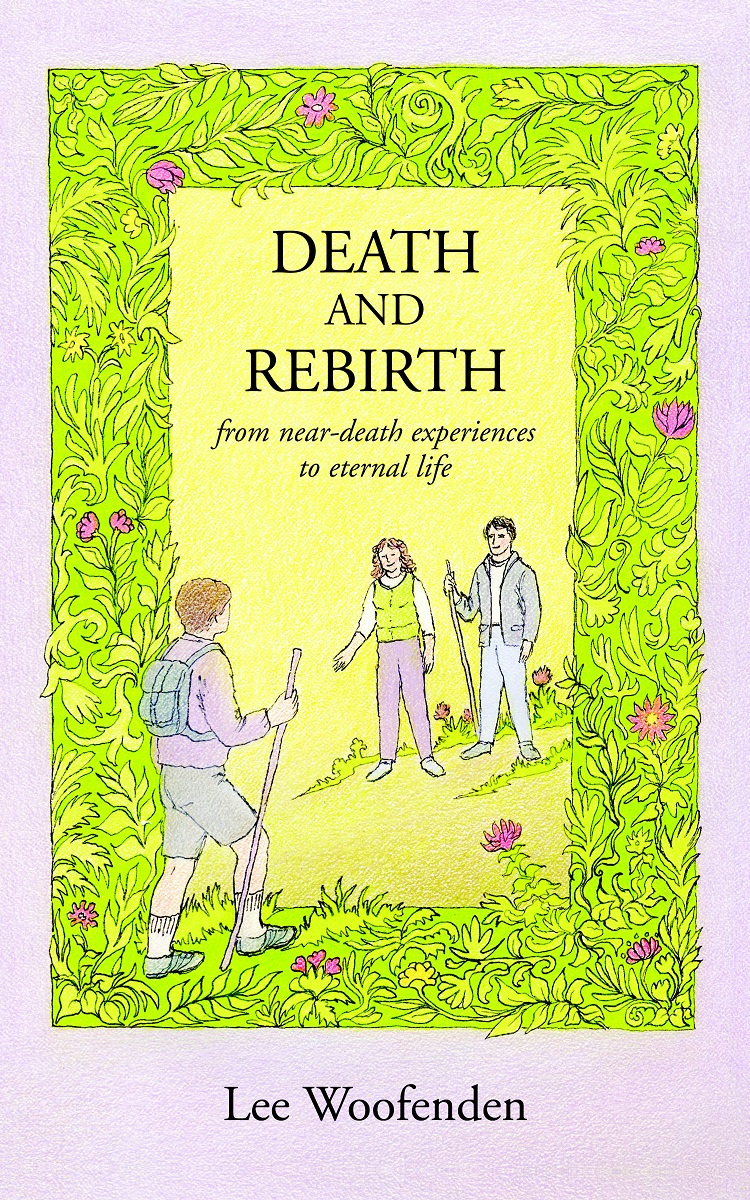
Death and Rebirth: Introduction

In 1975 Raymond Moody published his book Life After Life. It became an instant bestseller, sparking an intense popular interest in near-death experiences (NDEs) that has continued to grow ever since. Suddenly there was new light shining on a part of human experience that had been shrouded in mystery before. Suddenly we had up-do-date reports on the afterlife from ordinary people.

Though Moody’s was the first popular book on NDEs, it was not the first material to be published containing descriptions of what happens to us when we die. Various articles and a few books had already been published touching on the subject of NDEs in the years leading up to Moody’s book. There was a quiet buildup of investigation and reporting leading to the wide open door of Life After Life.

Even before that buildup though, there had long been texts containing descriptions of what happens to us when we die. For example, from the East we have The Tibetan Book of the Dead. From Africa we have The Egyptian Book of the Dead. In the West we have Heaven and Hell, by Emanuel Swedenborg. In this book I will focus on Swedenborg’s descriptions of the transition begun by death, putting them in a wider context and exploring their meaning for our spiritual growth during our lives.

Please click here to read on.

Tagged with: , , , , , , , ,
Posted in The Afterlife

Can I be Saved if I Hate my Mother?

Here is a Spiritual Conundrum submitted to Spiritual Insights for Everyday Life by a reader named Mary:

Greetings, Lee. I have been an Eastern Orthodox Christian my entire life, despite brief forays into other denominations, even considering myself an agnostic at times because of the insufficiency of answers to my questions. The return to Orthodoxy always seemed the best default in encompassing at least “most of the truth.” I stumbled across “Off the Left Eye” and discovered Swedenborg’s works and now find more answers to my struggles in faith than I ever believed possible. I’ve acquired nearly all his most seminal writings and feel a depth of satisfaction and connection I hadn’t believed possible for me. Suddenly, it all makes sense.

Bitter old woman

(stock image)

Yet, I have a continual gnawing problem, regarding my relationship with my very elderly mother. I feel that my intense, nearly lifelong dislike for her (often times, hatred) will keep me from salvation. It is the worst stumbling block I can imagine because I see her as such a horrible, haughty, deceitful, selfish, hateful, Godless person. I can’t even find it within me to pray for her. It is my daily spiritual stumbling. We don’t speak or have any contact and while I know I am not honoring her, I simply cannot do so. Can you possibly enlighten me in this regard? Thank you for any insight you might share.

Thanks, Mary, for sharing your conundrum.

I have often thought that if I had to choose one of the three main branches of Christianity, it would be Orthodox Christianity. It seems to have departed least far from the teachings of the Bible and of Jesus Christ. However, I agree with you that the teachings of Swedenborg take Christianity and our spiritual life to a whole new level. They are also closer to what is taught in the Bible than any other Christian teaching that I am aware of.

Now to your question—which is one that many people face. You touch on this commandment:

Honor your father and your mother, so that your days may be long in the land that the Lord your God is giving you. (Exodus 20:12, and also Deuteronomy 5:16)

In the New Testament, Jesus affirms this commandment in Matthew 15:1–9, Mark 7:9–13, Mark 10:19, and Luke 18:20. However, Jesus also says:

Whoever comes to me and does not hate father and mother, wife and children, brothers and sisters, yes, and even life itself, cannot be my disciple. (Luke 14:26)

Clearly there is more to your question than meets the eye! Let’s take a closer look.

For more on hating family members, please click here to read on.

Tagged with: , , , , , , ,
Posted in Sex Marriage Relationships, Spiritual Growth

Is There Sex in Heaven?

Here is a Spiritual Conundrum submitted to Spiritual Insights for Everyday Life by “Heart broken and worried”:

Hi Lee

I recently lost my fiancé a month ago we just got engaged on Christmas Eve. We were together for 6yrs and both have been divorced. This all still is taking a toll on me. He was only 39yrs old. The only thing that has brought me any comfort is since I came across your site. I want to thank you for that before I get to my question and I have so many. He and I had the most unbelievable bond and a connection mentally and physically and in every way imaginable not like in either of our previous marriages. We always said we were soulmates and God put us in each other’s lives for a reason. I am completely devastated and feel like more than half of me is gone and my biggest fear I guess really revolves around my question. If we will be able to be together in heaven in the after world and have the intimate relationship like we had here on earth and be able to be intimate in heaven. It was more than physical it felt like a spiritual connection and True Love. I’m doing as much reading as I can do and building my relationship with God and Jesus and just hope that not only will I be able to spend eternity with the Lord but with him the same as it was here but better. I hope you can bring me some comfort at this time.

The Angel of the Divine Presence clothing Adam and Eve with skins, by William Blake

The Angel of the Divine Presence clothing Adam and Eve with skins, by William Blake

First, I am so sorry to hear about the death of your fiancé. Our thoughts and prayers are with you as you grieve him and miss his presence with you. I’m glad the articles here have given you some help and comfort in assuring you that the two of you will be together again when it comes your time to move on to the spiritual world.

I can also assure you that when you rejoin him in heaven, you will be able to resume your relationship just as it was before, including sexual intimacy, and it will indeed be even better than it was here. That’s because the two of you will be living in the spiritual world, and will have spiritual bodies that can express your oneness of mind and heart in lovemaking even more fully than is possible in our physical bodies here on earth.

Now for a little more background and detail.

For more on sex in heaven, please click here to read on.
Tagged with: , , , , , , , , ,
Posted in Sex Marriage Relationships, The Afterlife

If God Already Knows What We’re Going to Do, How Can We Have Free Will?

Here is a Spiritual Conundrum submitted to Spiritual Insights for Everyday Life by a reader named Josh:

It says in the Bible that God knows our every word before it even leaves our tongue. If God already knows what we’re going to do, then how could we have free will?

Thanks for the great—and classic—question, Josh. I’ll get right to the point, and then we’ll explore the question in a little more depth.

The most basic answer to this question is that knowing something is not the same as causing something.

If I hold a book up in the air and let go of it, I know that it will fall to the floor. But I do not cause it to fall to the floor. Gravity does that.

In the very same way, God knowing what we will do does not mean God causes us to do it.

Further, the very idea that God “already” knows what we “will” do in the future is human, time-bound thinking, and a misunderstanding of how God knows everything. God does not look into the future and see what’s going to happen. Rather, God sees everything from an eternal state of being outside of time and space. God simply sees and therefore knows everything that to us is past, present, and future.

In other words, just as you and I can survey an entire scene from the top of a hill or mountain, and see everything in it in one view, so God can survey the entirety of creation, not only taking in everything that exists everywhere in all of space all at once, but also taking in everything that exists in all of time all at once.

But just as our seeing a vast panorama from a mountaintop doesn’t cause that scene to be the way it is, so God’s seeing everything that exists in all of time and space does not cause all of those things to be the way they are.

View from a mountainWe’ll look at these things more closely in a minute. But first, let’s take a look at the Bible passage Josh is referring to.

For more on God’s omniscience and human free will, please click here to read on.

Tagged with: , , , , , , , , , ,
Posted in All About God
Lee & Annette Woofenden

Lee & Annette Woofenden

Donate

Support the work of Spiritual Insights for Everyday Life by making a monthly donation at our Patreon

Join 1,296 other subscribers
Earlier Posts
Featured Book

Great Truths on Great Subjects

By Jonathan Bayley

(Click the title link to review or purchase. This website receives commissions from purchases made via its links to Amazon.)

Blog Stats
  • 4,201,598 hits