These days we don’t talk much about demon possession.

The Exorcist movie poster
Yes, popular horror films such as The Exorcist, with their graphic portrayals of demonic possession, do make the rounds in our culture. But most respected health professionals think that a belief in possession by demons is an irrational throwback to earlier, more superstitious times. Today we have a much more scientific view of life than they did in Biblical times. What they called demon possession, we call mental illness.
This is based on a secular worldview that does not accept the reality of the spiritual world—or at least holds that if there is a spiritual realm, it has no noticeable effect on the material world in which we live. Today, the educated leaders of Western society think more in terms of science than in terms of spirit. Even most Christians in the West consider an insane person to be “mentally ill” rather than “demon-possessed.”
And that’s not all bad. There certainly is less social stigma attached to being mentally ill than to being demon-possessed.
But it is also a symptom of the reluctance of educated people today to accept the idea that there are spiritual forces—let alone spiritual personalities—influencing us all the time. Science aims to explain everything through purely physical and biological processes, without resorting to unseen entities from another realm. And just as most people today no longer believe that evil spirits cause physical illness, we are also trained to think of mental illness as the result of malfunctions of the brain rather than of evil influences from spiritual realms.
This certainly does take away much of the fear and social stigma associated with the idea of demon possession. But from a spiritual perspective, it also takes away some of the most powerful ways to approach what we now call mental illness.
Yes, the medical and psychiatric world has some impressive tools at its command for controlling mental illness. But their methods commonly come at the expense of not dealing with the deeper causes. They tend to control, but not cure, the mental and emotional instability that plagues those who struggle and suffer with conditions that could aptly be called a personal hell.
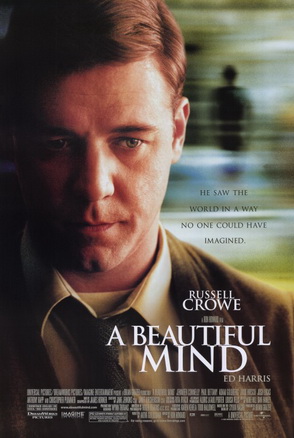
A Beautiful Mind movie poster
And the drugs prescribed by psychiatrists commonly have their own side-effects, which can include a numbing of the thoughts and emotions of the people who use them. That’s one of the reasons mathematician John Nash (1928–2015) ultimately chose not to take the psychiatric drugs prescribed by his doctors, as dramatized in the 2001 movie A Beautiful Mind.
What can we say about mental illness from a spiritual perspective?
For more on facing our inner demons, please click here to read on.













 Spiritual Insights for Everyday Life