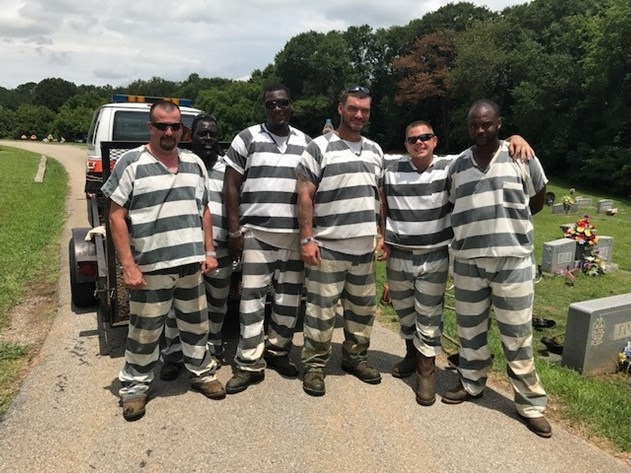
The six Polk County inmates who saved their deputy
On June 12 a Polk County, Georgia, sheriff’s deputy started going down. And this wasn’t a good time for that. You see, he was overseeing six prison inmates who were out on work detail sprucing up a local cemetery in preparation for Father’s Day.
But go down he did. He suffers from a rare brain malformation, and the Georgia heat that day was too much for him. As he lay unconscious on the grass, the inmates had access to his gun, his cellphone, and his van. They could have made a run for it.
Instead, this story has a happy ending.
You see, he was their deputy. They spent five days a week, seven hours a day with him out on work detail. When they saw him go down, they knew what they had to do.
For more on good deeds and prison inmates, please click here to read on.