Then the Lord rained down burning sulfur on Sodom and Gomorrah, from the Lord out of the heavens. Thus he overthrew those cities and the entire plain, including all those living in the cities, and also the vegetation in the land. (Genesis 19:24–25)
Genesis 19 is one of the most difficult stories in the Bible.
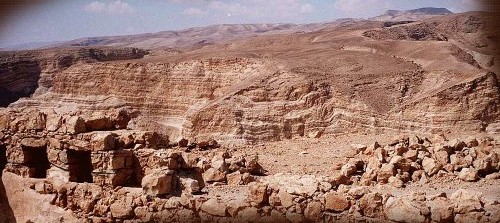
In the previous article in this series we covered a much nicer story—but it was leading up to the destruction that happens in this chapter. In the previous article, we talked about Abraham pleading for Sodom: how he went through the fifty, the forty-five, the forty, the thirty, the twenty, and the ten, pleading with God to see if there was any way the city could be saved. We talked about how this speaks of the great mercy of God: that if there is anything good and true left in us that God can reach out to, God will reach out to us, and will bring us out of the evil, meaning out of the destruction.
In this article we will look at the question: What if we completely reject goodness and truth, and choose evil instead? How does God deal with us when we entirely reject everything good? When we entirely reject God? When there is nothing good and true left in us because we refuse to let it be there, or we corrupt anything good and true in us for our own selfish purposes?
A more hopeful message
There is another way of looking and this story—one that is more hopeful for us. The story of Sodom can be seen as God’s mercy taking away evil and false things within us. It can be seen as God destroying the things in us that we are troubled by and that we struggle against.
We all have our struggles. The destruction of Sodom and Gomorrah is about God taking away that pain and hardship from our lives.
Finally, in the inner life of Jesus, it is about Jesus completely rejecting everything evil and false. He rejected every wrong motive and every false thought. In doing this, he delivered us from the clutches of hell. That is also what the story of Sodom and Gomorrah is about.
From the teachings of Swedenborg and from looking more carefully at the overall Bible narrative, we find that this is not an entirely “bad” story. It does have something hopeful about it. Next time we will talk about how Lot and his family escaped—which I hope is what all of us will do from the spiritual devastation represented by the destruction of Sodom and Gomorrah. And that is certainly a message of hope.
For today, we ask: What is this story all about, with its tale of the terribly evil thing those men were trying to do, and of the resulting destruction of their cities?
Is Sodom about homosexuality?
Many Biblical literalists and Christian conservatives say that Sodom is all about homosexuality. Yes, we could read it that way. However, if we want to make that argument based on the Bible itself, and on the actual story of Genesis 19, it doesn’t make much sense.
Why?
Because what the men of Sodom wanted to do to Lot’s angel guests would be evil no matter who it was done to, whether male or female. Gang rape is horribly evil regardless of whether it is heterosexual or homosexual. Lot offered his daughters to the men of the city instead. (He was not a particularly admirable character!) And it would have been just as evil if the men of Sodom had carried out their intentions on Lot’s virgin daughters as if they had done it to the men who were visiting him.
The story of Sodom is not about homosexuality. We know this because the prophet Ezekiel tells us plainly what the sin of Sodom was:
Now this was the sin of your sister Sodom: She and her daughters were arrogant, overfed, and unconcerned; they did not help the poor and needy. They were haughty and did detestable things before me. Therefore I did away with them, as you have seen. (Ezekiel 16:49–50)
This is very close to what Emanuel Swedenborg (1688–1772) says is the real meaning of Sodom and Gomorrah in the spiritual sense of the Bible. He says that Sodom represents the evil of selfish desires—especially the selfish desire to dominate other people—and that Gomorrah represents all the false ideas that come from this selfishness and desire to dominate (see Secrets of Heaven #2220).
The real sin of Sodom and Gomorrah
We have all had some experience of this. We have all had the experience of being bent on something that we know in our heart is not right, but that we really want to do. And our brain is ingenious at coming up with excuses and rationalizations for why we should go ahead—and why it would even be right to do so. Sodom is our desire for self-indulgence and power. Gomorrah is the rationalizations and justifications that we come up with to back up our desires. This is what those cities represent spiritually.
The sin of Sodom was not what it is usually considered to be. Both the Bible and Swedenborg say that the sin of Sodom is arrogance, violence, and blatant disregard for the needs of others. In other words, Sodom represents rank selfishness. That’s what the story of Sodom and Gomorrah is all about. Obviously, anyone who would treat people as atrociously as the men of Sodom intended to treat Lot’s guests is completely engrossed in rank selfishness and a total disregard for the well-being of others.
That is the meaning of the story, both literally spiritually. The message is that this kind of rank selfishness, this kind of total disregard for the well-being of others, this kind of exclusive focus on our own pleasure and happiness, leads to our own destruction.
Evil destroys itself
Let’s talk about who destroyed Sodom. In story itself, it says that burning sulfur rained down out of heaven from the Lord. In other words, it says that God destroyed Sodom and Gomorrah. (But notice that in verses 12–13, the angels who were talking to Lot said that the Lord had sent them to destroy the city. So even the story itself leaves some wiggle room about who actually destroyed Sodom and Gomorrah.)
I submit to you that this is how God presents it to us when we are opposed to God’s way.
Think about someone who is brought before a judge. This person has robbed or murdered or raped, and is in front of the judge being convicted of the crime he has committed. Who is he going to blame for the verdict and the punishment that he is about to receive? He is certainly not going to blame it on himself. He’s going to blame it on the judge, the jury, the victim—on everyone but himself!
In the very same way, when we have done something evil and wrong, we may very well blame God for any bad consequences that result from our own bad behavior.
The Bible often expresses things from a human point of view. From our point of view, when we do something wrong and get into trouble for it, it is usually someone else’s fault. It is our parents’ fault. It is the judge’s fault. Or if we are religious, it is God’s fault. God is the one who made me the way I am! God is the one who is causing this punishment to come upon me!
Yet if we look at it reasonably and objectively, we know that when something bad comes from our own actions, we are bringing that evil upon ourselves. We are the one flouting the law. If it’s a physical thing such as an addiction or an unhealthful lifestyle, we are the one who is bringing the destruction upon ourselves through our own actions.
Even though it appeared to be from God, really it was the evil desires and actions of the people of Sodom that brought destruction down upon Sodom. Swedenborg would tell us that the destruction of Sodom and Gomorrah came from evil spirits in hell, not from angels, and not from God.
Why does the Bible say God did it?
Then why would God let it be said in the Bible that it was God who destroyed Sodom and Gomorrah?
Besides the point-of-view issue I already mentioned, another answer to this question is that for many people, if God isn’t the one who punishes us for our wrongdoing, then that’s no kind of God at all. In the minds of these people, if God is all-powerful, then God must be able to do both good and evil. God must both reward us and punish us.
If these people don’t believe this, they will consider God to be weak and pathetic. God allows such people to believe that God does evil as well as good so that they will respect God, and will follow God’s commandments. People like this must literally fear God, or they will become walking crime waves!
However, according to Swedenborg, God never brings destruction on anyone, and God is never angry with anyone. God is entirely loving. At times, God lets us think that God is angry with us. But in reality, God loves us continually and completely—even when we turn our backs on God.
God cannot take away the consequences of our actions
Yet there are times when God cannot prevent the pain and destruction that comes to us as a result our own actions. If we engage in wrong practices such as deliberately rushing into conflict and war, the result will be pain and death. God does not stop those results from happening, in part because when we do evil things, we are rejecting God’s help and protection.
That is what today’s story is all about. It is about when we are completely unwilling to listen to God. It is about when we simply will not to do what God wants us to. It is about when we stubbornly go our own way, no matter what God says or does. This is what is represented by the inhabitants of Sodom and Gomorrah.
And God will not prevent the resulting destruction from coming upon us. Of course, God will do everything possible to soften the blow. But if we are bent on the wrong course, God will allow us to feel the consequences of our actions. The reason for this, under God’s providence, is that God hopes that when we feel the painful consequences of our bad attitudes and actions, we will realize that our way is wrong, and that we must change our attitudes and desires, and reform our lives.
This is what this story means when we are putting ourselves in the shoes of Sodom and Gomorrah.
Just to make sure it isn’t all theoretical, consider addiction to a substance such as alcohol. There are many helps available. There are ways we can break that habit and get free from the addiction. But if we refuse all that help and continue to drink heavily, we will bring destruction upon ourselves. No one else is doing it to us. No one is forcing the alcohol down our throat. And if we keep at it, we will eventually find ourselves on skid row.
If we would ever listen, and get the help we need, then we could escape from that destruction. But God will not stop the consequences of our actions. If God did, we would never learn the right way. We would never truly change from the inside out.
Saving us from Sodom
Earlier, I mentioned that there is another way of seeing the destruction of Sodom and Gomorrah—a more hopeful way. So far, we have been speaking from a perspective of identifying ourselves with Sodom. In this perspective, we are the ones who are doing the evil, and we are the ones who are being destroyed as a result. And that is never pleasant!
But think about the cities and towns around Sodom and Gomorrah. Think about Lot, who was a foreigner living there. The inhabitants of Sodom were violating one of the most important laws of the ancient Near East: the law of hospitality. Guests were considered sacred in those days. You did not do evil things to them. In the context of that culture, for the men of those cities to gather around Lot’s house to attack his guests meant that they were utterly evil and depraved.
Think about all the cities and towns near Sodom and Gomorrah. They had to deal with all those people who were bent on evil and destruction. It would be like living next to the old Combat Zone in Boston: you would live in constant fear of what might happen to you and your family because of all the criminal activity nearby. If we look at it from the perspective of Sodom and Gomorrah’s neighbors, the destruction of those cities was not a curse, but a blessing. It meant deliverance from people who might do them harm.
I hope this is the perspective that each of us will be able to look at it from: not as if we are Sodom, but as if we are the people who will be saved from Sodom’s influence.
The Sodom we are saved from
In us, that influence is our “tendencies toward evil,” in theological terms, or in common language, our bad habits. Sodom is everything that drags us down.
Each of us knows what that is in ourselves. We all have things that tend to drag us down. Things that we struggle against. Things that we sometimes lose the battle against. These are the Sodom and Gomorrah in us. And God promises us that if we will hang on, like Lot, and follow the angels out of the city (which we will talk about in the next article in this series), then God will save us from those destructive tendencies in ourselves. God will destroy the evil within us so that we will no longer have to struggle against it, and it will no longer drag us down.
This is the hopeful message of the story of Sodom and Gomorrah. This is the promise that God makes to us. If we will do our best to follow God’s way, we will eventually overcome. In the words of the old spiritual: “We shall overcome, we shall overcome, we shall overcome some day.” This is the promise expressed by the destruction of Sodom. Some day, with God’s help, we will overcome all the personal demons that we struggle against.
Jesus overcame
Finally, there is the meaning of the story of Sodom and Gomorrah in the life of Jesus. Jesus never committed any evil or any sin. He was the one sinless person who ever lived on this earth, because he was God come to earth.
But this does not mean that he didn’t have his struggles. We have talked in this series about how Jesus had all the tendencies toward evil and selfishness that we do. He got those tendencies from his human mother, and from the culture around him—as well as from evil influences that flowed in from hell. He had to struggle against all the same evil and wrong things that we struggle against—and many more that we can’t even conceive of.
Jesus struggled very bitterly against all that evil. We read about his temptation in the desert after he was baptized. We read about his praying in Gethsemane before his crucifixion. We read the accounts of his battles with the corrupt religious authorities of the day. We read about his struggles to reach so many people whose lives were focused entirely on their own immediate pleasure and possessions.
We can only imagine how much agony he must have endured fighting against all that human evil. It was the same evil that we fight against, except at a far deeper level. And he fought against all evil, not only against the little corner of it that each one of us fights against. Jesus went through all the struggles that we go through, and far more. He had to fight against the Sodom and Gomorrah that were attacking him, and us.
The story of the destruction of Sodom and Gomorrah is the story of how Jesus completely rejected all human evil and falsity. He rejected it, and he overcame it. And when he overcame it, he also took to himself the power to overcome our evils. And Jesus will deliver us from our own inner Sodom and Gomorrah if we will let him into our lives by believing in him, loving him, and obeying his commandments to the best of our ability, day after day, year after year.
(Note: This post is a revised version of a talk originally delivered on May 9, 2004. For the next article in this series, please see: “A Divine Rescue Mission.” To start at the beginning of the series, please go to the article, “What Child Is This?”)
For further reading:
- What is the Sin of Sodom?
- Homosexuality, the Bible, and Christianity: A Summary
- Homosexuality, the Bible, and Christianity
- What does Emanuel Swedenborg Say about Homosexuality?
- Heaven, Regeneration, and the Meaning of Life on Earth
Share this:


Lee Woofenden is an ordained minister, writer, editor, translator, and teacher. He enjoys taking spiritual insights from the Bible and the writings of Emanuel Swedenborg and putting them into plain English as guides for everyday life.



Why doesn’t God take babies away from evil parents? If God did, then he would prevent the parents from raising the babies into ungodly adults.
If California Family Law takes children from parents who don’t affirm their LGBTQ+ identity, then certainly God could take children away from parents that forbid them good things and allow them bad things.
The Israelites should have taken babies away from the Canaanites, Ammonites, and Philistines, etc. Then the Canaanite parents wouldn’t raise them into wicked adults, instead the Israelites would raise them into godly adults.
Much like the dairy industry takes calves from their mothers. But a big point of difference is that the godly should NOT harvest milk from ungodly mothers whose babies are taken away. And another point of difference, NONE of the babies should be discarded as the dairy industry discards dairy calves.
God should take babies away from Iran, so that American and European Christians can instead raise them into godly offspring (instead of ungodly offspring that Iranian parents would raise them to be).
If the parents are angry about their babies being taken away, God should answer “Because you are wicked and evil and would raise the children into ungodly adults. The children have been given to parents that will instead raise them into godly adults.”
Hi World Questioner,
In terms of people’s ultimate choice between heaven and hell, all babies who are born and grow up to adulthood have that choice, even if their parents were wicked and ungodly. God makes sure of that.